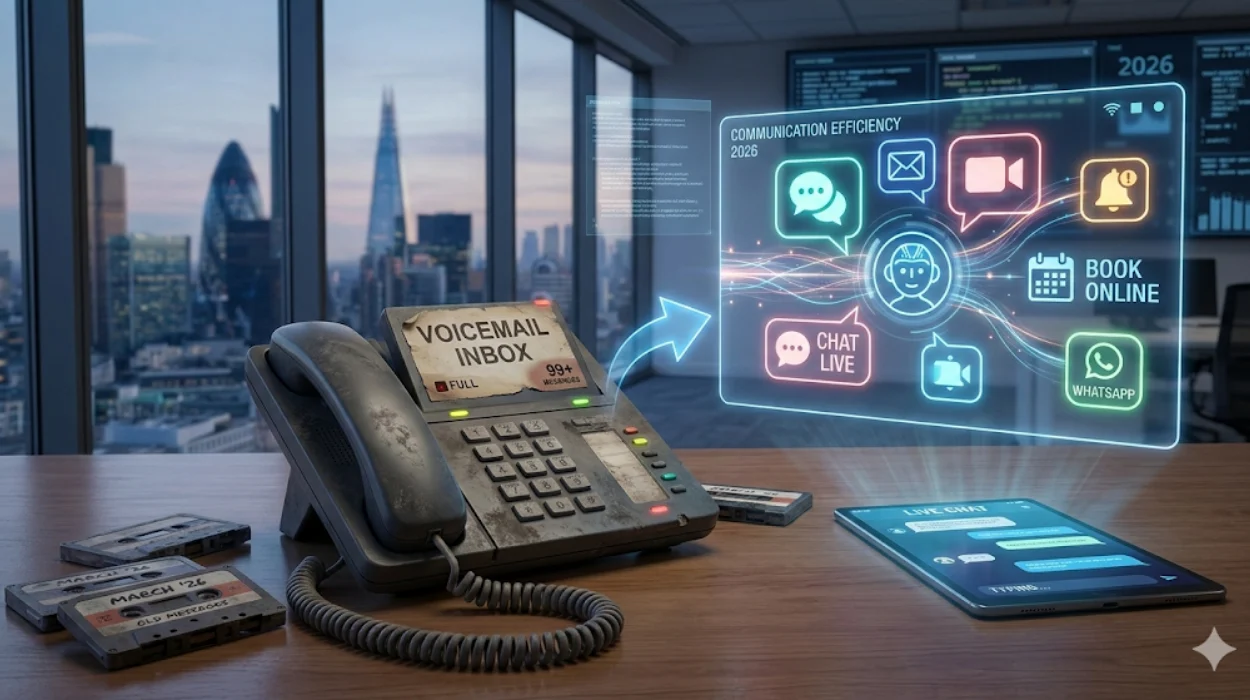
Modern customers refuse to leave voicemails in 2026 because they expect immediate, human responses and find voicemail systems outdated. Instead, they prefer seamless communication experiences through live call answering or digital channels that align with their on-demand expectations.
Communication in business has shifted dramatically. As technologies advance and attention spans shorten, voicemail has become a relic of the past a reminder of an era where waiting for a callback was acceptable. Today’s customers demand speed, personalisation, and reliability. For organisations that still rely on voicemail, this can lead to missed opportunities, frustrated callers, and weaker customer retention. Let’s explore why voicemail aversion has become the norm and how a professional call answering service bridges the gap between customer expectation and responsive service.
The Evolving Customer Expectation in 2026
In 2026, instant communication is the baseline standard. With live chat, WhatsApp for Business, and intelligent call routing available around the clock, customers have grown accustomed to speaking with real people rather than leaving messages and waiting.
Several trends drive this behavioural shift:
- The demand for immediacy. Customers expect acknowledgment within seconds. Waiting for a reply from a voicemail feels inefficient compared to real-time interactions.
- Digital-first communication habits. Millennials and Gen Z—now dominant in both consumer and B2B markets—see voicemail as an outdated process.
- Automation and AI accessibility. Businesses increasingly use AI chat or live reception tools, setting a higher responsiveness standard across all industries.
A missed call followed by a voicemail invitation no longer reads as “we’re unavailable”; it feels like “we don’t value your time.” In the competitive environment of 2026, that one impression can cost a conversion.
Why Voicemails Fail to Engage Modern Callers
Despite being a long-standing communication tool, voicemail creates friction in the customer journey. Most business leaders underestimate how negatively this affects brand credibility.
Friction in the User Journey
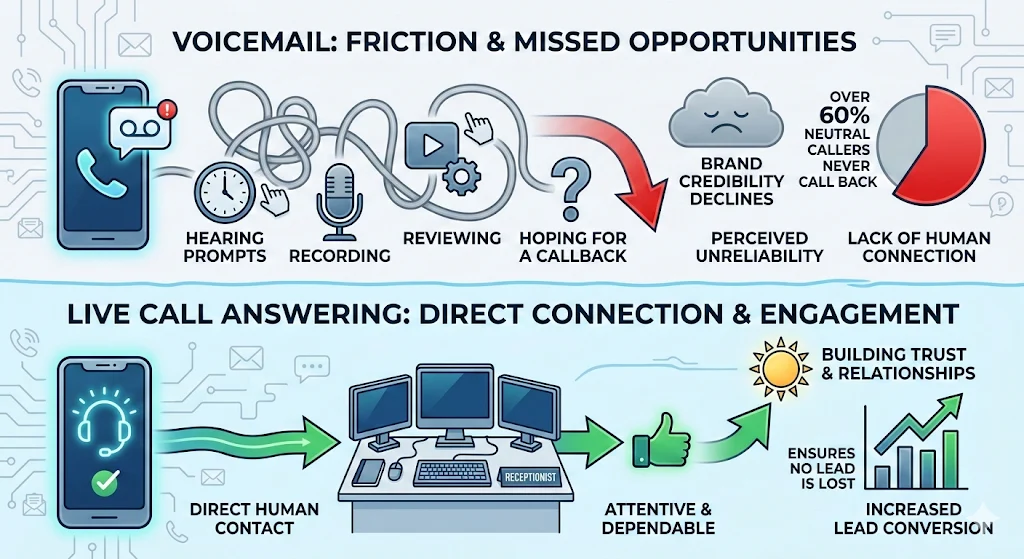
The process of leaving a voicemail hearing prompts, recording, reviewing, and hoping for a callback—adds multiple steps that modern customers no longer tolerate. In contrast, a live call answering solution eliminates that friction by providing direct human contact.
Perceived Unreliability
Few customers believe voicemails will receive timely responses. Over the past decade, voicemail response rates have declined sharply as businesses focus more on email and messaging. Consequently, customers perceive leaving a message as effort wasted.
Lack of Human Connection
In sectors where trust matters like legal, financial, or service-oriented businesses—the absence of human dialogue weakens relationship-building. A professional receptionist, even over the phone, reinforces that the company is attentive and dependable.
Missed Business Opportunities
Studies consistently show that over 60% of business callers who meet a voicemail never call back. For small or growing businesses, this is a silent revenue drain. This is where solutions like Form My Company’s professional Call Answering service become crucial, ensuring no lead is lost due to voicemail fatigue.
How Communication Preferences Have Transformed
Customer service in 2026 revolves around accessibility. Businesses no longer dictate communication formats; customers do.
From One-Way to Real-Time Interaction
In the past, communication was asynchronous customers left messages, and businesses responded later. The current landscape is synchronous and multidimensional: customers message, chat, and call expecting live resolution. Voicemail doesn’t fit this dynamic system.
The Role of Social and Messaging Channels
Hybrid interactions across multiple platforms dominate. For many, sending a quick voice note on WhatsApp feels natural, but leaving a formal voicemail feels outdated. The distinction lies in context: messaging channels imply immediacy, while voicemail implies delay.
Business Implication
If your business still directs missed calls to voicemail, it signals a lack of adaptability. In competitive marketplaces legal services, property management, consultancies customers simply move to another provider who answers first. That is why integrating a live call answering service offers both responsiveness and professionalism, improving customer retention and conversion rates.
The Psychological Shift: Customers Expect Presence
Beyond technology, this shift is psychological. Customers interpret responsiveness as attentiveness. Being reachable signals that the organisation values communication, making it easier to establish trust early.
When a customer calls, they’re often at a decision point ready to buy, enquire, or escalate. If they meet a voicemail prompt, the immediacy of that intent fades. By contrast, speaking to a trained live receptionist reaffirms the relationship between the caller’s urgency and the company’s attentiveness.
The Cost of Missed Calls in a Voicemail-Dependent Business
Every unanswered call represents potential lost revenue. In service industries, where customer acquisition costs are high, failing to answer the first call can negate prior marketing spending.
Key consequences of relying on voicemail include:
- Lower customer satisfaction metrics due to lack of immediacy.
- Decline in first-contact resolution rates.
- Higher customer churn resulting from perceived unresponsiveness.
- Weaker reputation in reviews and digital feedback spaces.
These operational inefficiencies compound, damaging both short-term performance and long-term brand credibility. Redirecting those calls to a 24/7 live call answering system prevents these losses and builds dependable communication habits that nurture loyalty.
The Business Case for Live Call Answering in 2026
Replacing voicemail with live call answering isn’t only about avoiding lost calls it’s about reengineering how customers experience your brand.
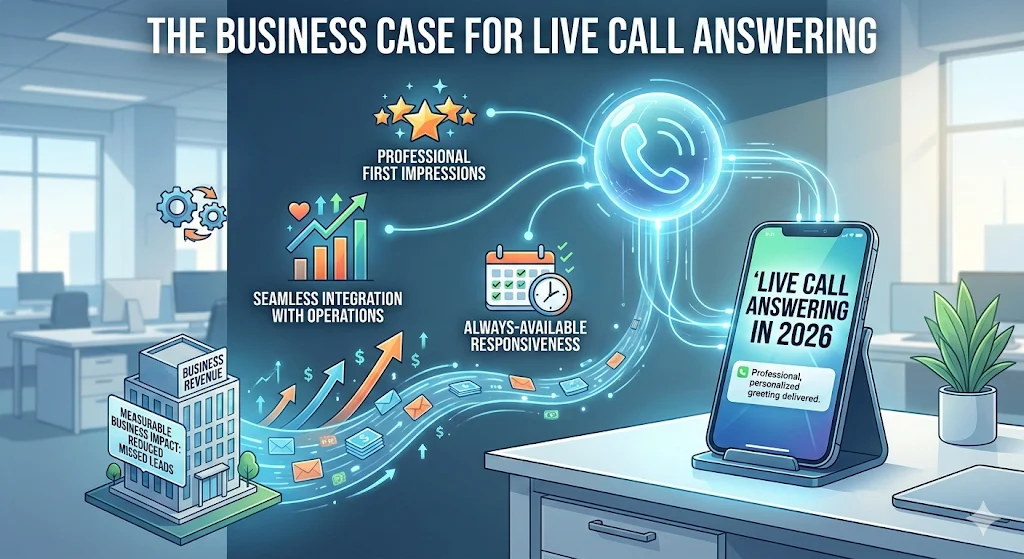
Always-Available Responsiveness
With live call answering, every call is acknowledged quickly by a trained professional who represents your brand tone. This availability not only satisfies customer expectations but also projects reliability, even when your in-house team is occupied or offline.
Professional First Impressions
A professional receptionist greeting each call sets the stage for customer confidence. Form My Company’s Call Answering service delivers customised greetings and message handling designed around your workflow, giving even micro-businesses the stature of a dedicated client service operation.
Seamless Integration with Operations
Modern systems route answered calls, record details, and forward messages instantly meaning the information lost to voicemail transcription errors disappears. Businesses maintain smoother coordination without burdening internal staff.
Enhanced Customer Retention
Responsiveness directly influences retention. When every call feels heard and valued, customers build loyalty, return more often, and refer others.
The informational focus of how a live call answering service improves your customer retention
demonstrates measurable business impact by reducing missed leads and strengthening engagement continuity.
The Shift from Reactive to Proactive Communication
Voicemail systems are reactive you respond after the fact. Live call answering is proactive by ensuring immediacy. In a world driven by data visibility and swift outreach, this distinction matters.
Businesses that prioritise proactive communication maintain a consistent interaction flow, gather better insights from call logs, and personalise follow-ups. This proactive infrastructure reassures customers that support is continuous.
Moreover, proactive answering can influence sentiment analysis and automated CRM entries, giving leadership an accurate picture of customer interactions something voicemail data rarely provides.
How Businesses Are Adapting in 2026
Forward-thinking companies are using professional call answering as part of their broader customer service strategy. Sectors like property management, consultancy, healthcare, and recruitment increasingly partner with firms like Form My Company to guarantee constant availability without inflating staffing costs.
Examples of modern adaptations include:
- Hybrid staffing models combining automated call routing with human receptionists.
- 24/7 external reception partnerships for global time zone coverage.
- Integrated reporting dashboards enabling managers to track call volume and outcomes.
By merging technology and human support, businesses create a communication model that embodies both efficiency and empathy.
Building Trust Through Real Human Interaction
Trust forms the foundation of retention. While AI and messaging automation streamline support, human dialogue remains irreplaceable for reassurance and relationship-building. Professional receptionists listen, interpret tone, and ensure that each exchange feels personal qualities no automated system can fully emulate.
Customers facing urgent issues particularly appreciate human presence. When individuals know their concerns are heard in real time, satisfaction scores rise significantly. A voicemail, by contrast, delivers uncertainty “Will someone call me back?” Live answering eliminates that question entirely.
Reframing Voicemail as a Legacy System
In many industries, voicemail persists out of habit rather than necessity. However, by 2026, it no longer aligns with customer communication standards. Similar to how fax machines or paper directories faded, voicemail is transitioning into the category of “legacy systems” viable only in rare, specialised contexts.
Forward-looking businesses are adapting their communication models to ensure constant responsiveness while maintaining efficiency and privacy. This evolution isn’t about dismissing voicemail arbitrarily but recognising it as incompatible with high-performance service expectations.
Moving Toward Human-Centred Business Communication
As customer engagement evolves, one principle stays steady: accessibility builds trust. A live call answering partner extends your business presence, ensuring each interaction receives immediate, professional attention.
For business owners assessing operational efficiency, the decision is clear: retaining voicemail limits opportunity. Replacing it with a responsive system builds reputation, boosts retention, and increases long-term customer value.
Partnering with Form My Company ensures your calls never go unanswered. With tailored messaging, brand-consistent reception, and detailed reporting, the Call Answering solution integrates seamlessly into your communication strategy. To see how others have maximised retention through this approach, explore the informational insights of how a live call answering service improves your customer retention, or discover proven outcomes in
our client success stories: scaling with Form My Company.
Why should a business use a call answering service in 2026?
A call answering service helps businesses manage incoming calls professionally, ensuring no customer enquiry goes unanswered. In 2026, services like From My Company’s Call Answering offer real-time human interaction, improving customer satisfaction and retention compared to voicemail or automated systems.
How does From My Company’s call answering service work?
From My Company’s Call Answering service routes your incoming calls to a trained receptionist who answers in your business name, takes messages, and forwards urgent calls as required. This ensures every caller receives immediate, professional assistance even outside regular office hours.
What industries benefit most from call answering services?
Sectors such as legal, property, healthcare, and consultancy gain the most from call answering, as customers in these areas value responsiveness and trust. From My Company tailors its approach to meet the communication needs of different professional service environments.
Can call answering improve customer retention rates?
Yes, consistent live call answering increases customer satisfaction and loyalty by providing prompt human support. Businesses using From My Company’s Call Answering solutions reduce missed calls, enhancing long-term client retention and reputation.
Is a call answering service suitable for small businesses?
Absolutely. Small businesses use From My Company’s Call Answering to project a larger, more professional image while saving time and staffing costs. It acts as a virtual reception team, ensuring every caller experiences responsive and reliable service.