
Missed customer calls can cost UK small businesses over £27,000 annually in lost revenue from just one missed enquiry per day. These hidden expenses extend beyond immediate sales losses to include reputational damage and operational inefficiencies that erode long-term growth.
Why Missed Calls Matter More Than You Think
In today’s fast-paced market, UK small businesses often juggle multiple roles, from on-site work to administrative tasks, leaving phones unanswered. A single missed call isn’t just a minor oversight; it represents a potential customer who moves on quickly to competitors, as modern buyers expect instant responses. Research shows that 98% of customers will not retry a business after a poor phone experience, turning brief oversights into substantial financial drains.
The problem intensifies during growth phases when call volumes rise but resources remain stretched. For instance, a plumber in Manchester missing three calls weekly might forgo £15,000 yearly, assuming each lead converts at a modest 20% rate with an average job value of £500. This isn’t hypothetical—industry data confirms that unanswered calls create “mystery” gaps in sales pipelines, quietly undermining revenue forecasts.
Direct Revenue Losses from Unanswered Calls
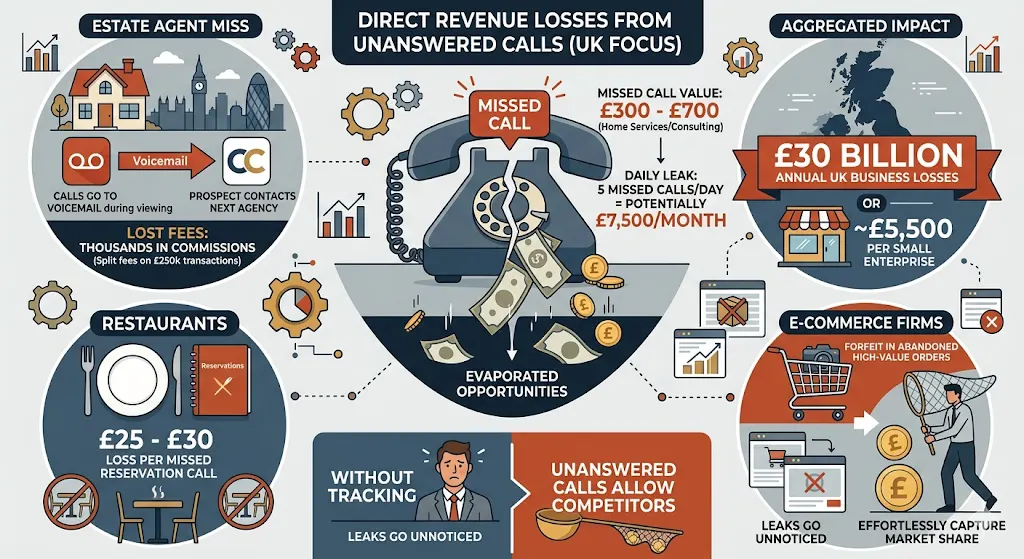
The most obvious impact of missed customer calls hits the bottom line through forgone sales. UK small businesses in sectors like home services or professional consulting can value each missed call at £300-£700, depending on close rates and deal sizes. If a business misses five calls daily, five days a week, that’s potentially £7,500 monthly in evaporated opportunities, even at conservative estimates.
Consider a typical scenario: a London-based estate agent receives an enquiry from a prospective buyer during a viewing. The call goes to voicemail, and the caller, impatient, contacts the next agency listed online. With UK property transactions averaging £250,000 in commissions split across firms, one such miss could cost thousands in shared fees. Aggregated across industries, missed calls contribute to £30 billion in annual UK business losses, or about £5,500 per small enterprise.
These figures compound for high-volume sectors. Restaurants might lose £25-£30 per missed reservation call, while e-commerce firms forfeit £145-£155 in abandoned high-value orders. Without tracking, these leaks go unnoticed, allowing competitors to capture market share effortlessly.
Reputational Damage Amplifies the Cost
Beyond revenue, missed calls erode trust, leading to negative reviews and diminished word-of-mouth referrals. In the UK, where 85% of consumers read online reviews before engaging a business, a single unanswered call can trigger a one-star Google rating, deterring 30 potential customers. This ripple effect turns a momentary lapse into a lasting barrier to new business.
Picture a family-run café in Birmingham: a customer calls to check gluten-free options but hangs up after ringing out. Frustrated, they post on social media, tagging the business negatively. The post garners shares, costing not just that sale but future footfall from locals who prioritise responsive service. Studies indicate such incidents increase customer effort scores, prompting complaints and repeat contacts that tie up more resources.
Over time, this builds a cycle of reputational harm. Small businesses reliant on local SEO suffer as poor reviews tank search rankings, making it harder to attract inbound calls in the first place. The hidden multiplier here is opportunity cost time spent managing fallout instead of serving paying clients.
Operational Inefficiencies Add Hidden Expenses
Missed customer calls don’t just lose sales; they inflate operational costs through inefficiency. When callers retry or escalate to email, staff spend extra hours chasing leads, diverting focus from core activities. For a small UK retailer, this might mean 10 hours weekly reconciling fragmented communications, equating to £400 in wasted labour at minimum wage rates.
In professional services, like accountancy firms in Leeds, a missed client query during tax season leads to rushed follow-ups, error-prone documentation, and compliance risks. One overlooked call could necessitate costly rework or even fines, far exceeding the initial lead value. Data reveals that voicemail abandonment rates exceed 70%, forcing businesses to invest in redundant channels like chatbots that underperform for complex enquiries.
Moreover, growth-minded small businesses face scaling pains: as demand surges, in-house answering becomes untenable without hiring, which adds overheads of £25,000+ per full-time receptionist annually. This inefficiency traps owners in a reactive mode, stunting strategic expansion.
Long-Term Growth Impacts on UK Small Businesses
The cumulative toll of missed calls hinders sustainable growth for UK small businesses. Consistent unanswered enquiries signal operational weakness, scaring off investors or partners who prioritise reliable customer handling. A tech startup in Cambridge, for example, might miss venture introductions, delaying funding rounds by months.
Market dynamics exacerbate this: with 80% of UK consumers switching brands after one bad experience, habitual misses accelerate churn. Loyal customers, expecting seamless service, defect quietly, eroding recurring revenue streams essential for SMEs. Over a year, this compounds to 20-30% profit erosion, per industry benchmarks.
Furthermore, in competitive niches like trades or consulting, missed calls hand advantages to rivals with better telephony setups. Businesses ignoring this risk stagnation, as agile competitors capture leads and scale faster.
Industry-Specific Costs in the UK Context
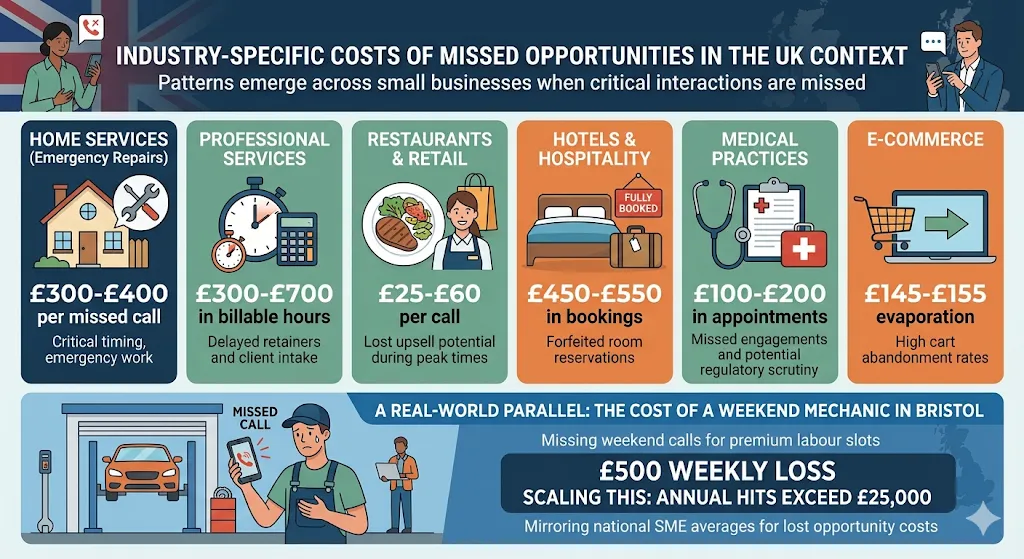
Costs vary by sector, but patterns emerge across UK small businesses. Home services firms face £300-£400 per missed call in emergency repairs, where timing is critical. Professional services lose £300-£700 in billable hours from delayed retainers.
Restaurants and retail average £25-£60 per call in upsell potential, while hotels forfeit £450-£550 in bookings. Medical practices risk £100-£200 in appointments, plus regulatory scrutiny. E-commerce sees £145-£155 evaporating from high-cart abandonments. These benchmarks highlight why tailored solutions matter for UK SMEs.
A real-world parallel: a Bristol mechanic missing weekend calls loses premium labour slots, costing £500 weekly. Scaling this, annual hits exceed £25,000, mirroring national SME averages.
Protecting Your Business with Professional Call Answering
Reliable call handling mitigates these risks effectively. Professional call answering services ensure every enquiry receives prompt, expert attention, converting more leads into loyal customers. For UK small businesses overwhelmed by demand, professional call answering services deliver seamless coverage without the overhead of in-house staff.
Exploring options like call answering vs. virtual receptionist helps identify the right fit for your operations, balancing cost and functionality. Businesses ready to act can get professional call answering services tailored for UK needs, safeguarding revenue streams.
Form My Company offers such call answering solutions, providing scalable support that aligns with small business growth. Their trained professionals handle calls professionally, integrating with your workflow to eliminate misses and boost efficiency.
What is call answering service from Form My Company?
Call answering service from Form My Company provides professional handling of incoming calls for businesses, ensuring no customer enquiry goes unanswered. Trained agents answer calls in your company name, capture key details, and relay messages promptly via your preferred method. This service supports small UK businesses by maintaining a professional image without the need for in-house receptionists.
How does call answering differ from a virtual receptionist?
Call answering focuses on basic call management, message-taking, and basic routing, while a virtual receptionist offers broader administrative support like diary scheduling and customer follow-ups. Form My Company’s call answering service handles overflow calls efficiently during peak times. Businesses choose based on needs, with call answering suiting high-volume, simple interactions.
What are the benefits of professional call answering for small businesses?
Professional call answering reduces missed calls, improves customer satisfaction, and frees business owners from phone duties to focus on core operations. Form My Company’s service ensures 24/7 coverage, capturing leads that might otherwise be lost. It also enhances credibility through polished call handling tailored to UK small enterprises.
How much does call answering service cost in the UK?
Call answering services in the UK typically start from £20-£50 per month for basic plans, scaling with call volume and features. Form My Company offers flexible pricing based on usage, often more affordable than hiring a full-time receptionist costing £25,000 annually. Costs depend on minutes handled and add-ons like call patching.
Can Form My Company handle calls during business hours?
Yes, Form My Company’s call answering service accommodates both out-of-hours and during-business-hours overflow to prevent missed opportunities. Agents integrate seamlessly with your workflow, screening calls and booking appointments as needed. This flexibility suits UK small businesses with variable call patterns.