

Choosing between a virtual receptionist vs answering service depends on how much support your business needs when handling incoming calls. An answering service typically focuses on live answering, message-taking and call forwarding, while a virtual receptionist can provide additional administrative support, such as appointment scheduling, customer enquiries and lead qualification. Both options help UK businesses manage customer communications without employing a full-time, in-house receptionist.
Understanding the differences between these services helps business owners select a solution that matches their call volumes, administrative requirements, customer expectations and operating budget. This guide compares their functionality, costs, scalability and suitability to help you make an informed decision.
What Is an Answering Service?
An answering service provides professional call handling on behalf of a business. Trained operators answer incoming calls using agreed instructions, collect relevant information, take messages and forward important enquiries to the appropriate person.
For UK small businesses, this arrangement provides access to live answering without the expense and administrative responsibilities of employing an in-house receptionist.
Main Features of an Answering Service
Live call answering: Professional operators answer calls using your business name and agreed greeting.
Message-taking: Callers can leave their contact details, questions and reasons for calling.
Call forwarding: Important calls can be transferred to designated employees or business owners.
Call screening: Operators identify unwanted calls and distinguish routine enquiries from urgent matters.
Out-of-hours coverage: Businesses can arrange support outside their normal operating hours.
Consistent customer communication: Callers receive a professional response rather than being directed immediately to voicemail.
An answering service is particularly suitable for tradespeople, consultants, contractors and small businesses where the main requirement is ensuring customer calls receive attention.
What Is a Virtual Receptionist?
A virtual receptionist provides remote reception and administrative support. In addition to answering incoming calls, the service can handle tasks such as booking appointments, managing calendars, responding to routine enquiries and collecting information from prospective customers.
The precise responsibilities depend on the provider’s service package and the instructions supplied by the business.
Main Features of a Virtual Receptionist
Appointment scheduling: Arranging customer meetings and appointments using an approved calendar.
Customer enquiries: Responding to routine questions using business information and agreed procedures.
Lead qualification: Collecting information to help identify potential customers and their requirements.
Calendar management: Coordinating appointments and communicating scheduling information.
Personalised call handling: Following customised scripts and adapting responses to different customer situations.
Administrative assistance: Supporting selected reception and customer communication activities.
Virtual receptionists are often useful for professional services, healthcare practices, consultancies and businesses that handle frequent appointments or detailed customer enquiries.
Virtual Receptionist vs Answering Service: Key Differences
Although both services provide live call handling, their main difference is the scope of support they offer. An answering service generally concentrates on managing incoming calls, whereas a virtual receptionist can take responsibility for additional administrative activities.
| Comparison factor | Answering service | Virtual receptionist |
|---|---|---|
| Main purpose | Incoming call management | Reception and administrative support |
| Message-taking | Yes | Yes |
| Call forwarding | Common feature | Available depending on package |
| Appointment scheduling | Limited or optional | Common feature |
| Lead qualification | Depends on instructions | Often available |
| Calendar management | Usually limited | Often available |
| Customer enquiries | Basic information and routing | Broader enquiry handling |
| Availability | Depends on selected coverage | Depends on provider and package |
| Personalisation | Agreed call scripts | More extensive interaction |
| Best suited to | Businesses needing reliable call handling | Businesses requiring broader reception support |
The comparison shows that neither service is automatically better. The appropriate option depends on whether a business primarily needs someone to answer calls or requires additional administrative assistance.
Call Handling and Live Answering Capabilities
Call handling is central to both services, but the way incoming enquiries are managed can differ.
An answering service focuses on making sure callers reach a professional person. Operators follow predefined instructions, record important details and pass messages to the relevant contact.
A virtual receptionist can manage more involved conversations. Depending on the agreed responsibilities, this may include checking appointment availability, arranging meetings, answering routine questions and collecting information before passing enquiries to the business.
When Basic Call Handling Is Enough
An answering service is generally appropriate when:
Customers mainly call to request information.
Employees spend significant time away from their desks.
Calls need to be answered during busy periods.
Business owners require message-taking and call forwarding.
The organisation does not need extensive administrative assistance.
When Advanced Reception Support Is Needed
A virtual receptionist is worth considering when:
Customers regularly request appointments.
Staff need assistance coordinating calendars.
Potential customers require initial qualification.
Routine enquiries involve several questions.
The business wants a broader remote reception function.
Businesses should assess the actual responsibilities offered by each provider rather than relying exclusively on the service name.
Cost Comparison: Answering Service vs Virtual Receptionist
Cost is an important consideration when choosing between an answering service and a virtual receptionist. Pricing varies according to call volume, coverage hours, included minutes, additional responsibilities and the provider’s charging structure.
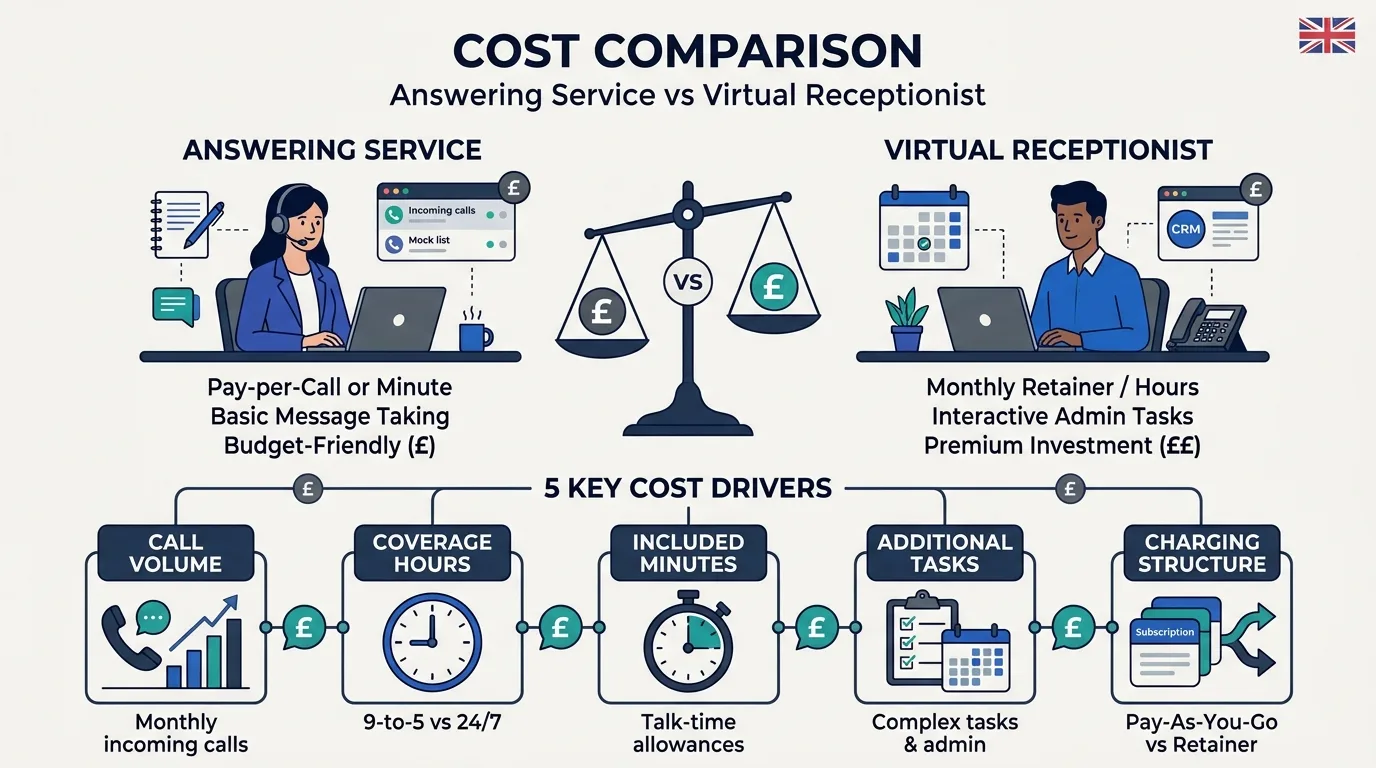
Answering services may offer straightforward pricing based on usage, making them suitable for businesses that need occasional or regular call handling without additional administrative features.
Virtual receptionist services may cost more when packages include appointment management, calendar coordination, customer support and lead qualification.
What Affects Answering Service Costs?
The main pricing factors include:
Monthly call volume.
Number of minutes included in the package.
Charges for additional calls or minutes.
Out-of-hours and weekend coverage.
Call transfer and message delivery arrangements.
Customised scripts and specialist handling requirements.
What Affects Virtual Receptionist Costs?
Virtual receptionist pricing can depend on:
Number of calls and enquiries handled.
Appointment scheduling requirements.
Calendar and software integrations.
Administrative responsibilities.
Required availability and service coverage.
Industry-specific knowledge and training.
Which Service Offers Better Value?
An answering service can offer better value when a business primarily needs reliable message-taking and call management. Paying for extensive administrative features would not necessarily provide additional value if those functions are rarely required.
A virtual receptionist can justify its higher cost when appointment scheduling, lead management and customer communication form a significant part of daily operations.
The best approach is to compare the total package cost against the time saved, responsibilities covered and customer experience delivered.
Scalability and Service Reliability
Businesses should consider how their call handling arrangements will perform as operations expand. Seasonal demand, marketing campaigns, new customers and changes in staffing can all affect incoming call volumes.
Scalability of Answering Services
Answering services can provide additional call-handling capacity without requiring a business to recruit and train permanent employees. This is particularly useful for organisations experiencing unpredictable demand or temporary increases in enquiries.
Businesses should confirm how providers manage simultaneous calls, peak periods, urgent messages and changes in call volumes.
Scalability of Virtual Receptionists
Virtual receptionists can provide broader support as administrative requirements develop. However, additional responsibilities may require more detailed instructions, software access, training and coordination.
Businesses should check whether providers can accommodate increasing appointment volumes, additional services and changing customer communication requirements.
Maintaining Reliable Customer Communication
Both services can improve communication by reducing the number of calls that go unanswered. Reliability depends on staffing arrangements, coverage hours, escalation procedures, technology and the provider’s ability to follow agreed instructions.
Before selecting a provider, ask about service availability, contingency arrangements, call reporting and procedures for urgent enquiries.
Customer Experience: Which Service Provides Better Support?
Customer experience depends on how effectively a business responds to enquiries and manages communication.
An answering service provides a professional point of contact when business owners or employees cannot answer the phone. Callers can speak to an operator, provide their details and receive confirmation that their enquiry will be passed on.
A virtual receptionist can provide a more involved interaction by assisting with appointments, answering routine questions and handling selected administrative requests.
The Importance of Personalised Call Handling
Businesses should establish clear call scripts, greeting preferences, escalation instructions and information requirements. These arrangements help maintain consistency across customer interactions.
For organisations handling sensitive or complex enquiries, it is also important to define which questions reception staff can answer and which must be referred to an authorised employee.
Reducing Missed Customer Calls
Unanswered calls can result in lost enquiries, delayed responses and poor customer experiences. Businesses should evaluate their communication arrangements before these problems affect customer relationships.
Our guide to the hidden cost of missed customer calls for UK small businesses explains how missed enquiries can affect revenue, customer retention and business operations.
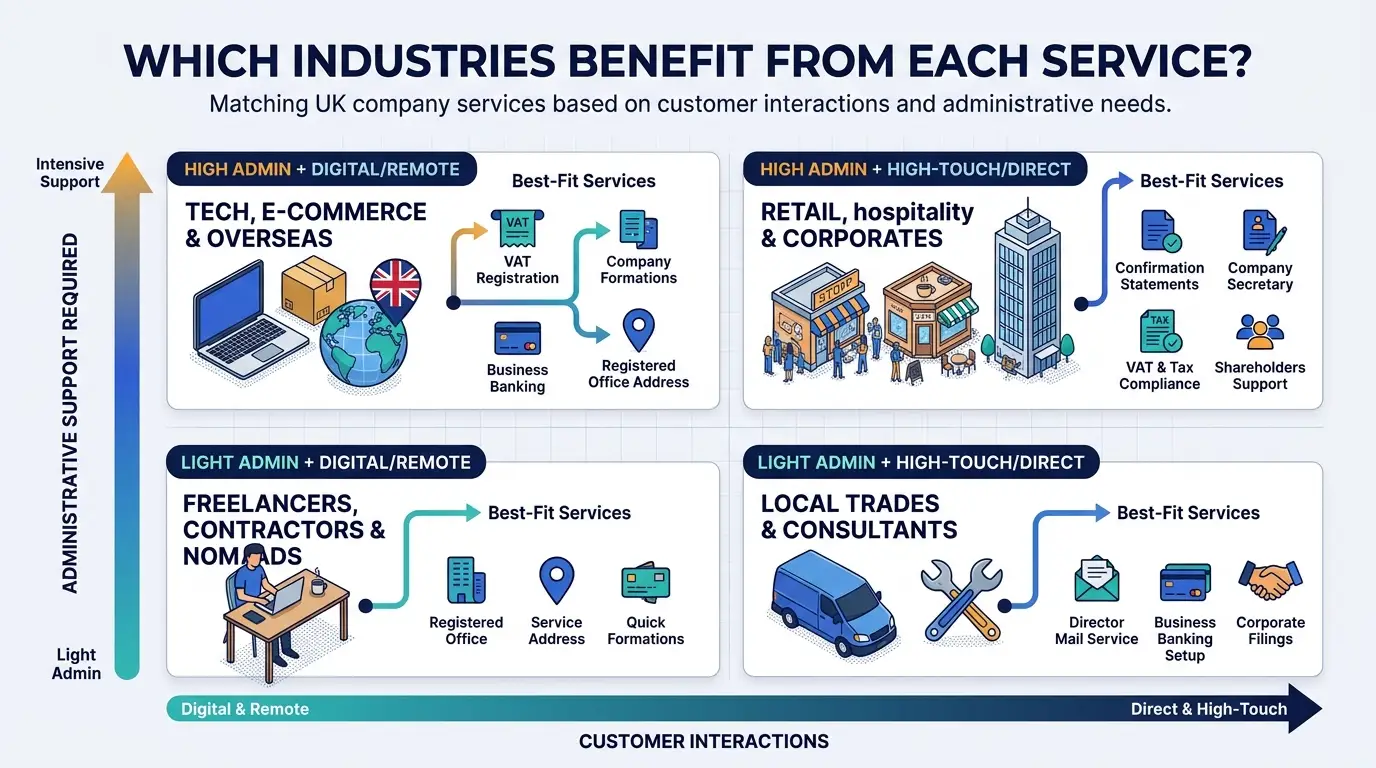
Which Industries Benefit from Each Service?
The right service depends on the nature of customer interactions and the amount of administrative support required.
Trades and Construction Businesses
Plumbers, electricians, builders and contractors often work away from their phones while completing jobs. An answering service helps capture enquiries, record job details and forward urgent requests.
A virtual receptionist may be more appropriate when the business also needs appointment coordination, quotation enquiries and customer follow-ups.
Professional Services
Accountants, consultants and legal service providers often receive detailed enquiries and appointment requests.
An answering service can handle initial messages and route calls to the relevant professional. A virtual receptionist can provide additional support by managing appointments and collecting preliminary information.
Healthcare and Private Practices
Healthcare providers frequently manage appointment requests, rescheduling and routine administrative enquiries.
A virtual receptionist may suit practices that require more extensive scheduling support. An answering service can provide additional call coverage, particularly outside normal reception hours.
Any provider handling patient information must operate under appropriate confidentiality and data protection arrangements.
Retail and E-commerce Businesses
Retailers and online businesses may receive questions about orders, deliveries, returns and product availability.
An answering service can record and forward customer enquiries. A virtual receptionist may be more suitable when the business requires broader customer support and order-related assistance.
Virtual Receptionist vs Answering Service: Which One Should You Choose?
The decision should reflect your business requirements rather than the number of features included in a package.
Choose an Answering Service If:
Your main priority is answering incoming calls.
You need professional message-taking and call forwarding.
Your employees frequently work away from the office.
You want additional coverage during busy periods.
You prefer straightforward call handling without extensive administration.
Choose a Virtual Receptionist If:
Your business regularly receives appointment requests.
You need calendar and diary management.
Customer enquiries require more detailed interaction.
Lead qualification is an important part of your sales process.
You want remote administrative and reception support.
Can a Business Use Both Services?
Yes. Some businesses use an answering service for general and out-of-hours call coverage while relying on a virtual receptionist for appointment scheduling and more detailed administrative tasks.
This arrangement can be useful when different types of enquiries require different levels of attention. However, responsibilities, call routing and escalation procedures should be clearly defined to avoid duplicated work.
How to Compare Professional Call Answering Providers
Once you understand the difference between the two services, compare providers according to their actual capabilities.
Consider these factors before making a decision:
Coverage: Confirm whether the provider offers business-hours, extended-hours, weekend or 24/7 support.
Call handling procedures: Ask how operators answer calls, record information and transfer urgent enquiries.
Customisation: Check whether the provider can follow your preferred greeting, scripts and escalation instructions.
Pricing transparency: Review included minutes, additional usage charges and any setup fees.
Technology: Check compatibility with your existing phone system and any required business software.
Reporting: Establish whether you receive call records, messages and activity reports.
Data protection: Understand how caller information is collected, stored, accessed and shared.
For a more detailed provider comparison, read our guide to the top five UK call answering services for busy founders. It examines different providers and the features businesses should consider when selecting professional call handling support.
Get Professional Call Answering Support with Form My Company
If your business needs reliable live answering, message-taking and professional call handling, Form My Company provides a dedicated solution for UK businesses.
Our professional call answering service helps businesses manage incoming enquiries without employing a full-time receptionist. It provides an additional point of contact for customers while allowing business owners and employees to concentrate on their core responsibilities.
Review your call volumes, coverage requirements and customer communication needs to determine whether a dedicated answering service is the right option.
Frequently Asked Questions
What is the difference between a virtual receptionist and an answering service?
An answering service primarily manages incoming calls, takes messages and forwards enquiries. A virtual receptionist offers broader reception support, which can include appointment scheduling, calendar management and lead qualification. The exact responsibilities depend on the provider and package.
Is an answering service cheaper than a virtual receptionist?
An answering service can be less expensive when it focuses on basic call handling and message-taking. Virtual receptionist packages may cost more because they include additional administrative responsibilities. Actual prices depend on usage, coverage and included features.
Can an answering service book appointments?
Some answering services offer appointment booking as an additional feature, but this is not included in every package. Businesses should confirm whether their chosen provider can access the required calendar and manage bookings.
Do virtual receptionists answer calls 24/7?
Availability depends on the provider and selected package. Some offer extended or round-the-clock coverage, while others operate during standard business hours. Confirm coverage before choosing a service.
Are virtual receptionists suitable for small businesses?
Yes. Small businesses can use virtual receptionists to manage incoming calls, arrange appointments and handle routine administrative enquiries without employing a full-time receptionist.
Can an answering service work with my existing phone system?
Many answering services can work with existing business telephone arrangements through call forwarding or other compatible routing methods. Confirm the technical requirements with the provider before signing up.
Which service is better for a sole trader?
An answering service is often suitable for sole traders who mainly need message-taking and call forwarding while working. A virtual receptionist may be more useful when the business regularly manages appointments, customer enquiries and administrative tasks.
Can I switch from an answering service to a virtual receptionist?
Yes. A business can move to a virtual receptionist when its administrative requirements increase. Before switching, assess the additional features, pricing, setup requirements and integration arrangements.
The choice between a virtual receptionist and an answering service comes down to the level of support your business needs. Answering services focus on live call answering, message-taking and call forwarding, while virtual receptionists provide broader administrative and reception assistance.
For businesses that primarily want to prevent missed calls, an answering service offers a straightforward solution. Organisations that regularly manage appointments, detailed customer enquiries and lead qualification may benefit more from a virtual receptionist.
Assess your daily call requirements, compare available services and choose a solution that supports your customer communication objectives as your business develops.