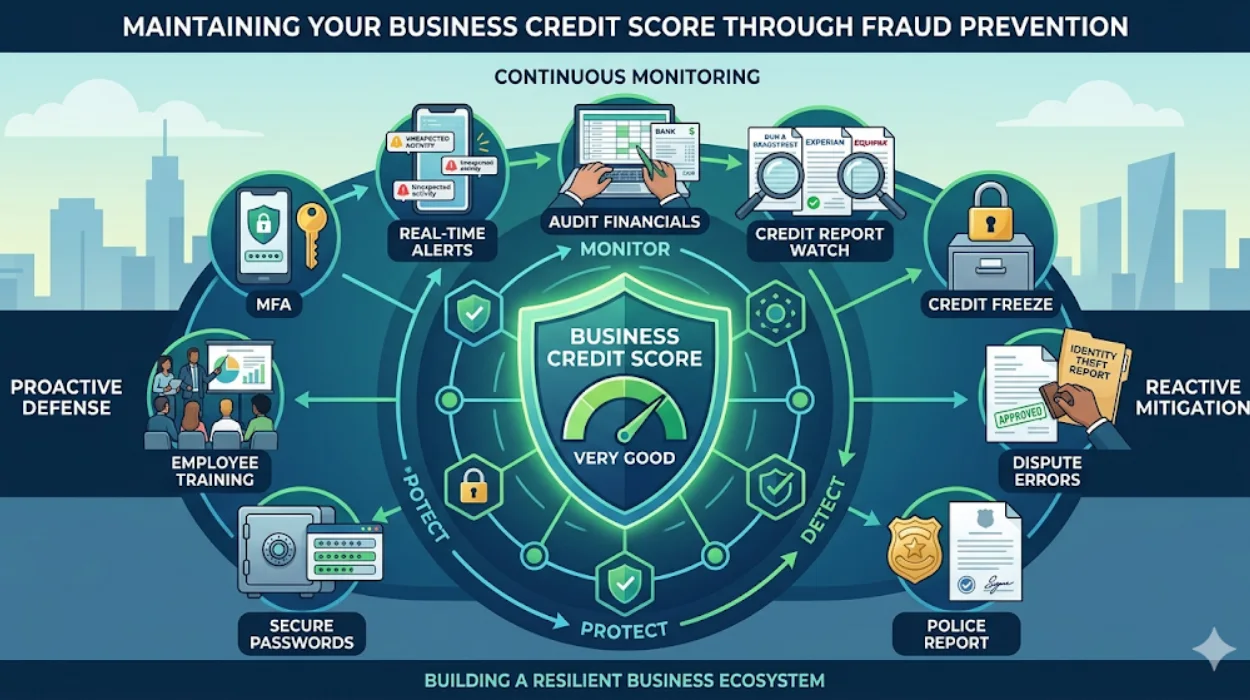
Maintaining your business credit score through fraud prevention involves proactive monitoring of credit reports, implementing robust security protocols, and swiftly addressing unauthorized activities. These steps safeguard your financial reputation and ensure long-term stability for your enterprise.
Why Fraud Threatens Business Credit
Fraud poses a significant risk to business credit scores by introducing unauthorized debts, missed payments, or negative marks that can linger on reports for years. When fraudsters exploit vulnerabilities like stolen credentials or fake filings, they can alter company records, rack up liabilities, or impersonate directors, directly impacting creditworthiness. Businesses in the UK, for instance, face heightened threats from unauthorized director changes, which can devastate credit profiles overnight.
Credit bureaus such as Experian, Equifax, and Dun & Bradstreet rely on accurate records to calculate scores. A single fraudulent incident, like an unpaid supplier invoice from a hacked account, can drop your score by 100 points or more, making loans or trade credit harder to secure. Regular vigilance turns potential disasters into manageable issues, preserving the trust lenders place in your operations.
Core Strategies for Fraud Prevention
Effective fraud prevention starts with foundational practices that create layers of defense around your business credit. Implementing strong internal controls, such as role-based access to financial systems, ensures that only authorized personnel handle sensitive data. For example, separating duties in accounting—where one employee approves transactions and another reconciles them catches irregularities early.
Employee training forms another pillar, educating staff on recognizing phishing emails or suspicious vendor requests that could lead to credit fraud. Businesses that conduct quarterly workshops see fewer incidents, as teams learn to verify unusual payment demands before processing. Complement this with secure password policies and multi-factor authentication on all business accounts to block unauthorized access at the source.
Document security cannot be overlooked; shredding physical records containing credit details prevents dumpster-diving theft, while digital encryption protects electronic files. These measures collectively maintain a clean credit history by stopping fraud before it registers on your reports.
Monitoring Credit Reports Regularly
Routine checks of business credit reports act as your first line of defense against fraud. Services from major bureaus provide alerts for new accounts or inquiries, allowing you to dispute inaccuracies within the 28-day window under UK regulations. A manufacturing firm once discovered a fraudulent loan application through weekly monitoring, freezing the account and averting a score drop.
Set up automated notifications for changes in credit utilization or payment history, which are common fraud indicators. Tools integrated with accounting software flag deviations, such as sudden spikes in trade references, prompting immediate investigation. This ongoing process not only prevents damage but also demonstrates reliability to lenders reviewing your profile.

Detecting Fraud Early to Protect Scores
Early detection hinges on real-time oversight of financial activities tied to your credit. Review bank and credit card statements weekly for unauthorized charges, which often signal broader identity theft affecting business credit. In one case, a retailer spotted irregular vendor payments early, traced them to a compromised email, and notified bureaus to block further harm.
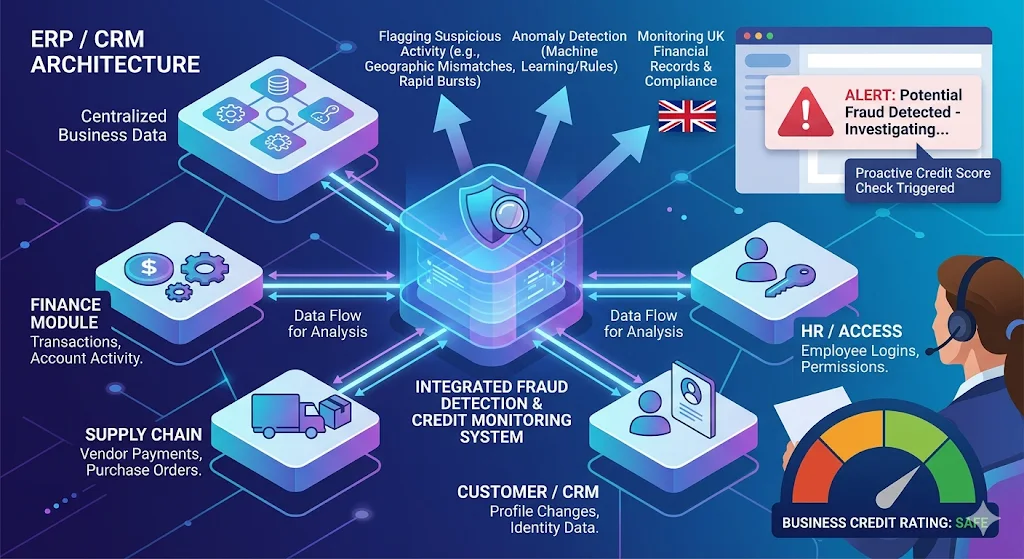
Leverage technology like machine learning-based monitoring that learns your spending patterns and flags anomalies, such as off-hours transactions or unusual merchant categories. This proactive approach minimizes the duration of fraudulent activity, limiting negative impacts on payment history—the heaviest factor in credit scoring models.
Businesses should also track Companies House filings, where unauthorized director changes can masquerade as legitimate updates, eroding credit trust. Cross-referencing filings against internal records ensures swift corrections, maintaining score integrity.
Responding to Suspected Fraud
Upon detecting fraud, act decisively to isolate and report it, preserving your credit score. Contact your bank immediately to freeze affected accounts and file a fraud report with Action Fraud in the UK, providing evidence like timestamps and IP logs. This documentation supports disputes with credit agencies, often resulting in rapid removal of erroneous marks.
Engage professional services for thorough remediation, such as Form My Company’s Fraud Protection, which offers expert monitoring and resolution to restore your business records efficiently. Their specialized protocols ensure compliance and minimize downtime, helping businesses rebound without lasting credit damage.
Building Resilient Financial Controls
Robust controls extend beyond detection to prevention through structured policies. Establish spending limits aligned with employee roles for instance, capping sales staff at £1,000 monthly while granting finance teams higher thresholds with pre-approvals. This contains potential fraud losses, protecting credit utilization ratios that influence scores.
Pre-approval workflows for high-risk categories like travel or equipment purchases add scrutiny without slowing operations. A logistics company reduced fraud exposure by 40% after mandating dual sign-offs for expenditures over £500, keeping their credit profile spotless.
Incorporate vendor locks via virtual cards for one-time use, eliminating reusable credentials that hackers target. These practices foster a secure environment where credit remains a strategic asset rather than a vulnerability.
Linking Fraud Prevention to Credit Health
Fraud prevention directly correlates with sustained credit health by avoiding the pitfalls of late payments or high debt loads from scams. Consistent on-time payments, bolstered by fraud-free operations, build a strong payment history, which comprises 35% of business credit scores per FICO models. Businesses prioritizing prevention enjoy lower interest rates and better terms from suppliers.
Understand how threats like friendly fraud where legitimate customers dispute valid charges erode scores if unresolved. Proactive resolution through clear policies maintains accuracy in trade references, a key score component.
For deeper insights into emerging risks, explore How Unauthorised Director Changes Ruin Your Business Credit, which details specific vulnerabilities in UK company structures.
Advanced Tools and Professional Support
Modern fraud detection tools integrate with ERP systems for seamless oversight, alerting teams to geographic mismatches or rapid transaction bursts. Investing in these platforms yields high ROI, as prevented losses far exceed subscription costs.
Professional services elevate protection further. Form My Company delivers tailored Fraud Protection, monitoring records 24/7 to preempt threats. Their expertise ensures compliance with UK financial regulations, safeguarding credit for growing enterprises.
To advance toward unbreakable security, consider Secure Your Business Credit Rating with 24/7 Record Monitoring, outlining implementation for optimal results.
Long-Term Benefits of Vigilance
Sustained fraud prevention enhances not just credit scores but overall business resilience. Companies with clean profiles access capital at preferential rates, fueling expansion without equity dilution. A tech startup maintained a 85+ score through diligent practices, securing venture debt at 2% below market averages.
This discipline signals professionalism to stakeholders, from banks to partners, fostering opportunities that fuel growth. Over time, it creates a virtuous cycle where strong credit attracts favorable terms, reinforcing prevention efforts.
Form My Company provides professional Fraud Protection solutions that align these strategies with your operations, ensuring your business credit score remains a cornerstone of success. With their support, UK businesses navigate fraud landscapes confidently, focusing on innovation rather than defense.
What is Fraud Protection for businesses?
Fraud Protection involves monitoring business records, credit reports, and Companies House filings to detect and prevent unauthorized changes or fraudulent activities. From My Company’s Fraud Protection service provides real-time alerts and expert intervention to safeguard your company’s financial integrity and credit score.
How does fraud affect a business credit score?
Fraud can introduce unauthorized debts, missed payments, or negative marks on credit reports, potentially dropping scores by 100 points or more. From My Company’s Fraud Protection helps by identifying issues early, enabling quick disputes to minimize long-term damage to your business credit profile.
What are common types of business fraud to watch for?
Common types include unauthorized director changes, phishing scams, invoice fraud, and identity theft that lead to fake accounts or filings. From My Company’s Fraud Protection service scans for these risks across key registries, ensuring proactive defense against threats targeting UK businesses.
How can businesses prevent fraud on Companies House records?
Businesses prevent fraud by enabling statement of capital protections, using secure filing protocols, and monitoring for suspicious updates. From My Company’s Fraud Protection offers dedicated oversight of Companies House activity, alerting you to irregularities before they impact operations or credit.
Why choose professional Fraud Protection services?
Professional services provide 24/7 monitoring, compliance expertise, and rapid response that internal efforts often lack, reducing fraud resolution time. From My Company’s Fraud Protection delivers tailored solutions for UK firms, combining technology and specialist support to maintain secure business records.