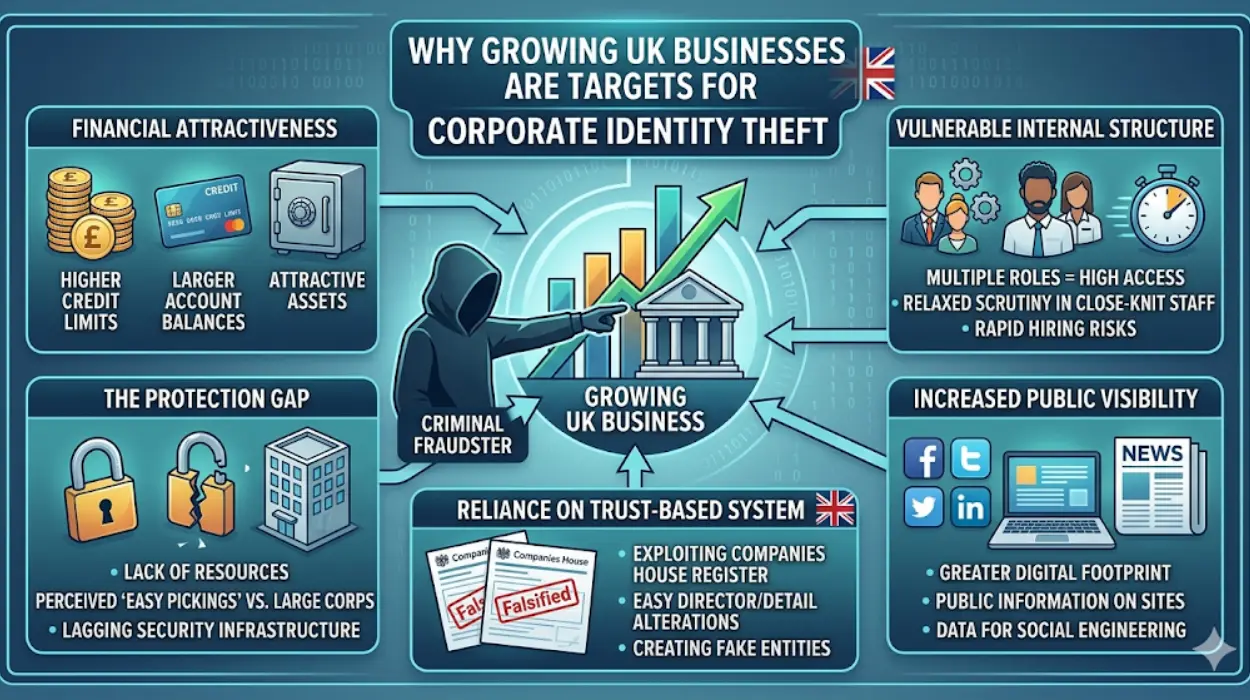
Growing businesses are prime targets for corporate identity theft because their public visibility increases faster than their fraud defences. As brand recognition rises, dishonest actors exploit company information to impersonate the business, access credit, or deceive clients and suppliers.
Rapid expansion brings opportunities but also risks. In today’s digital-first economy, every registered company leaves a trail of public data, and criminals have learned to weaponize it. Understanding why your business becomes vulnerable as it scales is key to preventing corporate identity fraud before costly damage occurs.
The Rise of Corporate Identity Theft in the UK
Corporate identity theft is one of the fastest-growing forms of business fraud in the UK. It occurs when criminals steal or misuse a company’s details such as its name, Companies House number, or directors’ information to create fake accounts, clone websites, or apply for credit. According to Action Fraud data, corporate impersonation reports have surged in recent years, primarily affecting SMEs and scaling enterprises.
When smaller businesses begin to grow, they often gain just enough public exposure to become targets, but not enough operational maturity to establish full fraud protection processes. Fraudsters exploit this transitional stage, blending social engineering, digital impersonation, and administrative manipulation to commit financial or reputational harm.

Why Growth Attracts Fraudsters
The link between business growth and fraud risk lies in visibility and data exposure. Several factors make expanding firms especially vulnerable:
- Public Listings and Transparency Obligations: UK companies must file official information with Companies House, including registered addresses and director names. Fraudsters can easily access these details to create false records or replicate documents.
- Rapid Staff Expansion and Process Gaps: As headcount grows, verification protocols and access controls often lag. Mistakes in document handling or supplier verification create loopholes.
- Increased Online Presence: A strong marketing push new domain names, social ads, directory profiles—generates trust signals that criminals can hijack through fake websites or cloned social accounts.
- Higher Creditworthiness: A growing business typically has better cash flow and credit limits, making it an appealing target for fraudulent credit applications.
This combination makes expansion phases a “sweet spot” for financial criminals. They prefer businesses that look trustworthy but aren’t yet fully fortified.
How Corporate Identity Theft Works
Corporate identity theft doesn’t usually begin with a data breach. Instead, it begins with open-source intelligence—the information your company already shares publicly. Criminals collect those details to craft convincing imitations.
Example: A fraudster might use a company’s registration number and legitimate address to open supplier accounts or invoice clients in the real company’s name. Another may alter the registered office on Companies House, redirecting correspondence and intercepting sensitive mail.
From these simple steps, identity theft can spiral:
- Cloned websites inviting unsuspecting clients to transfer funds
- Emails designed to trick partners into paying false invoices
- Credit applications made to lenders in the company’s name
Each incident can undermine years of work in building trust and brand integrity.
The Financial and Reputational Impact
The immediate financial loss from identity theft can be serious unpaid loans, fraudulent transactions, or frozen bank accounts but the reputational damage often lasts longer. Clients who once trusted your invoices or correspondence may become cautious. Suppliers could tighten payment terms. Regulatory questions might follow if stolen data or fraudulent activities implicate your company name.
In a competitive UK market, reputation is currency. Rebuilding it after fraud requires significant time, resources, and transparent communication. This is why proactive fraud protection isn’t optional; it’s fundamental to sustainable growth.
Detecting Corporate Identity Fraud Early
Early detection significantly reduces damage. Warning signs include:
- Unexpected changes recorded at Companies House (e.g., address or director details without authorization)
- Clients reporting unfamiliar contacts claiming to represent your company
- Suspicious credit checks or account openings you didn’t initiate
- Duplicate social media or website listings
By monitoring official company data and digital channels, businesses can spot unusual activity before losses accumulate. Services like Fraud Protection from Form My Company provide systematic oversight, instantly alerting directors to unauthorized filings or impersonation attempts before harm occurs.
The Regulatory Environment: Transparency vs. Exposure
UK regulations emphasise corporate transparency to support accountability and combat money laundering. However, that openness has unintended side effects. Publicly available information while beneficial for investors can also expose sensitive data to misuse by fraudsters.
Even a simple address change or director addition filed inaccurately (or maliciously) can trigger confusion. Without active monitoring, companies might not notice until financial discrepancies surface. This tension between regulatory compliance and fraud exposure defines the modern identity protection challenge.
Building a Robust Fraud-Prevention Framework
Securing your company identity requires integrating governance, technology, and oversight into daily business operations. Key protective measures include:
- Active Companies House Monitoring: Use digital monitoring tools to receive real-time alerts for any changes to your company’s registered details.
- Identity Verification for Staff and Suppliers: Regularly update onboarding and access verification protocols.
- Secure Communication Channels: Authenticate all client and supplier correspondence using domain-level email security to prevent spoofing.
- Financial Oversight: Regularly review company bank accounts and credit reports to detect unauthorized credit lines.
These steps align with professional safeguards available through structured services like Form My Company’s Fraud Protection package, designed for growing UK businesses that need automated alerts and digital identity monitoring.
Technology and the Fraud Arms Race
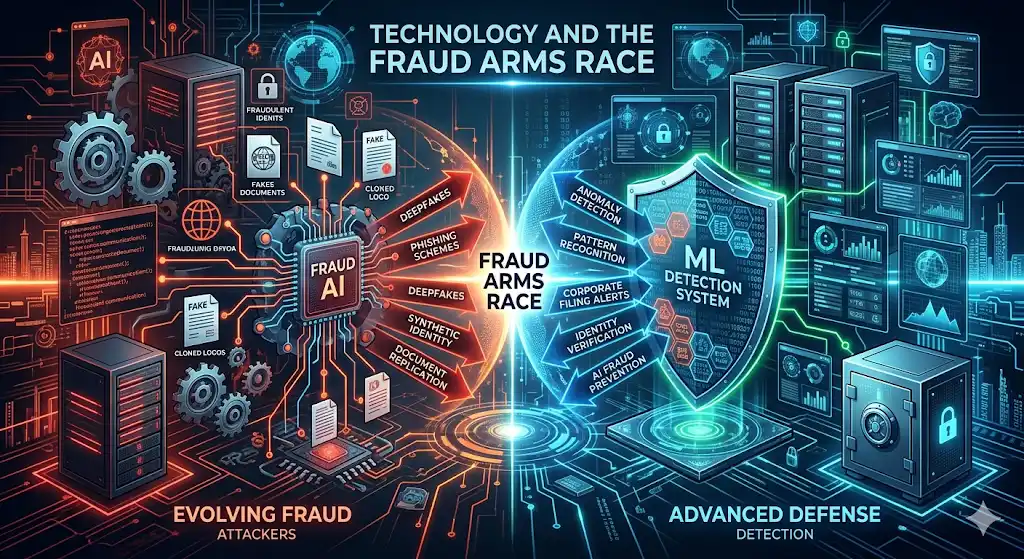
The digitalization of corporate operations has accelerated both business growth and fraud sophistication. Artificial intelligence tools can now replicate logos, copy documentation styles, and mirror authentic communication patterns. Conversely, fraud detection systems increasingly rely on machine learning to detect anomalies.
For instance, enterprise-grade fraud alerts available through advanced platforms such as those described in
Scaling Your Business Safely with Enterprise-Grade Fraud Alerts
use algorithms to analyse corporate filing patterns and flag irregular updates that might signal impersonation. As threats evolve, proactive adoption of such technology becomes an essential part of corporate governance.
Why Many Businesses Still Underestimate the Risk
Despite rising reports, many UK directors assume identity theft targets only large corporations. In truth, smaller but expanding businesses represent the easiest and most profitable targets. Fraudsters prefer companies that are big enough to hold credibility but small enough not to maintain dedicated compliance or cybersecurity teams.
Overlooking fraud protection often stems from resource prioritization funds flow toward marketing, operations, or expansion rather than compliance. Unfortunately, once an identity theft event occurs, recovery costs can exceed the sum of years of preventive investment. This asymmetry underpins the business case for continuous monitoring through specialized third-party services.
Linking Growth and Governance
As an enterprise scales, its leadership must evolve from reactive management to structured governance. Fraud prevention sits at the heart of that transformation. A company that scales safely not only grows revenue but also maintains integrity and stakeholder confidence.
Integrating fraud protection doesn’t slow progress it enables it. When your team knows your registration details, online identity, and client-facing channels are secured, they can focus on productivity and innovation instead of crisis response. The visibility and trust that attract customers should not simultaneously attract fraud.
Professional Solutions for a Digital Era
Form My Company (FMC) helps UK businesses maintain their operational integrity throughout the growth lifecycle. Through its Fraud Protection service, FMC provides real-time identity monitoring, instant alerts on filing changes, and guided resolution for corporate impersonation risks. These features support business owners who aim to expand securely.
For directors planning their next growth milestone, it’s worth reviewing advanced alert systems and governance automation like those outlined in
Upgrade to Ultimate Fraud Protection for Your Growing UK Company.
Investing early prevents reputational damage later, reinforcing long-term trust with stakeholders and clients.
A Secure Path to Sustainable Growth
Corporate identity theft is not an isolated risk it’s a structural byproduct of visibility and trust. The moment your company becomes known, it also becomes imitable. By combining constant monitoring, secure verification, and professional guidance from specialists like Form My Company, scaling businesses can close the gap between growth and governance.
When expansion meets protection, confidence becomes your greatest asset.
What is corporate fraud protection and why is it important for UK businesses?
Corporate fraud protection helps UK businesses detect, prevent, and respond to identity theft, financial scams, and unauthorised filings. From My Company’s Fraud Protection service safeguards company data and ensures that any suspicious activity is identified before it harms the business.
How does From My Company’s Fraud Protection work?
From My Company’s Fraud Protection monitors company information filed with official registries such as Companies House and alerts directors to any unauthorised changes. This real-time surveillance helps prevent fraudulent use of company details or false directorship filings.
What are common signs that a company may need fraud protection?
Warning signs include unexpected changes to company records, unknown credit checks, or clients receiving fake communications under the company’s name. Implementing a service like From My Company’s Fraud Protection helps identify and stop these issues early.
Can Fraud Protection prevent corporate identity theft completely?
While no system can guarantee total prevention, Fraud Protection from From My Company greatly reduces risk by continuously tracking official records and alerting you to irregular activity. Early detection allows businesses to act fast and secure their corporate identity.
Who should use From My Company’s Fraud Protection service?
Fraud Protection is essential for growing UK businesses, directors, and entrepreneurs who publicly register company information. It helps protect expanding firms from identity misuse, false filings, and financial fraud as they gain visibility and credibility.