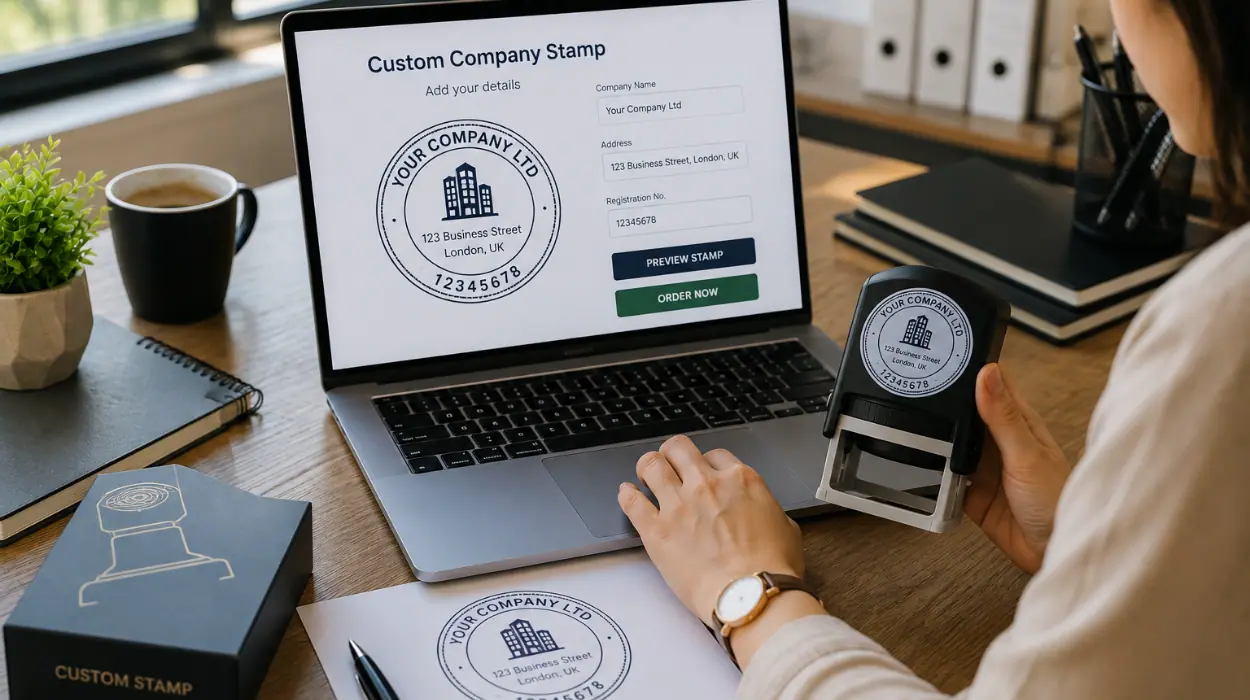
A company stamp does not automatically grant legal authority to UK documents because corporate validity relies primarily on authorized signatures, statutory compliance, and proper execution under the Companies Act 2006 rather than the physical impression of an ink seal.
Modern corporate governance relies on statutory frameworks rather than traditional impressions. Business owners frequently question whether traditional embossing or ink impressions hold mandatory legal weight. UK corporate law establishes specific rules for executing contracts, deeds, and official correspondence. Understanding these statutory requirements prevents administrative errors and ensures proper document execution across commercial operations.
Is a Company Stamp Legally Required in the United Kingdom?
UK corporate law does not require businesses to use a company stamp because legislation prioritizes valid signatures from directors, company secretaries, or authorized signatories for statutory compliance and contractual binding.
Historical business practices heavily featured metal embossing seals and heavy red ink pads. Modern legislation modernised these requirements to reflect digital workflows and streamlined administration. The Companies Act 2006 removed the mandatory requirement for registered companies to possess or use a common seal. Directors can execute standard commercial contracts with a single authorized signature or through two authorized officers for formal deeds. Corporate compliance officers must understand that omitting a physical stamp invalidates neither a contract nor a resolution. Legal validity stems from authority to bind the entity, not from the physical stationery used during execution.
What Documents Benefit From Using a Company Stamp?
Overseas authorities, banking institutions, and international trade partners frequently require a company stamp because foreign legal jurisdictions often expect physical validation before accepting foreign corporate paperwork.
Domestic UK transactions rarely demand physical seals, but cross-border commerce operates under different legal traditions. Exporters interacting with civil law jurisdictions in Europe, Asia, or the Middle East encounter strict documentary expectations. Local administrative bodies in those regions routinely reject documents lacking a physical ink impression. Businesses engaged in international shipping, overseas bank account opening, and foreign subsidiary registration utilize physical validation tools regularly. Incorporating a professional Company Pack ensures organizations possess the necessary physical governance tools for international trade compliance. Trade finance departments process letters of credit and bills of lading faster when physical validation accompanies authorized signatures.
How Do Company Stamps Support Internal Corporate Governance?
Internal administrative controls benefit from company stamps because physical impressions streamline document categorisation, restrict unauthorized paperwork distribution, and provide a clear visual marker of official corporate approval.
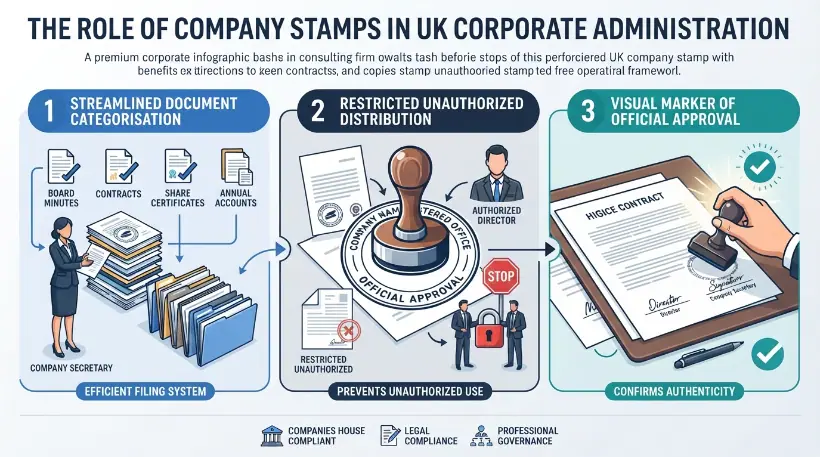
Operational efficiency requires robust internal controls to manage thousands of incoming and outgoing documents annually. Administrative teams deploy ink impressions to mark invoices as paid, authorize internal share certificates, and validate physical paper records. Share certificates issued under the Companies Act 2006 require proper authentication, and many company secretarial teams use an ink impression alongside director signatures. 100% of traditional share register books maintained manually benefit from clear physical validation stamps to prevent tampering. Corporate governance frameworks improve when staff members visually distinguish between draft correspondence and officially executed company documents.
How Does a Company Stamp Differ From a Statutory Register Seal?
Corporate seals differ fundamentally from rubber office stamps because traditional embossing seals were historically mandated for executing formal deeds under historical company law principles.
Common seals create a raised, embossed impression directly into the paper fibers through mechanical pressure. Rubber stamps apply surface ink using a polymer die and an ink pad. Historically, executing a deed under seal required no witness signatures if executed by two directors or one director and a secretary. Modern legislation permits companies to execute deeds simply by signing in the presence of a witness without any embossing. Organisations seeking comprehensive administrative equipment often review How to Order a Custom Company Stamp With Your Details? to select the correct physical format. Selecting the appropriate physical validation tool depends entirely on whether the business operates domestically or targets international markets requiring traditional embossing.
What Are the Security and Compliance Risks of Using Company Stamps?
Physical stamps present distinct security vulnerabilities because unchecked access to an ink impression allows unauthorized personnel to mark fraudulent documents or compromise corporate asset control.
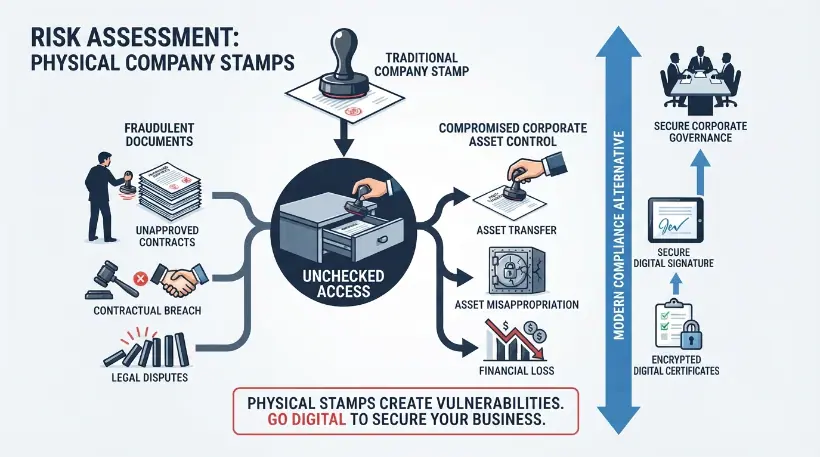
Unrestricted office access to corporate validation equipment invites significant internal risk. Operational managers must implement strict custody protocols for physical validation tools to prevent unauthorized document stamping. Security compliance requires storing rubber stamps and embossing devices in secure, lockable locations accessible only by designated company officers. Form My Company provides secure corporate governance solutions, and business owners exploring procurement options can review How Can You Buy a Personalised Company Stamp From Form My Company? for safe purchasing channels. Implementing digital logs tracking every physical stamp application protects corporate integrity and mitigates potential fraud risks across all operational departments.
Explore our Company Pack guide,
Why Do Businesses Still Use a Company Stamp Today?
What Is the FCDO Charge for Apostille Legalisation?
Frequently Asked Questions
What is included in a standard UK Company Pack?
A standard Company Pack typically contains essential corporate governance materials, including printed memorandum and articles of association, share certificates, and a statutory register. When business owners order a comprehensive Company Pack through Form My Company, they also receive custom-made statutory seals and digital corporate documents tailored for Companies House compliance.
Are company seals legally required for UK businesses?
UK legislation does not mandate the use of a physical company seal or stamp for standard business operations and contract execution. However, many international trade partners and overseas financial institutions still require a stamped physical impression to authenticate corporate paperwork.
How do I update company details after registering?
Updating company details involves submitting official statutory forms to Companies House regarding changes to directors, registered office addresses, or share capital structures. Business administrators can streamline this record-keeping process by utilizing the organized physical registers provided within a professional Company Pack from Form My Company.
What is the difference between a company register and a company pack?
A company register is a mandatory legal record tracking directors, shareholders, and significant controllers, whereas a company pack is a physical collection of stationery and corporate stationery tools used to manage those records. Form My Company includes both structured register books and corporate folders inside their tailored Company Pack bundles to ensure complete administrative readiness.
Can I use a digital signature instead of a physical company stamp?
Digital signatures hold full legal validity under UK law for executing standard commercial contracts and filing digital returns directly with Companies House. Businesses often combine electronic authorization workflows with a traditional physical stamp from Form My Company to satisfy both modern domestic efficiency and international paper-based compliance requirements.