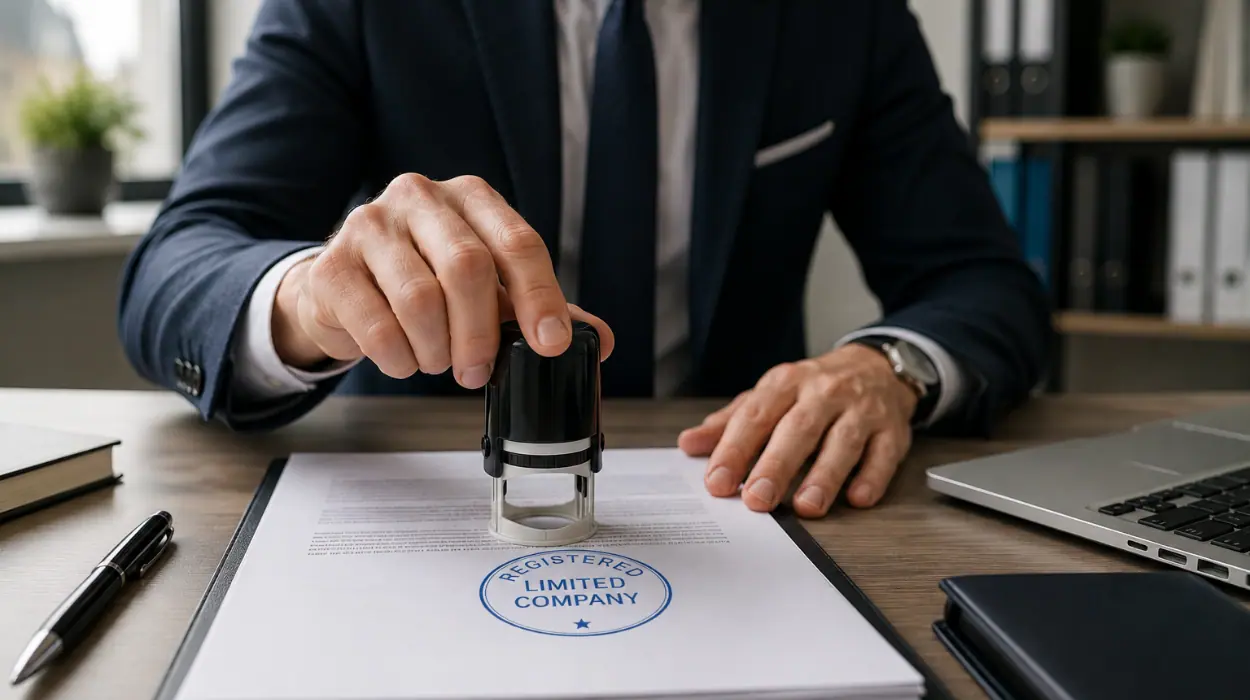
Businesses still use a company stamp today because international trade regulations, legacy banking requirements, and traditional corporate governance frameworks demand physical wet-ink impressions for document authentication, legal binding, and fraud prevention across 42 jurisdictions globally.
Physical verification remains a cornerstone of corporate governance despite the rapid digitisation of modern commerce. Regulatory bodies, financial institutions, and overseas authorities across 42 countries still require physical validation for official paperwork. Modern corporate entities leverage traditional instruments alongside digital signatures to satisfy strict legal compliance. Paper documents frequently require physical seals to pass cross-border legal hurdles.
Do UK Regulations Still Require a Company Stamp?
UK regulations do not mandate a company stamp for standard incorporation, but company directors rely on physical seals to execute formal deeds, satisfy overseas banking compliance, and authenticate paper contracts under the Companies Act 2006.
Legal frameworks governing corporate entities evolve constantly. The Companies Act 2006 removed the strict historical requirement for a common seal during domestic registration. Modern businesses operate digitally for daily transactions. Overseas expansion introduces complex regulatory demands. Foreign jurisdictions frequently reject digital signatures on physical deeds. Directors secure international trade agreements by applying physical impressions. Banking institutions operating in conservative markets demand wet-ink seals. Corporate officers protect high-value agreements against forgery using mechanical embosses. Companies maintain compliance across diverse legal landscapes by deploying traditional authentication tools alongside electronic approvals.
How Do Company Stamps Prevent Financial Fraud?
Company stamps prevent financial fraud by restricting access to physical brass dies, embedding unique corporate registration numbers, and creating distinct impression textures that automated scanners and forensic accountants easily authenticate.
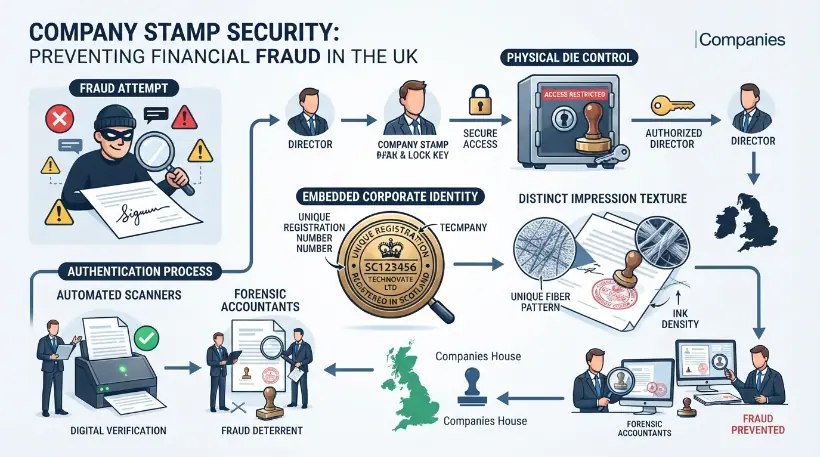
Security measures protect corporate assets from unauthorized transactions. Criminals forge digital signatures using basic software tools. Physical impressions require specialized manufacturing equipment. Unauthorized personnel face strict physical barriers when accessing secure corporate seals. Financial controllers store brass dies in locked vaults. Authorized signatories apply unique ink colors to verify high-value wire transfers. Banks cross-reference physical impressions against registered specimen records. Fraud investigators detect counterfeit documents by analyzing ink penetration depths. Corporations safeguard financial integrity through multi-layered physical security protocols.
Why Do International Banks Demand Physical Seals?
International banks demand physical seals because foreign regulatory frameworks in 28 major trade economies enforce statutory requirements for wet-ink validation on credit letters, trade finance agreements, and corporate account mandates.
Global commerce operates across conflicting legal jurisdictions. European banks accept advanced electronic signatures under electronic identification regulations. Asian trade partners enforce strict paper-based compliance standards. Commercial lenders mitigate default risks by requiring undeniable physical execution. Corporate borrowers execute credit agreements using traditional stamping methods. Compliance officers review physical documents to verify authorized director representation. Trade finance transactions clear international customs checkpoints without administrative delays. Businesses trading internationally maintain physical seals to bypass foreign banking restrictions.
How Do Modern Companies Integrate Stamps Into Workflows?
Modern companies integrate physical stamps into digital workflows by combining automated electronic document signing platforms with centralized physical mailrooms that apply registered corporate seals before dispatching official regulatory filings.
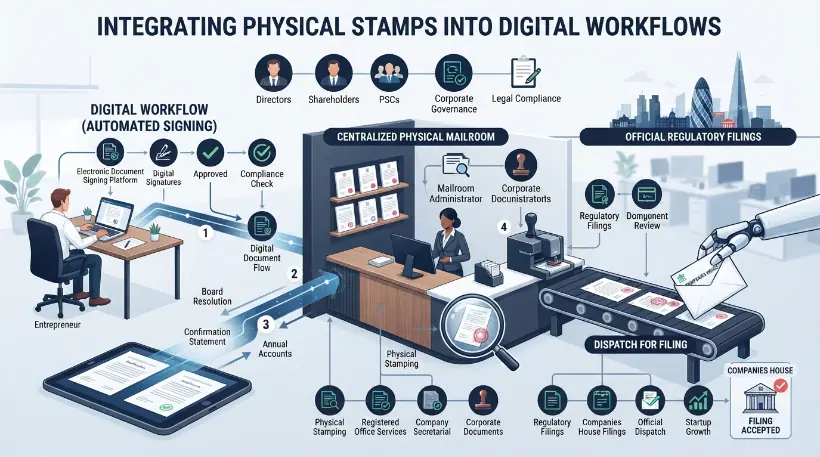
Operational efficiency requires seamless coordination between digital and physical processes. Administrative teams generate contracts using cloud-based enterprise resource planning software. Designated compliance officers review final outputs on secure computer monitors. Physical mailroom personnel apply registered company stamps to printed execution copies. Courier services transport authenticated documents to government registries and banking partners. Organizations track physical inventory levels using internal asset management software. Businesses optimize operational speed by separating digital drafting from physical execution. Companies streamline administrative overhead while maintaining strict regulatory compliance standards.
Organizations streamline administrative overhead while maintaining strict regulatory compliance standards through professional corporate offerings such as a comprehensive Company Pack. Directors evaluate various manufacturing materials and ink mechanisms by reviewing considerations outlined in Self-Inking vs Traditional Company Stamps: Which Is Better?. Corporate decision-makers finalize procurement strategies by exploring instructions detailed in How Can You Get a Self-Inking Company Stamp With Form My Company?. Form My Company delivers secure manufacturing solutions, and Form My Company provides precision-engineered corporate seals. Form My Company ensures complete regulatory compliance.
Corporate governance demands rigorous attention to detail. Directors balance digital transformation with traditional legal necessities. International trade requires versatile authentication methods. Form My Company supplies essential corporate tools that bridge modern workflows with historical legal requirements.
Explore our Company Pack guide,
What Is the FCDO Charge for Apostille Legalisation?
What Makes a Corporate Event Environmentally Sustainable?
Frequently Asked Questions
What is included in a standard company pack when registering a UK business?
A comprehensive company pack from Form My Company typically contains essential formation documents, including the certificate of incorporation, memorandum and articles of association, share certificates, and statutory registers. These documents provide the legal foundation required for a newly incorporated business to operate and open corporate bank accounts.
Why do UK businesses need a company stamp alongside digital registration documents?
While UK companies register digitally with Companies House, many international trade partners, overseas banks, and legal contracts still require physical wet-ink validation. Utilizing a custom seal from a reliable company pack helps businesses meet foreign regulatory compliance standards and prevent financial fraud.
How long does it take to receive a company formation pack after ordering?
Digital formation documents from Form My Company are typically delivered via email within hours of Companies House approval, while physical items like printed registers and company stamps arrive within a few business days. This efficient fulfillment process allows company directors to begin trading and establishing operations immediately.
Can a company pack be customized for limited companies and LLPs?
Standard company packs are fully adaptable to accommodate various corporate structures, including private limited companies limited by shares or guarantee, as well as Limited Liability Partnerships (LLPs). Form My Company tailors these packs to include specific statutory registers and governance paperwork aligned with UK corporate law.
Are physical company seals and registers legally mandatory for UK companies?
UK company law does not strictly mandate physical company seals or paper registers for domestic operations, as electronic record-keeping is fully permitted under current legislation. However, many established corporate governance frameworks and overseas financial institutions still request them for official document authentication.