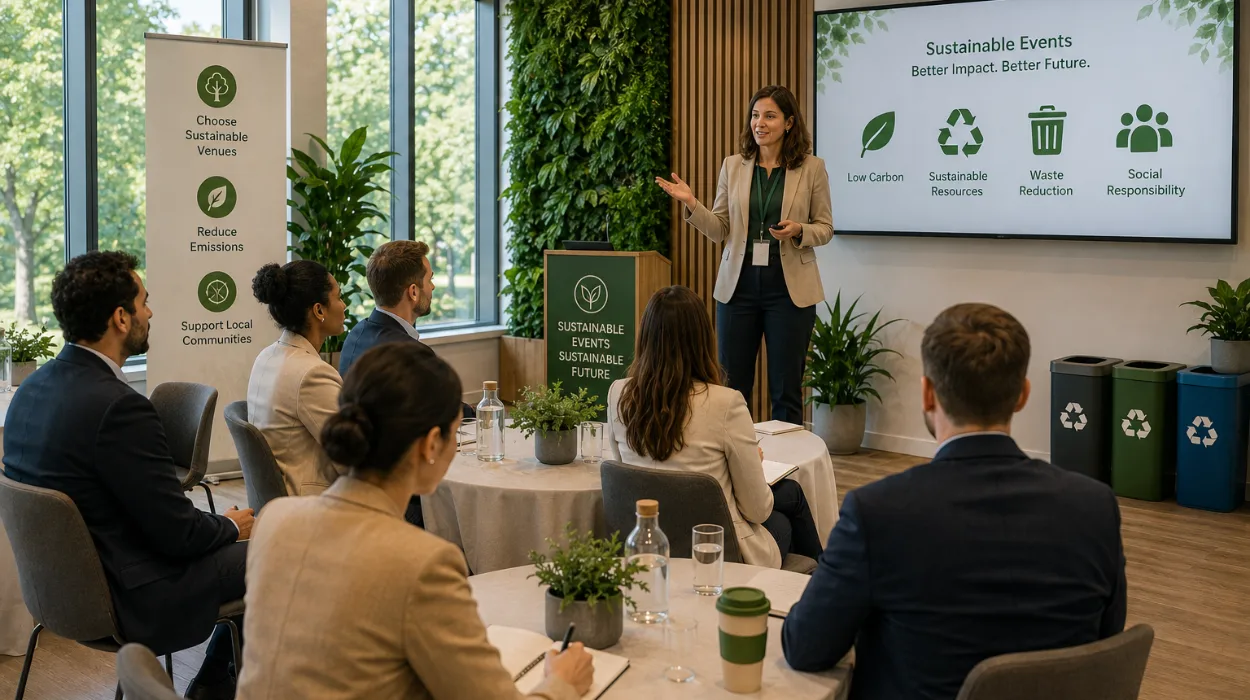
A corporate event environment achieves environmental sustainability by prioritizing zero waste generation, sourcing 100% renewable energy, utilizing locally sourced plant-based catering, eliminating single-use plastics, and selecting certified venues that strictly enforce carbon reduction policies across all operations.
Achieving a truly sustainable corporate event requires careful planning across every operational touchpoint. Modern organizations face increasing pressure to reduce their ecological footprint during large gatherings. Sustainable event management replaces traditional resource-heavy practices with circular economy principles. Planners evaluate venue efficiency, waste management protocols, and supply chain transparency to minimize environmental degradation. Implementing these eco-friendly measures protects natural ecosystems while enhancing corporate brand reputation among conscious consumers.
How Do Venues Achieve Zero Waste Goals?
Venues achieve zero waste goals by diverting 90% or more of all event materials away from landfills through mandatory on-site composting, rigorous recycling streams, digital signage replacements, and strict vendor take-back agreements for all decorative installations.
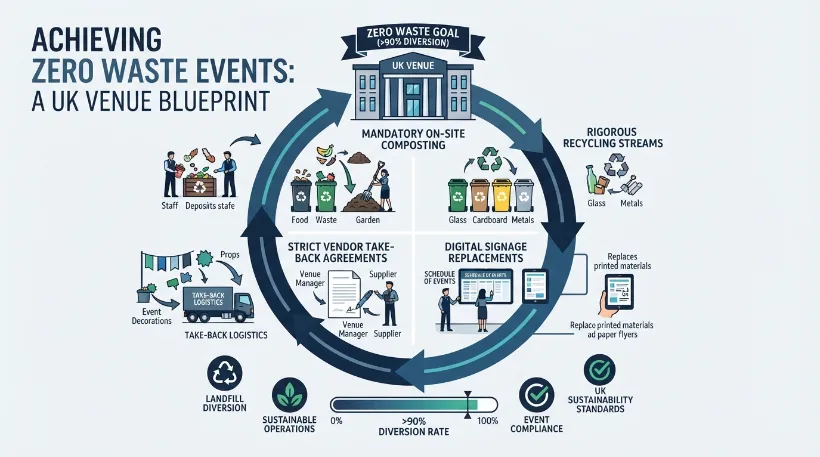
Waste reduction forms the foundation of any green corporate gathering. Traditional conferences generate mountains of discarded paper, plastic badge holders, and leftover promotional merchandise. Sustainable venues replace physical brochures with QR codes and digital apps. Event organizers partner with local recycling facilities to process organic food waste into nutrient-rich compost. Vendors must sign zero-waste contracts that prohibit bringing non-recyclable packaging onto the premises. These strict protocols ensure that materials remain in productive use rather than polluting local landfills.
Why Is Renewable Energy Essential for Events?
Renewable energy is essential for corporate events because electricity generation accounts for 45% of total venue carbon emissions, making solar, wind, and geothermal power sources mandatory for achieving verified net-zero operational status.
Power consumption represents a major environmental hurdle for large-scale business gatherings. Standard power grids rely heavily on fossil fuels that release massive quantities of carbon dioxide into the atmosphere. Sustainable event planners select facilities powered exclusively by certified green energy providers. Smart building management systems monitor real-time electricity usage to prevent unnecessary waste during breakout sessions. Facilities supplement grid power with on-site solar panel installations and battery storage units. These renewable power systems guarantee that every kilowatt consumed aligns with corporate climate commitments.
How Does Sustainable Catering Reduce Emissions?
Sustainable catering reduces emissions by sourcing ingredients within a 50-mile radius, serving 80% plant-based menus, utilizing biodegradable serviceware, and donating surplus edible meals to local food banks within two hours of event completion.
Food production and distribution generate significant greenhouse gas emissions globally. Green catering operations prioritize seasonal, organic produce grown by regional farmers to eliminate long-distance transport emissions. Chefs design menus that highlight plant-based proteins, reducing the massive water and land footprints associated with livestock farming. Kitchen staff measure food preparation quantities precisely to eliminate overproduction. Any unavoidable food waste undergoes anaerobic digestion to generate renewable biogas. This closed-loop culinary approach satisfies attendees while protecting agricultural ecosystems.
What Defines Eco-Friendly Venue Infrastructure?
Eco-friendly venue infrastructure is defined by high-performance building certifications like BREEAM Outstanding, integrated rainwater harvesting systems, energy-efficient LED lighting networks, and high-efficiency particulate air filtration systems that optimize indoor environmental quality.
The physical building hosting a corporate gathering dictates its baseline environmental impact. Modern green venues feature intelligent climate control systems that adjust temperatures automatically based on room occupancy. Low-flow plumbing fixtures reduce water consumption by 40% compared to standard commercial buildings. Natural daylight integration minimizes the need for artificial lighting during daytime workshops. Facilities utilize non-toxic, biodegradable cleaning products to maintain pristine interiors without releasing harmful volatile organic compounds into the air. These architectural features prove that commercial spaces can operate in harmony with nature.
When hosting strategic discussions, choosing a high-performance space matters just as much as overall venue selection. Organizations can book professional corporate conference rooms equipped with smart energy management and sustainable infrastructure to ensure low-impact business operations. Evaluating these physical spaces helps teams maintain strict environmental standards throughout every meeting.
How Do Smart Logistics Lower Carbon Footprints?
Smart logistics lower carbon footprints by enforcing centralized group transportation, utilizing electric shuttle fleets, selecting centrally located public transit hubs, and mandating remote-first hybrid attendance options for international delegates.
Travel and transit contribute the largest share of greenhouse gas emissions for corporate events. Sustainable logistics frameworks replace individual car rentals with high-capacity electric buses and hybrid shuttles. Planners choose venues situated within walking distance of major railway stations and underground transit networks. Digital broadcasting platforms allow remote participants to join keynotes without boarding commercial aircraft. Event coordinators calculate total travel emissions using precise carbon accounting software to purchase verified offsets. These coordinated transit strategies drastically curb the atmospheric impact of business travel.
For deeper insights into vetting eco-friendly properties, read our guide on how to choose a sustainable conference venue for your business to evaluate energy ratings and waste policies effectively. Understanding these evaluation criteria allows procurement teams to make informed decisions before signing venue contracts.
How Can Businesses Verify Event Sustainability Claims?
Businesses verify event sustainability claims by auditing third-party environmental certifications, requiring ISO 20121 event sustainability management compliance, reviewing transparent supply chain documentation, and requesting independent post-event carbon audit reports.
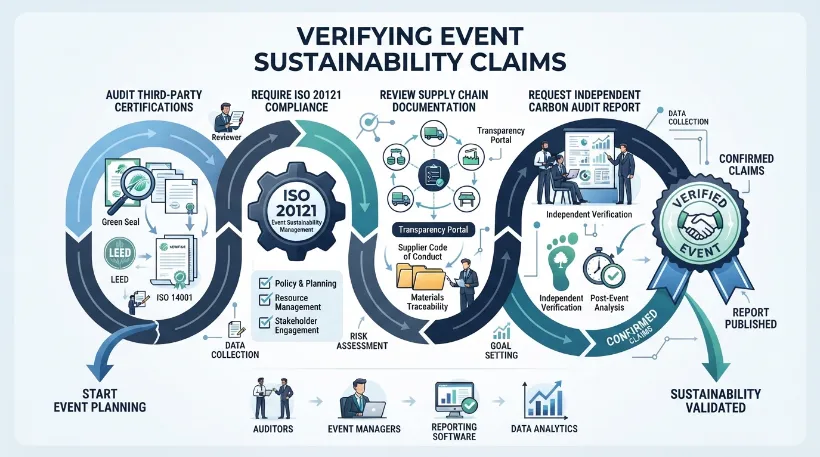
Greenwashing remains a persistent challenge in the modern corporate events industry. Rigorous verification protocols protect organizations from partnering with vendors that make unproven environmental claims. Compliance officers examine official documentation from recognized bodies like the Global Destination Sustainability Index. Independent auditors inspect waste logs, energy bills, and local sourcing receipts after the event concludes. Procurement teams use these verified metrics to compile accurate environmental, social, and governance disclosure reports for stakeholders. Form My Company assists enterprises in meeting these strict standards by providing fully compliant, eco-conscious corporate spaces that streamline sustainability tracking.
Ready to elevate your next corporate gathering while meeting net-zero targets? Explore our guide on how to book sustainable conference rooms with Form My Company to secure verified green spaces for your upcoming business events. Implementing these sustainable practices ensures long-term environmental stewardship for every organization.
Explore our Conference Room guide,
What Are Your Legal Duties for Storing Candidate Information?
Why Does Data Privacy Matter When Interviewing Candidates?
Frequently Asked Questions
What features should I look for when booking a conference room?
When booking a conference room through Form My Company, prioritize spaces equipped with high-speed fiber internet, professional audio-visual technology, and ergonomic seating arrangements. Additionally, ensure the facility provides adequate natural lighting, climate control, and flexible layouts to accommodate your specific meeting format.
How do I rent a conference room for a business meeting?
Renting a conference room with Form My Company involves selecting your preferred location, specifying your required attendee capacity, and choosing your date through our online booking platform. Our team provides instant confirmation and dedicated support to ensure your corporate meeting space is fully configured upon arrival.
Are conference rooms available for hourly rental?
Form My Company offers flexible booking options, allowing you to secure conference rooms on an hourly, half-day, or full-day basis depending on your schedule. This flexibility helps businesses optimize operational budgets while accessing professional corporate environments only when needed.
What is included in a standard conference room rental?
A standard conference room booking through Form My Company typically includes high-definition display screens, whiteboards, presentation clickers, and complimentary high-speed Wi-Fi access. On-site reception services and professional breakout areas are also available to support seamless client presentations and collaborative workshops.
Can I book a conference room with catering and refreshment services?
Form My Company facilitates complete corporate event packages by coordinating professional catering and refreshment options directly through our venue partners. Clients can customize their room bookings to include gourmet coffee services, tailored lunch buffets, and dietary-specific catering for all attendees.