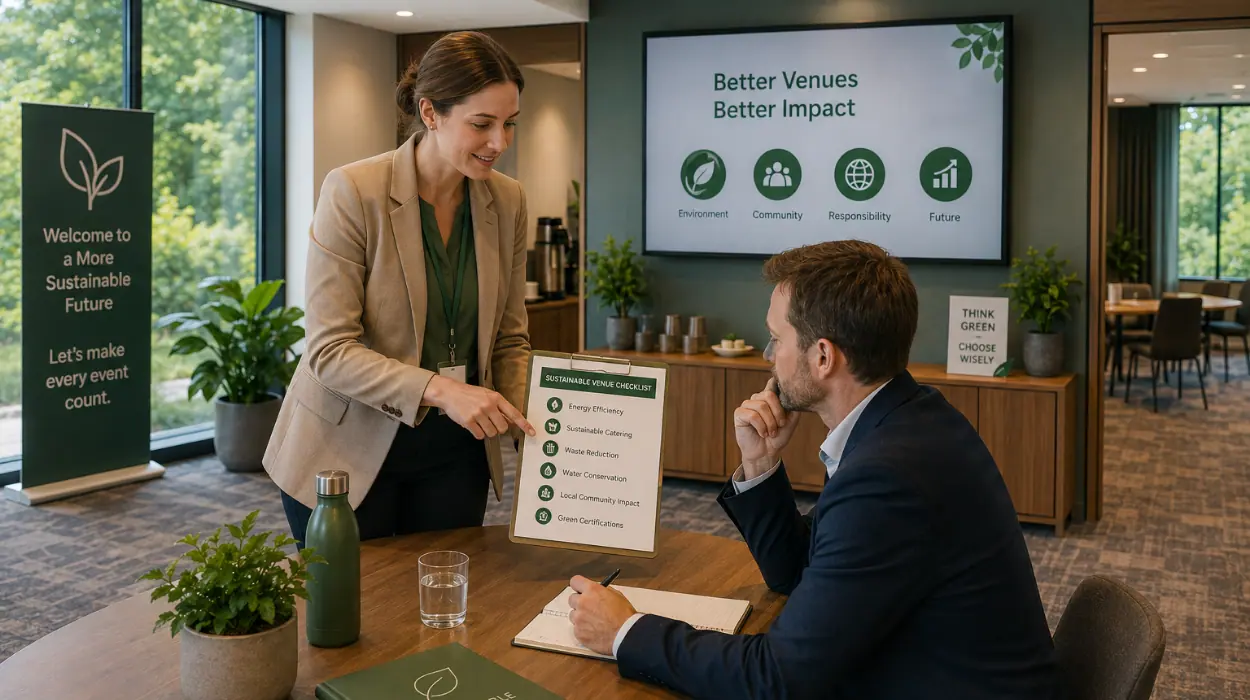
Choosing a sustainable conference venue requires evaluating renewable energy usage, waste management protocols, public transit accessibility, and local sourcing policies. Prioritize facilities holding recognized environmental certifications like LEED or BREEAM to guarantee measurable carbon footprint reductions during your corporate events.
Selecting eco-friendly corporate spaces reduces organizational emissions while meeting rising environmental standards. Modern enterprises face strict regulatory scrutiny regarding their corporate social responsibility metrics. Sustainable venue selection directly impacts overall carbon accounting. Event organizers must analyze facility operations thoroughly before booking corporate gathering spaces. Evaluating infrastructure prevents greenwashing and ensures genuine ecological accountability.
Why Does Venue Sustainability Matter for Modern Businesses?
Sustainable venues reduce corporate carbon emissions, lower operational costs, and align event strategies with global environmental regulations. Companies achieving lower resource consumption enhance stakeholder trust and meet mandatory carbon reduction reporting standards.
Modern consumers favor brands demonstrating verifiable ecological responsibility. Sustainable venue selection supports broader environmental targets established by corporate governance boards. Facilities utilizing renewable power sources eliminate Scope 3 emissions generated during external business events. Businesses tracking sustainability metrics report improved brand reputation among enterprise clients. Regulatory bodies now demand transparent reporting on corporate event impacts. Selecting certified green venues satisfies these compliance demands directly. Reduced energy consumption translates into lower utility surcharges passed through to event organizers. Eco-friendly properties often feature advanced smart thermostats and LED illumination systems. These technological efficiencies minimize unnecessary resource waste throughout large gatherings.
How Do You Evaluate Energy Efficiency and Power Sources?
Evaluating energy efficiency requires reviewing renewable energy tariffs, on-site solar generation capacity, and smart climate control systems. Venues powered entirely by wind or solar assets decrease total corporate event carbon output significantly.
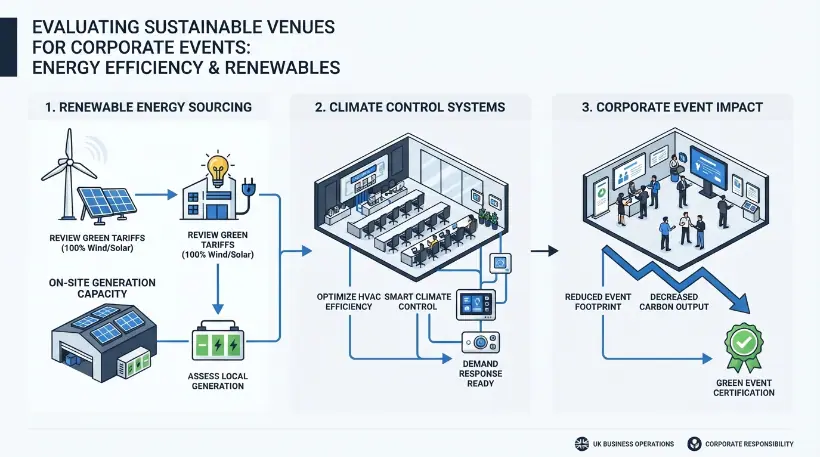
Facilities must disclose their annual energy procurement breakdowns. High-performing conference spaces source 100% of their electricity from certified green providers. On-site solar panels demonstrate a direct commitment to renewable generation. Smart building management systems regulate ambient temperatures dynamically. These technologies prevent empty conference rooms from drawing excessive heating or cooling power. Lighting arrays utilizing automated occupancy sensors eliminate wasted electricity. Event planners should request utility audit reports before finalizing facility contracts. Such documentation verifies actual energy performance rather than relying on marketing claims. Sustainable infrastructure investments reflect a venue’s long-term environmental dedication.
What Waste Management Standards Should You Look For?
Effective waste management demands comprehensive recycling programs, organic composting facilities, and strict single-use plastic bans. Venues achieving zero-waste certification divert all event refuse away from traditional landfills.
Comprehensive waste diversion requires segregated disposal bins throughout every conference floor. Staff must manage back-of-house sorting to ensure recyclable materials avoid contamination. Venues eliminating disposable water bottles rely on filtered hydration stations instead. Catering partners should utilize biodegradable serviceware made from renewable plant fibers. Organic food scraps require industrial composting arrangements rather than standard disposal. Facilities tracking diversion metrics provide clear post-event waste diversion percentages. Planners can review these audited metrics to measure event cleanliness. Zero-waste protocols eliminate thousands of pounds of non-biodegradable debris annually.
| Waste Management Metric | Target Standard | Verification Method |
| Single-Use Plastics | 100% Ban | Facility Inventory Audit |
| Organic Waste Diversion | Minimum 85% | Commercial Composting Receipts |
| Recyclable Material Sorting | Dual-Stream Minimum | Waste Hauler Diversion Reports |
How Does Venue Location Impact Transportation Emissions?
Venue location influences transport emissions through proximity to mass transit hubs, pedestrian accessibility, and electric vehicle charging availability. Facilities situated near major railway networks reduce attendee travel carbon footprints by up to 70%.
Transportation represents the largest emission source for most corporate conferences. Selecting centrally located properties encourages attendees to utilize trains and subways. Venues offering complimentary shuttle services from transit stations minimize private vehicle usage. Urban locations reduce reliance on carbon-intensive domestic flights for regional delegates. Facilities must provide secure bicycle parking infrastructure to encourage active commuting. Planners seeking optimal accessibility should book a conference room situated within major transport corridors. Electric vehicle drivers require dedicated charging stations within parking structures. Venues integrating high-capacity charging docks support sustainable fleet and attendee vehicle operations. Walkable districts eliminate local taxi emissions during multi-day convention schedules.
| Transportation Factor | Optimal Standard | Environmental Impact |
| Public Transit Proximity | Within 800 Meters | Eliminates Private Car Emissions |
| Electric Vehicle Charging | Minimum 10 Docks | Supports Zero-Emission Travel |
| Active Transport Support | Secure Bike Storage | Encourages Zero-Carbon Commutes |
Why Is Sustainable Catering Critical for Events?
Sustainable catering prioritizes locally sourced seasonal ingredients, plant-forward menus, and strict food waste reduction policies. Procuring food within a 50-mile radius minimizes supply chain transportation emissions significantly.
Catering operations account for a substantial portion of any conference environmental footprint. Local sourcing supports regional agricultural economies while reducing freight emissions. Plant-forward menus produce significantly lower greenhouse gas emissions compared to red meat options. Kitchens must implement accurate headcounts to prevent excessive food preparation. Unserved surplus meals should be redirected to local food rescue charities immediately. Composting protocols handle unavoidable kitchen scraps efficiently. Chefs eliminating artificial preservatives and chemical additives improve attendee health outcomes simultaneously. Sustainable food procurement reinforces corporate ecological commitments across every operational touchpoint.
How Do Recognized Certifications Validate Venue Claims?
Recognized certifications validate environmental claims through rigorous third-party audits evaluating energy, water, and waste metrics. Standards like LEED, BREEAM, and Green Tourism provide objective verification of true sustainability.
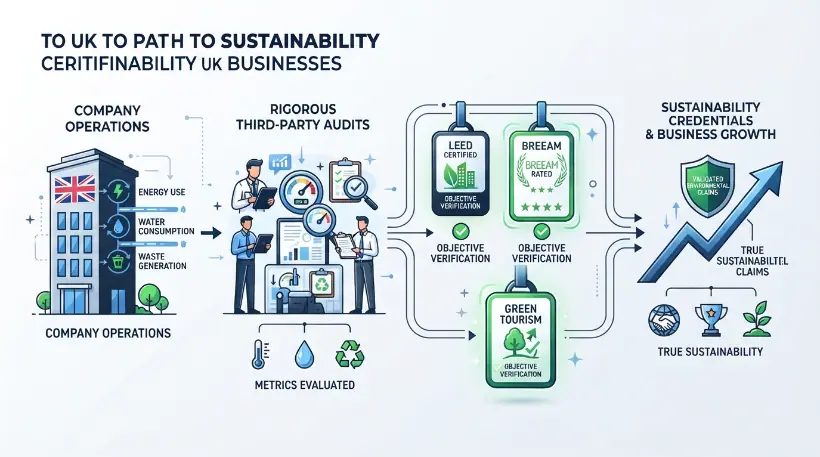
Greenwashing complicates the venue selection process for corporate event planners. Third-party certifications eliminate guesswork by enforcing strict operational benchmarks. LEED certification assesses building design, water efficiency, and energy performance comprehensively. BREEAM ratings evaluate asset value and environmental lifecycle impacts. Facilities holding these credentials undergo recurring mandatory audits to maintain compliance. Planners should request official certificate identification numbers during initial venue inquiries. Certified properties transparently share sustainability reports with prospective corporate clients. Relying on verified credentials protects organizations from reputational damage associated with false ecological claims. Reviewing these standards aligns with insights outlined in What Makes a Corporate Event Environmentally Sustainable? to ensure rigorous framework adherence.
How Do You Finalize Your Eco-Friendly Venue Booking?
Finalizing an eco-friendly venue requires integrating specific environmental clauses into legal contracts and establishing clear performance KPIs. Organizations executing thorough reviews ensure venue accountability throughout the entire event lifecycle.
Contractual agreements must stipulate adherence to waste diversion and energy reduction targets. Planners should include financial penalties for venues failing to meet agreed ecological metrics. Post-event reporting clauses require facilities to deliver verified carbon emission summaries. Establishing these accountability measures guarantees measurable sustainability outcomes. Securing long-term partnerships with certified providers streamlines future corporate event planning cycles. Organizations ready to execute their sustainable strategy can review How to Book Sustainable Conference Rooms With Form My Company? for streamlined procurement steps. Form My Company delivers structured solutions ensuring every corporate gathering meets rigorous environmental standards. Careful preparation transforms corporate events into powerful drivers of ecological responsibility.
Explore our Conference Room guide,
Get Accessible Event Venues From Form My Company
Reserve Private Compliant Interview Rooms via Form My Company
Frequently Asked Questions
How do I book a conference room with Form My Company?
You can easily reserve a fully equipped conference room through the Form My Company client portal by selecting your preferred date, time, and location. Existing clients can log in directly to manage bookings, while new users can register online to secure professional workspace solutions instantly.
What amenities are included when hiring a conference room?
Form My Company ensures every conference room features high-speed fibre internet, state-of-the-art audiovisual presentation screens, and professional reception greeting services. Additional amenities typically include adjustable climate control, whiteboard facilities, and complimentary refreshment stations to support productive corporate gatherings.
Can non-clients hire a conference room through Form My Company?
Non-clients are fully welcome to book a professional conference room via Form My Company using our streamlined online reservation system. External businesses gain access to the same premium business facilities, high-speed connectivity, and central UK locations without requiring an ongoing company secretarial package.
What seating layouts are available for corporate meetings?
Form My Company provides flexible conference room configurations, including traditional boardroom layouts, collaborative roundtable setups, and theatre-style seating for presentations. Event organizers can specify their exact attendee capacity and layout preferences during the booking process to match their specific meeting format.
Are hourly and daily rates available for workspace rentals?
Form My Company offers flexible booking terms, allowing businesses to secure a conference room by the hour, half-day, or full day depending on schedule requirements. Transparent pricing structures ensure organizations only pay for the exact duration needed for client pitches, interviews, or team workshops.