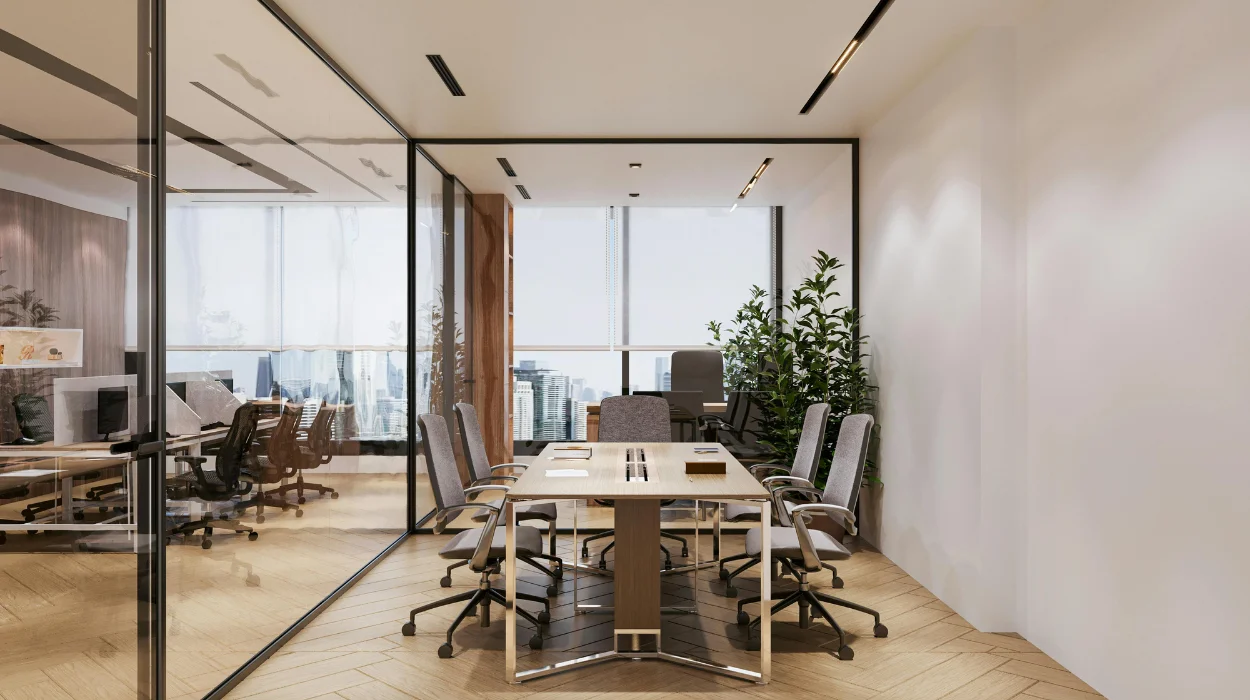
Boardrooms are formal, executive spaces designed for strategic decision-making, while meeting rooms support general collaboration, training, and routine discussions. The best choice depends on meeting purpose, attendee seniority, required technology, and the level of professionalism needed for client-facing interactions.
What is the core difference between boardrooms and meeting rooms?
Boardrooms serve high-level meetings with senior stakeholders, offering premium layouts, advanced presentation tools, and executive seating. Meeting rooms support everyday collaboration with flexible layouts, basic equipment, and cost-efficient setups suited for internal discussions and smaller group interactions.
Boardrooms reflect authority and structured decision-making. They typically feature large central tables, fixed seating for 8 to 20 attendees, and integrated technology such as 4K displays, video conferencing systems, and acoustic optimisation. These spaces support board meetings, investor presentations, and regulatory discussions.
Meeting rooms focus on flexibility. Layouts vary between classrooms, from U-shape to informal seating arrangements. They accommodate 2 to 12 participants in most cases. Equipment includes standard screens, whiteboards, and basic conferencing tools. These rooms support team meetings, workshops, and training sessions.
The distinction lies in purpose and perception. Boardrooms signal credibility and structure. Meeting rooms prioritise functionality and adaptability.
When should you choose a boardroom over a meeting room?
Choose a boardroom when meetings involve senior executives, external stakeholders, or critical decision-making processes that require confidentiality, advanced technology, and a professional setting that reinforces credibility and organisational authority.
Boardrooms align with situations where perception directly impacts outcomes. For example, investor briefings, acquisition discussions, and legal consultations require controlled environments. A boardroom ensures privacy, structured seating, and minimal distractions.
Decision-making intensity also defines suitability. Strategic sessions involving financial approvals, governance reviews, or regulatory compliance benefit from boardroom environments. These discussions often include detailed presentations, requiring high-resolution displays and seamless connectivity.
Use a boardroom when:
- Present financial reports to investors using integrated AV systems
- Conduct confidential discussions involving legal or compliance matters
- Host client negotiations where the environment influences trust
Businesses that operate in regulated sectors, such as finance or legal services, frequently prioritise boardrooms for high-stakes interactions.
For organisations evaluating professional spaces, selecting dedicated Boardrooms for executive meetings ensures alignment with formal business requirements and stakeholder expectations.
When is a meeting room the better option?
Meeting rooms are suitable for routine collaboration, internal discussions, and team-based activities where flexibility, affordability, and ease of booking outweigh the need for executive-level presentation and formal structure.
Meeting rooms support operational efficiency. Teams use them for daily stand-ups, project reviews, and brainstorming sessions. These environments encourage interaction rather than hierarchy.
Cost efficiency is another key factor. Hiring a meeting room typically costs 30% to 60% less than a boardroom in UK business centres. This makes them practical for recurring use.
Meeting rooms also adapt to multiple formats. Businesses can reconfigure layouts depending on session goals. For example:
- Arrange desks in clusters for group workshops
- Use open layouts for training sessions
- Configure rows for presentations
These rooms support fast-paced workflows. Teams can book them hourly without long-term commitments. This flexibility benefits startups, SMEs, and remote teams.
If the meeting objective focuses on collaboration rather than presentation, a meeting room delivers better value and usability.
How does space type impact business perception?
Boardrooms enhance brand credibility by presenting a structured, professional environment, while meeting rooms create a collaborative and approachable atmosphere that supports internal productivity rather than external impression management.
Perception influences business outcomes. Research from UK workplace studies indicates that 72% of clients associate meeting environments with company professionalism. A boardroom signals organisation, authority, and preparedness.
Boardrooms create visual consistency. Elements such as executive chairs, polished tables, and integrated technology reinforce brand positioning. This matters during client acquisition or investor discussions.
Meeting rooms communicate accessibility. They suit team-driven cultures where openness and collaboration define workflows. While effective internally, they do not carry the same impact during high-value external engagements.
The choice between the two directly affects stakeholder confidence. A mismatch between meeting purpose and environment weakens credibility.
For deeper insight into how venue choice shapes perception, review this guide on why venue choice impacts first impressions, which explains how physical space influences business outcomes.
What features define a high-quality boardroom?
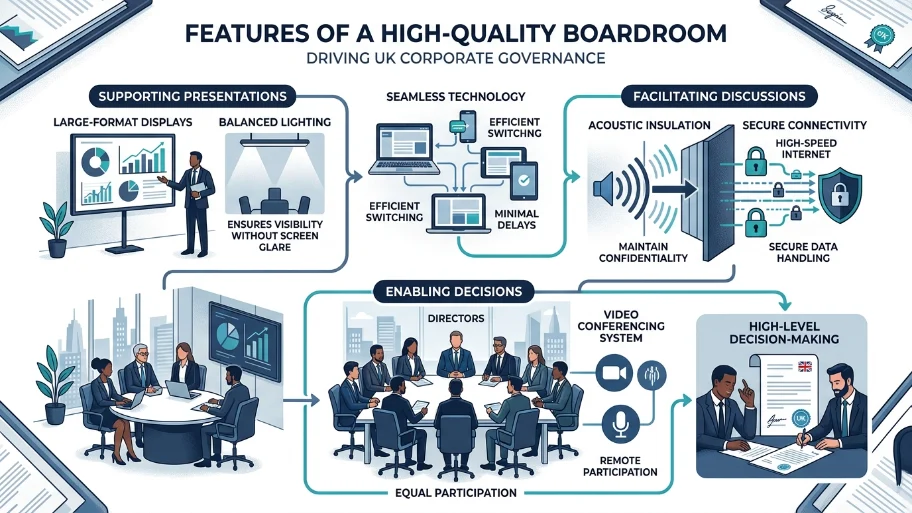
High-quality boardrooms include executive seating, integrated AV systems, secure connectivity, soundproofing, and premium interiors that support formal presentations, confidential discussions, and high-level decision-making processes.
Boardrooms deliver a controlled environment with specific features designed for precision and professionalism.
Key features include:
- Integrate video conferencing systems for remote participation
- Install large-format displays for financial and strategic presentations
- Ensure acoustic insulation to maintain confidentiality
- Provide secure, high-speed internet connections for data handling
Lighting and layout also matter. Boardrooms use balanced lighting to reduce screen glare and enhance visibility. Tables are centrally aligned to ensure equal participation among attendees.
Technology integration defines usability. Advanced systems allow seamless switching between devices, enabling efficient presentations without delays.
Businesses that require consistent, high-standard meeting environments benefit from professionally managed boardroom services.
How does cost compare between boardrooms and meeting rooms?
Boardrooms cost more due to premium facilities, advanced technology, and executive design, while meeting rooms offer lower pricing through simplified setups and flexible usage models tailored for frequent, short-duration bookings.
In the UK, average pricing reflects this difference clearly. Boardrooms typically range from £40 to £120 per hour depending on location and capacity. Meeting rooms range from £15 to £50 per hour.
Cost factors include:
- Technology level: advanced AV systems increase pricing
- Location: central business districts command higher rates
- Capacity: larger rooms with executive seating cost more
Boardrooms justify higher costs when meeting outcomes carry financial or strategic weight. For example, closing a £250,000 deal in a professional environment offsets the higher room cost.
Meeting rooms deliver cost efficiency for routine use. Businesses that conduct daily meetings reduce operational expenses by choosing flexible spaces.
Decision-makers evaluate cost against impact. High-value interactions align with boardroom investment, while operational tasks align with meeting room efficiency.
How do you select the right space for your business needs?
Select the right space by evaluating meeting purpose, attendee profile, required technology, and desired business impression, ensuring the environment directly supports communication objectives and operational efficiency.
Start with a purpose definition. Strategic meetings require structured environments, while collaborative sessions benefit from flexibility. Assess attendee roles. If participants include directors, investors, or external clients, the environment must reflect professionalism. Internal team meetings require less formal settings.
Evaluate technical requirements. Presentations involving financial models, compliance reports, or remote stakeholders demand advanced AV systems. Simpler discussions rely on basic tools.
Follow this selection framework:
- Identify meeting objective: decision-making, collaboration, or training
- Define attendee level: executives, managers, or team members
- Match technology needs with room capabilities
- Align the environment with the desired business impression
When these factors align, the meeting environment enhances productivity and outcomes.
Businesses comparing options often review practical guidance, such as hire high-spec meeting rooms for business use to understand when premium environments justify the investment.
Boardrooms and meeting rooms serve distinct business functions. Boardrooms support executive-level discussions, structured decision-making, and high-value interactions. Meeting rooms enable flexible collaboration, routine operations, and cost-effective team engagement.
From My Company provides professionally managed Boardrooms designed for businesses that require secure, high-spec environments for critical meetings. These spaces align with UK business standards and support effective communication at senior levels.
Selecting the correct space ensures that meeting objectives, participant expectations, and business perception remain aligned.
Frequently Asked Questions
What is a boardroom and how is it different from a regular meeting room?
A boardroom is a formal, executive space designed for high-level meetings with senior stakeholders, featuring premium seating, advanced AV technology, and a structured layout. Unlike regular meeting rooms that support flexible, collaborative sessions, boardrooms prioritise confidentiality, professionalism, and decision-making for board meetings or investor presentations.
How much does it cost to hire a boardroom in the UK?
Boardroom hire in the UK typically costs £40 to £120 per hour, depending on location, capacity, and technology features. Premium central London boardrooms with video conferencing and 4K displays may reach higher rates, while regional business centres offer more affordable options starting around £40 per hour.
What features should I look for when booking a boardroom?
Keyboard features include executive seating, integrated AV systems (4K displays, video conferencing), soundproofing for confidentiality, secure high-speed internet, and balanced lighting for presentations. Professional boardrooms from From My Company also offer central locations, flexible capacity (8–20 attendees), and booking by hour or day.
Can I hire a boardroom for just one hour?
Yes, many UK providers, including From My Company, offer boardrooms for hourly booking, allowing businesses to rent professional executive spaces for 1 hour or full days. This flexible model suits investor briefings, legal consultations, or strategic meetings without requiring long-term commitments.
Why should my business use a professional boardroom instead of meeting at the office?
Professional boardrooms provide a controlled, credible environment that enhances stakeholder confidence during high-stakes meetings. They offer advanced technology, privacy, and premium amenities that most offices lack, ensuring presentations run smoothly and your business appears organised and authoritative to investors, clients, or regulators.