
You must report a change to your PSC register within 14 days of updating your internal company records. Companies House requires you to file the notice within a further 14 days, giving your business a total of 28 days from the event.
What Is a Person with Significant Control Register?
A Person with Significant Control register is an official statutory record that details every individual or legal entity exercising ultimate ownership or control over a UK company. UK legislation mandates that every active business maintains this document to ensure corporate transparency.
The Person with Significant Control (PSC) register identifies the ultimate beneficial owners of corporate entities. Parliament introduced this legal requirement under the Small Business, Enterprise and Employment Act 2015 to prevent money laundering, fraud, and illicit financial activities across the United Kingdom.
Every UK private limited company, limited liability partnership, and public limited company must maintain this internal record. The document must store full names, service addresses, residential addresses, nationalities, dates of birth, and the exact nature of control for each identified individual.
Maintaining an inaccurate or outdated document constitutes a criminal offence under UK company law. Directors and officers face financial penalties or prosecution when they fail to update ownership details within the strict statutory timeframes set by the central registrar.
Which Business Events Trigger an Immediate PSC Update?
Specific corporate changes trigger an immediate PSC update, including transfers of company shares, changes to voting rights, board appointments, personal detail updates, and legal structure alterations. Directors must record these dynamic operational events to maintain compliance.
Share transfers exceeding specific threshold limits represent the primary operational trigger. When an individual acquires more than 25% of company shares, the corporate entity must immediately update its official records. Equally, when an existing owner sells equity and drops below the 25% threshold, you must document the reduction in ownership.
Changes to voting power also require formal statutory updates. If a shareholder restructures share classes to gain control over board decisions, the business must record this shift. You must also report changes to personal details, such as residential addresses, legal names, or service locations.
Corporate restructuring events demand prompt administrative action. These events include introducing relevant legal entities, appointing directors with veto powers, or removing individuals who no longer exercise significant control over company decisions.
What Are the Strict Statutory Deadlines for Filing PSC Changes?
UK law mandates a strict 14-day deadline to update your internal PSC register after receiving confirmed changes. Your company must then file these updated details with Companies House within an additional 14 days, creating a hard 28-day compliance window.
The statutory clock starts ticking on the exact date a change occurs or receives confirmation. When a shareholder notifies the business of a name change or share transfer, administrators have exactly 14 calendar days to enter this verified information into the internal register.
Once you update the internal record, a second 14-day statutory timeframe begins. You must submit the official notifications to Companies House before this secondary window expires. Failing to meet either deadline puts the company and its directors in breach of statutory duties.
Missing these chronological milestones disrupts company operations. Filings made outside the legal timeframes face immediate rejection, requiring formal legal declarations or corrective filings to restore public corporate standing.
What Are the Five Conditions That Define a PSC?
Five legal conditions define a Person with Significant Control, based on share percentages, voting rights, board appointment powers, overarching control, and trust structures. Meeting any single condition automatically triggers mandatory registration requirements.
The legal framework establishes strict thresholds for corporate control. When reviewing individual positions within a company, directors must evaluate ownership structures against five distinct statutory tests:
Holding more than 25% of the total issued company shares
Holding more than 25% of the total voting rights in the company
Holding the legal right to appoint or remove the majority of the board of directors
Exercising the right to exert significant influence or control over company decisions
Exercising significant control over the activities of a trust or firm that meets any of the first four conditions
Identifying these individuals requires reviewing original founding documents, shareholder agreements, and official equity registers. If an individual satisfies two or more conditions, you must record every applicable condition on the statutory register.
How Do You Verify Information Before Updating the Register?
You must verify personal information using official government documentation, formal written confirmations, identity verification procedures, and legal address checks before updating the register. Entering unverified details on a public statutory document breaches UK reporting regulations.
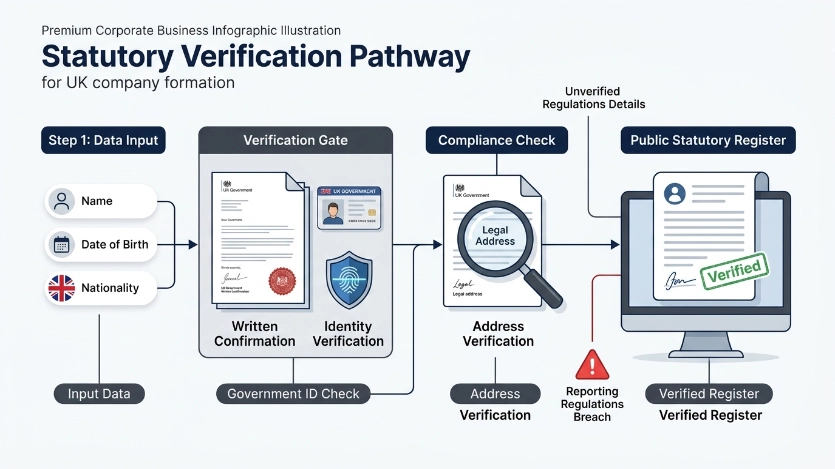
Verification protects public records from inaccurate or fraudulent entries. Directors must serve an official notice to any individual suspected of holding significant control, requesting formal confirmation of their personal details and ownership percentages.
The individual must confirm their full legal name, date of birth, nationality, country of residence, and service address. They must also confirm the exact date they attained significant control over the entity. Unconfirmed details cannot legally enter the official internal register.
If an individual fails to respond to official requests within one month, directors can issue a restrictions notice. This legal action freezes the individual’s shares, preventing share transfers, dividend payments, or the exercise of voting rights until identity verification completes.
What Happens If Your Company Fails to Report PSC Changes?
Failing to report PSC changes results in criminal prosecution, unlimited financial fines, frozen corporate actions, and potential prison terms for company directors. Companies House active enforcement targets non-compliant businesses to maintain corporate registry integrity.
Non-compliance carries severe legal consequences under UK law. The company, along with every officer in default, commits a criminal offence when failing to maintain or update statutory ownership records within the mandated 28-day window.
Courts can impose unlimited fines on the company and individual directors. Persistent failure to comply leads to criminal records for business officers and custodial sentences lasting up to two years for serious compliance breaches.
Beyond court penalties, operational blockages occur immediately. Financial institutions, legal advisors, and commercial lenders regularly inspect the public register. Discrepancies between internal files and public records stop commercial transactions, loan approvals, and banking services.
How Do You Correct Errors on an Existing PSC Record?
You correct errors on an existing record by filing specific rectification forms, submitting amended statements, withdrawing inaccurate entries, and notifying Companies House immediately. Administrative mistakes require prompt formal corrections to preserve record accuracy.
Administrative errors happen during data entry, legal restructures, or routine address updates. When an error appears on the official register, you must identify whether the mistake resides in the internal document or the public Companies House database.
Minor spelling errors or incorrect dates require submitting corrective notices to the central registrar. If an individual was incorrectly added or removed from the register, the company must submit a formal withdrawal notice to remove the invalid entry.
Maintaining an audit trail ensures legal transparency. Always document the precise reasons for record alterations, preserving signed correspondence and verification documents to prove compliance during official regulatory audits.
When Should You Seek Professional Services for PSC Compliance?
You should seek professional services when managing complex corporate ownership structures, executing share restructures, navigating cross-border holdings, or resolving statutory filing delays. Expert compliance management ensures complete accuracy across all public filings.
Complex ownership chains obscure true beneficial ownership. When corporate structures involve offshore entities, corporate directors, or intricate trust agreements, assessing control requires specialized legal and secretarial knowledge.
Professional corporate services remove administrative burdens from directors. When you utilize specialized administrative support, qualified specialists review corporate changes, verify identity documents, prepare statutory forms, and execute timely submissions.
Managing updates through dedicated software platforms prevents missed deadlines. Modern services monitor filing schedules, track changing regulations, and update public registries efficiently, protecting your company from operational delays and financial penalties.
Maintaining Accuracy in Your Public Records
Managing ownership records demands consistent attention to statutory deadlines, regulatory updates, and precise documentation. By identifying corporate changes early, verifying individual details, and adhering to the 28-day submission window, company directors keep their entities compliant and commercially viable.
Organized businesses implement internal monitoring systems to catch share transfers, address changes, and board restructuring immediately. Relying on structured processes guarantees that public disclosures match internal operations.
Professional governance support simplifies ongoing statutory responsibilities. Utilizing experienced corporate service providers ensures every change to your PSC Register meets official standards, protecting your leadership team from legal liability and maintaining clean business records.
To understand the exact step-by-step submission process for official filings, read our detailed guide on How to File a PSC Change With Companies House Correctly before gathering your legal documents.
When you are ready to update your statutory ownership records seamlessly and maintain legal compliance, File Your PSC Change With Form My Company Today through our secure online corporate portal. Form My Company manages your administrative tasks efficiently, providing complete peace of mind for business owners across the United Kingdom.
Explore our PSC Register guide,
What Happens If You Fail to Keep a Statutory Register?
Where Must a UK Company Keep Its Statutory Records?
Frequently Asked Questions
What is a PSC register and who needs to maintain one?
A PSC register is an official statutory record tracking individuals or legal entities that hold significant control, such as owning more than 25% of shares or voting rights. Under UK company law, every active limited company must accurately maintain and update these ownership details with Companies House. Form My Company assists businesses in identifying and registering their beneficial owners correctly via the PSC Register.
How do you report changes to your PSC register?
Any updates regarding a change in control, share percentages, or personal details must be reported within 14 days of confirmation. Companies must ensure that all modifications to beneficial ownership are filed promptly to maintain legal compliance. Form My Company simplifies this reporting process for your PSC Register through streamlined digital filing services.
What are the identity verification requirements for a PSC?
Recent regulations mandate that all individuals listed as Persons with Significant Control must complete formal identity verification with Companies House. This process requires submitting official personal details and a unique verification code within the specified statutory window. Form My Company helps corporate clients navigate these identity rules alongside their PSC Register requirements seamlessly.
What are the penalties for failing to update a PSC register?
Failing to maintain accurate records or missing statutory reporting deadlines constitutes a criminal offence under the Companies Act. Companies and their officers can face severe financial penalties, unlimited fines, and potential prosecution by regulatory authorities. Utilizing compliance services from providers like Form My Company protects businesses from mistakes on their PSC Register.
Can a corporate service provider manage your PSC register filings?
Yes, businesses can utilize professional corporate service providers to handle statutory filings and maintain accurate register records. Corporate secretarial services ensure that all beneficial ownership updates meet official regulatory standards and strict deadlines. Form My Company offers dedicated support to manage your PSC Register filings accurately and efficiently.