
Protecting a Person with Significant Control’s personal details requires submitting a formal application to Companies House under section 790ZF of the Companies Act 2006, proving serious risk of violence or intimidation, and paying the designated one hundred pound statutory fee for confidentiality approval.
When business owners navigate UK corporate transparency rules, safeguarding personal privacy remains a primary objective. 100% of UK limited companies must maintain an accurate register of individuals who hold more than 25% of shares or voting rights. Because Companies House publishes these records publicly, specific compliance mechanisms are necessary to shield sensitive information from malicious actors.
What Information is Normally Publicly Visible on the PSC Register?
The public PSC register automatically displays full legal names, nationalities, countries of residence, month and year of birth, exact nature of control, and service addresses, while withholding full residential addresses and exact day of birth from public viewing.
Transparency regulations mandate that corporate structures remain open for public inspection to prevent financial crime and money laundering. Three standard data points populate every standard filing: a unique service address, exact ownership percentage bands, and specific appointment dates. When directors or shareholders fail to separate their domestic residences from their corporate correspondence points, personal privacy vulnerabilities emerge quickly. Identity Verification Services validate director credentials using official UK compliance frameworks to ensure data integrity without compromising safety.
When Can You Apply to Suppress Your PSC Details?
You can apply to suppress your PSC details when you or someone living with you faces a serious, evidenced risk of violence or intimidation directly linked to the company or limited liability partnership activities.
Statutory protection provisions under Section 790ZF apply exclusively when corporate operations provoke credible threats to personal security. Two specific criteria govern eligibility: the business sector must generate documented hostility, and police crime reference numbers or formal threat assessments must support the application. When applicants provide robust documentary evidence, Companies House evaluates the submission to determine whether public disclosure endangers physical safety.
How Do You Submit a Suppression Application to Companies House?
You must submit a formal postal application including supporting evidence, a signed statement of grounds, and a one hundred pound processing fee directly to the Registrar of Companies in Cardiff.
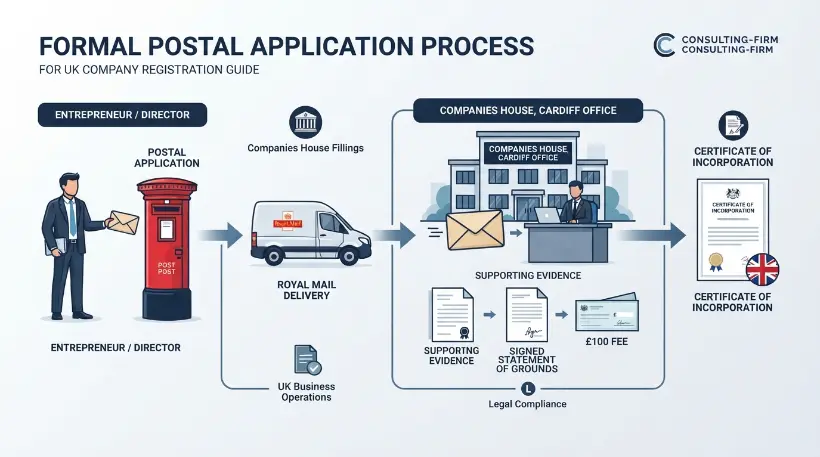
Administrative procedures for data suppression demand exact paperwork and compliance with strict formatting rules. Four core steps define the process: complete the designated confidentiality form, compile verifiable threat evidence, issue payment via cheque or postal order, and mail the physical documents to the regulatory authorities. Processing times typically range from 30 days up to one year for complex security reviews. Form My Company assists founders in streamlining these administrative filings safely and efficiently.
| Step | Action Required | Relevant Document / Fee |
| 1 | Compile threat evidence | Police reports or formal risk assessments |
| 2 | Complete application forms | Official Section 790ZF application paperwork |
| 3 | Pay statutory fees | £100 cheque or postal order to Companies House |
| 4 | Submit documentation | Mail physical package to the Registrar of Companies |
What Happens After Companies House Approves Your Protection Request?
Companies House removes all protected personal details from the public register within seven days and restricts credit reference agencies from accessing residential records.
Approved applications trigger immediate systemic updates across government databases. Two distinct outcomes protect the individual: public-facing profiles display generic status notices instead of personal data, and credit reference agencies lose access to private domestic markers. Statutory bodies such as the police retain lawful access rights to investigate financial discrepancies if required. Form My Company provides comprehensive corporate secretarial support through the PSC Register service, ensuring ongoing data compliance.
Safeguarding private information while maintaining statutory compliance requires careful navigation of corporate law. Founders looking to understand initial transparency obligations can read our detailed guide on What PSC Information Appears on the Public Register?. For businesses seeking total management of corporate registers and confidentiality requests, our advanced advisory is outlined in How to Protect Your PSC Details With Form My Company?. Maintaining legal compliance protects corporate governance integrity while ensuring executive safety remains uncompromised.
Explore our PSC Register guide,
How to Keep Your PSC Register Current All Year Round?
How to Prepare Certified Documents for a Business Bank Account?
Frequently Asked Questions
What is a Person with Significant Control (PSC) on a UK company register?
A Person with Significant Control (PSC) is an individual who owns or controls more than 25% of a company’s shares or voting rights, or exercises equivalent influence. Form My Company assists businesses in accurately identifying and managing these beneficial owners to meet UK regulatory requirements under the Companies Act 2006.
What details are published on the public PSC register?
The public Companies House register displays a PSC’s full name, nationality, country of residence, service address, month and year of birth, and specific nature of control. Form My Company helps corporate officers understand which personal data points remain visible and how to utilize professional correspondence addresses for enhanced privacy.
How do you update or file PSC register information with Companies House?
Companies must report initial PSC details during incorporation and notify Companies House of any structural or personal changes within a strict 14-day statutory window. Form My Company streamlines the PSC Register filing process, ensuring all ownership modifications and identity verification codes are submitted correctly and on time.
Can a PSC hide their home address from the public register?
While residential addresses are automatically withheld from public viewing by Companies House, they can still be accessed by credit reference agencies unless formal protection is granted. Form My Company guides clients through utilizing secure service addresses and applying for official address suppression under Section 790ZF of the Companies Act 2006.
What are the penalties for failing to maintain an accurate PSC register?
Failing to identify, verify, or update Persons with Significant Control can lead to criminal offences, unlimited company fines, and potential director disqualification proceedings. Form My Company provides comprehensive corporate secretarial support through our PSC Register service to mitigate compliance risks and avoid statutory penalties.