You can secure your incorporation certificate directly through Form My Company by choosing our streamlined registration process, which submits your verified business details to Companies House and delivers your official digital or hard-copy certificate upon successful approval.
Why Is an Incorporation Certificate Essential for Your Business?
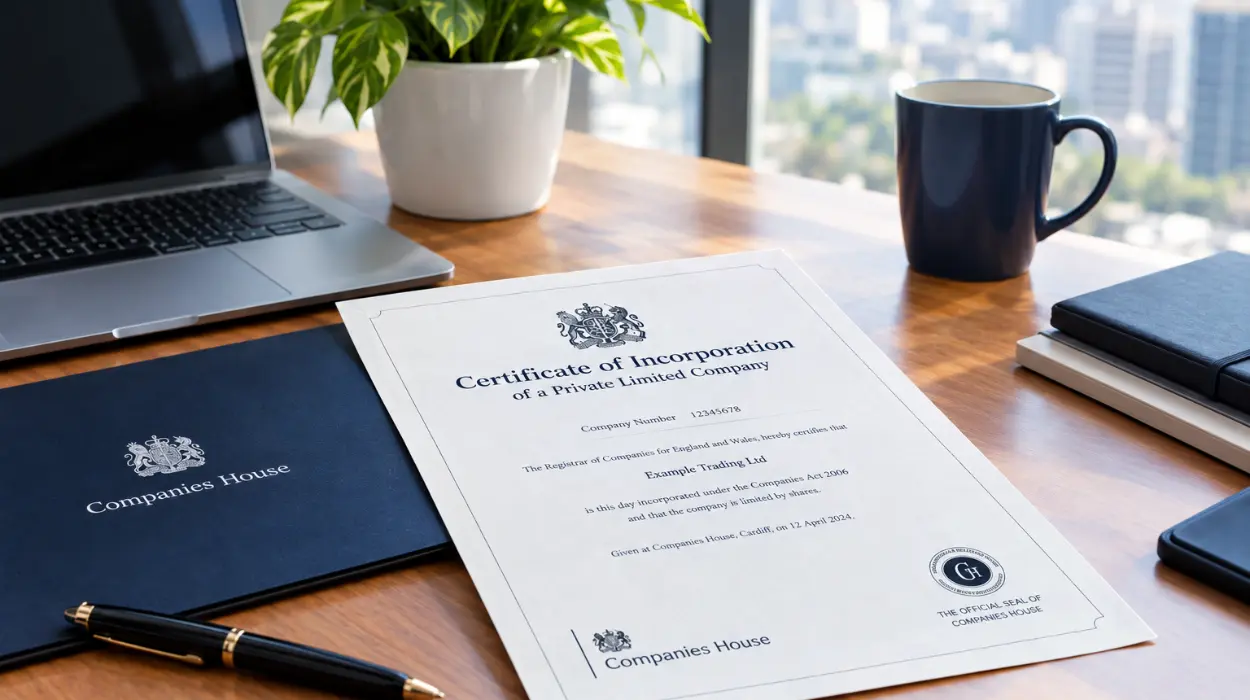
An incorporation certificate serves as legal proof of your company’s existence, enabling you to open business bank accounts, secure commercial loans, sign corporate contracts, and prove official UK registration to investors, regulatory bodies, and financial institutions.
Companies House issues this official document when a business successfully registers in the United Kingdom. Financial institutions require this verification before opening corporate accounts or extending credit lines. Without this legal document, corporate entities cannot execute contracts, hire employees, or obtain trade licenses legally.
The document contains crucial structural details about your corporate entity. It displays your company name, unique company number, exact date of formation, and legal jurisdiction. Regulatory agencies use these details to verify corporate transparency across public databases.
Maintaining accessible official documents ensures seamless daily operations. Loss of access to primary registry files stalls commercial growth, delays funding, and halts vendor onboarding. Businesses use supplementary company documents to maintain operational compliance and satisfy external compliance audits efficiently.
How Does the Process to Retrieve Official Documents Work?
The document retrieval process involves identifying your required corporate filings, submitting official identification to the registry, paying administrative filing fees, and receiving verified digital or physical documents directly from the official UK registry.
Business owners initiate retrieval by searching the central registry database. The system matches the company registration number with official public records. Specific document requests trigger a direct interface with Companies House file systems.
Registry systems validate the requested document type before processing. Standard processing verifies current company standing, active director appointments, and filing histories. Electronic systems generate verified PDF copies within minutes, while hard copies undergo physical stamping and postal delivery.
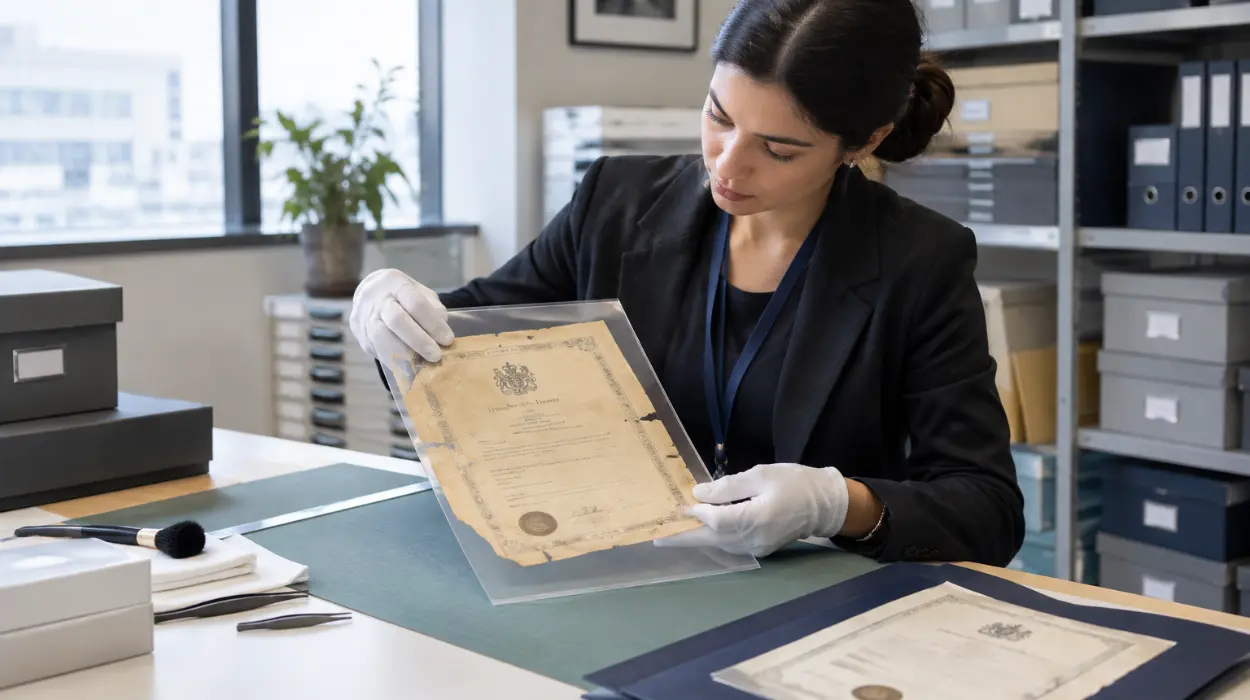
Corporate changes often require updated paperwork to maintain legal validity. When official certificates sustain damage or go missing, directors must act swiftly to prevent operational delays. You can review our guide on how to restore lost or damaged company certificates to understand standard retrieval protocols.
What Supplementary Company Documents Support Your Growth?
Supplementary company documents include certificates of good standing, share certificates, memorandum of association, articles of association, and official register extracts that prove internal corporate structure, financial health, and legal compliance to third parties.
Certificates of Good Standing prove your company operates without pending dissolution proceedings. Global trading partners and international banks require this document during cross-border expansions. The document confirms timely filing of annual confirmation statements and accounts.
Articles of Association outline operational rules for company directors and shareholders. Share certificates validate individual ownership stakes and voting rights within the business. Financial auditors inspect these filings during capital raises, corporate restructures, or acquisition due diligence.
Maintaining updated records prevents compliance failures and operational friction. When expanding operations into new markets, partners demand complete legal packages. You can learn what details appear on a certificate of incorporation to verify your structural information before submitting compliance files.
How Does Form My Company Simplify Certificate Acquisition?
Form My Company simplifies certificate acquisition by automating data entry, conducting pre-submission compliance checks, submitting filings directly to Companies House, and delivering authenticated legal documents through a secure digital dashboard.
Our automated system cross-references applicant data against official filing criteria. This verification step eliminates common administrative errors that cause application rejections. Automated API connections transmit verified information directly to registry databases.
Digital processing reduces filing turnaround times significantly. Applicants receive instant notifications upon registry approval and immediate access to digital document downloads. Paper copies undergo physical processing with secure courier delivery options.
Professional document services eliminate administrative burdens for busy founders. Form My Company manages continuous compliance requirements, ensuring your corporate entity remains in good standing.
What Verification Requirements Ensure Fast Certificate Approval?
Fast certificate approval requires submitting government-issued identification, proof of registered office address, accurate officer details, clear shareholder allocation data, and standardized Standard Industrial Classification (SIC) codes.
Registry authorities mandate identity checks to prevent corporate fraud. Applicants submit color passport scans or national identity cards alongside live biometric selfie checks. Address verification requires utility bills or official bank statements issued within 90 days.
Accuracy in officer appointment details prevents processing delays. Submissions must list full legal names, service addresses, residential addresses, dates of birth, and nationalities for all directors. Discrepancies between submitted data and official identification trigger manual compliance reviews.
Standard Industrial Classification codes define primary business activities accurately. Selecting incorrect codes delays registration approval and creates tax classification issues. Double-checking code alignments ensures seamless processing by registry systems.
How Do Verified Documents Impact Banking and Financing?
Verified documents satisfy Anti-Money Laundering (AML) and Know Your Customer (KYC) requirements, allowing commercial banks, lenders, and investors to verify company legitimacy and approve funding requests without delay.
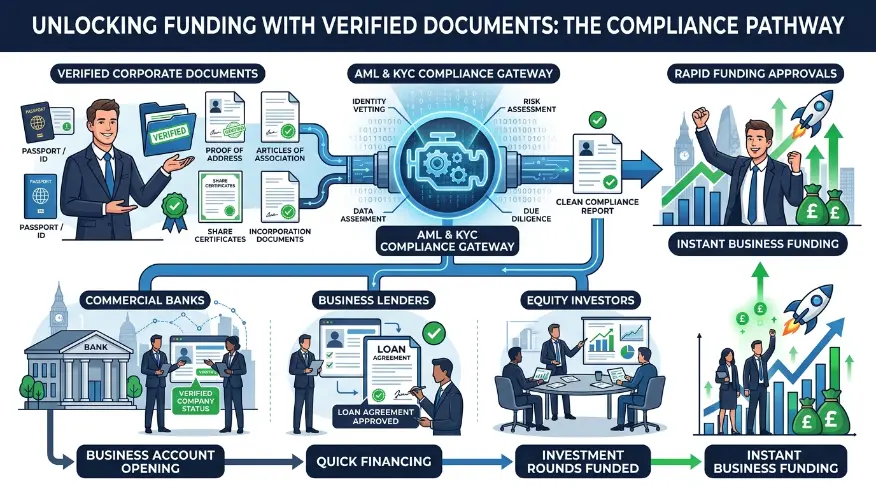
Banking compliance teams analyze corporate filings before opening business accounts. They review the certificate of incorporation alongside shareholder registers to identify Ultimate Beneficial Owners (UBOs). Missing or unverified documents cause immediate application rejections.
Lenders evaluate corporate age and structure during loan underwriting. An official certificate proves exact business longevity, influencing credit risk models and interest rates. Precise formation dates establish commercial history clearly.
Equity investors demand verified corporate documentation during funding rounds. Diligence teams inspect official registry filings to confirm equity ownership structures and voting rights. Clean documentation accelerates capital acquisition timelines.
When Should You Request Updated Corporate Certificates?
You should request updated corporate certificates immediately following company name changes, structural share reorganizations, director appointments, registered address relocations, or ahead of foreign branch registrations.
Corporate name changes render old certificates legally obsolete. The registry issues a Certificate of Incorporation on Change of Name upon approving the modification. Operating with outdated legal names creates contractual invalidity risks.
International expansion requires fresh legal documentation. Foreign jurisdictions demand corporate certificates issued within 30 to 90 days to prove current active standing. Outdated documents fail international apostille and legalization standards.
Internal corporate restructures alter official business registers. Allocating new share classes or updating voting rights requires fresh filing extracts. Keeping documentation current ensures legal enforceability during corporate disputes.
What Are the Risks of Unregistered Corporate Changes?
Unregistered corporate changes lead to statutory fines, loss of limited liability protection, rejection of official filings, operational suspension, and potential compulsory strike-off by the registry registrar.
Failing to report changes to Companies House violates UK corporate law. Late filings incur automatic financial penalties that increase over time. Persistent non-compliance results in personal director liability for accumulated corporate debts.
Financial institutions monitor public registry databases continuously. Unreported address changes or unrecorded director resignations trigger account freezes. Suspended banking access halts payroll processing and supplier payments immediately.
The registrar initiates strike-off proceedings against non-compliant entities. Striking off a business dissolves the corporate entity, transferring company assets to the Crown automatically. Maintaining accurate filings protects corporate asset ownership.
Securing an official incorporation certificate forms the structural foundation of legal business operations in the United Kingdom. Accurately filed documentation ensures full compliance with statutory regulations, protects shareholder equity, and facilitates seamless commercial banking. Form My Company provides direct, automated access to official registry filings, delivering verified digital and hard-copy documents to support ongoing business growth.
Explore our Supplementary Company Documents guide,
Want to Reserve Green Event Spaces via Form My Company?
How to Book Carbon-Conscious Conference Rooms Through Form My Company?
Frequently Asked Questions
What are supplementary company documents and why do UK businesses need them?
Supplementary company documents refer to official corporate records such as certificates of good standing, share certificates, and memorandum updates that prove active legal status. UK businesses use these files to satisfy compliance audits, verify corporate structures with financial institutions, and support international expansions. Form My Company provides streamlined access to these vital administrative files to ensure continuous operational transparency.
How quickly can I obtain replacement incorporation certificates or certified copies?
Replacement incorporation certificates and certified copies are typically processed through Companies House within 24 to 48 hours for digital formats, while hard copies require postal delivery. Expedited retrieval services reduce administrative downtime significantly when businesses face urgent banking or legal deadlines. Form My Company automates document requests to accelerate delivery times for founders.
Do international banks require apostilled supplementary company documents?
International banks and foreign regulatory authorities frequently demand apostilled supplementary company documents to verify cross-border corporate legitimacy and prevent money laundering. An apostille authenticates the signature and seal of the UK registry official for legal acceptance abroad. Form My Company assists businesses in acquiring fully authenticated corporate paperwork for global operations.
What is the difference between a certificate of incorporation and a certificate of good standing?
A certificate of incorporation acts as the foundational birth certificate of a business, whereas a certificate of good standing proves the company currently complies with all filing requirements. Financial lenders and foreign partners request good standing documents to confirm active operations and absence of dissolution proceedings. Form My Company helps businesses order both document types directly through secure online portals.
How do I update missing details on my official company registers?
Updating missing details on official company registers requires filing specific amendment forms with Companies House alongside supporting corporate resolutions. Directors must report structural changes like officer updates or share reclassifications within statutory timeframes to avoid regulatory penalties. Form My Company guides corporate officers through accurate filing procedures to maintain strict compliance.