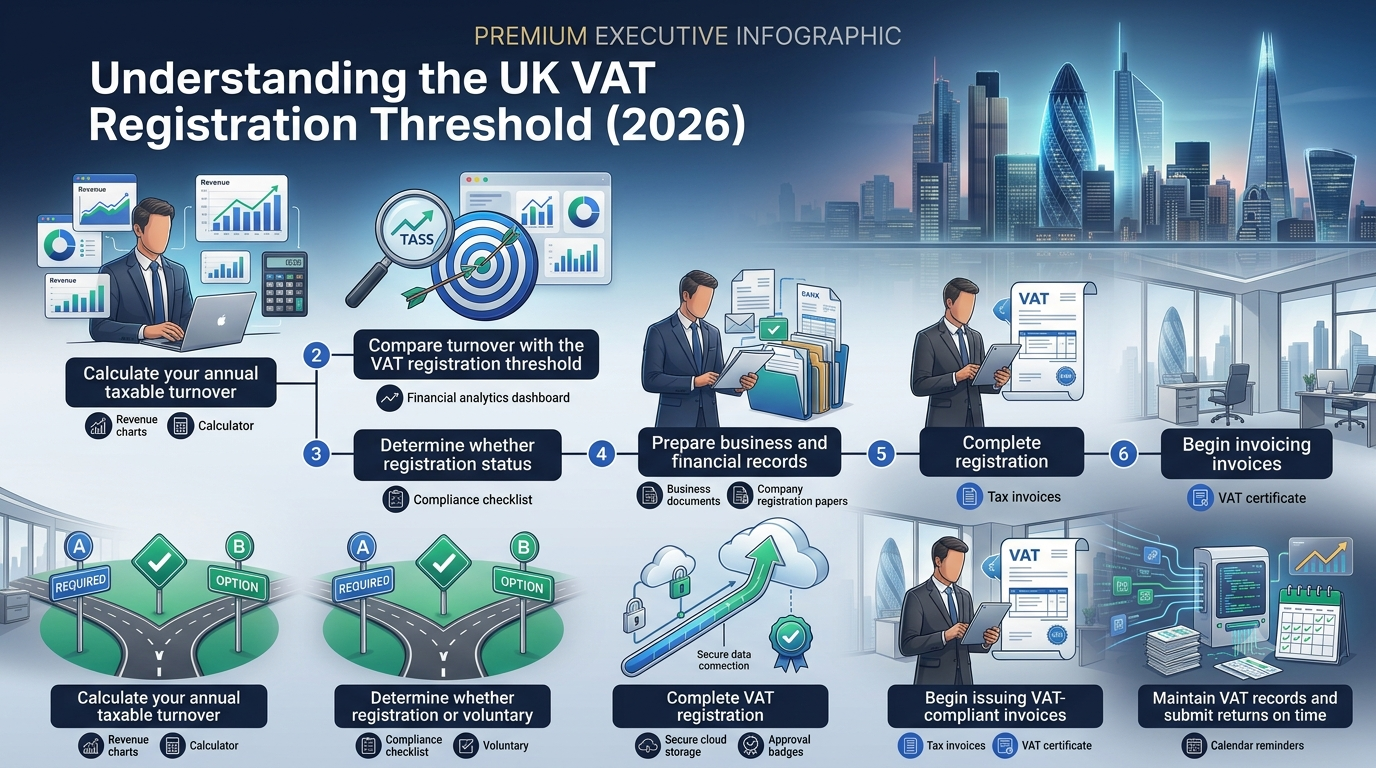
VAT Registration Threshold
The UK VAT registration threshold is one of the most important numbers for any growing business to understand. Once your turnover crosses it, you have a legal obligation to register for VAT with HMRC, and getting the timing wrong can lead to significant penalties. But the threshold is more nuanced than a single figure suggests. It’s calculated in a specific way, applies over a rolling period, and interacts with voluntary registration and deregistration rules. At Form My Company, we help UK businesses navigate the threshold and register for VAT correctly. This guide explains everything you need to know about the UK VAT registration threshold in 2026.
What Is the Current UK VAT Registration Threshold?
The current UK VAT registration threshold is £90,000. This has been in force since 1 April 2024, when it was raised from the previous £85,000. The change was designed to reduce the compliance burden on smaller businesses and align with rising costs.
If your VAT taxable turnover exceeds £90,000, you have a legal obligation to register for VAT with HMRC. This applies to almost all UK businesses, including limited companies, sole traders, partnerships, and LLPs.
The related deregistration threshold is £88,000. If your VAT taxable turnover falls below this, you may be able to deregister for VAT.
What Counts Toward the Threshold?
Understanding what counts as “VAT taxable turnover” is essential. It includes:
- Standard-rated sales. Goods and services you sell at the current standard rate (20%).
- Reduced-rated sales. Goods and services sold at the reduced rate (5%).
- Zero-rated sales. Goods and services sold at 0% (such as most food and children’s clothing).
- Business-to-business sales in the UK. All B2B UK sales count.
- Business-to-consumer sales in the UK. All B2C UK sales count.
- What doesn’t count:
- Exempt sales. Certain financial services, education, and health services that are exempt from VAT don’t count toward the threshold.
- Sales outside the UK. Sales to overseas businesses or consumers are treated differently.
- Sale of capital assets. One-off sales of business assets (like equipment or vehicles) may not count.
- Sales of your business itself. If you sell the business as a going concern, this is generally outside the threshold calculation.
The distinction between “taxable” and “exempt” turnover matters significantly. A business with £100,000 in exempt turnover and £30,000 in taxable turnover isn’t over the threshold.
The Rolling 12-Month Calculation
The threshold isn’t a calendar-year figure. It’s calculated on a rolling 12-month basis. This means:
- Check your turnover every month. You look at the last 12 months ending on the current month.
- As you cross the threshold. Once your rolling 12-month taxable turnover exceeds £90,000, registration is required.
- The registration deadline. You must notify HMRC within 30 days of crossing the threshold, and registration takes effect from the first day of the second month after you cross.
- Look-forward test. If you expect your turnover in the next 30 days alone to exceed £90,000 (from a specific new contract, for example), you must register within 30 days of that expectation being formed.
This rolling calculation catches many businesses out. You can grow slowly for a year, then suddenly find yourself at the threshold mid-year and needing to register quickly.
Mandatory vs Voluntary Registration
Registration falls into one of two categories:
- Mandatory registration. Required by law once your turnover exceeds £90,000, or when you expect to exceed it in the next 30 days. Missing this deadline can lead to penalties, back VAT, and interest charges.
- Voluntary registration. You can register below the threshold if you choose. This is common for businesses that want to reclaim VAT on expenses, appear more established to clients and suppliers, or prepare for growth.
The choice between mandatory and voluntary changes the calculation significantly. Below the threshold, you have flexibility. Above it, you’re required.
When You Have to Register
You have a legal obligation to register when:
- Your rolling 12-month turnover exceeds £90,000. Once this happens, you must notify HMRC within 30 days.
- You expect turnover in the next 30 days alone to exceed £90,000. From a specific event, like a large contract.
- HMRC directs you to register. In some circumstances, HMRC can require registration even below the threshold.
- Specific business types must register regardless. Certain businesses (such as those in specific sectors, or non-resident sellers with UK stock) must register regardless of turnover.
Once required to register, the clock is ticking. The 30-day deadline is a real one, and missing it can lead to significant consequences.
What Happens If You Miss the Registration Deadline?
Failing to register when required can lead to:
- Late registration penalties. HMRC can impose penalties based on how much VAT should have been charged during the unregistered period.
- Back VAT liability. You may owe VAT on sales made during the period you should have been registered, but weren’t. This can be a significant sum.
- Interest charges. On the back VAT.
- Difficulty with future compliance. Late registration can create complications with your ongoing VAT position.
- Reputation impact. Missing registration deadlines can affect business relationships and future dealings with HMRC.
The safest approach is to monitor your turnover monthly and act as soon as you cross the threshold. If you’ve already missed the deadline, seek professional advice quickly to minimise the impact.
Approaching the Threshold: What to Do
If you’re approaching the £90,000 threshold, plan ahead. Here’s what to consider:
- Monitor your rolling 12-month turnover. Set up a system that tracks your turnover and alerts you as you approach the threshold.
- Assess your business model. How will VAT affect your pricing, competitiveness, and cash flow? Consumer-facing businesses may need to think about whether they absorb the VAT or pass it on.
- Consider voluntary registration. If you’re close to the threshold and expect to cross it soon, voluntary registration in advance can smooth the transition and let you reclaim VAT on setup costs.
- Get your bookkeeping ready. VAT-registered businesses must keep digital records under Making Tax Digital. Getting your systems ready before you register is easier than scrambling after.
- Think about VAT schemes. The Flat Rate Scheme, Cash Accounting Scheme, or Annual Accounting Scheme may suit your business better than standard accounting. Advice matters here.
- Plan your cash flow. VAT is essentially a pass-through tax, but timing differences between VAT charged, VAT paid, and VAT returns can affect cash flow.
- Coordinate with your accountant. VAT registration is part of your wider tax planning. Talk to your accountant about how registration fits with your Corporation Tax and other obligations.
- Consider a VAT registration service. For businesses that want professional handling, a service takes the complexity off your plate and ensures the process is done correctly.
Being proactive rather than reactive when you approach the threshold makes the whole process smoother.
The Deregistration Threshold
If your turnover drops below £88,000, you may be able to deregister for VAT. This is called the deregistration threshold.
Deregistration is voluntary, not automatic. You can choose to remain VAT registered if you want to, even if your turnover falls below the threshold. Some reasons to remain registered include:
- Reclaiming VAT on ongoing expenses. Losing this benefit can offset the reduced admin.
- Business credibility. Being VAT registered signals a certain size and legitimacy.
- Anticipating turnover recovery. If turnover is temporarily low but expected to recover, staying registered avoids the hassle of deregistering and re-registering.
- Client requirements. Some clients (especially larger corporate customers) prefer to work with VAT-registered suppliers.
If you do want to deregister, the process is handled through HMRC. Deregistration takes effect from a specific date, and you’ll typically owe final VAT on any goods held in the business at that point.
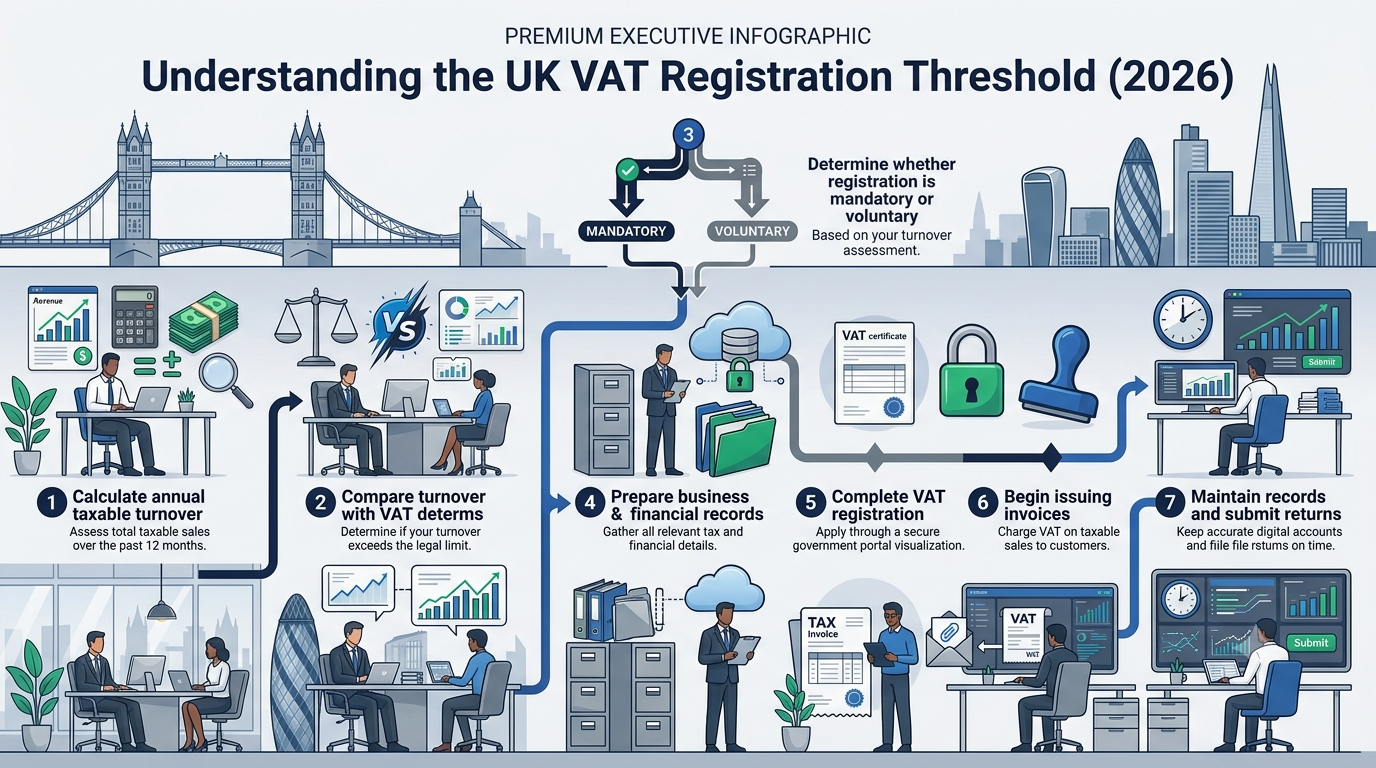
Threshold Considerations for Non-Residents
For non-resident owners of UK companies, VAT threshold rules can be different:
- Overseas sellers with UK stock. May need to register regardless of turnover if goods are stored in the UK, particularly for the Online Marketplace VAT rules and specific overseas seller rules.
- Distance selling to UK consumers. Non-resident businesses selling goods £135 or less directly to UK consumers may need to register regardless of turnover.
- Non-established taxable person (NETP) rules. Businesses without a UK establishment have specific VAT registration rules that can differ from the standard threshold.
- Business-to-business services. For B2B services to UK customers, reverse charge rules often apply, meaning the UK customer accounts for VAT rather than the overseas provider.
For non-resident businesses trading in the UK, VAT rules are often significantly more complex than for UK-based businesses. Professional advice matters.
Threshold Considerations for Specific Sectors
Some sectors have specific VAT considerations:
- E-commerce and marketplace sellers. Overseas sellers using UK marketplaces (Amazon, eBay) may have VAT registration obligations regardless of turnover due to marketplace facilitator rules.
- Property and construction. Domestic reverse charge for construction services affects when and how businesses in this sector register.
- Financial services. Many financial services are VAT exempt, which affects threshold calculations.
- Health and education. Certain health and educational services are exempt, again affecting how the threshold applies.
- Charities and non-profits. Have specific VAT rules that can differ from commercial businesses.
If your business is in one of these sectors, your VAT position needs sector-specific advice, not just the standard threshold rules.
Should You Register Before Reaching the Threshold?
Voluntary registration before hitting the threshold is a real strategic choice. Reasons to consider it:
- Reclaim VAT on setup costs. If you’re investing in equipment, stock, or setup expenses, being VAT registered lets you reclaim the VAT you pay.
- B2B customer base. If your customers are mostly businesses who can reclaim VAT, adding 20% to your prices doesn’t affect their real cost.
- Business credibility. Being VAT registered signals professionalism and scale to some client segments.
- Preparation for growth. If you expect to cross the threshold soon, registering in advance makes the transition smoother.
- Access to specific tax schemes. Some tax planning opportunities require VAT registration.
- Reasons to avoid voluntary registration:
- Consumer-facing business. If your customers are consumers who can’t reclaim VAT, adding 20% to prices may make you less competitive.
- Low input VAT. If you don’t have significant VAT to reclaim, voluntary registration adds admin without much benefit.
- Simple business model. VAT registration adds bookkeeping complexity that may not be worth it for a simple operation.
The right choice depends on your specific business. Professional advice helps clarify what makes sense.
How Form My Company Helps
We help UK businesses navigate the VAT threshold and register correctly. As part of our compliance services, we can:
- Assess your VAT position. Whether registration is mandatory, voluntary, or for a specific circumstance.
- Monitor your approach to the threshold. Helping you plan ahead.
- Prepare and submit your VAT registration application to HMRC on your behalf.
- Advise on the right VAT scheme. For your business type, turnover, and cash flow.
- Coordinate VAT registration with formation. For new UK companies.
- Support non-resident sellers. With the specific rules that apply to overseas businesses.
- Point you toward ongoing accounting support. Where VAT return filing and wider tax compliance is needed.
For businesses approaching or above the threshold, professional support ensures you register correctly and avoid costly mistakes.
Understand the Threshold and Plan Ahead Today
The UK VAT registration threshold is a critical number for any growing business, and understanding how it works helps you plan proactively rather than react in a rush. Whether you’re approaching the threshold, crossing it, or considering voluntary registration, professional support makes the process smoother. With Form My Company, VAT registration guidance and services are straightforward and fully supported. Get in touch today and let us help you navigate the threshold correctly.
Frequently Asked Questions
What is the current UK VAT registration threshold?
The current UK VAT registration threshold is £90,000, in force since 1 April 2024. If your VAT taxable turnover exceeds this over any rolling 12-month period, you must register for VAT with HMRC within 30 days.
Is the threshold £90,000 turnover or profit?
Turnover. The threshold applies to your total taxable turnover (excluding VAT), not your profit. This means even businesses with modest profit margins can quickly hit the threshold on turnover alone.
Is the threshold calculated annually or rolling?
Rolling. The £90,000 threshold applies to your rolling 12-month turnover, not a calendar year or tax year. You check the last 12 months from the end of any current month.
What if I expect to exceed the threshold in the next 30 days?
You must register within 30 days of forming that expectation. This is a “look-forward” test that applies when a specific event (like a large contract) is expected to push you over the threshold immediately.
Do zero-rated sales count toward the threshold?
Yes. Zero-rated sales (like most food and children’s clothing) count as VAT taxable turnover, even though the VAT rate is 0%. This can affect businesses that thought they wouldn’t need to register.
What if I’m below the threshold but want to register?
Voluntary registration is common. Benefits include reclaiming VAT on expenses, business credibility, and preparation for growth. The trade-off is added admin and, for consumer-facing businesses, adding 20% to prices.
What’s the deregistration threshold?
£88,000. If your turnover falls below this, you may be able to deregister for VAT, though deregistration is voluntary rather than automatic.
Can Form My Company help with VAT registration?
Yes. We assess your VAT position, prepare and submit your registration application, advise on the right VAT scheme, coordinate with your wider UK compliance, and support both UK-based and non-resident businesses.