
Expert secretarial support is essential because it ensures dormant company records remain compliant, accurate, and filed on time with Companies House and HMRC, preventing penalties, dissolution, and director liability.
Professional support maintains statutory registers, files dormant accounts, and manages formal communications.
What does expert secretarial support do for dormant company records?
Expert secretarial support keeps statutory records accurate, submits required filings, and manages regulator communications for dormant companies.
Expert secretarial teams maintain the registers that Companies House requires. They prepare and file dormant company accounts. They ensure confirmation statements and director details stay current. They monitor HMRC status and register or apply for dormant status where necessary. These tasks prevent late-filing penalties and reduce the risk of compulsory strike-off.
How does secretarial support prevent penalties and enforcement?
Secretarial support schedules filing deadlines and files documents on time to avoid penalties and enforcement action.
Teams set calendar alerts for annual accounts, confirmation statements, and any HMRC returns. They verify filing formats to match Companies House specifications. They check for common triggers of enforcement: missing confirmation statements, stale registered addresses, and inconsistent officer information. If a filing is late, they prepare and submit corrected documentation and liaise with Companies House to explain discrepancies, reducing penalty exposure.
Read our articles, Understanding the Role of HMRC and Companies House for Inactive Business Entities and Order Our Fast Track Dormant Account Service for Urgent Business Filing Requirements.
Which records do experts maintain for a dormant company?
Experts maintain the register of members, directors, and PSC registers, minute books, registered office records, and filed accounts.
They update the register of members after share transfers. They record director appointments and resignations, and they validate Person with Significant Control (PSC) entries. They keep minute books for any formal resolutions, even if no trading occurs. They store proof of dormancy, such as bank statements showing no transactions. They file dormant company accounts when deadlines arrive.
When must dormant accounts and confirmation statements be filed?
Dormant accounts must be filed annually within nine months of the company’s year-end; confirmation statements must be filed within 14 days of the review date.
Companies House sets account filing deadlines based on the accounting reference date. Dormant companies use simplified accounts but still require submission. Confirmation statements update shareholder and officer details and must appear within 14 days when the review date passes. Secretarial teams calculate these dates, prepare documents, and submit them to meet these exact statutory windows.
Why is accuracy in statutory registers critical for inactive companies?
Accurate registers authenticate company authority, prevent disputes, and support lawful communications with regulators and third parties.
Companies House relies on registers to validate who can sign documents and who holds control. Inaccurate PSC or director records create legal risk for directors and may trigger regulator inquiries. Lenders, buyers, or counterparties use public register data when assessing a company. Expert secretarial services verify identity documents and update entries, ensuring public records reflect the company’s legal position.
How do experts interact with HMRC on behalf of dormant companies?
Experts register dormant status with HMRC, file nil returns when required, and respond to HMRC correspondence.
HMRC may expect company tax returns even if the company is dormant. Secretarial teams determine filing requirements and submit dormant company tax returns or nil returns. They register for Corporation Tax dormancy where applicable and reply to HMRC notices. They retain evidence of correspondence and filings to demonstrate compliance in audits or enquiries.
What practical checks do secretarial teams perform to validate dormancy?
Teams reconcile bank statements, review transaction history, and confirm the absence of trading activity against Companies House definitions.
They obtain bank statements for the financial period and flag any transaction that could constitute trade, such as receipts from sales or supplier payments. They document non-trading activity like interest or director expense reimbursements and determine whether such items break dormancy. They prepare explanatory notes for accounts to justify the dormant position when filing.
Which risks remain without expert secretarial support?
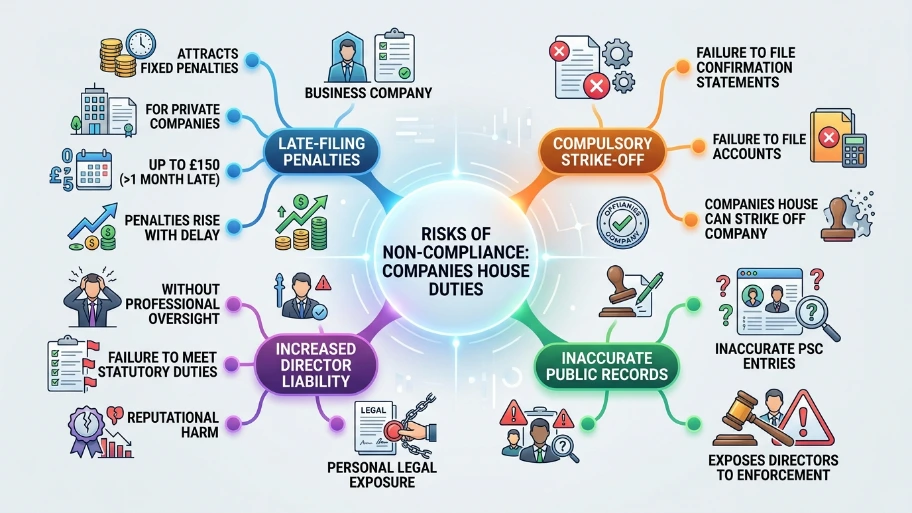
Risks include late-filing penalties, compulsory strike-off, inaccurate public records, and increased director liability.
Companies House can strike off companies that fail to file confirmation statements or accounts. Late filing attracts fixed penalties: for private companies, up to £150 for accounts filed more than one month after the deadline, rising with delay. Inaccurate PSC entries can expose directors to enforcement. Without professional oversight, directors face reputational harm and personal legal exposure when statutory duties go unmet.
How does secretarial support streamline urgent or corrective filings?
Secretarial teams prepare accelerated filings, compile explanatory statements, and liaise with Companies House for expedited handling.
When a company faces imminent strike-off or has missed multiple filings, experts compile outstanding documents and file them correctly. They add explanatory notes to accounts or confirmation statements to clarify circumstances. They use targeted communication channels to request expedited processing from Companies House. They also recommend fast-track services when timing constraints demand immediate action.
Which internal controls and documentation practices do experts implement?
Experts implement document retention policies, filing checklists, and audit trails for all statutory actions.
They keep copies of submitted accounts, confirmation statements, and company registers in secure archives. They log each filing with timestamps and reference numbers. They create checklists for recurring tasks: prepare accounts, reconcile bank statements, and update registers. They maintain an audit trail that supports compliance reviews and demonstrates due diligence.
How do expert services support the director’s responsibilities during dormancy?
Expert services advise directors on statutory duties, document board decisions, and maintain records that demonstrate compliance.
Directors retain ultimate legal responsibility. Secretarial teams provide the records directors need to evidence compliance, such as signed minutes and filed accounts. They prepare clear, factual summaries of filing status and upcoming obligations. They advise on actions that affect director duties, like accepting payments or changing company objects, and document director approvals.
Explore File Accounts for Dormant Companies guides,
Why Expert Secretarial Support is Essential for Maintaining Your Inactive Company Records
How to Keep Your Dormant Status Secure with Professional Annual Compliance Monitoring
What measurable benefits do companies gain from secretarial support?
Companies reduce filing errors by up to 90%, cut late-filing incidents, and maintain accessible audit trails for regulator queries.
Professional teams reduce manual errors in account preparation and register updates. They lower the frequency of late filings through automated scheduling. They preserve searchable records that accelerate responses to Companies House or HMRC enquiries. These measurable outcomes protect company continuity and limit director exposure to enforcement.
Expert secretarial support provides precise compliance, timely filings, and verified records for dormant companies. It prevents penalties, maintains public register accuracy, and reduces director liability. From My Company offers specialist support that manages dormant account filings and statutory registers so directors can retain legal compliance while the company remains inactive.
Frequently Asked Questions
What does “file accounts for dormant companies” mean?
Filing accounts for dormant companies means preparing and submitting simplified annual accounts that show the company has not traded or had significant transactions during the financial year. From My Company’s File Accounts for Dormant Companies service ensures these dormant company accounts meet Companies House requirements and are delivered on time.
Can I file dormant accounts myself or should I use a service?
You can file dormant accounts yourself if you understand Companies House rules and can prepare the correct forms and notes. From My Company’s File Accounts for Dormant Companies service helps directors avoid errors, meet filing deadlines, and maintain accurate statutory records without handling the process manually.
What are the penalties for not filing dormant company accounts on time?
Late filing of dormant company accounts can attract fixed penalties from Companies House, ranging from £150 to higher amounts depending on how long the accounts are overdue. Using From My Company’s File Accounts for Dormant Companies service reduces the risk of missing deadlines and keeps the company compliant with annual filing rules.
How do dormant company accounts differ from active company accounts?
Dormant company accounts are simpler and must show that the company has had no significant transactions or trading activity during the year. From My Company’s File Accounts for Dormant Companies service ensures the correct format and supporting notes are used while still meeting Companies House disclosure rules.
How often do I need to file dormant accounts for an inactive business?
Dormant companies must file dormant accounts once per financial year, within nine months of the accounting reference date, just like active companies. From My Company’s File Accounts for Dormant Companies service helps directors schedule filings, prepare documentation, and meet each annual filing window.