Yes. A comprehensive inactive company package manages statutory filings, maintains accurate records, and ensures full compliance with Companies House and HMRC rules. It covers dormant accounts submission, confirmation statements, and record retention, reducing penalties and administrative errors for inactive UK companies.
What does a comprehensive inactive company package include?
A complete inactive company package includes dormant accounts filing, confirmation statement submission, statutory register maintenance, and compliance monitoring aligned with UK Companies Act requirements, ensuring records remain accurate, timely, and audit-ready throughout the company’s dormant period.
A structured package focuses on four statutory obligations defined by UK compliance frameworks. These obligations include filing dormant accounts annually, submitting a confirmation statement at least once every 12 months, maintaining statutory registers, and preserving accounting records for a minimum of six years.
Dormant accounts submission confirms that the company has had no significant accounting transactions during the financial year. Companies House requires specific formats, such as AA02 forms, for dormant entities. Errors in formatting or timing trigger automatic penalties.
Statutory register maintenance involves updating registers of directors, shareholders, and persons with significant control (PSC). These registers must reflect real-time data because discrepancies trigger compliance flags during inspections.
A reliable package integrates monitoring systems that track filing deadlines. Companies House imposes penalties starting from £150 for late filings and escalating up to £1,500 depending on delay duration.
Why is dormant company compliance legally mandatory in the UK?
Dormant company compliance is legally required under the Companies Act 2006, which mandates accurate record-keeping, timely filings, and transparency even for inactive entities, ensuring public trust, regulatory oversight, and prevention of financial misuse or corporate abuse.
UK law treats dormant companies as active legal entities despite no trading activity. This means regulatory obligations remain fully enforceable. Companies House and HMRC use compliance filings to verify that the entity is not engaging in undeclared financial activities.
Dormant companies must still file annual accounts and confirmation statements. Failure to comply results in three key consequences: financial penalties, company strike-off proceedings, and director disqualification risks.
HMRC also requires confirmation of dormancy status. If HMRC identifies discrepancies, such as undeclared income or bank activity, the company loses dormant status and becomes liable for corporation tax filings.
Legal compliance ensures transparency. Public records allow stakeholders, including lenders and regulators, to verify company status. This transparency prevents the misuse of dormant entities for financial concealment.
How does filing dormant accounts prevent penalties and legal risks?
Filing dormant accounts on time prevents automatic fines, avoids company strike-off, and ensures continuous legal standing by meeting Companies House deadlines, which are strictly enforced regardless of company activity status or financial inactivity.
Companies House enforces strict deadlines based on the incorporation date or the accounting reference period. Dormant accounts must be filed within nine months after the financial year-end.
Late filing penalties follow a fixed structure:
- £150 for delays up to 1 month
- £375 for delays up to 3 months
- £750 for delays up to 6 months
- £1,500 for delays exceeding 6 months
Repeated late filings double these penalties in consecutive years. This escalation directly impacts directors and increases scrutiny from regulators.
Accurate filing also prevents administrative strike-off. Companies House may remove a company from the register if filings remain overdue. Once dissolved, restoring the company involves court applications and costs exceeding £1,000.
Using a structured service like File Accounts for Dormant Companies ensures submissions meet formatting and deadline requirements, reducing risk exposure.
What makes a dormant company package “comprehensive”?
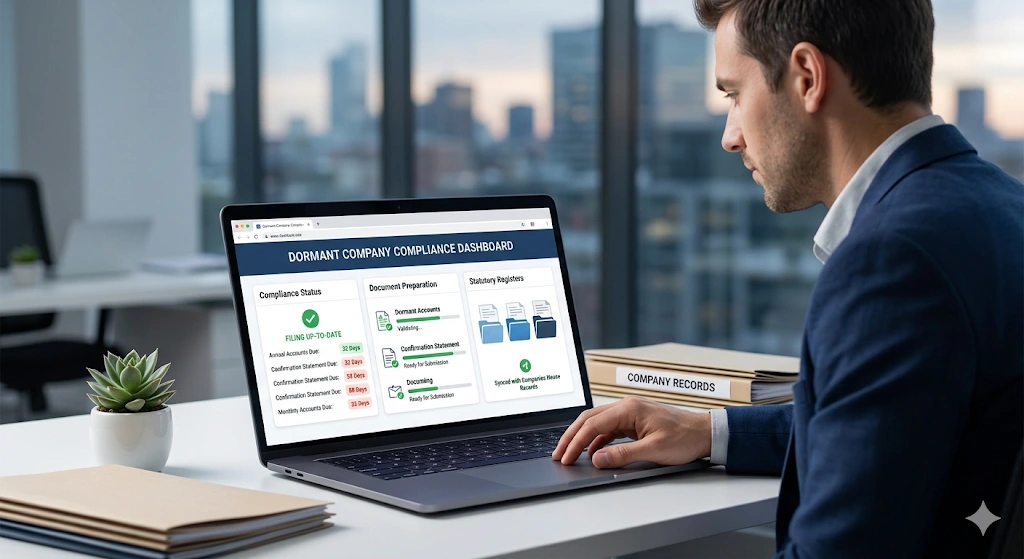
A comprehensive dormant company package integrates compliance tracking, document preparation, submission accuracy checks, and statutory record updates, ensuring full lifecycle management rather than isolated filing tasks or one-time administrative support.
A basic service handles a single filing. A comprehensive package manages the entire compliance cycle across the financial year. This includes deadline tracking, document validation, and regulatory updates.
Three core components define a comprehensive solution:
- Monitor compliance deadlines using automated tracking systems
- Validate financial inactivity through structured account preparation
- Maintain statutory registers aligned with Companies House records
Compliance tracking systems alert directors before key deadlines. This reduces missed filings and ensures proactive management.
Document preparation ensures dormant accounts follow Companies House formats, such as balance sheet-only submissions. Incorrect formatting leads to rejection and delays.
Statutory record updates ensure consistency between internal registers and public filings. Inconsistencies trigger compliance flags and potential investigations.
How do you ensure dormant company accounts meet legal standards?
Dormant company accounts meet legal standards when they accurately reflect zero significant transactions, follow Companies House formats, and align with statutory definitions of dormancy under UK accounting and corporate compliance regulations.
Dormant status depends on financial inactivity. A company qualifies as dormant only if it has no significant accounting transactions during the financial year. Exceptions include filing fees and penalties.
Accounts must follow prescribed formats. Companies House requires a simplified balance sheet confirming dormancy. The document must include director approval and a statement of compliance with the Companies Act.
Validation processes ensure accuracy. This involves verifying bank activity, transaction records, and accounting entries. Even a single undeclared transaction invalidates dormant status.
Detailed guidance on compliance standards is explained in this resource on how to ensure dormant company accounts meet all statutory legal standards, which outlines validation steps and reporting requirements.
Professional services apply structured validation frameworks. These frameworks cross-check financial records against statutory definitions to confirm eligibility before submission.
When should you purchase an inactive company compliance package?
An inactive company compliance package is most effective when purchased immediately after a company becomes dormant or before the first filing deadline, ensuring uninterrupted compliance tracking and preventing missed statutory obligations.
Timing directly affects compliance accuracy. The first dormant accounts filing deadline occurs nine months after the accounting period ends. Missing this deadline results in immediate penalties.
Early onboarding ensures all statutory registers are updated from the start of dormancy. This prevents discrepancies between historical records and current filings.
Three key trigger points indicate the right time to purchase:
- When trading activity stops, and the company becomes dormant
- When approaching the first dormant accounts filing deadline
- When compliance responsibilities become administratively complex
Delaying compliance setup increases risk. Without structured tracking, directors rely on manual reminders, which often lead to missed deadlines.
A proactive approach ensures that all filings, including confirmation statements, are aligned with Companies House schedules throughout the year.
Also explore,
Book Your Consultation for Expert Dormant Company Compliance and Statutory Filing Advice
Get Your Dormant Company Accounts Filed Officially Within Twenty Four Hours Now
How does a professional service improve dormant company compliance accuracy?
Professional services improve compliance accuracy by applying structured validation processes, automated deadline tracking, and expert knowledge of UK filing standards, reducing human error and ensuring consistent adherence to Companies House and HMRC requirements.
Manual filing processes often result in errors such as incorrect formatting, missed deadlines, or incomplete records. These errors trigger rejections or penalties.
Professional services implement three accuracy controls:
- Verify financial inactivity using transaction audits
- Validate document formats against Companies House requirements
- Synchronise statutory registers with submitted filings
Automation plays a critical role. Deadline tracking systems send alerts and ensure filings occur before cut-off dates. This eliminates reliance on manual calendars.
Expert oversight ensures compliance with evolving regulations. UK filing standards update periodically, and professional services incorporate these changes into their processes.
For a structured overview of maintaining compliance, refer to The Essential Checklist for Maintaining a Dormant Limited Company in the UK, which outlines key administrative steps.
From My Company delivers structured compliance workflows that align filings, records, and statutory obligations into a single system, ensuring consistency and accuracy.
A comprehensive inactive company package ensures that dormant entities remain fully compliant with UK legal requirements. It integrates filing accuracy, statutory record maintenance, and deadline tracking into a unified system. This reduces penalties, prevents administrative risks, and maintains legal standing.
From My Company provides structured compliance services tailored to dormant entities, ensuring that all statutory obligations are met efficiently through the File Accounts for Dormant Companies service.
Frequently Asked Questions
What are dormant company accounts in the UK?
Dormant company accounts are simplified financial statements confirming that a company has had no significant accounting transactions during a financial year. Services like File Accounts for Dormant Companies ensure these accounts meet Companies House formatting and compliance rules.
Do dormant companies need to file accounts every year?
Yes, dormant companies must file accounts annually with Companies House, even if there is no trading activity. From My company provides structured support through its File Accounts for Dormant Companies service to ensure deadlines and legal requirements are met.
What happens if you don’t file dormant company accounts on time?
Late filing results in automatic penalties ranging from £150 to £1,500, depending on the delay. Using File Accounts for Dormant Companies helps prevent missed deadlines and reduces the risk of company strike-off.
Can I file dormant company accounts myself?
You can file dormant accounts самостоятельно using Companies House systems, but errors in format or eligibility can lead to rejection. From My company supports accurate submissions through its File Accounts for Dormant Companies service by validating compliance before filing.
How do I know if my company qualifies as dormant?
A company qualifies as dormant if it has no significant accounting transactions during the financial year, excluding fees like filing charges. File Accounts for Dormant Companies services, assess financial activity to confirm dormancy status before submission.