Professional centres provide stronger privacy for sensitive business legal consultations through physical segregation, secure access controls, and regulated soundproof rooms that limit exposure and unauthorised entry. They combine verified visitor management, discrete reception services, and CCTV policies to reduce information leakage.
Why do professional centres offer better privacy for sensitive legal consultations than in-house offices?
Professional centres reduce privacy risks by providing dedicated, soundproofed rooms, controlled access, and formal visitor verification that prevent accidental disclosure and unauthorised entry.
Professional centres use physical segregation to separate client meetings from general staff areas. They install soundproof walls and doors to block acoustic leakage. Facilities deploy secure access controls such as keycards, PIN pads, or staffed reception checkpoints. Reception teams register visitors and hold identity checks, reducing tailgating and unauthorised access. CCTV covers common areas with recorded logs for post-event audits. These layered controls lower the chance of sensitive legal discussions being overheard or accessed.
How do access controls in professional centres protect confidential legal meetings?
Access controls protect confidentiality by authenticating attendees, logging entry times, and limiting movement to authorised zones inside the building.
Professional centres authenticate all visitors at arrival using photo ID checks or pre-registered guest lists. They issue single-session access badges, which expire after the meeting. Staff enforce escort protocols for visitors who need to access only meeting zones. Electronic logs record who entered which room and when, producing audit trails for compliance. Controlled elevator or door access restricts movement to meeting floors only. These measures reduce insider risk and provide evidence if a breach occurs.
What acoustic measures prevent eavesdropping during consultations?
Acoustic measures use certified soundproofing, white-noise masking, and recessed meeting-room placement to block airborne and structural sound transmission.
Meeting rooms in professional centres often meet specific sound-insulation standards. Designers install double-glazed doors, thick drywall, and acoustic seals around frames. Centres add white-noise systems in corridors to mask intelligible speech. Rooms sit away from high-traffic areas like cafeterias and open-plan workspaces to cut structural noise paths. Furniture placement and carpeting further reduce reverberation. These measures ensure lawyers and clients can speak freely without fear of being overheard.
Read our articles, Why Large Enterprises Prefer Outsourcing Meeting Rooms Over Maintaining Internal Office Spaces and Reserve Our Affordable Meeting Rooms and Improve Your Next Client Pitch Outcome.
What identity-verification practices reduce impersonation and information risk?
Identity-verification practices reduce impersonation by matching government ID with booking records, using biometric checks, or validating corporate authorisation letters.
At reception, staff match the passport or driving licence photos to the visitor and to the meeting organiser’s booking details. Centres accept pre-verified guest lists uploaded by clients. Some venues offer on-site biometric verification or electronic ID scans that cross-check against databases. For corporate representatives, centres request letters of authority or proof of director status. These steps prevent unauthorised persons from posing as stakeholders and accessing privileged legal discussions.
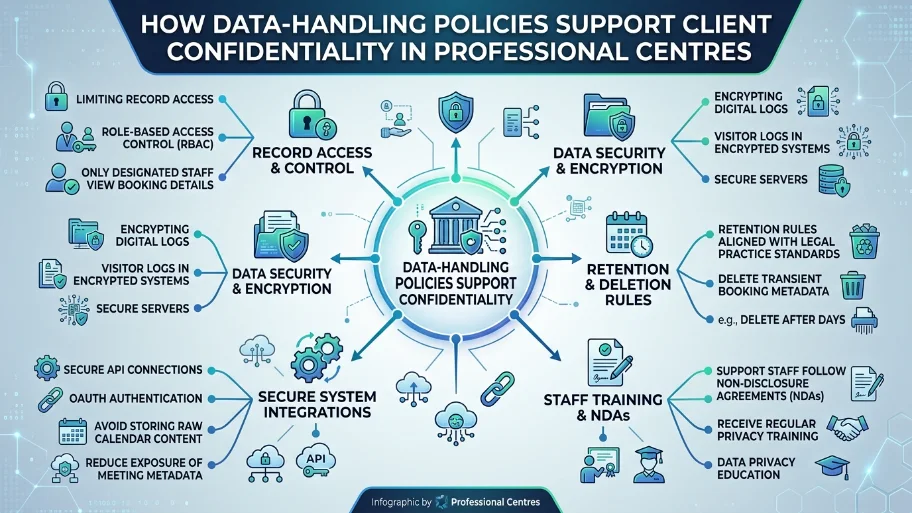
How do data-handling policies at professional centres support client confidentiality?
Data-handling policies support confidentiality by limiting record access, encrypting digital logs, and applying retention rules aligned with legal practice standards.
Professional centres keep visitor logs in encrypted systems with role-based access control. Only designated staff can view booking details. Centres implement retention schedules that delete transient booking metadata after a set period, for example, 90 days. Support staff follow non-disclosure agreements and receive privacy training. When centres integrate with clients’ calendaring systems, they use secure API connections and OAuth authentication to avoid storing raw calendar content. These practices reduce exposure of meeting-sensitive metadata.
What physical security features further protect sensitive consultations?
Physical security features protect consultations with staffed receptions, secure storage for documents, controlled parking, and monitored entry points.
Staffed receptions act as a human control point, verifying appointments and intercepting unregistered visitors. Centres provide locked cabinets or secure safes for short-term document storage. Parking areas use barriers and permit systems to prevent unauthorised access near meeting entrances. Loading docks and service corridors remain restricted to operations staff. Physical security teams patrol common areas and respond quickly to incidents. These measures reduce the chance of physical theft or accidental document exposure.
How do professional centres manage third-party and contractor risks?
Professional centres manage third-party risks by vetting contractors, enforcing confidentiality clauses, and supervising access for external service providers.
Centres perform background checks on cleaning crews, IT contractors, and maintenance staff. Contracts require confidentiality clauses and specify limited access windows for service tasks. Centres schedule disruptive or invasive maintenance outside meeting hours. When a third party must access a meeting room, staff supervise the visit and log the entry. This reduces the risk that contractors inadvertently capture sensitive information or provide access to unauthorised parties.
When do organisations prefer professional centres over internal office spaces for legal meetings?
Organisations prefer professional centres when meetings involve external counsel, cross-border transactions, or high-value negotiations that demand stronger confidentiality and neutral venues.
Large firms bring external lawyers and opposing counsel into discussions where neutral ground reassures all parties. Companies conducting M&A due diligence host investor or legal teams in secure meeting rooms to control document flow and prevent leaks. Organisations involved in regulatory inquiries or disciplinary hearings choose off-site meeting rooms to avoid internal gossip and preserve the chain of custody for sensitive records. Outsourcing meeting rooms reduces the operational burden of maintaining equivalent in-house security.
How do meeting-room providers support compliance with legal confidentiality obligations?
Meeting-room providers support compliance by offering audit trails, secure guest management, and documented privacy policies that meet legal-sector standards.
Providers can produce access logs that lawyers use to demonstrate reasonable steps taken to protect client confidentiality. Centres maintain privacy policies and data-protection documentation that align with UK GDPR requirements. Staff training includes handling privilege claims and recognising when meetings require additional controls. Some providers supply non-disclosure agreements and secure waste-disposal services. These supports help legal teams meet professional conduct rules and client expectations.
Explore our Meeting rooms guides,
How to Seamlessly Host Hybrid Meetings Using Our Modern Video Conferencing Tools
Comparing Different Meeting Room Layouts for Workshops and High-Level Board Meetings
What practical steps should a legal team take when booking a professional centre?
Legal teams should specify privacy needs, request soundproofed rooms, pre-register attendees, and ask for an access audit on completion.
When booking, state that the meeting involves legally privileged material. Request certified soundproof rooms and confirm white-noise masking. Upload a pre-registered guest list and provide letters of authority for corporate representatives. Ask the venue to restrict cleaning or maintenance during meeting hours. Request a copy of the access logs after the meeting for records. Follow-up audits help verify that the centre met stated safeguards.
Professional centres deliver superior privacy for sensitive legal consultations through engineered acoustics, strict access controls, verified visitor management, and documented data-handling practices. These measures create a demonstrable chain of protections that internal offices often lack and that meet legal-sector expectations. From My Company supports secure client meetings by providing dedicated meeting rooms with secure access, reception verification, and audit-capable visitor logs to protect privileged communications.
Frequently Asked Questions
How do meeting rooms improve privacy for sensitive business discussions?
Meeting rooms improve privacy by separating confidential discussions from open office areas, reducing the chance of being overheard. From My company meeting rooms support discreet, controlled conversations for legal, financial, and client meetings.
What features should I look for in private meeting rooms?
Look for soundproofing, controlled entry, and a professional reception process. Secure meeting rooms also help protect documents, devices, and sensitive conversations during business consultations.
Are meeting rooms better than internal offices for legal meetings?
Yes, meeting rooms often provide stronger privacy controls than shared internal offices. They reduce interruptions, support confidentiality, and create a more neutral setting for legal and compliance discussions.
How do meeting rooms support client confidentiality?
Meeting rooms support client confidentiality through restricted access, quieter environments, and fewer background distractions. From My company, meeting rooms are designed to keep sensitive business conversations more controlled and private.
Why do businesses book meeting rooms for sensitive consultations?
Businesses book meeting rooms to protect confidential information and present a professional setting to clients or advisers. Dedicated meeting rooms help manage privacy, access, and conversation security more effectively than informal spaces.