
If you need to add a director to Companies House, you must notify Companies House of the appointment and provide the required information about the new director. For most UK limited companies, you can appoint an individual director online using the AP01 service, provided the company and appointment meet the relevant filing requirements.
This guide explains how to appoint a director on Companies House, what details you need, how the online and paper processes differ, and when you must submit the information. It also explains the importance of identity verification and the steps to take before completing the appointment.
Add Director to Companies House: What You Need to Know
To add a director to Companies House, the company must first appoint the individual in accordance with its articles of association and applicable company law. You then notify Companies House using the appropriate filing method, usually the online AP01 service for an individual director.
Companies must report changes to directors within 14 days. Before filing, check that the new director has completed the required identity verification and can provide their Companies House personal code.
The main steps are:
- Confirm that the appointment has been properly approved.
- Collect the new director’s details and consent.
- Complete the online AP01 filing or use the appropriate paper process where permitted.
- Submit the information to Companies House.
- Check the public company record to confirm the appointment has been recorded.
You can access the official Companies House AP01 appointment service for the current instructions and filing options.
How to Add a Director on Companies House Online
For most standard appointments of individual directors, online filing is a convenient way to notify Companies House. Before starting, ensure you have the correct company details and the information needed to complete the appointment.
Step 1: Confirm the Director’s Appointment
Before you add a director to Companies House, check your company’s articles of association and any applicable internal approval requirements. The company should formally approve the appointment using the process required by its governing documents.
Confirm the intended appointment date and make sure the individual has agreed to act as a director. The date entered on the filing should reflect the actual appointment rather than the date the online form is submitted.
Step 2: Gather the Required Information
Prepare the company number, registered company name and the new director’s personal details. You will generally need information such as the director’s name, nationality, month and year of birth, addresses and appointment date.
You must also meet the applicable identity verification requirements. Companies House guidance states that directors must verify their identity and that the filing requires the director’s Companies House personal code, together with confirmation of identity verification.
Check the details carefully before proceeding. Incorrect names, addresses or appointment dates can delay the filing or lead to inaccurate public records.
Step 3: Complete the Online AP01 Form
Use the official Companies House service to file an AP01 appointment for an individual director. Enter the company information, appointment date and required director particulars.
Review each field before submitting the form. Make sure the information matches the company’s records and that the director has consented to act. The AP01 process is intended for appointing an individual, not a corporate director.
Step 4: Submit the Appointment Information
Once the form is complete, submit it through the relevant Companies House service. Keep a record of the submission and any confirmation you receive.
If you are unable to use the online service, check the official guidance to establish whether a paper filing is permitted for your circumstances. Certain cases, including company restoration and UK Societas appointments, have specific requirements.
Step 5: Check the Companies House Record
After submission, check the company’s public record to confirm that the director’s appointment appears correctly. If the filing has not been processed or the record does not reflect the appointment, follow the instructions provided by Companies House.
Keep the company’s internal records up to date as well. Filing with Companies House is an important part of the process, but it does not replace the company’s own appointment and governance records.
Companies House Appoint a Director: What Is Form AP01?
AP01 is the Companies House form used to notify the appointment of an individual as a director of a company. It provides the information needed to update the company’s officer record.
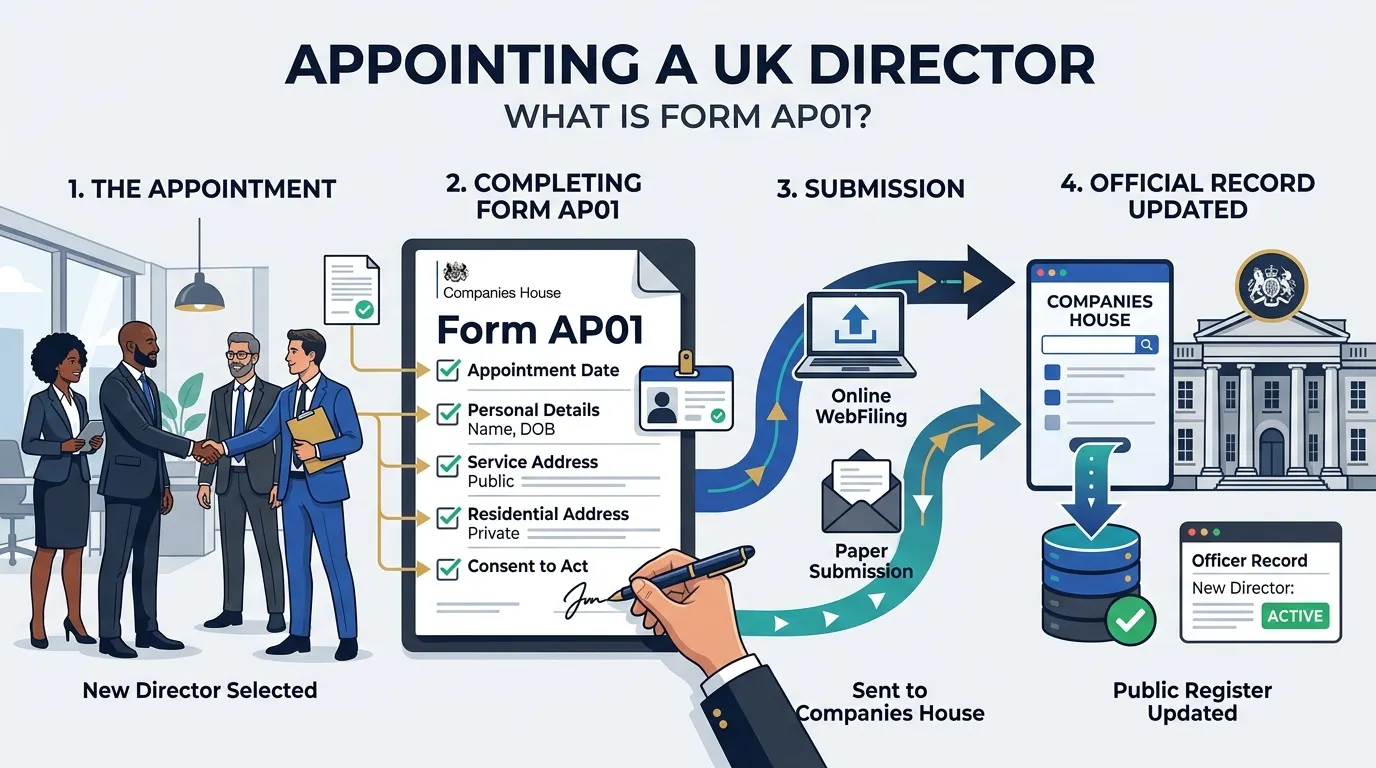
The form covers the company’s details, the date of appointment and the new director’s particulars. It also includes declarations and other information required by the current form.
Important: AP01 is for an individual director. If the proposed appointee is a corporate entity, the relevant form is generally AP02 rather than AP01. Check the official Companies House form guidance before filing.
What Details Are Required on AP01?
The information requested may include:
- Company name and company number
- Date of the director’s appointment
- Director’s full name and relevant former names
- Nationality and other personal particulars
- Month and year of birth, alongside the full details required by the form
- Service address and usual residential address
- Identity verification information and Companies House personal code
- Confirmation of consent to act and the required authentication
The precise information and declarations required should be checked against the current version of AP01. Avoid relying on an old downloaded copy if Companies House has updated its form or process.
Online vs Paper: Which Method Should You Use?
Companies House offers an online appointment service for standard appointments of individual directors. Online filing is generally the most straightforward route because it guides the user through the required information.
Paper filing is not available for every situation. For example, Companies House specifies paper filing requirements for certain restoration cases and UK Societas appointments. Companies in the PROOF scheme may also have to use online filing for relevant changes.
| Filing method | When it may be suitable | What to check |
|---|---|---|
| Online AP01 | Standard appointment of an individual director | Identity verification, personal code and required particulars |
| Paper AP01 | Specific cases where paper filing is permitted or required | Current form version, supporting details and delivery instructions |
| AP02 | Appointment of a corporate director | Eligibility and the requirements for a corporate appointment |
Always follow the current Companies House instructions for your company type and circumstances. Do not assume that the same filing method applies to every appointment.
When Must You Add a New Director to Companies House?
Companies House must be notified of changes to directors within 14 days. This includes reporting a director appointment and relevant changes to a director’s personal details.
The deadline makes it important to organise the appointment and filing promptly. Do not leave the notification until a later confirmation statement simply because the company is preparing other records.
A practical timeline is:
- Before the appointment: Check the company’s articles and internal approval requirements.
- On appointment: Record the appointment date and collect the required information.
- Before filing: Confirm identity verification and review all form details.
- Within 14 days: Notify Companies House of the appointment.
- After filing: Check the public record and retain the relevant company records.
For the official reporting requirement, refer to the GOV.UK guidance on company information you must report.
What Should You Check Before Appointing a Director?
Before completing the Companies House appointment process, confirm that the appointment has been properly authorised and that the proposed director meets the relevant legal requirements. The company should also consider how the new appointment affects its governance and statutory records.
Check that:
- The appointment follows the company’s articles of association.
- The individual has agreed to act as a director.
- The appointment date is accurate.
- The director’s details are complete and consistent.
- The identity verification requirements have been met.
- The appropriate form and filing method have been selected.
- The company’s internal records will be updated after the appointment.
For more information about the broader eligibility and legal considerations, read our guide to the legal requirements and criteria for appointing a new company director.
If you need a wider explanation of the appointment process for a limited company, see our guide on how to add a director to a limited company.
What Happens After Companies House Adds the Director?
Once the appointment is recorded, review the public company record and update the company’s internal documentation. Depending on the business, this may include board records, internal contact lists, delegated authorities, banking arrangements and relevant compliance procedures.
Make sure the director understands their responsibilities and has access to the information needed to perform the role. A Companies House filing updates the official record, but the company should also ensure its governance arrangements reflect the new appointment.
If the proposed director is a corporate entity rather than an individual, review the relevant rules and filing route before proceeding. Our guide to whether a corporate entity can be a UK company director explains this separate issue.
How Form My Company Can Help With a Director Appointment
Appointing a director involves more than entering a name on a form. Companies need to follow their internal approval process, gather accurate information, meet identity verification requirements and submit the appropriate filing within the required timeframe.
Form My Company provides support for businesses that need assistance with company administration and director appointments. If you want help managing the process, explore our director appointment and resignation service.
Before proceeding, confirm the service scope and the information required for your specific company. You remain responsible for ensuring that the appointment is authorised and that the information supplied is accurate.
Appoint a Director With Confidence
When you need to add a director to Companies House, make sure the appointment is properly authorised, the required information is accurate and the notification is submitted within the 14-day deadline. Use the current Companies House guidance to select the correct form and filing method.
If you would prefer support with the administration, visit Form My Company’s director appointment and resignation service to explore the available assistance.
Frequently Asked Questions
How do I add a director to Companies House?
To add a director to Companies House, formally approve the appointment, collect the director’s details and submit the appropriate notification. For an individual director, this is usually done using the AP01 form through the Companies House online service.
Can I appoint a director on Companies House online?
Yes, you can usually appoint an individual director online using the Companies House AP01 service. You will need the company details, the director’s information and the required identity verification details.
What is the AP01 form used for?
The AP01 form is used to notify Companies House about the appointment of an individual company director. It records the appointment date and the required personal details. A different form generally applies when appointing a corporate director.
How long do I have to add a new director to Companies House?
A company must notify Companies House of a director’s appointment within 14 days. Prepare the required information promptly, check the details carefully and submit the notification within the deadline.
Does a new director need to verify their identity?
Yes. Directors must meet the applicable Companies House identity verification requirements. The appointment filing requires the relevant Companies House personal code and confirmation that identity verification has been completed.
Can I add a director to Companies House using a paper form?
Paper filing may be available or required in certain circumstances, but it is not suitable for every appointment. Check the latest Companies House guidance to confirm whether you can use a paper AP01 form or need to file online.
Can a non-UK resident be appointed as a UK company director?
A person does not generally have to be a UK resident to become a director of a UK company. However, the individual must meet the applicable legal requirements and complete the required Companies House identity verification process.
What should I do after Companies House records the new director?
Check the company’s public record to ensure the appointment details are correct. You should also update your internal company records and make any necessary changes to banking arrangements, delegated responsibilities and company administration.
Can I appoint a company rather than an individual as a director?
A corporate director appointment is subject to specific legal requirements and is not filed using the individual director AP01 form. Check the current Companies House rules and the appropriate filing process before proceeding.
Can Form My Company help me appoint a director?
Form My Company offers a director appointment and resignation service for businesses that need assistance with company administration. Visit the director appointment and resignation service to review the available support.