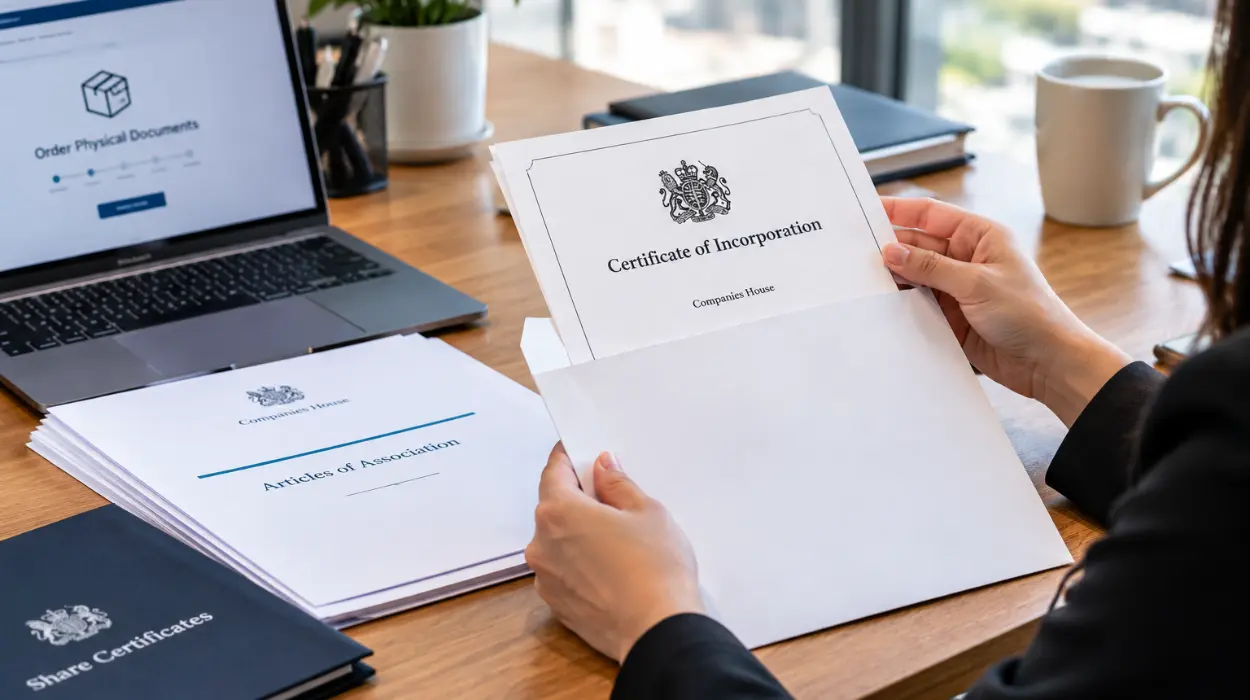
Leaving company documents unprotected exposes UK businesses to corporate identity theft, unauthorised filings, and severe financial losses. Fraudsters exploit public Companies House records to alter officer details, siphon corporate credit, and incur legal liabilities without the direct knowledge of company directors.
What Is Corporate Document Fraud in the UK?
Corporate document fraud occurs when unauthorized individuals alter official business records registered at Companies House to hijack a legitimate company identity. Attackers submit fraudulent filings to change registered addresses, appoint shadow directors, or secure fraudulent loans using corporate credentials.
Companies House operates on a good-faith filing framework. The registrar accepts submitted documents without performing deep background checks on every entry. Consequently, criminals exploit this process by filing false returns. They change the company’s registered office address to a location under their control. Once the address changes, official mail redirects to the perpetrators.
Criminals then appoint false directors to the board. They use these fake officer profiles to apply for line-of-credit accounts, corporate loans, and high-value trade agreements. The legitimate business owners often discover the breach only when debt collectors demand payment for unpaid liabilities.
Protecting official paperwork prevents unauthorized access to internal filings, statutory registers, and director records. Businesses must secure their filing mechanisms to prevent fraudulent amendments. Utilizing specialized Fraud Protection measures stops unauthorized parties from submitting changes to Companies House registers.
How Do Criminals Exploit Unprotected Statutory Registers?
Criminals exploit unprotected statutory registers by extracting sensitive director information, corporate signatures, and authentication codes from public databases. They manipulate these details to forge official filings, open fraudulent bank accounts, and hijack existing corporate supplier contracts.
Public registers contain vital business intelligence. Anyone can view director names, dates of birth, service addresses, and filing histories online for free. When companies fail to secure internal statutory books and electronic authentication keys, identity thieves gather enough data to impersonate company officers.
The primary method involves hijacking the PROJ (Proof) scheme or exploiting vulnerable online filing accounts. Criminals construct fake identity credentials using stolen director information. They submit physical or electronic paper filings to change the company name, share distribution, or mortgages.
Fraudulent filings destroy commercial credit scores immediately. Financial institutions revoke lines of credit when unexpected changes appear on official filings. Supplier networks cancel deferred payment terms if officer changes signal high-risk operational instability. Unprotected statutory records leave doors wide open for seamless external manipulation.
What Are the Financial Risks of Corporate Identity Theft?
The financial risks of corporate identity theft include direct bank account drain, severe credit rating damage, unexpected debt liabilities, and substantial legal defense fees. UK enterprises face immediate operational disruption when fraudulent transactions drain corporate working capital reserves.
Corporate identity theft directly attacks business capital. When fraudsters hijack corporate identities, they immediately apply for overdraft facilities, asset leases, and commercial loans. Lenders issue funds based on the legitimate company’s established credit history.
When the loans default, lenders pursue the legitimate company for repayment. Resolving these fraudulent debts requires extensive legal intervention and forensic accounting checks. During investigations, banks often freeze official accounts, preventing the business from paying payroll, taxes, and suppliers.
Direct financial losses through unauthorized corporate loans
Indirect costs from frozen bank accounts and operational downtime
Legal fees incurred to reverse fraudulent filings at Companies House
Increased insurance premiums due to compromised risk profiles
Restoring a compromised corporate credit profile takes several months. Companies often lose critical vendor relationships while clearing their financial records. Unprotected records jeopardize overall liquidity and long-term business continuity.
How Does Unprotected Documentation Trigger Regulatory Fines?
Unprotected documentation triggers regulatory fines by causing non-compliance with UK corporate governance frameworks, statutory filing duties, and data protection legislation. Directors face personal liability, financial penalties, and disqualification when official registers contain uncorrected inaccurate information.
UK law places strict duties on company directors to maintain accurate corporate records. The Companies Act 2006 requires businesses to keep statutory registers updated at all times. Leaving documents vulnerable leads to inaccurate statutory filings, triggering automatic statutory financial penalties.
Under the UK GDPR and Data Protection Act 2018, director personal data must remain secure. Unprotected documents containing home addresses, signatures, and personal identification details constitute a data breach. The Information Commissioner’s Office (ICO) penalizes organizations that fail to implement appropriate administrative and technical safeguards for sensitive records.
Furthermore, directors risk personal liability if bad actors commit fraud using unverified company files. Regulatory bodies deem the failure to secure business documentation a breach of director duties. Disqualification as a company director can last up to 15 years for severe governance negligence.
What Steps Secure Official Business Filing Systems?
Securing official business filing systems requires enrolling in electronic filing protection schemes, restricting internal document access, enforcing multi-factor authentication, and conducting regular statutory record audits. These protective controls block unauthorized modifications to corporate filings.
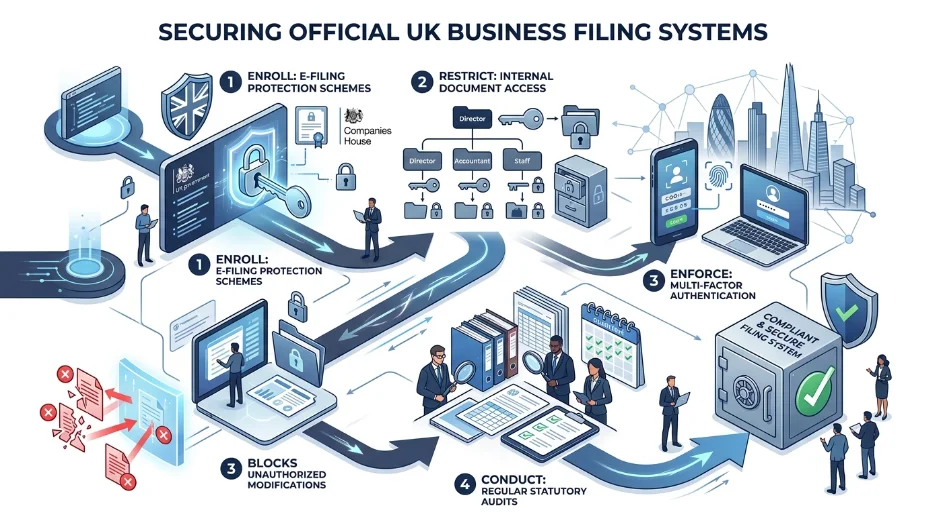
Companies must move away from insecure physical processes and unmonitored paper filings. Implementing systematic security protocols prevents unauthorized individuals from altering records at Companies House or within internal registers.
First, enroll in the Companies House Protected Online Filing (PROOF) scheme. This service rejects all paper-based filings, ensuring changes occur solely through verified, encrypted electronic channels. Second, restrict access to corporate web-filing authentication codes to authorized officers only.
Third, maintain consistent internal document formats to detect unauthorized tampering quickly. Reviewing Document Standardisation: Why Your Company Pack Should be Consistent provides clear strategies for maintaining uniform internal documentation across your organisation. Finally, audit statutory registers quarterly to verify that public entries match internal records precisely.
Why Is Continuous Document Monitoring Essential for UK Companies?
Continuous document monitoring is essential because it provides immediate alerts when unauthorized filings or changes occur on official public registers. Early detection allows business owners to reverse fraudulent alterations before lenders, suppliers, and banks act on bad data.
Fraudulent filings cause maximum damage when they remain unnoticed. Criminals rely on time lags to exploit credit facilities before the target company realizes a breach occurred. Standard annual reviews leave an 12-month window of vulnerability for undetected fraudulent activity.
Real-time monitoring services track Companies House databases continuously. When an update, address modification, or officer appointment processes, the system alerts company management immediately. Immediate notification enables directors to lodge objections and initiate swift legal remediation.
Detect unauthorized filings instantly: Receive real-time alerts for any change submitted under your company number.
Protect commercial credit scores: Prevent lenders from seeing fraudulent liabilities by stopping bad filings early.
Maintain director reputation: Ensure unauthorized individuals cannot add questionable directors to your official board.
Establishing continuous oversight safeguards statutory integrity. Combining live monitoring with Professional PSC Compliance Services for UK Business Directors ensures your Persons with Significant Control (PSC) registers remain accurate, secure, and compliant with current UK corporate laws. Form My Company assists businesses in locking down statutory registers, securing filing channels, and defending corporate assets against identity fraud.
Explore our Fraud Protection guide,
Colombia Freelancers Are Switching to UK Companies for USD Income
How Comoros Entrepreneurs Can Start and Manage a UK Company Internationally
Frequently Asked Questions
How does corporate fraud protection protect a UK business from identity theft?
Corporate fraud protection safeguards UK businesses by monitoring Companies House registers and blocking unauthorized changes to company filings. Services like those provided by Form My Company prevent identity thieves from altering registered office addresses, appointing shadow directors, or hijacking corporate credit profiles. This proactive monitoring ensures statutory records remain accurate and secured against unauthorized modifications.
What is the Companies House PROOF scheme, and why is it necessary?
The Protected Online Filing (PROOF) scheme is an official Companies House initiative that prevents the submission of paper-based legal forms. By enrolling through Form My Company, businesses ensure that Companies House only accepts electronic filings authenticated with secure corporate credentials. This mechanism eliminates unauthorized paper submissions, significantly reducing the risk of corporate identity fraud.
How do I know if my company’s statutory records have been compromised?
Signs of compromised statutory records include unexpected notifications from Companies House, sudden credit score drops, or mail addressed to unfamiliar corporate officers. Utilizing the fraud protection service from Form My Company provides continuous real-time alerts whenever a filing attempt occurs under your company registration number. Instant notification allows directors to object to fraudulent changes before financial damage occurs.
What are the legal penalties for inaccurate Persons with Significant Control (PSC) registers?
Failing to maintain accurate PSC registers can lead to financial penalties, legal prosecution, or the disqualification of company directors under UK corporate law. Securing corporate documentation through Form My Company ensures that officer and owner details remain compliant with current statutory filing standards. Maintaining verified PSC data protects directors from personal liability and regulatory enforcement action by the Registrar of Companies.
Can fraudsters open bank accounts or apply for loans using stolen company documents?
Yes, criminals frequently use stolen corporate credentials, false filing documents, and fake director profiles to apply for commercial loans or open fraudulent trade accounts. Business fraud protection stops these identity hijacking attempts at the source by securing company filings and statutory records. Form My Company assists UK enterprises in maintaining strict filing controls, ensuring external lenders verify genuine corporate authority before issuing credit.