
Financial institutions and investors require verified Articles of Association to authenticate director signing powers, review internal governance rules, and comply with UK legal frameworks before approving business bank accounts or releasing venture capital funds.
Why do financial institutions inspect articles of association during account onboarding?
Banks review constitutional documents to verify authorized corporate signatories, confirm voting thresholds, and satisfy strict anti-money laundering regulations before activating business accounts.
Commercial banks examine internal governance rules to ensure corporate applicants operate within legal boundaries established by the Companies Act 2006. When compliance officers review incorporation paperwork, they cross-reference director appointments against the statutory register. Financial compliance teams require certified copies of your constitutional framework to validate that account applicants hold legitimate executive authority.
What specific clauses do venture capital investors examine in your rulebook?
Investors scrutinize share transfer restrictions, pre-emption rights, and minority protection provisions to safeguard their capital injections against dilution or unauthorized corporate actions.
Venture capitalists evaluate constitutional documents to determine how equity is managed and transferred. Investors look closely at drag-along rights, tag-along provisions, and class-specific voting entitlements before committing funds. If founders utilize standard model rules, external backers often request customized amendments to secure protective governance terms. Legal due diligence teams review these clauses to ensure long-term stability and clear dispute-resolution mechanisms. Businesses preparing for equity rounds often utilize Supplementary Company Documents to ensure all constitutional records meet rigorous investor standards.
How should you format and transmit these documents for external review?
Submit digitally certified PDF copies containing official Companies House stamps, complete shareholder schedules, and any historical special resolutions passed by the board.
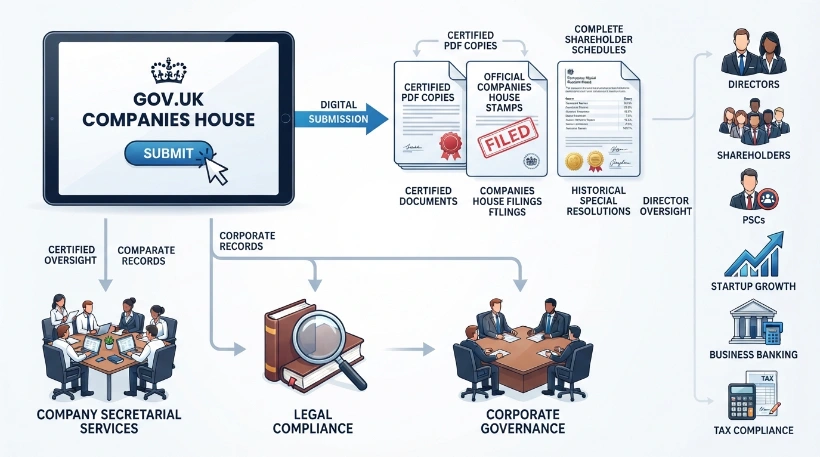
External reviewers reject incomplete or unverified constitutional records during initial due diligence phases. You must present the foundational document alongside your certificate of incorporation and a current cap table. When financial institutions request verification, providing a clean, searchable digital file accelerates processing times. Maintaining accurate statutory registers ensures that your corporate presentation matches public registry data without discrepancies. Business founders seeking structured guidance on foundational requirements can review our detailed resource on What Rules Do Articles of Association Set for Directors and Shareholders? to align internal governance with statutory expectations.
What actionable steps ensure your constitutional paperwork satisfies compliance checks?
Audit your current governance clauses, update missing historical amendments, and verify registry alignment before initiating formal banking or funding applications.
Corporate compliance requires proactive maintenance of all internal rulebooks whenever share capital structures change. When companies issue new shares or alter voting rights, directors must file special resolutions within 15 days to remain compliant. Failing to update public records creates immediate friction during institutional onboarding procedures. Reviewing your governance structure periodically prevents administrative rejections from commercial lenders and equity partners. Organizations looking to streamline their corporate records can utilize Secure Your Company Constitution With Form My Company to secure professionally managed compliance documentation.
Summary of UK Company Registration and Document Preparation
| Document / Requirement | Primary Purpose | Regulatory Authority | Action Required by Founders |
| Articles of Association | Defines internal governance and director powers | Companies House | Adopt model rules or draft bespoke clauses |
| Certificate of Incorporation | Confirms legal existence of the corporate entity | Companies House | Retain official digital or paper certificate |
| Shareholder Cap Table | Outlines equity distribution and share classes | Internal Board | Maintain accurate records of all share allotments |
| Special Resolutions | Authorizes constitutional amendments or share issues | Companies House | File updates within 15 days of passing |
Presenting accurate constitutional documentation to financial institutions and investors requires thorough preparation and strict adherence to statutory filing standards. Banks and equity partners rely on these foundational records to confirm executive authority and mitigate regulatory risk. Form My Company delivers reliable administrative solutions through our Supplementary Company Documents service, helping enterprises maintain flawless corporate governance records.
Explore our Supplementary Company Documents guide,
When to Use a Company Seal vs a Signature on a Deed
PSC vs Shareholder: How to Tell the Difference When Filing
Frequently Asked Questions
What documents are included in supplementary company document packages?
Supplementary company document packages typically include certified copies of your Articles of Association, historical special resolutions, share certificates, and updated registers of directors. When businesses order these records through Form My Company and their Supplementary Company Documents service, founders receive authenticated files required for banking and legal due diligence.
Why do banks require certified copies of your Articles of Association?
Commercial banks inspect certified Articles of Association to verify authorized corporate signatories, confirm voting thresholds, and satisfy strict anti-money laundering regulations. Providing these official constitutional records ensures that financial compliance teams can authenticate executive powers before approving corporate bank accounts.
How do investors review Articles of Association during funding rounds?
Venture capital investors scrutinize share transfer restrictions, pre-emption rights, and minority protection clauses within your constitutional rulebook. Legal due diligence teams evaluate these provisions to protect capital injections against unauthorized corporate dilution and ensure long-term governance stability.
When do UK companies need to update their constitutional documents?
UK companies must update their constitutional documents whenever shareholders alter voting rights, change share capital structures, or modify internal governance rules. Directors are legally required to file special resolutions with Companies House within 15 days of passing changes to maintain a compliant public record.
How can businesses obtain official copies of lost company documents?
Businesses can secure official, authenticated corporate records by utilizing professional filing platforms that access official registry databases. Form My Company assists corporate entities through their Supplementary Company Documents service to replace lost certificates and retrieve verified compliance paperwork quickly.