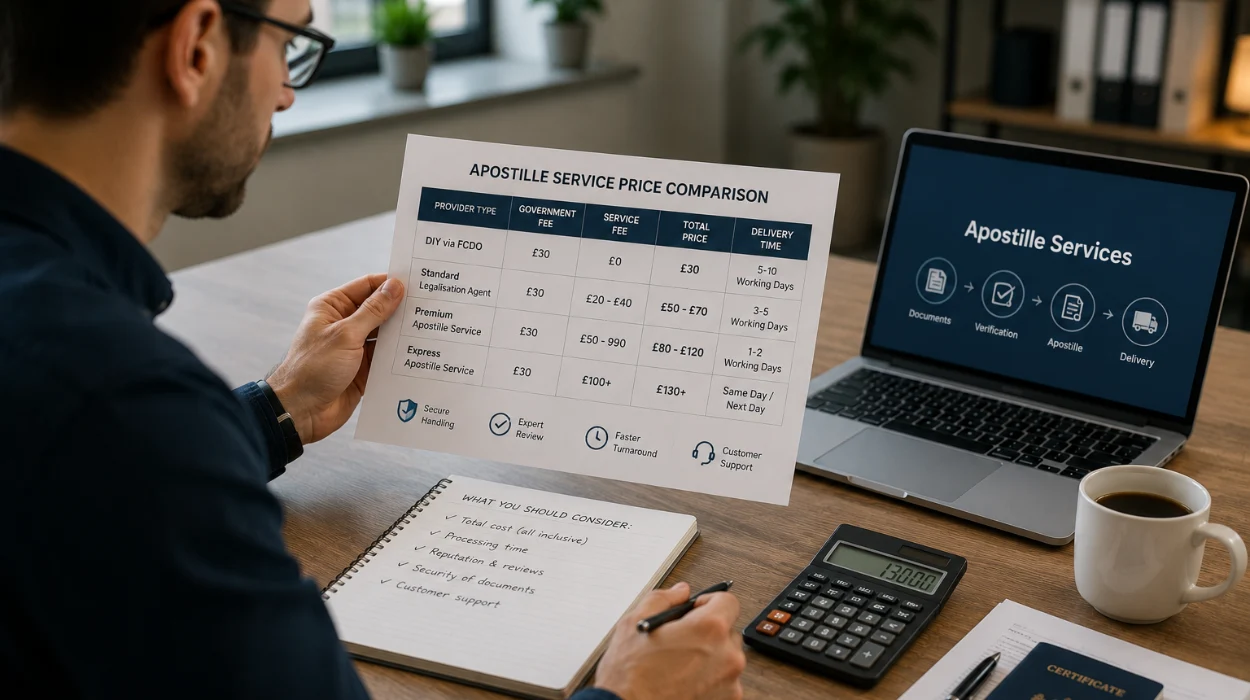
You should typically pay between 40 pounds and 150 pounds per document for standard UK apostille service prices, depending on processing speeds and government fees. Additional courier charges, solicitor certification, and embassy legalisation will increase the final total cost.
What factors influence apostille service prices in the UK?
Government fees, administrative handling charges, and document certification requirements drive variations in apostille service prices across different providers.
FCDO processing fees form the baseline cost for every document legalisation request submitted in the UK. Standard government processing costs 45 pounds per document, excluding return delivery expenses. Commercial providers charge additional service fees to cover manual document checks, tracking, and secure lodgement at government offices.
Different document types require varying levels of preliminary preparation before submission. Public documents like birth certificates require standard government processing without extra verification steps. Corporate documents like board resolutions require notary public or solicitor certification before the government applies the official stamp. Solicitor certification fees range from 50 pounds to 100 pounds per signature, impacting overall expenditure.
Urgent turnaround times alter standard pricing structures significantly through expedited service tiers. Standard processing takes up to ten working days for routine document verification. Priority processing reduces turnaround to two working days while adding substantial administrative surcharges to the base fee. Courier logistics fees range from 10 pounds for standard domestic delivery to over 50 pounds for international shipping.
How do standard and express processing fees compare?
Standard processing costs approximately 45 pounds in government fees plus basic agency handling, while express services cost upwards of 100 pounds per document for rapid turnaround.
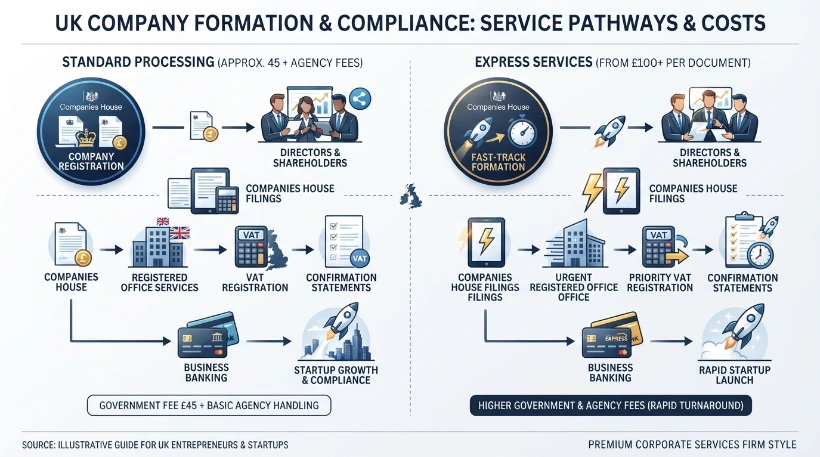
Standard submission routes suit businesses operating with flexible timelines and planned international expansion schedules. Standard processing relies on postal lodgements or routine counter submissions managed by document legalisation agencies. Companies save capital by selecting standard tiers when managing large batches of routine corporate paperwork.
Express processing routes serve organisations requiring immediate international document authentication for urgent commercial transactions. Premium agencies offer same-day or 24-hour lodgement services through dedicated couriers stationed at government offices. These expedited tiers eliminate operational delays but introduce heavy premium charges to cover priority handling.
Hidden costs frequently emerge within budget-priced apostille packages advertised by unverified online brokers. Low initial quotes often exclude return postage, VAT, or necessary preliminary solicitor certification steps. Businesses evaluate total project costs by requesting itemised quotes before confirming document submission with any provider. Form My Company ensures complete transparency when ordering apostilled documents for international business use.
What hidden costs should you watch out for when comparing quotes?
Hidden costs in apostille services include solicitor certification fees, return international courier charges, and translation expenses required for foreign jurisdictions.
Document translation represents a major secondary expense when authenticating paperwork for non-English speaking destination countries. Certified translators charge per word or per document, adding 40 pounds to 120 pounds to the process. Destination countries often mandate sworn translations attached directly to the legalised UK document.
Notarisation requirements create unexpected financial hurdles for corporate entities submitting unverified company registers or power of attorney forms. Notaries charge professional fees to witness signatures and verify corporate identity before FCDO submission. Businesses preparing documents for foreign use read more about these requirements in the What Fees Are Involved in Getting an Apostille in the UK? guide.
International return shipping rates fluctuate based on destination countries and courier weight restrictions. Standard domestic tracked mail costs under 10 pounds, whereas international priority shipping to the UAE or USA exceeds 45 pounds. Providers bundle these delivery expenses into final invoices or bill them separately upon document completion.
How can businesses secure transparent and cost-effective legalisation?
Businesses secure cost-effective legalisation by auditing supplier price structures, bundling corporate documents, and choosing fixed-fee providers.
Corporate document batches benefit from volume discounts offered by established legalisation specialists. Submitting multiple director certificates or incorporation papers simultaneously reduces per-document administrative overhead. Transparent providers list clear pricing matrices for multi-document orders on their commercial platforms.
Fixed-price packages protect organisations from unexpected disbursements during complex international legalisation procedures. Clear commercial agreements outline exact inclusions covering government fees, handling, and standard return postage. Companies ready to proceed with transparent authentication can Order Apostille Legalisation at a Clear Fixed Price From Form My Company.
Proper initial document preparation prevents costly rejections by government examiners during the verification stage. Incorrectly certified paperwork incurs duplicate government fees and extended operational downtime for international ventures. Experienced compliance teams review document formatting before submission to guarantee first-time approval success.
Navigating apostille service prices requires careful evaluation of government fees, processing speeds, and ancillary certification requirements. Form My Company delivers reliable document legalisation solutions through transparent fixed pricing and expert administrative handling. Organisations streamline international expansion by partnering with professional service providers who eliminate hidden fees and operational delays.
Explore our Appostiled Documents guide,
How to Make Your Corporate Event Inclusive for Every Delegate
Choosing Interview Rooms Equipped for Hybrid Hiring
Frequently Asked Questions
How much does it cost to get an apostille in the UK?
Standard government fees for an apostille through the FCDO cost 45 pounds per document, while total commercial service costs range from 70 pounds to 150 pounds when including handling and delivery. Form My Company provides transparent pricing structures for apostilled documents to ensure businesses avoid unexpected administrative fees.
How long does the apostille process take for business documents?
Standard UK apostille processing takes approximately five to ten working days from the date of submission to the government office. Express priority services reduce this timeframe to two working days, though expedited document legalisation incurs higher agency handling surcharges.
Do corporate documents need solicitor certification before getting an apostille?
Corporate documents such as memorandum of association and power of attorney require notarisation or solicitor certification before government legalisation. Form My Company assists clients in verifying that company records meet all preliminary compliance standards before submitting them for authentication.
Can company certificates be apostilled online?
Physical paper documents must be physically submitted to the Foreign, Commonwealth & Development Office because digital originals require physical certification stamps. Businesses streamline this submission process by utilizing professional courier lodgement services provided by authorized corporate agents.
What is the difference between an apostille and consular legalisation?
An apostille validates documents for use in countries that are signatories to the 1961 Hague Convention, whereas consular legalisation is required for non-member nations. Consular legalisation involves additional verification steps through foreign embassies, making the process longer and more expensive than standard apostille issuance.