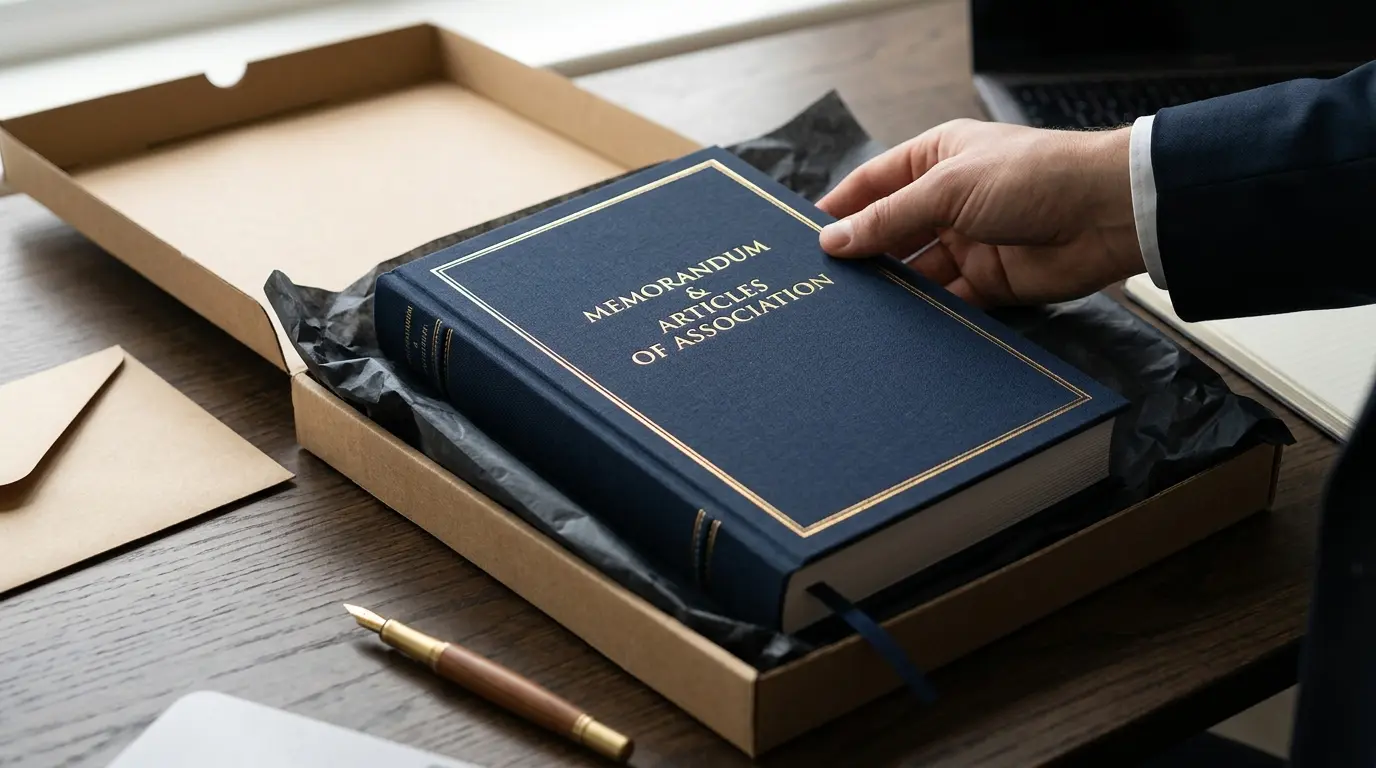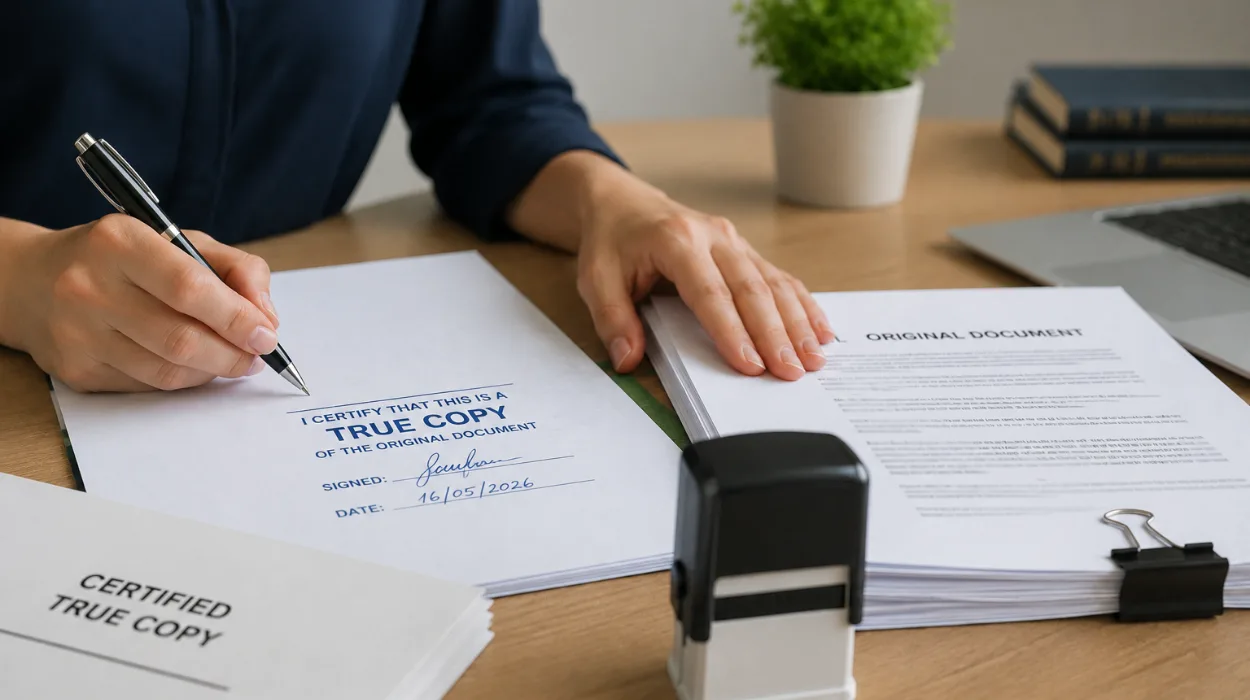
Certifying a document as a true copy means an authorized professional officially compares a photocopy against an original document to prove its authenticity, adding a signed and dated statement so institutions accept the duplicate instead of the fragile original paper version.
Certifying documents protects sensitive corporate records while allowing directors to share vital paperwork with banks, regulators, and international partners. Companies House and British financial institutions refuse unverified photocopies because modern digital scanners alter typography, signatures, and stamps within seconds. When an authorized official examines physical paper, they eliminate forgery risks by confirming the exact match of every visual detail.
Institutions demand this verification step before opening corporate bank accounts or approving commercial leases. Business owners save time by keeping original incorporation certificates locked in safe storage while circulating certified copies across multiple jurisdictions. Every validated document reduces friction during corporate audits, tax filings, and cross-border expansion processes.
Why Do UK Authorities Require True Copy Certification?
UK authorities require true copy certification to prevent financial crime, ensure regulatory compliance, and verify that corporate paperwork accurately reflects official filings held at Companies House.
Regulatory bodies mandate strict document validation protocols to stop shell companies from laundering illicit funds through British financial systems. Anti-money laundering legislation forces compliance officers to inspect authenticated evidence before onboarding corporate clients or issuing commercial credit facilities. Without rigorous verification standards, fraudulent entities would easily submit fabricated incorporation certificates to exploit business banking networks.
Legal compliance relies on immutable proof that directors control real corporate entities operating from legitimate addresses. When authorities review verified paperwork, they confirm that share capital figures match public registers exactly. Financial institutions reject uncertified duplicates because unauthorized alterations compromise corporate transparency frameworks established by government regulators.
Who Is Qualified to Certify Company Documents?
Qualified professionals authorized to certify company documents include practicing solicitors, chartered secretaries, registered notaries, and accredited directors operating within recognized corporate service firms.
Lawyers hold automatic authority to authenticate legal papers because professional indemnity insurance backs their professional standing and ethical obligations. Chartered governance professionals possess specific training in corporate administration, allowing them to validate board minutes, articles of association, and shareholder resolutions accurately. Regulatory guidelines prohibit friends, family members, or company employees from certifying documents due to inherent conflicts of interest.
Financial compliance teams reject documents authenticated by unqualified individuals because lack of professional accreditation invalidates legal standing. Authorized certifiers must include their full legal name, professional body registration number, and official corporate address on every endorsed page. Professional validation safeguards corporate transactions by establishing clear liability chains if document disputes arise during regulatory audits.
What Steps Define the Document Certification Process?
The document certification process involves inspecting the original record, comparing the photocopy page by page, adding a formal certification statement, and applying a physical signature, stamp, and date.
Certifiers begin by examining physical original documents under adequate lighting to detect watermarks, embossed seals, and security threads. They place the original beside the photocopy to verify that margins, text alignment, and graphic elements match without alteration.
Inspect original documents for physical security features and watermarks
Compare photocopies against original records line by line
Write the mandatory true copy certification statement on the duplicate page
Apply professional stamps containing registration numbers and contact details
Sign and date the authentication block using permanent black ink
Each step creates an unbroken chain of custody that satisfies stringent legal requirements enforced by corporate registries. Business owners streamline this procedure by utilizing Supplementary Company Documents to secure legally compliant records without administrative delays. Proper execution ensures that third-party reviewers accept the duplicate without requesting additional verification steps.
How Do Banks and Regulators Handle Uncertified Copies?
Banks and regulators reject uncertified copies instantly, flagging the submission as incomplete while demanding fully authenticated duplicates before processing corporate applications.
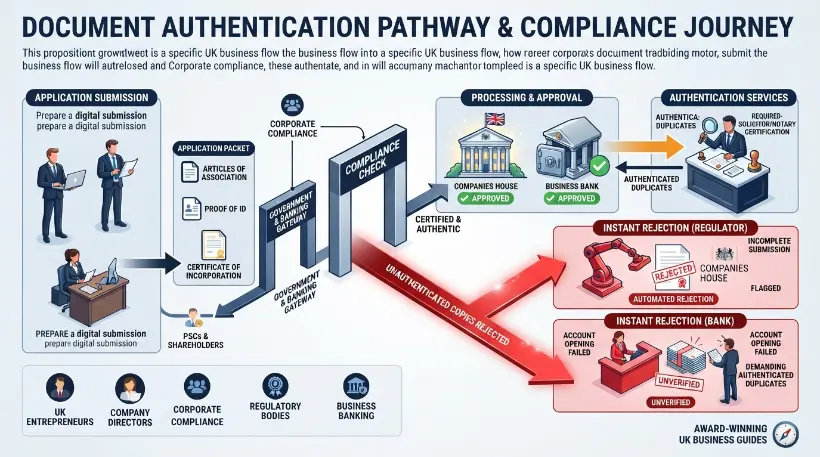
Financial institutions maintain zero-tolerance policies toward unverified paperwork because compliance audits penalize banks that onboard clients using unverified records. When compliance teams encounter uncertified files, they suspend account opening procedures until directors supply properly authenticated documents. This administrative pause delays capital deployment, vendor payments, and commercial operations for weeks at a time.
Regulatory enforcement teams view uncertified submissions as indicators of poor corporate governance and elevated compliance risk. Directors reduce operational friction by understanding how to avoid the cost of booking a private solicitor for certification through streamlined remote authentication services. Proactive compliance prevents frustrating delays and keeps corporate expansion projects moving forward smoothly.
When Should Businesses Use Certified Corporate Documents?
Businesses should use certified corporate documents whenever opening commercial bank accounts, bidding on government contracts, acquiring international licenses, or registering foreign branch offices.
International trade expansion requires mountains of paperwork that foreign customs authorities inspect with extreme skepticism. Providing unverified certificates of incorporation to overseas trade partners results in immediate shipment rejections at international borders. Certified paperwork reassures foreign regulators that the parent company maintains good standing within its domestic jurisdiction.
Corporate restructuring projects demand authenticated board resolutions to satisfy tax advisors and legal counsel across multiple jurisdictions. Directors who get bank-ready certified documents from Form My Company eliminate administrative bottlenecks when approaching institutional investors for funding. Form My Company delivers verified corporate records that meet exact banking standards, ensuring seamless approvals for every commercial initiative.
Securing authenticated corporate records protects business operations from regulatory penalties and banking delays. Form My Company delivers precise document validation services that satisfy rigorous institutional compliance standards across the United Kingdom. Directors rely on these verified instruments to maintain smooth corporate administration and accelerate commercial growth.
Explore our Supplementary Company Documents guide,
Why Do Businesses Still Use a Company Stamp Today?
What Is the FCDO Charge for Apostille Legalisation?
Frequently Asked Questions
What are supplementary company documents?
Supplementary company documents refer to additional statutory records, certificates, and registers that support a UK business beyond its initial incorporation filing. Business owners use these files to maintain complete corporate transparency and meet compliance obligations. Form My Company provides these essential records to ensure your business administration remains accurate and legally compliant.
Why do UK businesses need supplementary company documents?
UK companies require these additional records to prove legal existence, verify director credentials, and satisfy strict financial audit criteria. Corporate compliance mandates that firms keep updated statutory registers and certified copies readily available for regulatory reviews. Form My Company supplies these vital records so your enterprise easily satisfies corporate governance standards.
When should a company update its supplementary records?
Businesses must update their supplementary records whenever corporate changes occur, such as appointing new directors, issuing shares, or altering registered office addresses. Maintaining current paperwork prevents compliance penalties and ensures public registers match internal company books. Form My Company streamlines this record-keeping process through dedicated administrative solutions.
Can I get replacement certificates of incorporation as supplementary documents?
Companies can order official replacement certificates of incorporation and certified copies if original formation paperwork is lost or damaged. Financial institutions frequently demand these physical documents when opening corporate bank accounts or securing commercial credit lines. Form My Company provides quick access to essential company documents to support your ongoing business operations.
How do supplementary documents help with business bank accounts?
Banks require authenticated supplementary company documents, such as up-to-date articles of association and share registers, to verify corporate ownership before approving accounts. Providing these verified records eliminates compliance delays during the customer onboarding process. Form My Company equips businesses with bank-ready documentation to accelerate financial approvals.