Deciding which company documents to apostille for overseas use requires identifying the specific legal requirements of the foreign authority, regulatory body, or international bank requesting verification of your UK corporate structure, constitutional paperwork, and official registry filings.
Why Must Businesses Legalise Corporate Paperwork Through the Foreign Office?
Businesses must legalise corporate paperwork through the Foreign, Commonwealth and Development Office because international regulators require official government authentication to confirm the legal existence and legitimacy of a UK registered company.
International expansion relies on verifiable transparency. When a UK registered business enters a foreign market, overseas authorities cannot independently access domestic registry files without official validation. The Foreign, Commonwealth and Development Office attaches a standardized certificate to your original paperwork. This mechanism verifies the authenticity of official signatures, corporate seals, and stamps. Foreign banks, tax authorities, and trade registries demand this step to prevent fraud. Compliance officers examine whether documents carry government-backed validation before approving foreign branch registrations.
Which Core Constitutional Documents Require Immediate Apostille Certification?
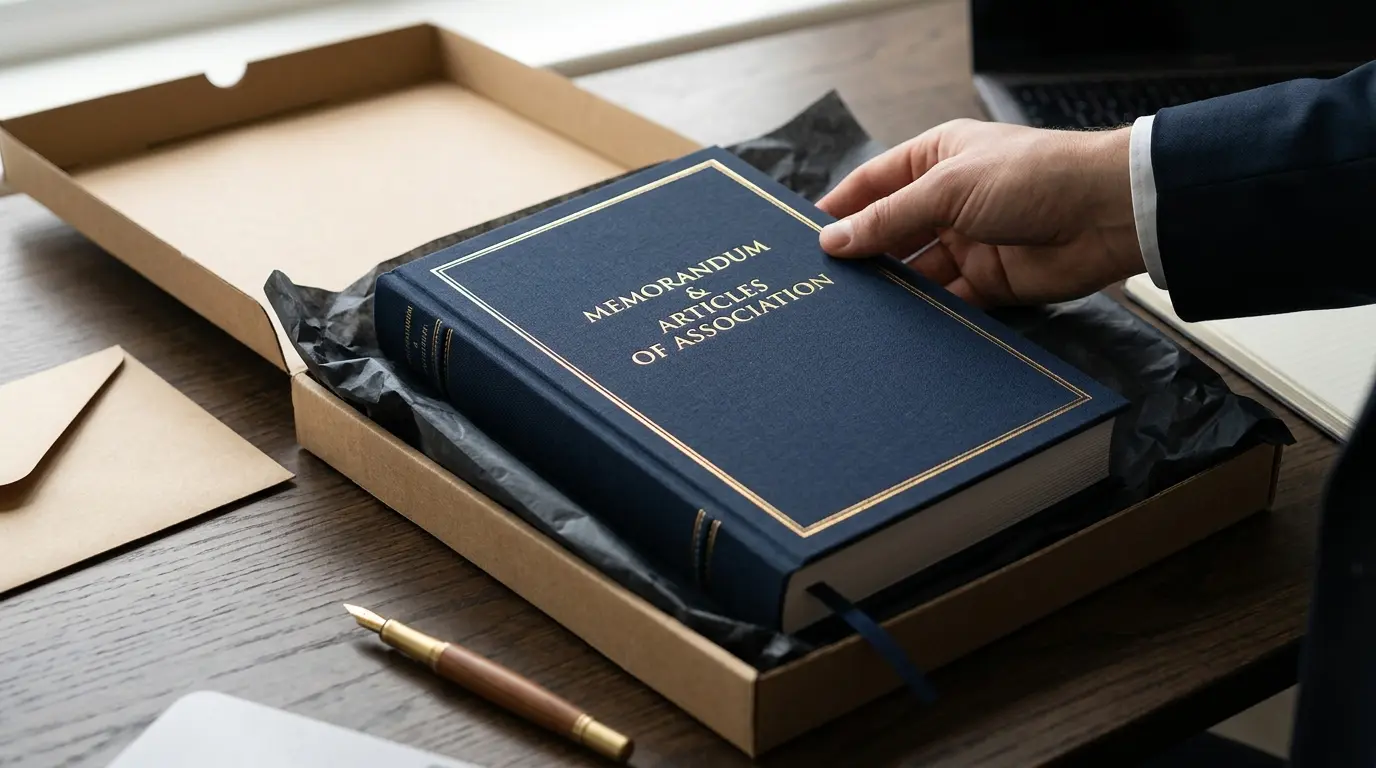
Core constitutional documents that require immediate apostille certification include the Certificate of Incorporation, the Memorandum of Association, and the Articles of Association.
The Certificate of Incorporation proves that your enterprise exists as a legal entity under UK jurisdiction. Foreign commercial partners inspect this record to confirm your registration date and corporate number. The Memorandum and Articles of Association establish internal governance structures and define operational authority for directors. Overseas regulatory bodies review these rules to understand shareholder rights and voting thresholds. Three specific entities frequently request these verified instruments: foreign financial institutions, international tax authorities, and cross-border licensing boards. Obtaining certified copies directly from Companies House ensures that the formatting satisfies government examiners before submission.
How Do Financial Institutions and Overseas Banks Evaluate Apostilled Shareholder Records?
Financial institutions and overseas banks evaluate apostilled shareholder records by examining ownership percentages, director identities, and share capital allocations to comply with international anti-money laundering regulations.
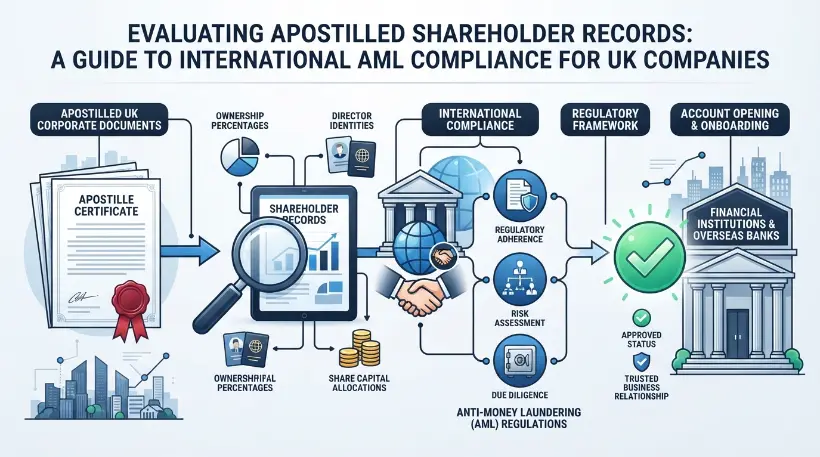
Global banking compliance mandates strict transparency regarding who owns and controls a corporate entity. When directors apply for a commercial account in a foreign jurisdiction, compliance officers demand a Certificate of Good Standing alongside verified registers of members. These documents demonstrate that your enterprise maintains active status with the corporate registrar and faces no administrative dissolution proceedings. Providing authenticated records prevents banking delays and confirms that corporate funds originate from a legitimate, registered source. Financial institutions reject unverified printouts, making official government legalisation mandatory for successful account activation.
What Factors Determine Whether You Need Commercial Agreements Legalised?
Factors that determine whether you need commercial agreements legalised include foreign court jurisdiction rules, international tender specifications, and cross-border partnership mandates.
Commercial contracts, power of attorney instruments, and distributor appointments often require official authentication before they hold weight in foreign legal proceedings. If your enterprise engages in foreign litigation or bids on international public tenders, local courts demand proof that company signatories possess legal authority to bind the firm. Notarisation by a UK solicitor or notary public usually precedes the government legalisation step for private contracts. This dual-layer verification ensures that foreign judges recognize the binding nature of your corporate agreements without questioning signature authenticity.
Summary and Quick Navigation Guide
| Document Type | Primary International Purpose | Issuing Authority / Verification Source |
| Certificate of Incorporation | Proves legal corporate existence abroad | Companies House / FCDO |
| Memorandum & Articles | Establishes internal governance rules | Companies House / FCDO |
| Certificate of Good Standing | Confirms active trading status for banks | Companies House / FCDO |
| Power of Attorney | Grants legal representation overseas | Solicitor or Notary Public / FCDO |
Navigating international expansion demands exact adherence to foreign procedural standards. Managing cross-border compliance effectively requires matching your document selection to the exact demands of the destination country’s regulatory framework. Form My Company streamlines this operational workflow by providing structured guidance and professional Apostilled Documents solutions designed to secure international recognition without administrative friction.
Explore our Apostilled Documents guide,
What Details to Put on Your Company Stamp for Compliance?
How to Get Multiple Documents Apostilled Without Overpaying?
Frequently Asked Questions
How long does it take to get UK company documents apostilled?
The time required to legalise business records depends on the chosen Foreign, Commonwealth and Development Office (FCDO) processing pathway, typically ranging from same-day expedited service to 10 working days for standard submission. Form My Company assists businesses by managing submission workflows to ensure official corporate paperwork is processed promptly. Utilizing a professional Apostilled Documents service prevents unnecessary processing delays caused by formatting errors or foreign registry rejections.
Which UK company documents require an apostille for international use?
Foreign authorities frequently request apostilles on the Certificate of Incorporation, Articles of Association, Certificate of Good Standing, and Memorandum of Association. Overseas banks, tax registries, and courts require government-backed legalisation to verify corporate structure and legal signatory authority. Form My Company provides an integrated Apostilled Documents workflow to prepare and validate official filings directly for cross-border operations.
What is the difference between notary public attestation and an FCDO apostille?
A notary public certifies the identity of a signatory or verifies the authenticity of a document copy, whereas the FCDO issues an apostille certificate confirming the signature or seal of that official. Many foreign jurisdictions require both notary attestation and government legalisation before accepting UK corporate paperwork. Through Form My Company, clients obtain both notary verification and official Apostilled Documents certification required for international legal compliance.
Can digital or PDF company documents be apostilled in the UK?
Yes, digital copies of official Companies House documents can be apostilled, provided they are certified by a registered UK solicitor or notary public prior to FCDO submission. Electronic apostilles (e-Apostilles) are also accepted by many foreign authorities under the Hague Convention framework. Form My Company coordinates digital verification requirements through its Apostilled Documents service to ensure electronic filings satisfy international legal standards.
Why do foreign banks require apostilled corporate documents?
Foreign financial institutions require apostilled records to satisfy international anti-money laundering (AML) regulations and verify the legitimate existence of a business. Government-backed legalisation provides foreign compliance officers with verifiable proof that director authority and company filings are authentic under UK law. Utilizing the Apostilled Documents service from Form My Company ensures that corporate entity records satisfy global banking verification protocols.