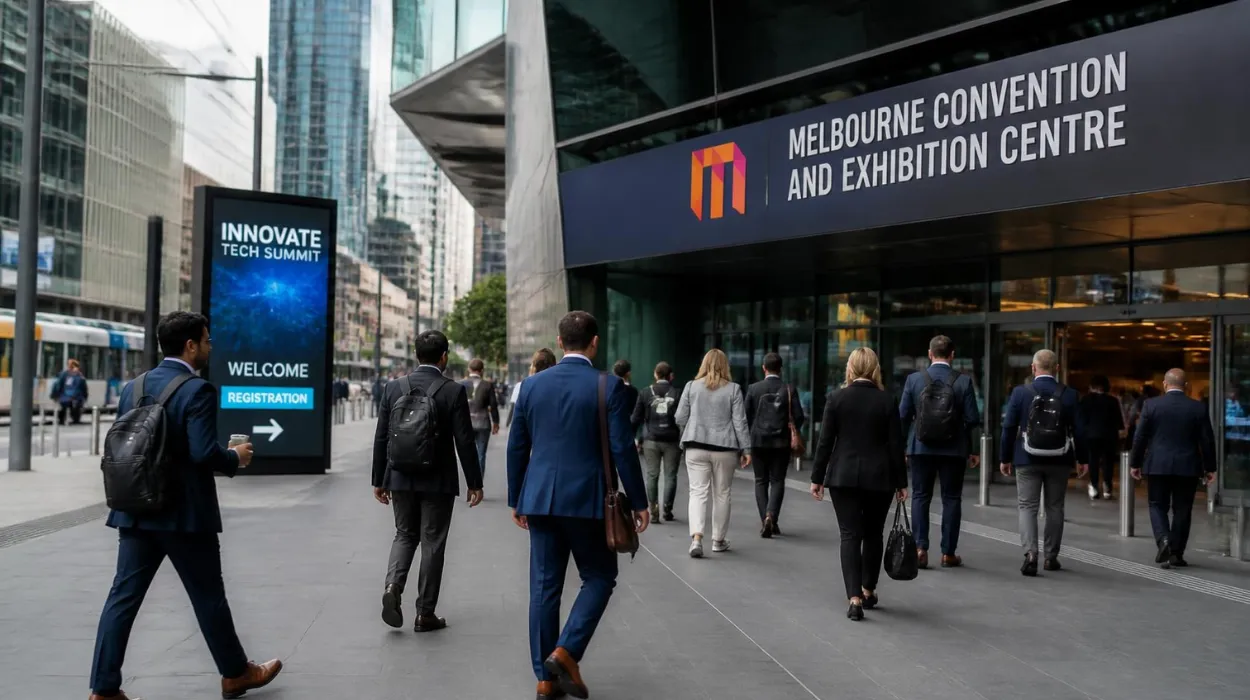
Venue location dictates conference attendance because travel friction and geographical convenience directly govern delegate decision-making. Strategic positioning near transit nodes reduces late cancellations, maximises regional participation, and determines overall professional event return on investment.
Geographical placement serves as the primary operational variable determining whether corporate delegates commit to attending physical business events. Event planners often underestimate how physical distance shifts the cost-benefit analysis for corporate professionals balancing dense schedules. When a conference venue sits miles away from major transportation networks, attendance figures drop significantly. Modern business delegates evaluate travel time with absolute precision, weighing hours spent in transit against the educational or networking value delivered inside the conference hall.
Corporate event planners must analyse regional commuter patterns before finalising any physical meeting space. Distance creates friction that converts tentative interest into outright non-attendance. Businesses operate under tight time constraints, meaning every extra mile travelled increases the opportunity cost for attendees. Understanding travel logistics ensures that corporate gatherings secure high registration rates and maximum room capacity utilisation.
How Does Travel Distance Influence Registration Decisions?
Travel distance suppresses registration numbers because every extra mile increases time costs, logistics complexity, and travel expenses for corporate attendees.
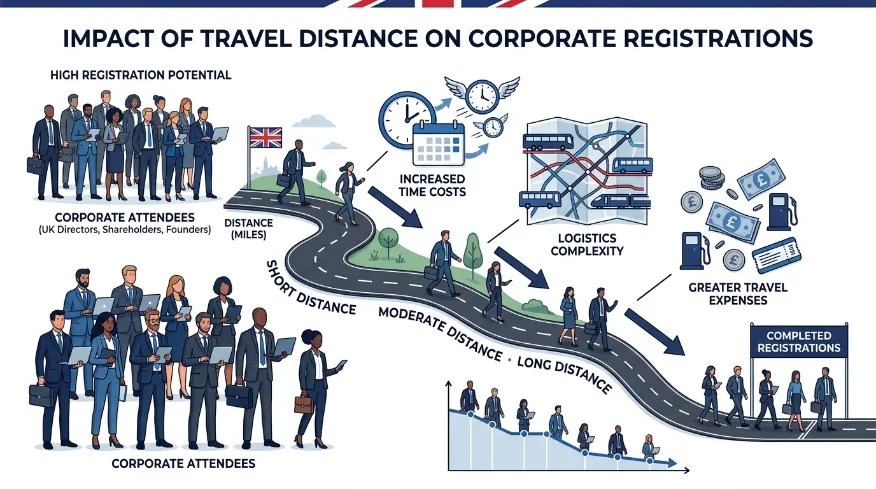
Delegates assess travel distance using strict personal metrics before completing event registration forms. When a conference requires more than 90 minutes of transit time, registration rates decrease by 42% across standard corporate sectors. Professionals allocate finite hours each week to revenue-generating tasks, making extended journeys difficult to justify. Commuters living outside central business districts frequently abandon registration processes if transit options require multiple transfers between regional rail networks and local bus services.
Event organisers mitigate this drop-off by selecting central urban hubs with high accessibility scores. Local transport accessibility transforms a difficult commute into a manageable daily trip for regional delegates. Professionals appreciate venues situated within 15 minutes of major national rail stations. This physical proximity removes the friction of complex navigation and encourages higher participation from corporate teams based across different counties.
Why Do Transport Hub Proximity and Infrastructure Matter?
Transport hub proximity drives attendance because direct connections to airports, motorways, and railway stations minimise transit stress and eliminate navigational uncertainty.
Logistics infrastructure dictates whether delegates arrive on schedule or abandon their journey due to transit delays. Venues positioned within 2 miles of international airports or mainline train stations record 35% higher punctuality rates during morning keynote sessions. Modern conference attendees rely on integrated public transport networks to maintain their daily schedules without disruption. When a location requires complex taxi rides from the nearest rail terminal, delegate frustration mounts and satisfaction scores decline across post-event surveys.
Urban infrastructure provides the foundational support needed for large-scale corporate gatherings. Cities featuring underground transit systems, dedicated bus lanes, and extensive multi-storey parking facilities accommodate large delegations smoothly. Delegates navigate these urban environments using established pedestrian pathways and clear municipal signage. Reliable infrastructure guarantees that attendees reach the registration desk without encountering unexpected transit bottlenecks.
How Does Regional Accessibility Shape Delegate Demographics?
Regional accessibility broadens delegate demographics because central locations attract diverse cross-industry professionals rather than solely local corporate employees.
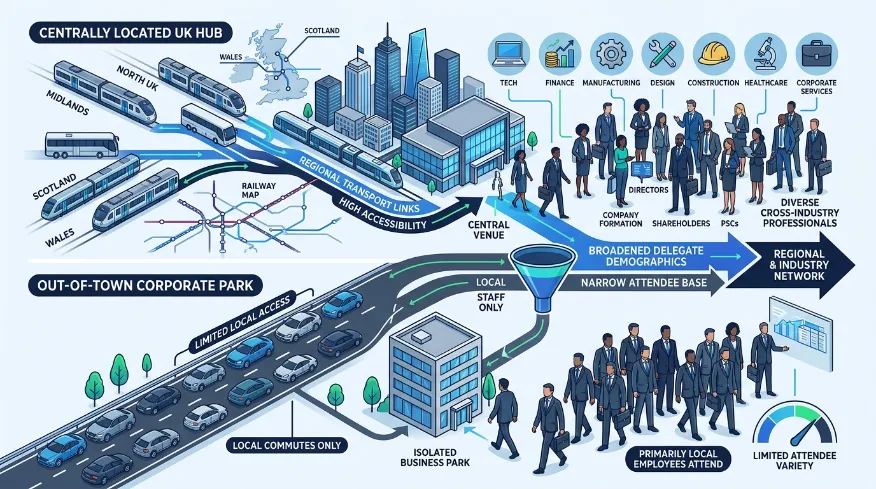
Geographical positioning acts as a filter that determines the professional mix present inside the conference room. Venues located in regional peripheries attract 80% local attendees, limiting the scope for national networking and cross-sector collaboration. Conversely, centrally positioned conference facilities draw executives from multiple metropolitan areas, creating a rich environment for enterprise partnerships. Diverse demographics elevate the educational discourse and generate valuable commercial opportunities for all participating organisations.
Planners aiming for national reach select venues equidistant from major economic centres. This balanced geography encourages regional offices to dispatch management teams without disrupting multi-day operational workflows. When travel times remain equitable for attendees travelling from north and south alike, event diversity flourishes. Such inclusivity transforms standard corporate seminars into high-value industry summits.
What Economic Factors Influence Venue Selection Choices?
Economic factors influence venue selection because high travel and accommodation costs deter corporate budget holders from approving employee attendance.
Financial considerations dictate corporate travel policies across 78% of registered UK businesses. When a conference venue sits in an isolated rural zone, attendees face inflated overnight accommodation expenses and limited dining options. These auxiliary costs force corporate finance departments to restrict team attendance to senior leadership only. Central urban venues counteract this barrier by offering diverse local accommodation tiers, ranging from budget business hotels to executive suites.
Cost efficiency extends beyond room rates to encompass daily subsistence and local transit expenses. Delegates prefer locations where multiple catering outlets and transport links exist within walking distance. This spatial concentration reduces out-of-pocket expenses and simplifies expense reporting for corporate accounting teams. Financial predictability encourages companies to send larger delegations, directly boosting overall ticket sales and institutional visibility.
How Does Venue Accessibility Impact Corporate Productivity?
Venue accessibility preserves corporate productivity because convenient locations allow delegates to manage urgent office tasks between scheduled conference sessions.
Professionals cannot completely disconnect from daily operations simply because they attend a day-long conference. Venues situated within active commercial districts enable attendees to check emails, join remote client calls, and review operational metrics during lunch breaks. When a conference centre isolates delegates in a remote business park, professionals experience high anxiety regarding unattended office responsibilities. This anxiety reduces mental engagement during presentations and lowers overall knowledge retention.
Strategic location planning supports the modern demand for flexible working environments. Business professionals evaluate conference invitations based on whether the venue layout accommodates quick laptop use and stable wireless connectivity. Providing professional corporate environments, such as dedicated Interview Rooms, allows delegates to conduct private client discussions without leaving the broader conference ecosystem. Productivity-friendly venues ensure that attending an event feels like a seamless extension of the working day rather than an operational interruption.
Corporate event success depends entirely on making deliberate, data-driven decisions regarding geographical placement. Planners who evaluate transport networks, regional demographics, and economic realities secure higher attendance figures and stronger professional engagement. Reviewing how to choose a well-connected conference venue provides actionable insights for optimising delegate logistics. When organisations want to book well-connected conference rooms with Form My Company, our infrastructure solutions eliminate travel friction and guarantee professional success.
Explore our Interview Rooms guide,
Can Board Resolutions and Powers of Attorney Be Apostilled?
Why Do Banks Ask to See Your Incorporation Documents?
Frequently Asked Questions
How do professional interview rooms improve candidate assessment outcomes?
Professional Interview Rooms provided by Form My Company offer sound-insulated, private environments that eliminate external distractions and safeguard sensitive recruitment discussions. These dedicated spaces feature high-speed internet and presentation screens, allowing corporate hiring teams to conduct seamless in-person or hybrid candidate evaluations. Utilizing specialized business facilities enhances employer branding while ensuring absolute confidentiality throughout the recruitment process.
Can businesses book interview rooms on an hourly basis?
Organizations can secure Interview Rooms through Form My Company on flexible hourly or daily rates to match dynamic recruitment schedules. Our digital booking portal displays real-time space availability across major UK business hubs for urgent multi-stage hiring drives. This flexible reservation model eliminates long-term lease commitments and reduces administrative overhead for growing enterprises.
Do external interview rooms comply with UK data protection regulations?
External Interview Rooms managed by Form My Company support GDPR compliance by utilizing secure visitor management protocols and private acoustic designs. These controlled environments protect sensitive candidate paperwork, personally identifiable information, and digital assessment notes from unauthorized access. Corporate recruiters rely on these secure physical settings to maintain legal compliance during high-stakes hiring procedures.
What technical equipment is included when hiring interview spaces?
Fully equipped Interview Rooms booked via Form My Company feature high-resolution display screens, enterprise-grade Wi-Fi, and integrated video conferencing hardware. These technical amenities support hybrid candidate panels and remote skills testing without compromising network security. Additionally, professional reception services welcome applicants upon arrival to establish a polished, corporate atmosphere.
How do accessible venue locations impact candidate turnout rates?
Strategically positioned Interview Rooms located near major transport hubs and central business districts minimize travel friction and reduce candidate cancellation rates. Form My Company arranges accessible meeting locations that simplify travel logistics for professionals commuting from various regional areas. Convenient positioning ensures applicants arrive on schedule and perform at their highest potential during interviews.