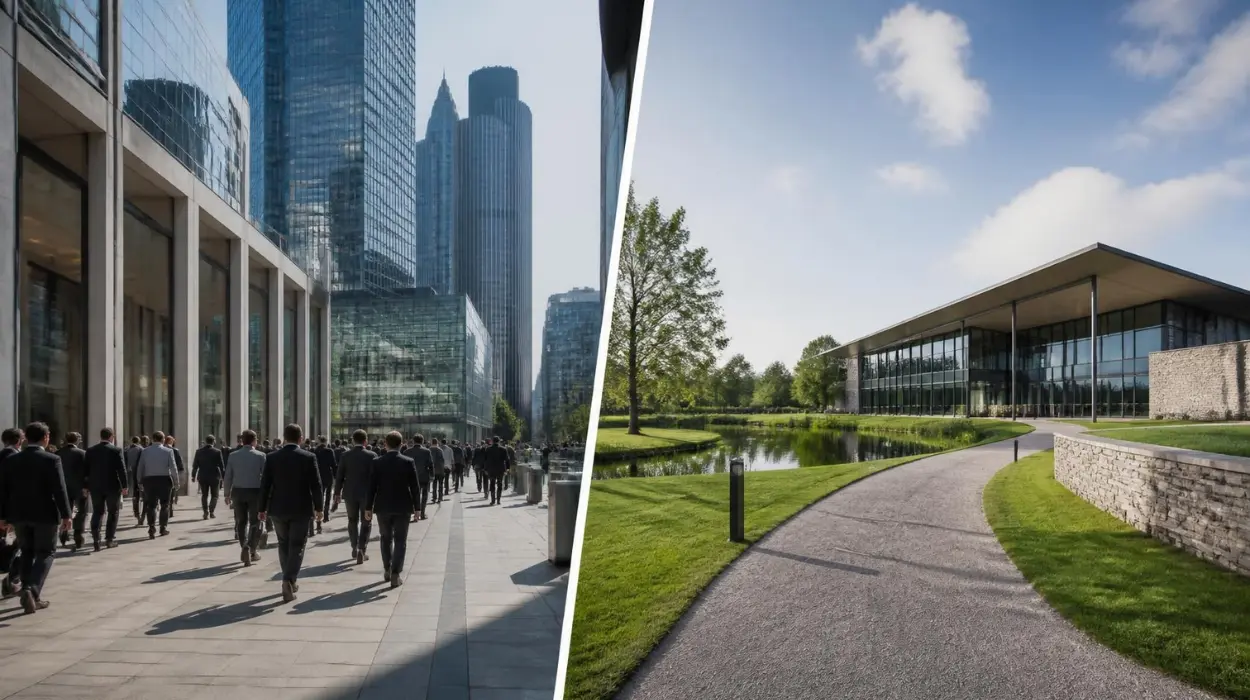
City centre venues suit corporate events requiring high public transit accessibility, short delegate commutes, and immediate networking proximity. Out-of-town locations suit large-scale conferences needing expansive parking capacities, lower delegate accommodation costs, and quiet, distraction-free environments for multi-day strategic sessions.
Choosing the right location determines overall delegate attendance rates and operational budgets. Organisers evaluate multiple operational factors before booking corporate spaces. Evaluating logistical demands ensures corporate meetings achieve optimal engagement levels and financial efficiency.
What Factors Dictate Corporate Venue Accessibility?
Public transit networks, major arterial road links, and designated parking ratios dictate corporate venue accessibility across urban and suburban regions.
Transport infrastructure directly influences delegate punctuality rates for morning keynote sessions. Urban locations connect directly to national rail networks and underground transit lines. Commuters arrive via central stations located within walking distance of downtown meeting facilities. Suburban conference centers rely heavily on motorway connectivity and dual-carriageway access points. Drivers navigate ring roads to reach out-of-town properties without entering congested metropolitan cores. Urban planners integrate multi-story car parks to manage high-density vehicle arrivals. Suburban properties provide extensive surface-level parking bays capable of accommodating hundreds of vehicles simultaneously. Transport planning teams analyze delegate travel patterns to select locations minimising transit times.
How Do Costs Compare Between Urban and Suburban Spaces?
Urban rental rates reflect premium metropolitan land values, while suburban properties offer reduced square-foot pricing alongside complimentary parking concessions.
Financial allocations determine whether corporate planners book downtown facilities or out-of-town business parks. Central business district properties charge higher daily delegate rates due to high demand and prime real estate costs. Suburban venues reduce overall overhead expenses by passing savings on to corporate clients through lower catering tariffs. AV equipment hire and staging costs fluctuate depending on regional supplier competition levels. Urban facilities frequently include standard projection systems within baseline room hire packages. Suburban locations occasionally require specialized equipment transport fees from regional metropolitan suppliers. Budgetary reviews highlight hidden expenses like city-centre congestion charges versus suburban shuttle bus provisions.
Which Location Style Enhances Delegate Engagement and Networking?
Central urban settings facilitate spontaneous evening networking, whereas tranquil out-of-town properties maximize focus during intensive multi-day workshops.
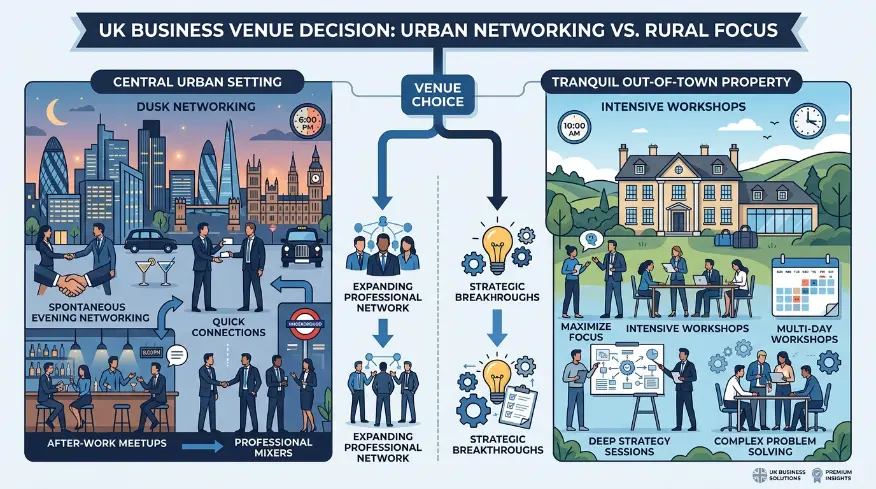
Delegate concentration levels depend heavily on the surrounding environment during scheduled breaks. Downtown venues place attendees near dining establishments, cultural attractions, and high-end hotels. Attendees transition seamlessly from formal conference sessions into evening social events and client dinners. Suburban retreats eliminate urban distractions by isolating participants within dedicated corporate campuses. Attendees immerse themselves fully in strategic planning without external interruptions from city noise or tourist crowds. Corporate teams often utilise professional spaces such as a bookable conference room to maintain strict privacy during confidential board meetings. Quiet surroundings improve cognitive retention during lengthy analytical training modules.
How Do Infrastructure and Technology Capabilities Vary?
Metropolitan business hubs feature redundant high-speed fiber-optic connectivity, whereas expansive suburban centers excel at accommodating heavy exhibition freight.
Technical infrastructure underpins the successful execution of hybrid meetings and live-streamed broadcasts. Downtown conference facilities maintain dedicated leased internet lines ensuring zero downtime during critical virtual presentations. Suburban properties utilize robust wireless mesh networks designed to handle hundreds of simultaneous device connections without signal degradation. Space configurations differ significantly between regional markets. Urban meeting rooms feature modular partitions that adapt quickly to changing workshop layouts. Out-of-town exhibition halls provide expansive ground-floor load-in bays required for heavy machinery displays and large trade show booths. Event directors assess technical specifications carefully to match specific hardware requirements with venue capabilities.
What Logistics Impact Multi-Day Corporate Events?
Multi-day events require proximity to diverse hotel inventories in cities, whereas suburban venues provide integrated on-site accommodation packages.
Extended corporate conferences demand comprehensive logistical support for overnight guests. Urban venues leverage surrounding hotel partnerships to accommodate delegates across various budget brackets within walking distance. Suburban hotels often operate as self-contained resorts featuring on-site leisure facilities, dining halls, and sleeping quarters. Catering operations scale differently based on geographic positioning. Downtown locations source fresh ingredients easily from local metropolitan suppliers and specialized caterers. Out-of-town venues manage food production through large commercial kitchens built specifically for high-volume banquet services. Planners analyzing travel logistics often reference insights from How Important Is Parking and Transport for Event Delegates? to optimize fleet management. Effective schedule coordination ensures smooth transitions between accommodation blocks and primary conference halls. Organisations planning bespoke corporate gatherings can review guidelines outlined in How to Hire City Centre Conference Venues From Form My Company? to streamline procurement workflows.
City centre and out-of-town venues serve distinct corporate functions based on logistical priorities, budgetary constraints, and delegate engagement goals. Form My Company delivers structured solutions through professional advisory services that match corporate clients with ideal venue configurations.
Explore our Conference Rooms guide,
How to Meet Hiring Compliance Standards With Professional Venues?
How to schedule back-to-back interviews across multiple rooms?
Frequently Asked Questions
What amenities are typically included when booking a conference room through Form My Company?
Booking a conference room through Form My Company typically includes high-speed fiber-optic internet, high-definition display screens, and ergonomic seating designed for professional meetings. Additionally, these spaces feature whiteboards, video conferencing hardware, and climate control to ensure an optimal environment for corporate presentations and team collaborations.
How many attendees can a standard Form My Company conference room accommodate?
A standard conference room provided by Form My Company accommodates anywhere from 4 to 30 attendees depending on the selected room layout, such as boardroom or theater style. Corporate planners can select specific room capacities that match exact meeting sizes, ensuring comfortable spacing for workshops, interviews, and executive briefings.
Can businesses rent a Form My Company conference room on an hourly basis?
Businesses can rent a professional conference room through Form My Company on both flexible hourly schedules and full-day bookings. This flexible rental model allows companies to secure fully equipped business spaces only for the duration required, reducing unnecessary overhead costs for short strategic sessions.
Are catering services available during meetings held in a Form My Company conference room?
Catering services are readily arranged for meetings hosted within a Form My Company conference room, ranging from working lunches to coffee breaks. Corporate clients can coordinate custom food and beverage packages directly through booking support teams to accommodate dietary requirements of all attending delegates.
How does Form My Company ensure data privacy during confidential conference room sessions?
Form My Company ensures complete data privacy in every conference room by providing secure, encrypted Wi-Fi networks and soundproofed architectural layouts. These security measures protect sensitive corporate discussions, financial reviews, and proprietary presentations from external interception.