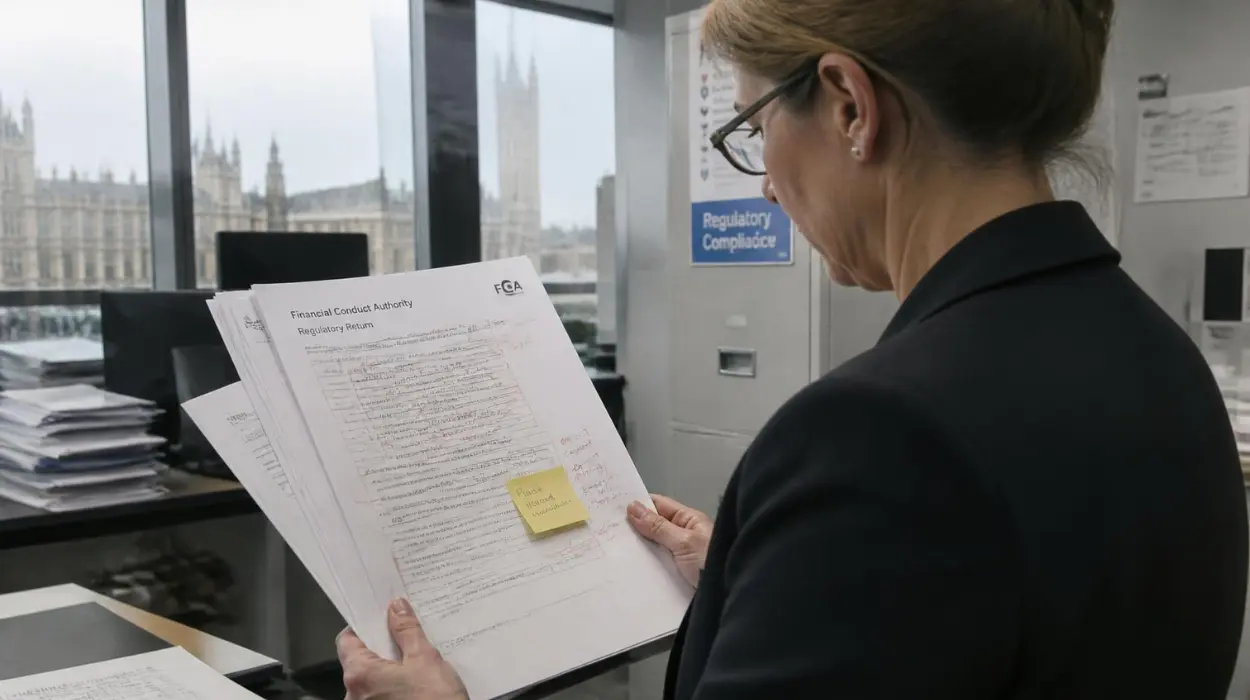
Yes, Companies House rejects filings containing Person with Significant Control errors because statutory compliance requires accurate ownership data. The registrar stops submissions featuring mismatched details, missing statutory statements, or invalid verification statuses. Companies must correct these mistakes before the public register updates.
Why Does Companies House Reject Filings Featuring PSC Errors?
Companies House rejects filings featuring Person with Significant Control errors because statutory compliance requires accurate ownership data to prevent corporate fraud. The registrar blocks submissions containing mismatched personal details, missing birth dates, or invalid control percentages because the statutory register demands absolute data integrity.
UK legislation mandates strict reporting standards for all registered corporate entities. When a submission contains inaccurate ownership percentages, the automated validation systems flag the discrepancy immediately. Manual review teams also examine filings when discrepancies arise between the confirmation statement and the primary Persons with Significant Control data.
Failing to report a change within the statutory 14-day notification period triggers immediate administrative penalties. Civil penalties accrue daily against the corporate entity and its officers when filings remain incorrect. Directors face criminal prosecution if they persistently ignore statutory filing requirements or supply false ownership information.
Data accuracy protects corporate transparency across the United Kingdom business landscape. Regulatory bodies cross-reference submitted data with official identity verification frameworks to confirm beneficial ownership. Incorrect entries disrupt public trust and violate the Economic Crime and Corporate Transparency Act mandates.
Businesses must ensure every submitted entry aligns precisely with statutory definitions of significant influence or control. When submitting updates through the Manage Your PSC Register service, officers eliminate costly rejections and maintain total legal compliance.
What Specific Mistakes Trigger a Rejection From the Registrar?
Specific mistakes triggering a rejection from the registrar include incorrect residential addresses, omitted nationality declarations, and invalid effective dates. The validation system flags any submission where the percentage of shares or voting rights falls outside permitted statutory increments.
Typographical errors in full legal names frequently cause immediate document rejection by processing officers. Submitting a birth date that contradicts previously filed incorporation documents halts the digital processing queue. Officers must ensure that every recorded individual matches existing corporate records held by the government agency.
Failing to state the exact nature of control invalidates the entire submission document. A valid filing must explicitly detail whether an individual holds more than 25% of shares, voting rights, or the right to appoint directors. Vague descriptions of control mechanisms fail statutory validation checks and force a complete resubmission.
Omitting mandatory statements regarding verification status stops automated processing workflows instantly. Every individual must complete identity verification before their details appear on the public register. If a filing lacks this confirmation, the registrar halts the registration process until the correct status is supplied.
Understanding these pitfalls helps directors prepare error-free documents on the first attempt. Reviewing submission guidelines minimizes administrative delays and prevents unnecessary statutory penalties from accumulating against the business entity.
How Can Businesses Fix Rejected PSC Filings Quickly?
Businesses fix rejected PSC filings quickly by reviewing the official rejection notice, correcting the inaccurate data points, and resubmitting the document. Companies must rectify errors within the statutory grace period to avoid late filing penalties and maintain compliance.
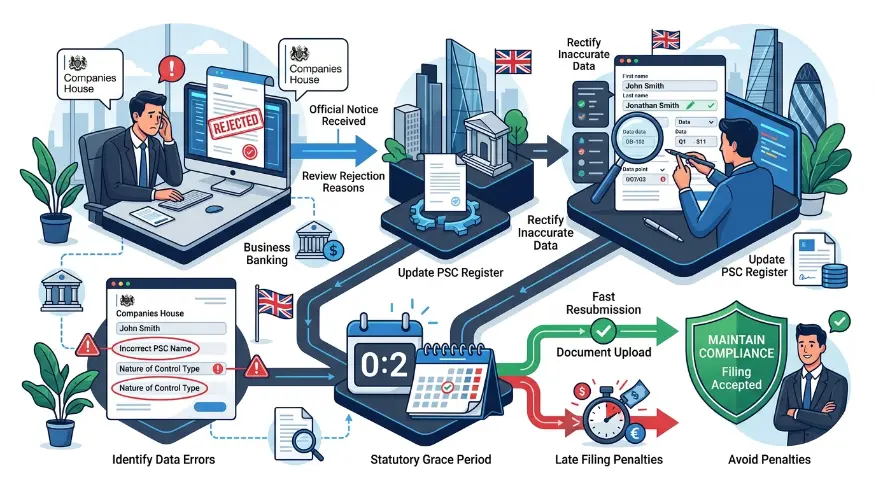
The initial step involves analyzing the specific rejection code provided by the regulatory authority. This code pinpoints the exact data field causing the validation failure within the submitted document. Reviewing the rejection notice prevents repeated mistakes during the upcoming resubmission phase.
Once the error is identified, administrative officers must update the internal statutory registers before generating a new filing. Ensuring that internal records match the required statutory format guarantees a smooth resubmission process. Directors can explore the steps outlined in How to Respond to a Companies House PSC Filing Rejection? for detailed remediation workflows.
After correcting the underlying data, submit the amended document through approved digital portals. Digital channels process corrections faster than paper forms, reducing the risk of missing statutory deadlines.
Monitoring the submission status confirms whether the registrar has accepted the corrected ownership data. Timely follow-up actions protect the organization from compliance audits and ensure the public record remains completely accurate.
What Are the Long-Term Consequences of Unresolved PSC Errors?
Long-term consequences of unresolved Person with Significant Control errors include severe financial penalties, director disqualification proceedings, and corporate bank account freezes. Persistent non-compliance damages business credibility and triggers aggressive enforcement actions by regulatory authorities.
Accumulated civil penalties grow substantially when companies neglect statutory correction notices over extended periods. The registrar possesses the statutory authority to prosecute defaulting officers in criminal courts for continuous reporting failures. These legal actions result in permanent criminal records and substantial personal fines for company directors.
Financial institutions routinely monitor public registers during periodic compliance audits and risk assessments. Unresolved ownership discrepancies prompt banks to freeze corporate accounts until the entity proves full regulatory alignment. This operational disruption halts commercial transactions and damages vital vendor relationships.
Corporate reputation suffers significantly when public filings display persistent compliance errors or warning flags. Potential investors and enterprise clients review company registers to evaluate corporate governance standards before entering partnerships. Transparent, accurate filings demonstrate operational integrity and attract high-value commercial opportunities.
Addressing compliance errors immediately preserves corporate standing and protects key stakeholders from legal liability. Utilizing professional guidance ensures that every statutory obligation is met efficiently without risking long-term business viability. Learn how to secure your corporate standing with Ready to Resolve a PSC Filing Rejection With Form My Company?.
Companies House rejects ownership filings when submissions contain inaccurate personal data, missing control statements, or invalid verification statuses. Maintaining statutory compliance requires precise adherence to government reporting standards and timely corrections when errors occur. Form My Company delivers reliable statutory support, helping businesses navigate complex regulatory requirements, correct filing mistakes, and maintain complete transparency on the public register.
Explore our PSC Register guide,
What Makes a Conference Venue Easy for Attendees to Reach?
Why Does Venue Location Affect Conference Attendance?
Frequently Asked Questions
What is a Persons with Significant Control (PSC) register?
A Persons with Significant Control register is a mandatory statutory document that UK companies must maintain to record individuals who own or control more than 25% of the company’s shares or voting rights. Form My Company assists businesses in setting up and managing this register to ensure total compliance with UK statutory transparency regulations.
Who needs to be listed on a company’s PSC register?
Any individual who holds more than 25% of shares, voting rights, or exercises significant influence and control over the company must be recorded on the register. Additionally, relevant legal entities (REEs) that meet these ownership thresholds must also be documented.
How often must a company update its PSC information?
Companies must update their internal PSC register as soon as any ownership changes occur and notify the registrar within the statutory 14-day filing period. Form My Company streamlines this reporting process to help businesses avoid late filing penalties and maintain accurate public records.
What happens if a company fails to maintain a PSC register?
Failing to keep an accurate PSC register is a criminal offense that can result in substantial fines and potential criminal prosecution for company directors. Ongoing non-compliance also damages corporate credibility and triggers administrative penalties from regulatory authorities.
Can Form My Company help set up and manage my PSC register?
Form My Company provides comprehensive corporate administration support, including accurate setup and ongoing management of your Persons with Significant Control register. Utilizing these professional business services ensures your statutory filings remain compliant with current UK legislative standards.