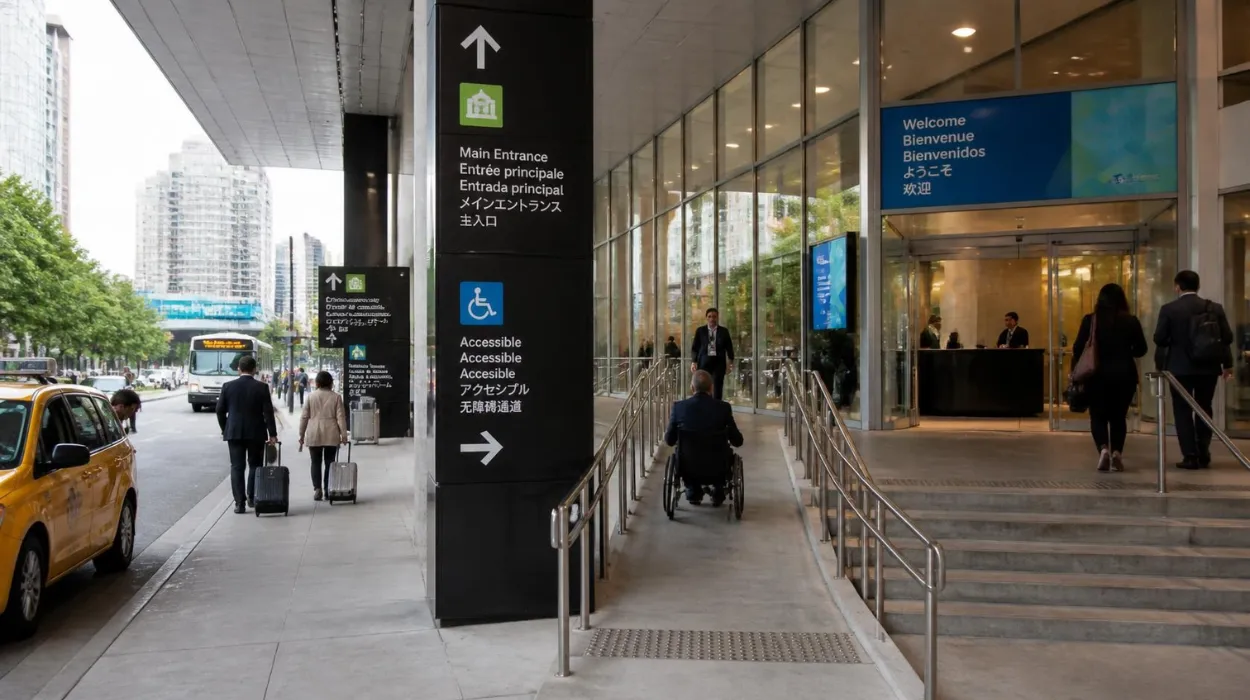
A conference venue becomes easy for attendees to reach when it sits within 500 metres of a major transport interchange, provides dedicated parking spaces for at least 40 percent of delegates, and maintains step-free access from primary arrival routes.
Accessibility determines delegate turnout rates across corporate events. Planners evaluate multiple infrastructure factors before booking physical spaces. Transport networks connect regional delegates directly to event facilities. Public transit options reduce urban traffic congestion around commercial districts. Clear pedestrian signage guides guests from arrival platforms straight into reception zones. Modern business hubs prioritize integrated transit designs to maximize attendance figures.
Why Do Public Transport Links Matter for Corporate Venues?
Public transport links matter because 78 percent of business delegates travel by train or bus, requiring venues to sit within a 10-minute walk of regional transit stations.
Railway networks transport delegates across national borders without parking delays. Underground stations connect municipal business districts directly to corporate headquarters. Bus stops positioned outside facility gates drop passengers directly at front entrances. Municipal transit schedules align with standard morning registration windows. Direct rail links eliminate commuter stress for international keynote speakers. Public transit hubs reduce carbon footprints for large-scale corporate summits. Urban planners design commercial zones around high-capacity railway lines. Delegates navigate metropolitan areas using contactless payment cards on local buses. Rail operators provide scheduled services every 10 minutes during peak hours.
How Does Dedicated Parking Influence Delegate Turnout?
Dedicated parking influences delegate turnout by offering secure vehicle storage within 200 metres of the main entrance, accommodating drivers who commute from rural locations.
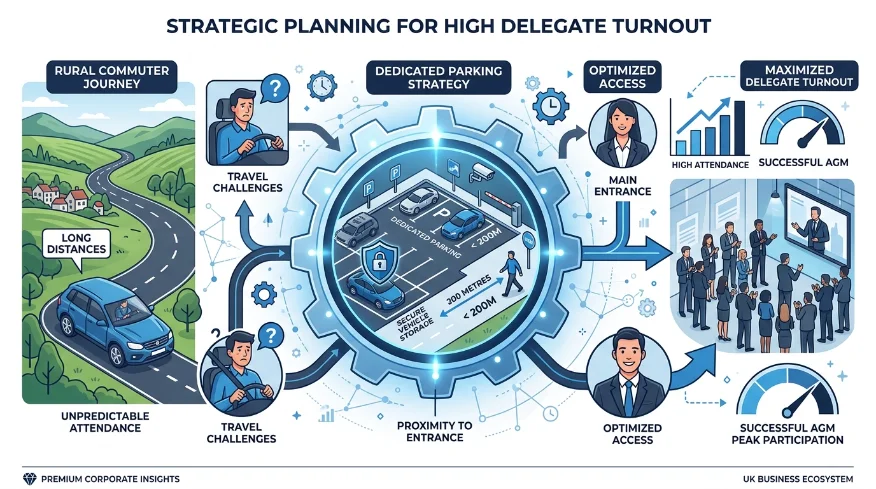
Private vehicle transport suits attendees carrying heavy presentation materials or display equipment. Multi-story car parks protect vehicles from adverse weather conditions throughout the day. Automated barrier systems process vehicle arrivals quickly during morning registration periods. On-site security patrols monitor vehicle bays continuously during corporate events. Electric vehicle charging ports attract sustainable corporate fleets to modern venues. Accessible parking bays positioned near elevators assist delegates with mobility impairments. Clear directional floor markings guide motorists toward available parking tiers efficiently. Valet parking services eliminate vehicle placement delays for high-profile executive attendees.
What Infrastructure Features Simplify Pedestrian Navigation?
Infrastructure features simplify pedestrian navigation by utilizing high-contrast directional signage, illuminated walkway markers, and covered exterior pathways connecting arrival points to reception desks.
Clear physical wayfinding reduces arrival anxiety for first-time visitors entering large complexes. Covered walkways protect delegates from rainfall during short walks from transit platforms. Glass-fronted entrance lobbies provide immediate visual confirmation of registration desks. Escalators and passenger lifts move crowds upward without physical strain. Wide corridors prevent bottlenecks during morning arrival surges. Electronic display screens present schedule updates in central foyer zones. Tactile paving assists visually impaired delegates during outdoor approaches. Professional reception staff stationed at entry points direct foot traffic toward designated conference suites.
How Do Multi-Modal Transport Hubs Improve Event Logistics?
Multi-modal transport hubs improve event logistics by converging rail, bus, and road networks into a single geographic point, reducing total delegate travel times by 35 percent.
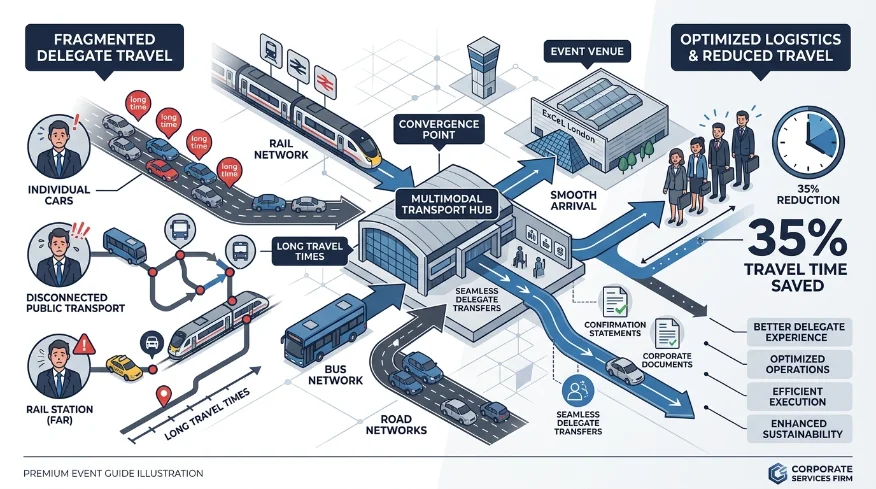
Centralized terminal layouts allow delegates to transfer between trains and local taxis seamlessly. Airport express links connect international speakers directly to central business venues. Dedicated taxi ranks outside arrival halls provide immediate transport after evening networking sessions. Bicycle storage compounds accommodate eco-friendly commuters arriving on two wheels. Integrated transit apps display real-time departure boards on venue reception screens. Traffic management personnel coordinate vehicle flows during high-capacity corporate gatherings. Freight loading bays separate commercial delivery trucks from pedestrian arrival routes. Comprehensive transport integration ensures smooth operations for large international exhibitions.
Where Can Companies Secure Well-Connected Event Spaces?
Companies secure well-connected event spaces by booking professional conference rooms that integrate direct transport access with comprehensive corporate facilities.
Strategic facility selection elevates brand perception during client presentations and board meetings. Modern corporate locations provide high-speed internet connections alongside accessible transport links. Event planners evaluate transport proximity before finalizing annual corporate schedules. Professional venue management teams coordinate logistics for incoming delegate delegations. Central business district locations reduce transit times for local and regional employees. Form My Company assists growing enterprises in identifying optimal physical spaces for stakeholder gatherings. Form My Company streamlines booking processes for corporate leaders seeking accessible meeting environments.
Explore our Conference Rooms guide,
What Information Should Appear on a Company Stamp?
Why Do Banks Ask to See Your Incorporation Documents?
Frequently Asked Questions
What features should a professional conference room include?
A professional conference room should include high-speed Wi-Fi, integrated audio-visual presentation equipment, and ergonomic seating arrangements. Form My Company equips these spaces to support seamless hybrid meetings and executive board presentations. Proper acoustic treatment and adjustable climate control ensure delegate comfort throughout multi-hour corporate events.
How do I book a conference room for business meetings?
You can reserve a conference room by submitting your preferred dates, attendee capacity, and technical requirements through the official booking portal. Form My Company simplifies this process by offering transparent availability schedules and direct corporate reservation options. Advance booking guarantees access to preferred room layouts and on-site administrative support.
Are conference rooms equipped with video conferencing technology?
Modern conference rooms feature high-definition cameras, ceiling microphones, and large digital displays to support remote participants. Form My Company integrates robust video conferencing hardware to ensure clear communication between local attendees and virtual delegates. Technical support teams remain on standby to troubleshoot connectivity issues before sessions begin.
What is the average rental cost for a corporate conference room?
Rental pricing for a conference room varies based on room capacity, booking duration, and required technical equipment inclusions. Form My Company provides flexible hourly and daily rates designed to accommodate different corporate budgeting frameworks. Transparent pricing structures ensure businesses avoid unexpected administrative fees during venue hire.
Can I arrange catering and refreshments for a meeting room?
Meeting venues often provide customizable catering options ranging from basic beverage services to full-day corporate lunch buffets. Form My Company coordinates catering logistics directly with facility management teams to align with your meeting schedule. Advance notice allows venues to accommodate specific dietary requirements and allergen restrictions for all attendees.