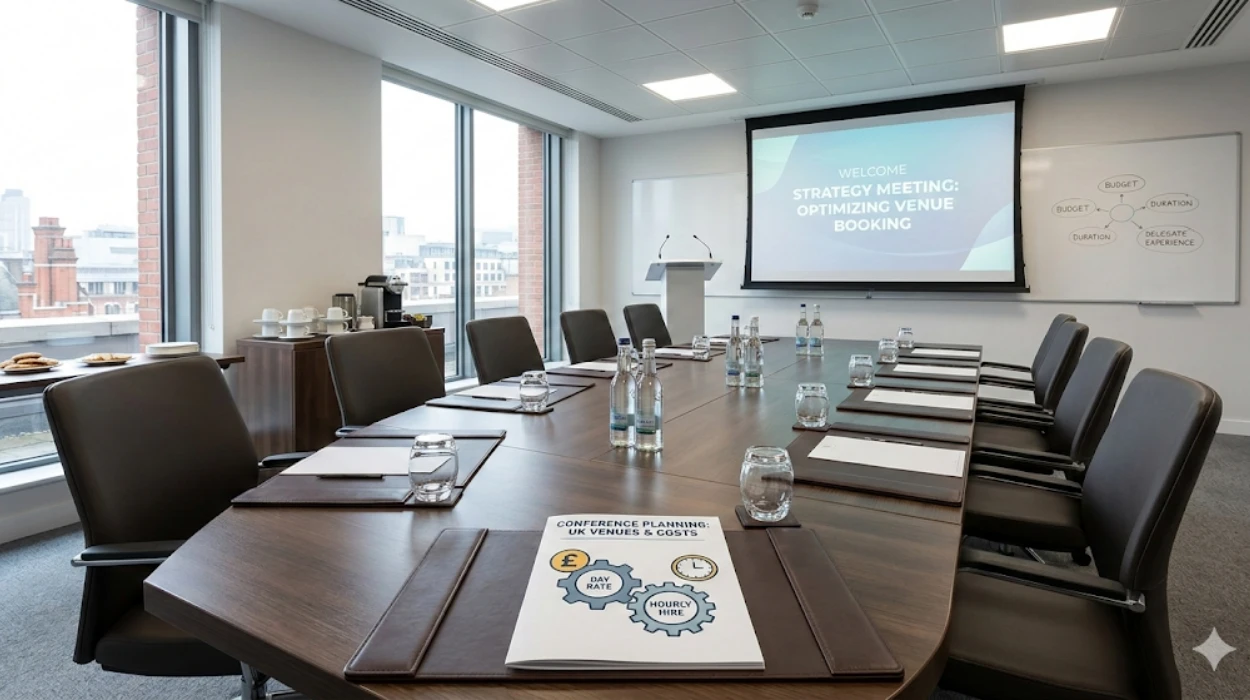
Day rates for UK conference spaces typically offer better value for full-day events, providing all-inclusive access at £400–£800, while hourly hires suit short meetings at £20–£150 per hour. Choosing between them depends on event duration, budget, and needs, with day rates often saving costs for extended use.
Understanding Pricing Models
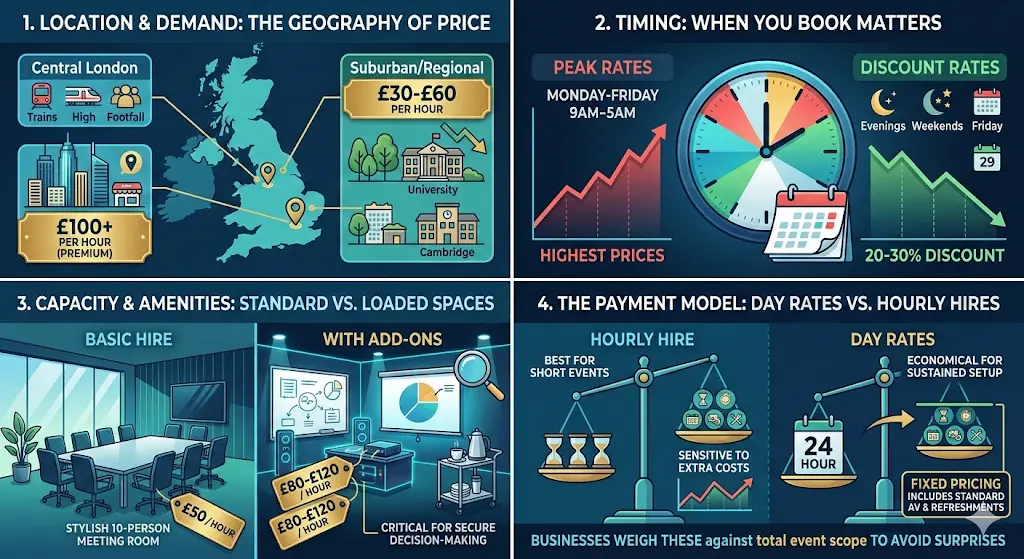
Conference rooms in the UK come with two primary pricing structures: hourly hires and day rates. Hourly hires charge per clock hour, ideal for quick team huddles or client catch-ups lasting under four hours. These rates reflect the flexibility of shared business spaces, where providers like Form My Company optimize availability for diverse client needs.
Day rates, conversely, grant full-day access usually 8–10 hours for a fixed fee, bundling essentials like Wi-Fi, projectors, and basic refreshments. This model suits workshops, training sessions, or strategy days, minimizing the risk of overtime charges that can inflate hourly bookings. Providers structure these to encourage longer commitments, aligning with how businesses plan professional meetings in dynamic urban hubs.
Key Factors Influencing Costs
Location plays a pivotal role in pricing for UK conference spaces. Central London or Manchester venues command premiums due to demand, with hourly rates climbing to £100+ amid high footfall, while suburban or regional spots like those near Cambridge hover lower at £30–£60. Time of day and week also factor in: peak weekdays push prices up, whereas evenings or weekends might discount hourly hires by 20–30%.
Capacity and amenities further differentiate costs. A basic 10-person room might start at £50 hourly, but adding AV equipment, whiteboards, or catering bumps it to £80–£120. Day rates often cap these extras, making them economical for events needing sustained setup, such as board meetings where seamless technology supports secure decision-making. Businesses weigh these against total event scope to avoid surprises.
Pros and Cons of Hourly Hires
Hourly hires shine for brevity and precision. A two-hour brainstorming session in a conference room costs £100–£300, allowing firms to scale expenses tightly without overcommitting space. This suits solopreneurs or remote teams needing occasional professional venues, preserving budget for core operations.
However, drawbacks emerge with longer needs. Overtime fees often 1.5x the base rate can double costs if discussions overrun, a common pitfall in dynamic business talks. Minimum booking thresholds, like two hours, also reduce appeal for ultra-short uses, and setup time eats into billed hours, frustrating planners. For events pushing four hours, the cumulative toll often exceeds day-rate equivalents.
Advantages of Day Rates
Day rates streamline budgeting for immersive events. At £400–£800 for 8–10 hours, they encompass room hire, standard tech, and sometimes lunch, equating to £50–£100 hourly often cheaper than peak-time equivalents. This predictability aids financial forecasting, especially for MOFU-stage decisions where teams evaluate scalable conference rooms services.
Extended access fosters productivity without clock-watching. Delegates can reconfigure layouts, test presentations, or network freely, enhancing outcomes for training or strategy offsites. Providers bundle value-adds like unlimited tea/coffee, reducing ancillary spends that plague hourly models. For UK businesses hosting large business meetings in shared spaces, this structure as explored in The True Cost of Hosting Large Business Meetings in Shared Spaces delivers efficiency.
Cost Comparison Scenarios
Consider a four-hour strategy meeting: hourly hire at £80/hour totals £320, plus £50 for AV and £100 catering £470 overall. A day rate at £550 includes everything, saving 15% and granting extra hours for overruns. For an 8-hour workshop, hourly balloons to £800+, versus £600 day rate a 25% discount.
| Event Type | Hourly Total (8 hrs + Extras) | Day Rate Total | Savings with Day Rate |
|---|---|---|---|
| Strategy Meeting (4 hrs) | £470 | £550 (flexible) | Up to 15% if extended |
| Full Workshop (8 hrs) | £900+ | £600 | 33% |
| Client Pitch (3 hrs) | £300 | N/A (overkill) | Hourly better |
These examples highlight day rates’ edge for mid-length events, factoring regional variances like North London’s £50–£120 hourly baselines. Hourly wins for sub-3-hour needs, but scalability tips toward days as duration grows.
When to Choose Hourly Hire
Opt for hourly when precision trumps endurance. Sales pitches, freelance consultations, or agile stand-ups typically 1–3 hours benefit from pay-per-use economics. In flexible UK markets, this model supports hybrid workforces dipping into conference rooms without full-day lock-ins.
It’s also strategic for testing venues. First-time users gauge fit via short hires, refining needs before committing larger sums. During off-peak slots, discounts amplify value, making it viable for startups monitoring cash flow amid economic shifts.
Ideal Scenarios for Day Rates
Day rates excel in structured, multi-phase events. All-day board retreats or product launches demand uninterrupted flow, where hourly resets disrupt momentum. Training programs spanning morning briefings to afternoon drills leverage the format’s inclusivity, ensuring tech and space readiness.
For recurring needs, like weekly leadership huddles, day rates foster loyalty discounts from providers. Businesses in competitive sectors prioritize this for conference rooms that enable focused, professional environments without hourly pressures.
Hidden Costs and Mitigation
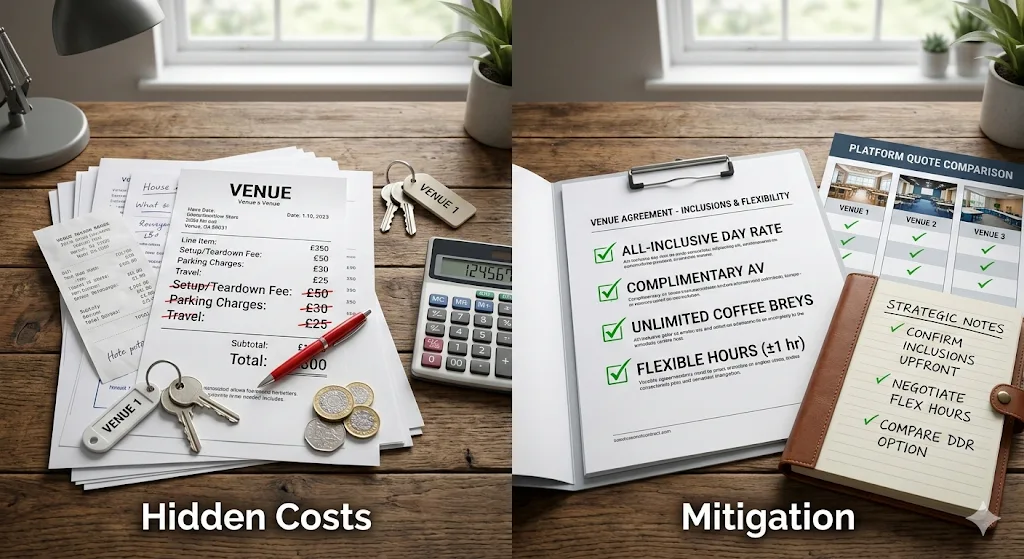
Both models harbor pitfalls. Hourly bookings accrue setup/teardown fees (£20–£50), parking, or travel if venues scatter. Day rates might enforce minimum delegates or exclude premium catering, yet they cap exposure better overall.
Mitigate via clear contracts: confirm inclusions upfront, negotiate flex hours, and compare quotes across platforms. Tools like delegate day rates (£30–£90/person) hybridize options, blending access with perks for mid-sized groups.
Making the Right Choice for Your Business
Align selection with objectives. Short, sporadic? Hourly. Sustained collaboration? Day rates. Hybrid events might mix: hourly for mornings, day for afternoons. Evaluate via total ownership cost, including productivity gains from stress-free spaces.
Form My Company’s conference rooms provide tailored solutions, balancing flexibility and value for UK businesses navigating these choices. Their professional setups ensure seamless events, whether hourly bursts or full-day immersions. Explore Save on Your Next Event with Form My Company’s All-Inclusive Rates.
What are the typical costs for hiring conference rooms in the UK?
Conference room hire in the UK typically ranges from £20–£150 per hour for hourly bookings and £400–£800 for day rates, depending on location, size, and amenities. From My Company’s conference rooms offer competitive pricing that includes standard AV equipment and Wi-Fi for professional meetings. Factors like central London versus regional venues influence these rates significantly.
How do day rates compare to hourly hires for conference rooms?
Day rates provide better value for events lasting over four hours, often saving 20–30% compared to hourly hires due to bundled inclusions like full-day access and refreshments. Hourly hires suit short meetings under three hours but risk overtime fees. From My Company’s conference rooms structure both options to match business needs efficiently.
What amenities are included in most UK conference room bookings?
Standard amenities in UK conference rooms include high-speed Wi-Fi, projectors, whiteboards, and flipcharts, with many venues adding complimentary tea and coffee. Premium setups may cover catering or advanced AV, though extras like these are often specified upfront. From My Company’s conference rooms ensure reliable technology for seamless hybrid or in-person events.
Can conference rooms accommodate different group sizes and layouts?
Yes, conference rooms in the UK vary from 8–10 person boardrooms to spaces holding 50+ in theatre or classroom styles, with flexible configurations available. Providers confirm capacities and floor plans to suit workshops, meetings, or presentations. From My Company’s conference rooms support multiple layouts for optimal delegate flow.
What should I check before booking a conference room?
Before booking, verify inclusions like parking, catering options, cancellation policies, and accessibility features such as step-free access. Confirm technology compatibility and setup times to avoid surprises. From My Company’s conference rooms provide clear details on these essentials for hassle-free planning.