A well-planned room layout and thoughtful lighting setup can transform meeting engagement, communication, and results. The space you choose doesn’t just host your discussion it actively shapes the productivity of every participant.
The Power of Environment in Business Meetings
Every meeting has goals: align teams, make decisions, innovate, or connect with clients. Yet, the design of the physical space its layout, light quality, and comfort plays a measurable role in whether those goals are achieved efficiently. Studies in workplace psychology consistently show that thoughtfully arranged meeting spaces promote better collaboration, creativity, and focus.
For organisations that rely on effective communication and a positive impression, understanding how layout and lighting interact is key to higher productivity and happier participants.
How Room Layout Shapes Group Dynamics
Room layout sets the stage for how people interact, share ideas, and process information. In conference rooms, layout decisions communicate hierarchy, collaboration style, and flow.
Collaborative vs. Directive Layouts
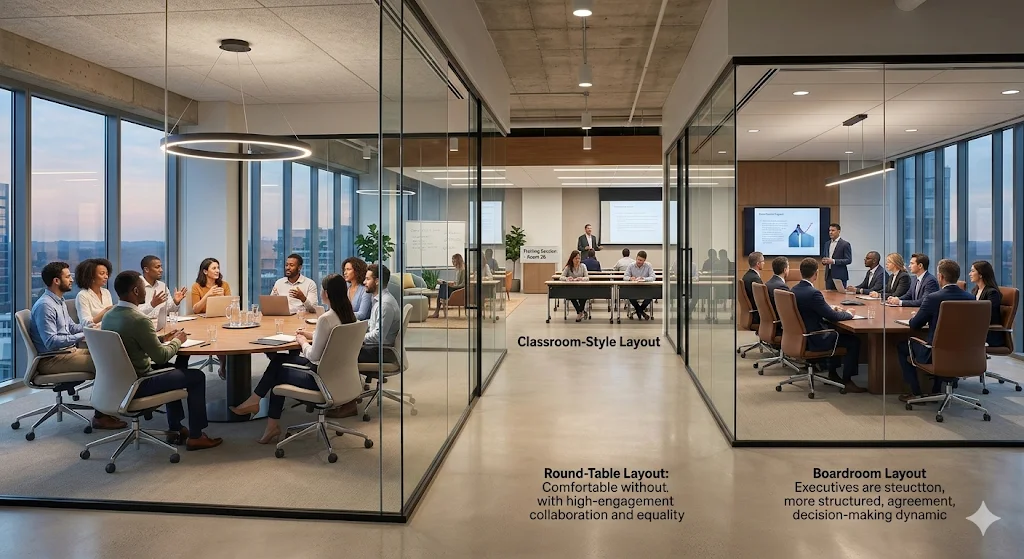
A round-table layout, often used in high-engagement discussions, supports equality: all attendees share eye contact and voice. This structure encourages idea exchange and faster consensus. In contrast, a boardroom layout reinforces formality, perfect for client-facing or decision-making meetings.
When productivity relies on presentations or pitches, theatre-style seating ensures focus toward a central speaker or screen. It maximises capacity but limits two-way engagement. Classrooms layouts tables facing forward balance note-taking with interaction, making them ideal for training sessions.
As explored further in our related post Classroom vs. Theatre Style: Which Conference Setup Fits Your Goal?, understanding these spatial differences helps teams align their meeting types with their layout setups.
Flow and Accessibility
Practical productivity often depends on movement. A layout that allows clear access to exits, visibility of presentation screens, and convenient connections for technology prevents interruptions. Narrow aisles and poor sightlines subtly increase fatigue, especially in longer sessions.
Ergonomically arranged furniture also affects posture and comfort. Adjustable seating, breakout corners, and open walking pathways maintain alertness and promote subtle movement that sustains energy throughout the meeting.
Lighting as a Productivity Multiplier
Lighting in conference rooms isn’t decorative it’s functional psychology. The brightness, colour temperature, and positioning of lights influence concentration, mood, and perception.
Natural vs. Artificial Light
Natural light remains the gold standard for sustained focus. Exposure to daylight regulates circadian rhythm, improving alertness and cognitive function. Large windows or skylights that diffuse sunlight evenly across the meeting room create a sense of openness and mental vitality.
However, artificial lighting becomes crucial when natural sources are limited. High-quality LED lighting, calibrated between 4000K–5000K (neutral white), mimics daylight and prevents eye strain. Poorly lit spaces with inconsistent or dim tone lighting often trigger fatigue, especially during long meetings or video calls.
Direction and Shadow Management
The direction of light also dictates how participants interpret visual cues. Ideally, lighting should illuminate facial expressions and gestures without casting harsh shadows or glare on screens. Recessed ceiling panels or indirect wall lighting distribute light evenly, while task lamps provide flexible brightness for note-taking or reading.
For presentations, adjustable lighting configurations enable smooth transitions between display visibility and discussion clarity. Intelligent lighting systems those that adapt brightness automatically based on time or occupancy further enhance meeting comfort.
The Interplay Between Layout and Lighting
While layout and lighting matter independently, they achieve the best effect when planned together. A circular seating arrangement under evenly distributed lighting enhances equality and conversational flow. Meanwhile, directional lighting focused on a presentation area naturally supports theatre or classroom configurations.
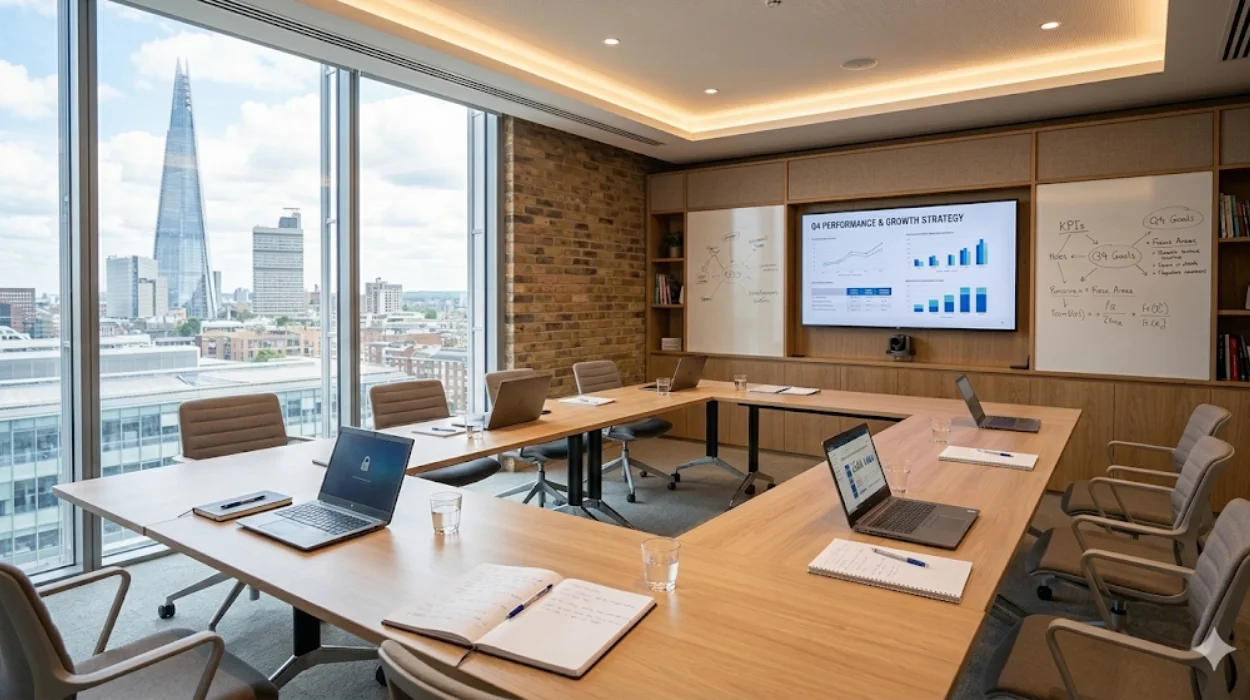
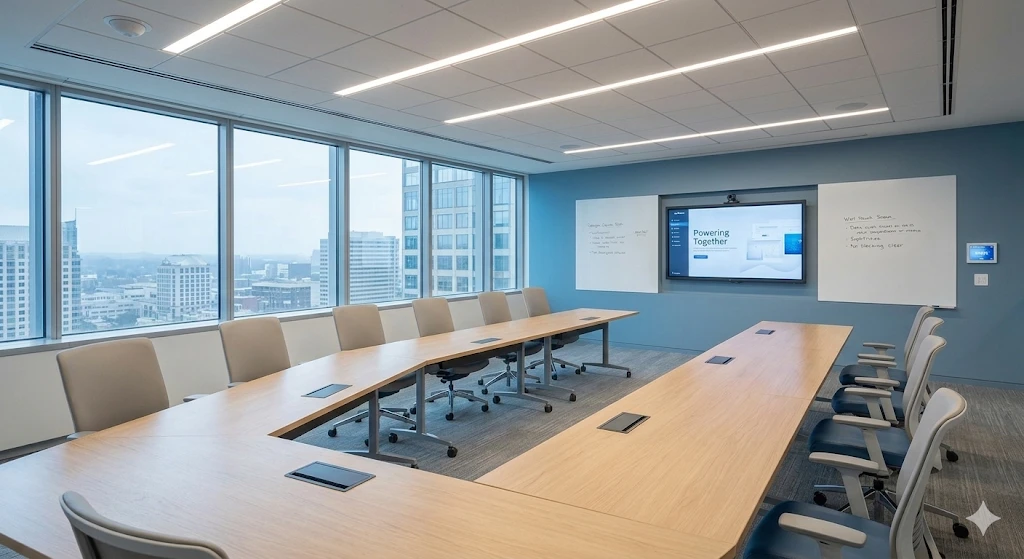
A mismatch between these factors can undermine meeting goals. For example, bright overhead lights above a U-shaped table may glare on screens, distracting attendees. Similarly, uneven lighting in a large boardroom can create zoning effects some areas feel engaged, others overlooked. Integrating architectural design with lighting control helps ensure a consistent meeting atmosphere.
Psychological and Physiological Effects
A room’s layout and lighting influence both mental and physical responses in subtle yet significant ways:
- Focus and Attention: Symmetrical layouts and neutral lighting improve information retention by reducing cognitive distractions.
- Comfort and Mood: Soft white lighting enhances approachability; warm tones near 3000K create calm in negotiation or brainstorming sessions.
- Energy Levels: Ergonomic spacing encourages movement; cooler light tones energise morning meetings.
- Authority and Hierarchy: Rectangular setups and directional lighting reinforce leadership positioning during formal presentations.
Each meeting type benefits from different environmental signals so customising spatial and lighting design to align with purpose saves time and enhances engagement.
Designing for Hybrid and Technology-Driven Meetings
With remote collaboration now standard, hybrid-friendly conference room layouts are vital. Room design must accommodate cameras, microphones, and digital displays without creating visual obstructions or shadowed participants. Lighting must also cater to both in-person visibility and on-screen clarity.
Balanced front-facing lighting ensures that speakers appear naturally lit on camera, while background light balance prevents overexposure. Furniture placement should maintain symmetrical visuals for both virtual and physical attendees.
Modern Conference Rooms Services providers increasingly integrate architectural planning with audiovisual technology and adaptive lighting systems, ensuring rooms perform across every format. This alignment directly boosts meeting productivity by keeping both on-site and remote participants engaged.
Acoustics, Colour, and Air Quality: Supporting Factors
While layout and lighting dominate the visual environment, secondary design factors can elevate concentration and collaboration. Acoustic panels or carpeting reduce echo, allowing clear voice transmission. Colour palettes in muted or neutral tones calm participants, while accent walls in soft blues or greens encourage openness.
Even air circulation contributes to alertness. Poor ventilation leads to drowsiness, whereas a well-ventilated conference room maintains consistent oxygen levels that sustain focus. Combined with natural light and ergonomic spacing, these environmental conditions form the backbone of productive meetings.
Practical Tips for Productive Meeting Spaces
To maximise impact from layout and lighting design:
- Match the layout to the meeting goal collaboration, training, decision-making, or presentation.
- Blend natural and artificial lighting for consistent illumination.
- Choose adaptable lighting controls dimmer switches, colour temperature adjustment, or motion sensors.
- Maintain uncluttered sightlines; avoid furniture blocking light paths or screens.
- Ensure electrical points and digital connectors are accessible from every seating position.
Each of these considerations enhances human comfort, communication rhythm, and task effectiveness.
How Form My Company Delivers Productive Meeting Environments
At Form My Company, our Conference Rooms Services are designed with these functional principles in mind. We understand that meeting productivity depends on a seamless combination of space, light, and atmosphere.
Whether for executive board sessions, training workshops, or hybrid team events, our conference facilities support optimal engagement through strategic layout and intelligent lighting design. Clients benefit from flexible room configurations that adapt to diverse session types and professional needs.
And when you’re ready to explore tailored meeting environments, our Customisable Conference Room Solutions at Form My Company details how flexible solutions can match your company’s culture and goals.
By integrating thoughtful design and modern technology, Form My Company ensures every meeting begins in a space built for progress.
What should I look for in From My Company conference rooms?
From My Company conference rooms typically include essentials like tables, chairs, projectors, whiteboards, and high-speed WiFi for productive meetings. Check for configurable seating arrangements and large monitors to suit your group’s needs, such as boardroom or theater setups. These features support various meeting formats from brainstorming sessions to presentations.
What amenities are available in From My Company conference rooms?
From My Company conference rooms often come equipped with audio-visual tools like microphones, screens, and video conferencing capabilities. Additional amenities may include whiteboard space, flip charts, and reliable internet access for virtual or hybrid meetings. Confirm specifics like power outlets and natural lighting to ensure comfort during extended use.
How do I book a conference room at From My Company?
Booking a From My Company conference room starts with checking availability for your preferred date and duration through their online portal or contact form. Specify your setup needs, such as room capacity and AV equipment, to secure the right space. Early reservations help accommodate setup time for events or catering if required.
What is the capacity of From My Company conference rooms?
From My Company conference rooms vary in capacity based on layout, typically holding 8-20 people in boardroom style or up to 50 in theater arrangements. Factors like table configurations and event type determine comfortable occupancy. Always verify the maximum for your group size to comply with safety guidelines.
Are From My Company conference rooms suitable for video calls?
From My Company conference rooms are equipped for video conferencing with high-quality cameras, speakers, and stable internet connections. Look for dedicated HDMI inputs and compatible software support like Zoom or Teams. Test bandwidth in advance for smooth hybrid meetings with remote participants.