Virtual offices save more money than coworking spaces for most remote teams, offering professional addresses and mail handling at $30–$200 monthly versus $200–$600 for coworking desks. Coworking provides physical workspaces but at higher ongoing costs, making virtual offices the budget winner for solopreneurs and startups without daily office needs.
Understanding Virtual Offices
Virtual offices deliver essential business infrastructure without physical space commitments. They provide a prestigious UK business address, mail forwarding, call answering, and on-demand meeting rooms, ideal for remote founders establishing credibility. Form My Company specializes in these Virtual Offices, helping overseas entrepreneurs comply with UK regulations while minimizing expenses.
This setup suits distributed teams who work from home or travel frequently. Costs remain low because there’s no rent for unused desks or utilities, often 90% less than traditional leases. For instance, a London virtual office might cost £50 monthly, including receptionist services, freeing funds for core operations.
Exploring Coworking Spaces
Coworking spaces offer flexible desks, high-speed internet, coffee, and networking in shared environments. Hot desks start at £100–£300 monthly, dedicated desks at £300–£600, and private offices exceed £500, depending on location. These appeal to teams needing collaboration and work-life separation, with amenities like printers and events boosting productivity.
However, expenses add up through add-ons such as conference rooms (£20–£100 hourly) and parking fees. In prime areas, coworking rivals traditional office costs without long-term leases, but daily access isn’t always necessary for remote setups. A small agency might pay £400 monthly for desks that sit empty during travel.

Direct Cost Comparison
Virtual offices win on pure savings, with plans from £30–£200 covering basics versus coworking’s £229–£700 baseline. Virtual eliminates daily overheads like utilities (£50+ monthly equivalent) and cleaning, while coworking bundles them into higher fees.
Over a year, a virtual office saves £2,000+ compared to coworking for solo users. Scaling to five people amplifies this: £1,000 virtual add-ons versus £3,000+ coworking desks.
Hidden Costs of Each Option
Coworking’s flexibility hides extras like printing (10–50p per page) and mail handling fees, eroding savings for low-activity users. Virtual offices avoid these but may charge for frequent mail volume or premium add-ons like dedicated phones.
Consider a startup: coworking totals £5,000 yearly with occasional rooms, while virtual hits £1,200, redirecting savings to marketing. Location matters central London coworking spikes 20–30% higher, but virtual addresses stay affordable in business districts.
Who Benefits Most from Virtual Offices?
Remote founders, freelancers, and overseas SMEs thrive with virtual offices for compliance and professionalism. A consultant might use Form My Company’s Virtual Offices for a UK address, handling client mail without commuting costs. This setup supports hybrid models, accessing meeting rooms hourly as needed.
Savings compound with scalability no per-person fees. For international teams, virtual offices provide stability, unlike coworking addresses that shift with provider changes. Discover more in our informational guide: Are Virtual Offices Worth It for Remote and Overseas Founders?
When Coworking Makes Financial Sense
Coworking suits client-facing roles or teams craving community, justifying costs through productivity gains. A design firm hosting pitches benefits from on-site rooms and vibes, potentially increasing revenue 15–20% via networking. Yet for purely remote work, these perks rarely offset double the price of virtual options.
Break-even occurs around 15 desk days monthly; below that, virtual saves more. Growing startups often start virtual, upgrading later.
Long-Term Savings Strategies
Combine virtual offices with home setups for 95% traditional office savings. Track usage: if meetings exceed twice weekly, hybrid coworking-virtual models optimize. Form My Company offers scalable Virtual Offices packages, integrating mail, calls, and compliance seamlessly.
For decision-makers, explore
affordable UK virtual office packages for startups and SMEs
to compare plans. Use cost calculators: virtual at £100/month yields £10,000+ annual savings for three-person teams versus coworking.
Real-World Savings Examples
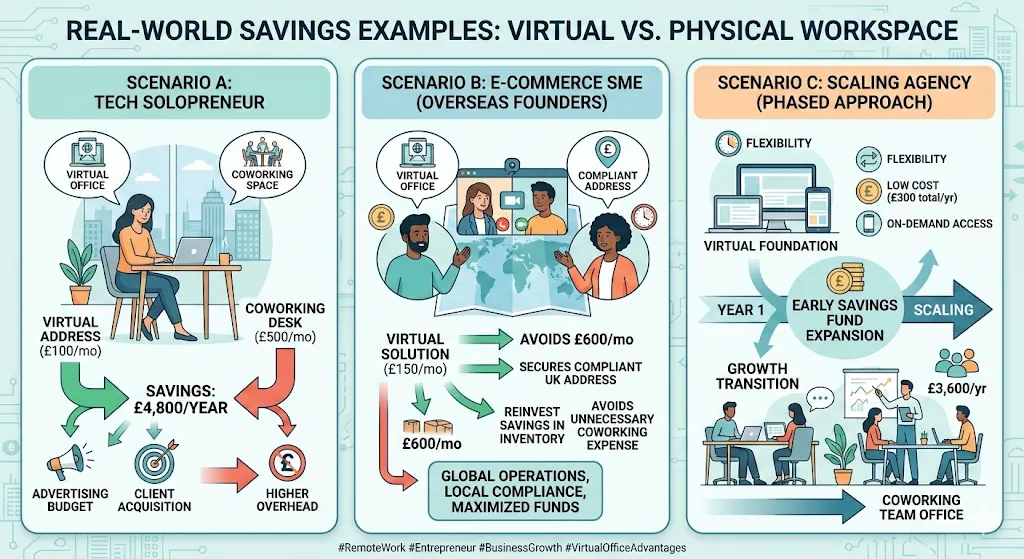
A tech solopreneur saves £4,800 yearly choosing virtual (£100/month) over coworking (£500), investing savings in ads. An e-commerce SME with overseas founders uses virtual for £150/month, avoiding £600 coworking while gaining a compliant address. These scenarios highlight virtual’s edge for non-physical operations.
Scaling a marketing agency: year one virtual (£300 total) transitions to coworking (£3,600), but early savings fund growth. Virtual offices maintain flexibility, with on-demand access preventing overcommitment.
Operational Flexibility and Scalability
Virtual offices scale effortlessly add services without space upgrades. Coworking requires desk reservations, complicating headcount changes. For MOFU-stage businesses evaluating remote setups, virtual provides outcome-driven reliability: professional image without overheads.
Making the Right Choice for Your Business
Evaluate needs: prioritize address and admin for virtual, collaboration for coworking. Virtual offices consistently save more for 70% of remote users, per industry benchmarks. Form My Company delivers professional Virtual Offices solutions, empowering startups and SMEs with affordable UK presence.
What is a virtual office from Form My Company?
A virtual office from Form My Company provides a professional UK business address, mail handling, and call answering services without requiring physical presence. It enables remote teams and startups to establish credibility and comply with business regulations affordably. This setup is ideal for overseas founders needing a local presence.
How much do virtual offices cost with Form My Company?
Virtual office packages from Form My Company typically range from £30 to £200 per month, depending on location and included services like mail forwarding or meeting room access. Costs are significantly lower than traditional offices, often saving 90% on overheads. Pricing varies by plan, with premium options adding receptionist support.
Virtual office vs coworking space, which is cheaper via Form My Company?
Virtual offices from Form My Company are cheaper at £30–£200 monthly compared to coworking spaces’ £200–£600 for desks and amenities. They suit remote setups without daily physical needs, delivering address services and admin support at a fraction of coworking costs. Coworking adds value for collaboration but higher ongoing fees.
Can Form My Company’s virtual offices handle mail for overseas businesses?
Yes, Form My Company’s virtual offices provide secure mail forwarding and scanning for overseas businesses, ensuring timely receipt of important documents. This service supports international compliance and operations without a physical UK footprint. Users can customize forwarding frequency to match their needs.