

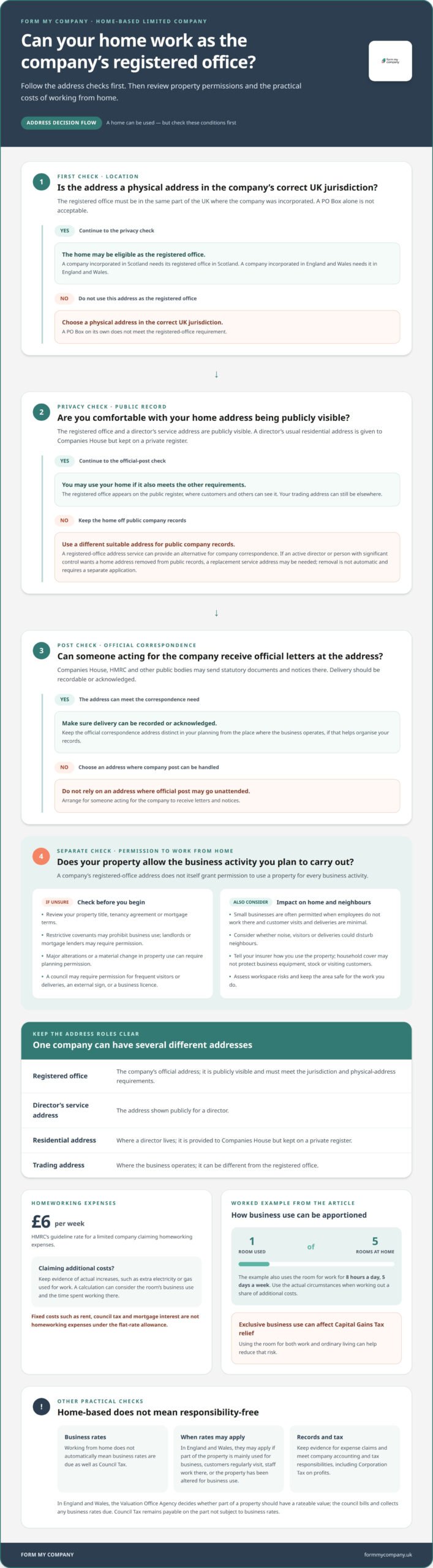
Yes, you can run a limited company from your home in the UK. Working from home does not automatically make your home the right registered office, and it doesn’t remove the need to consider property permissions or how the business affects your home. HMRC’s guideline rate for a limited company claiming homeworking expenses is £6 per week.
It’s easy to treat a company’s working address, public address and official correspondence address as the same thing. They can be different, so understand what each is for before deciding which addresses to put on the public record.
This article explains how running a limited company from home fits with Companies House address rules, privacy and official post. It also covers permissions and homeworking expenses, helping you plan a practical setup without overlooking important details.
Key Takeaways
- You can operate a limited company from home, but the company’s registered office and your working location serve different purposes.
- Choose a suitable registered office address in the correct part of the UK, and make sure official post reaches someone acting for the company.
- Understand which company and director addresses are publicly visible before using your home address on company records.
- Consider planning rules, your tenancy or mortgage terms, and the effect of business activity on your home before you begin.
- Keep homeworking expense claims separate from fixed household costs, and retain evidence for any additional costs claimed.
Can I run a limited company from home?
Yes. A UK limited company can operate from your home, but company registration does not grant permission to use the property for every business activity. Consider property restrictions, tax treatment and the effect of your work on the household.
Home business permissions and restrictions
Home business permissions are the rules and agreements that determine whether you can use your property for work. Small businesses are often permitted to operate from home when employees don’t work there and customer visits and deliveries are minimal.
Before you start, review your property title, tenancy agreement or mortgage terms. Restrictive covenants may prohibit business use, while landlords or mortgage lenders may require permission. Major alterations or a material change in how the property is used can require planning permission. A council may also require permission if you expect frequent visitors or deliveries, want an external sign, or need a business licence. Check that your insurance covers business equipment and activity.
Apportioning household costs
Apportioning household costs means calculating the share that relates to business use, rather than claiming the whole household bill. HMRC’s guideline rate for a limited company claiming homeworking expenses is £6 per week. According to The National Archives, Section 316A of the Income Tax (Earnings and Pensions) Act 2003 is the legal provision for qualifying homeworking expense payments.
For additional costs, keep evidence of actual increases, such as extra electricity or gas used for work. A calculation can consider the room’s business use and the time spent working there. In one example, one room in a five-room home is used for work, for 8 hours a day, 5 days a week. Fixed costs such as rent, council tax and mortgage interest aren’t homeworking expenses under the flat-rate allowance.
Using a room exclusively for business can affect Capital Gains Tax relief when you sell your home. Using the room for both work and ordinary living can help reduce that risk.
Responsibilities of home-based businesses
Running a business from home brings responsibilities for safety, neighbours and records. You remain responsible for health and safety, including your own, and must assess risks in your workspace. Keep it safe for the work you do.
Consider whether noise, visitors or deliveries could disturb neighbours. Tell your insurer how you use the property, since household cover may not protect business equipment, stock or visiting customers. Keep evidence for expense claims and meet the company’s accounting and tax responsibilities, including Corporation Tax on profits.
Council tax and business rates
Working from home doesn’t automatically mean you’ll pay business rates as well as Council Tax. In England and Wales, business rates may apply if part of the property is mainly used for business, customers regularly visit, staff work there, or the property has been altered for business use.
In England and Wales, the Valuation Office Agency decides whether part of a property should have a rateable value, and the council bills and collects any business rates due. Council Tax remains payable on the part not subject to business rates. The decision depends on how the space is used and the activity at the property, so an occasionally used home office differs from a dedicated business area with regular visitors.
Companies House registration and keeping a home address private
Companies House records several company and director addresses, each with a different purpose. Choosing them carefully helps separate public company information from your private residence.
Keeping a home address private
Your home address stays off the public register if you use a different suitable address for public company records. This matters because the registered office and director’s service address are publicly visible, while a director’s usual residential address is provided to Companies House but kept on a private register.
Before registration, decide which address should receive public correspondence. An active director or person with significant control who wants a home address removed from public records may need to provide a replacement service address. Removal isn’t automatic; a separate application is required. A registered office address service can provide an alternative address for company correspondence.
Choosing company addresses
A residential address is where a director lives; a service address is the address shown publicly for that director. The registered office is the company’s official address, while the trading address is where the business operates. These addresses can differ, allowing you to organise public records without making your home the company’s working location.
Every UK limited company needs a physical registered office in the same part of the UK where it was incorporated. A company incorporated in Scotland must keep its registered office in Scotland; one incorporated in England and Wales must keep it in England and Wales. A PO Box alone isn’t acceptable. Unlike a sole trader, a limited company is a separate legal entity, so its address arrangements are distinct.
Using a home as registered office
You can use your home as the registered office if it meets Companies House requirements and is in the company’s correct UK jurisdiction. Consider the public visibility before choosing this option: the registered office appears on the public register, where customers and others can see it. Your trading address can still be elsewhere.
Choose an address where someone acting for the company can receive official letters and where delivery can be recorded or acknowledged. Companies House, HMRC and other public bodies may send statutory documents and notices there. A limited company must register before it starts trading, so settle the address arrangement during formation. If the company later moves, update Companies House rather than waiting for the next confirmation statement. Keep company records and correspondence organised separately from household paperwork, including personal tax return documents.
Public visibility of registered and director service addresses
Using your home address for a limited company can make it publicly visible, creating privacy concerns and the risk of unwanted correspondence. The registered office and director’s service address appear on the public register; a director’s usual residential address is held privately by Companies House and is not normally shown to the public.
A director’s service address is the public address for company correspondence. It can be their home, the company’s registered office, or another suitable address, such as an accountant’s or registered office provider’s address. Choose somewhere that can receive correspondence reliably. If an active director or person with significant control wants a home address removed from public records, they may need a replacement service address. Removal requires a separate application and doesn’t happen automatically.
The practical risk of publishing a home address is that people can find it through company records. That may bring unwanted attention or make it harder to keep work and home life separate. An alternative public address can reduce that exposure, but it must still be suitable for receiving correspondence. A virtual office address may provide a separate business contact point without changing where you actually work.
Directors who work from home may receive qualifying homeworking expense payments tax-free under the applicable rules. HMRC’s guideline rate is £6 per week, and a qualifying payment doesn’t need to be reported on a P11D. The allowance covers eligible additional costs, not private household expenses simply relabelled as business costs. Where actual additional costs exceed the guideline allowance, evidence is important to support the amount reimbursed.
A director and their company can agree a rental arrangement for workspace at home. If a director and their company agree a rental arrangement for workspace at home, they should consider how the rent is set and how rental income is reported. Keep the agreement and supporting records with the company’s paperwork so the arrangement and payments are clearly documented.
Working from home doesn’t reduce directors’ company responsibilities. Directors must keep company and accounting records and file company accounts and tax returns. Separate business documents from household bills, and retain evidence for expense reimbursements or rental payments. For example, keep the homeworking agreement with company records and retain calculations for any additional costs claimed. Clear records help distinguish company expenses from personal spending.
Planning permission, landlord and mortgage permissions
Registering a company doesn’t give you permission to use your home for every business purpose. Before setting up, consider the property’s planning status, your mortgage or tenancy terms, and how the work may affect neighbours.
Planning permission for home businesses
In England and Wales, planning permission isn’t normally required simply because you work from home, provided the business remains incidental to the property’s use as a home. The key question is whether the activity changes the home’s character or use. Quiet desk-based work differs from regular customer visits, deliveries, staff activity or noticeable alterations.
Contact the local planning authority before making structural changes or materially changing how the property is used. A business expecting lots of visitors or deliveries, displaying an external sign, or requiring a business licence may also need council permission. Factor in an external sign when planning, as it may need permission. Childcare, B&Bs and guesthouses are examples of home businesses that may require a local authority licence.
Permission from a landlord or mortgage provider
A residential mortgage may restrict or prohibit certain business uses, so check the lender’s terms even if you work at a desk. Read the mortgage conditions and ask the lender for permission where required. The type of activity, customer access and changes to the property can affect the assessment.
If you rent or lease your home, review the tenancy agreement and get the landlord’s permission where required. A business involving stock storage or customer visits may raise different concerns from occasional computer work. Check the property title and purchase documents for restrictive covenants that prohibit business use. You can check title information through HM Land Registry.
Match the activity to the property
When requesting permission, describe how the business will operate: where work happens, whether customers or employees will visit, and whether deliveries will increase. These details help a landlord, mortgage provider or planning authority assess the proposal. They also help you spot possible effects on neighbours, such as extra noise, parking pressure or frequent arrivals.
Keep the home’s use under review as the company grows. A quiet office may remain incidental to residential use, while converting rooms or bringing in regular visitors could change the position. Ask the local council about planning or signage requirements before making those changes. If the company’s activity doesn’t fit the property’s terms, consider another permitted working arrangement rather than risking a breach.
Keep written permissions and related documents with your company records. Note any approved conditions, such as limits on visitors or alterations, and follow them as operations change. Expense calculations don’t replace property permission: tax treatment and the right to use the premises are separate issues. Review the arrangement if you add staff, customers, signage or deliveries, as each can change the impact of your home business.
Address requirements for official company correspondence
A registered office is more than an entry on the company register. It must be an appropriate physical address where official post is likely to reach someone acting for the company and delivery can be recorded or acknowledged. When setting up the company, decide who will receive letters and how they will reach the person responsible.
This applies whether the registered office is your home or another address. It must work for formal correspondence, not simply identify where employees work. A home-based company may trade elsewhere, but official letters still need a reliable route to the company. A PO Box alone doesn’t meet the registered-office address requirement.
Set up a clear process for receiving mail. Assign someone to collect and open company post, note when it arrives, and pass documents to the relevant director. Record important letters and the action taken. For example, a filing notice should reach the person managing company records rather than remain unopened with household post.
Handle official letters promptly, as they can include notices, reminders and statutory documents. If an address service or another agency receives post for the company, arrange reliable forwarding to the directors. Make sure the company can identify when a document arrived and who received it. Letters that wait or go untracked can disrupt decisions and filings.
Consider how the setting affects day-to-day deliveries. A home may be suitable for letters even if the business doesn’t expect customer visits or regular parcels. Keep company correspondence separate from personal mail, and make the company name clear to whoever handles deliveries. If employees share responsibility, give them a simple process for logging and escalating official documents.
Review the arrangement whenever the company moves or changes how it receives post. Update the registered office with Companies House after a move, and notify any agency handling correspondence. Ensure someone can receive documents at the new address and that forwarding details are current. Keep copies of address-change records with the company documents.
When choosing an address, balance privacy with reliable access to official post. A separate business address can keep correspondence away from household deliveries, but it still needs to meet registered-office requirements. The practical test is whether company documents will reach someone’s attention and their delivery can be recorded or acknowledged.
If you’re setting up a company and need help with its formation, arrange company formation with an address plan that supports reliable official correspondence.
Form My Company
Form My Company helps you take the next step when you’re ready to set up a UK company. Its formation options include the Digital Package, Digital & Print Package and Entrepreneurs Choice Package, giving you ways to proceed with company formation.
If you’re deciding which structure suits your plans, consider it alongside your home-working and address arrangements. Form My Company also offers Limited Liability Partnership (LLP) Formation for those choosing an LLP. The right formation route depends on the structure you want to establish, not simply where you’ll work.
Contact Form My Company to move forward with company formation.
Set up a home-based company with a clear plan
If you’re weighing whether you can run a limited company from your home, plan beyond your first day of trading. Choose an arrangement that works for your business now and can adapt as your activity changes. Consider the company’s public presence, working arrangements and handling of official correspondence as you make decisions.
A considered setup can help you manage company administration without letting business processes take over your home life. Decide which details should be public, who will handle company documents and how you’ll respond if your working arrangements change. These choices help make a home-based business more organised from the start.
When you’re ready to take the next step, contact Form My Company about forming your company. Start with a setup that fits your plans, then build your business with confidence.
Frequently Asked Questions
Can I use my home address as my director’s address?
Yes, you can use your home as your director’s service address, but it will be shown publicly on the Companies House register. Your usual residential address is provided separately and is not normally public. To avoid displaying your home as the service address, use another suitable correspondence address. If your home address is already on public records, removing it requires a separate application.
Does my company need a separate trading address?
No, a limited company doesn’t need a trading address that differs from its registered office. It can trade from home and use the same address, provided the registered office meets the official requirements. A separate trading address can be useful if you work elsewhere or want to keep business operations apart from home life. Keep the distinction clear in company records and ensure official post reaches the registered office.
How does this work in practice?
You can live at one address, work from home and use a different registered office or service address for company records. For example, a director may work at home each day while a separate address receives official letters. Set up a reliable process to pass post to the director promptly. Keep Companies House details current if the registered office changes.
What about the neighbours?
Consider whether your business could disturb neighbours through noise, frequent visitors, parking pressure or extra deliveries. A home office without customer visits has a different impact from a business receiving visitors regularly. If your activity interferes with neighbours’ enjoyment of their property, it could lead to legal action. Plan how customers and deliveries will be handled, and respond promptly if your operations cause a disturbance.
Can I register a UK limited company at my home address?
Yes, you can use your home as the registered office if it’s a physical address in the part of the UK where the company is incorporated. A PO Box alone isn’t suitable. Official post must reach someone acting for the company, and delivery must be recorded or acknowledged. Consider the address’s public visibility before using your home.
Can a UK limited company operate from a residential property?
Yes, a limited company can operate from a residential property, but incorporation alone doesn’t permit every type of business activity. The property’s title, tenancy or mortgage terms may restrict business use. Customer visits, deliveries, staff attendance and alterations can also affect which permissions are needed. Quiet homeworking may be treated differently from a business that changes how the property is used.
Do I need planning permission to run a business from home in the UK?
In England and Wales, planning permission is not normally needed just because you work from home, provided the business remains incidental to residential use. Structural alterations or a material change in how the property is used can require permission. Frequent visitors, increased deliveries or an external sign may also raise planning or council permission questions. The activity and its impact on the property are key considerations.
Can I claim home office expenses through a UK limited company?
Yes, a limited company can claim eligible homeworking expenses, but claims must reflect business costs rather than ordinary household spending. Keep records and evidence for additional costs, such as increased energy use, and use a reasonable calculation when apportioning bills. The flat-rate allowance does not cover fixed costs such as rent, Council Tax or mortgage interest. HMRC’s rules distinguish company expenses from personal costs.