
Submitting an expired Certificate of Good Standing results in automatic rejection from government bodies, banks, and international regulators because these institutions require proof of active corporate compliance within a strict 30-day window. Prevent this rejection by monitoring issuance dates, requesting fresh validations, and utilizing professional filing services.
Why Do Authorities Reject Expired Certificates?
Authorities reject outdated compliance documents because corporate statuses change rapidly, and third parties require validation that a company maintains active legal standing within the current operating month.
Corporate regulatory environments demand absolute accuracy when verifying business legitimacy. When a corporate entity files documents with Companies House, its administrative standing shifts based on annual confirmation statements and accounts filings. Third-party institutions enforce strict expiration limits because an out-of-date document fails to reflect recent dissolutions, strikes, or compliance failures. Banks, international partners, and overseas registries implement these policies to mitigate financial risk and adhere to strict anti-money laundering regulations. Operating with unverified credentials compromises business agreements and delays crucial corporate transactions across global markets.
What Defines the Validity Period of a Certificate?
A Certificate of Good Standing remains legally valid for a specific window of 30 days from its issuance date because requesting entities demand real-time verification of company status.
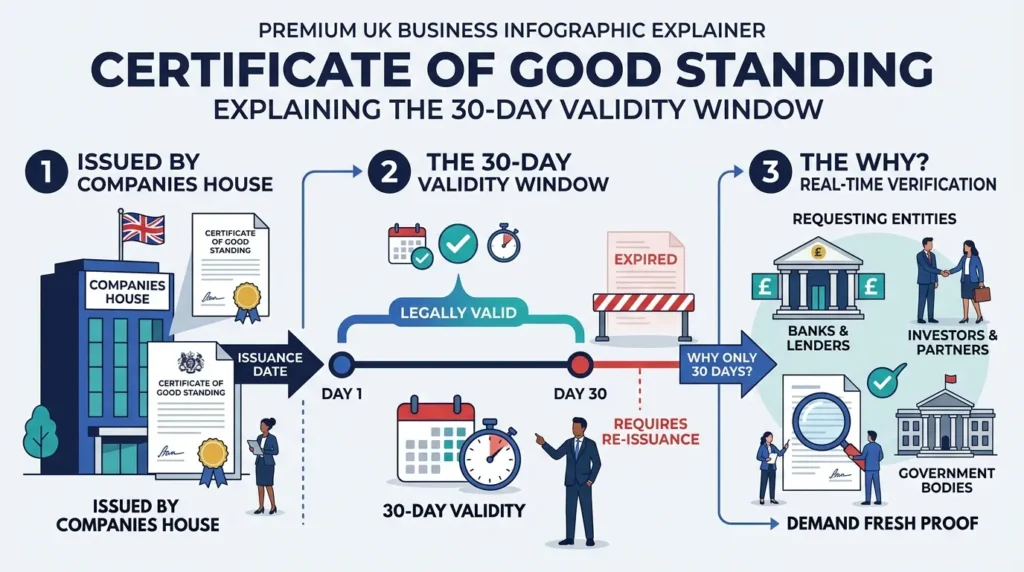
Financial institutions and legal authorities enforce a tight timeframe due to the fluid nature of corporate compliance. When a registrar prints this official document, it captures the exact status of a business on that specific day. If an enterprise submits paperwork past that threshold, reviewing officers flag the document as obsolete. Maintaining compliance requires understanding that foreign registries and UK authorities do not accept historical documents for current legal procedures. Businesses must synchronize document acquisition with immediate submission deadlines to bypass administrative rejection entirely.
How Can Companies Track Expiration Dates Effectively?
Companies track document expiration schedules by implementing automated calendar alerts, auditing compliance timelines quarterly, and reviewing registry update schedules.
Administrative oversight causes many corporate rejections during international expansion or banking applications. Establishing a reliable tracking protocol protects business operations from sudden document invalidation. Operations managers monitor renewal windows by scheduling automated alerts 45 days before any planned corporate submission. Three tracking methods: calendar software notifications, dedicated compliance spreadsheets, and direct registry checks, ensure zero oversights occur. Integrating these protocols into daily administrative workflows guarantees that every document remains fresh and fully acceptable to reviewing authorities.
What Steps Prevent Rejection During International Submissions?
Prevent international rejection by authenticating documents through official consular legalization, obtaining recent registry extracts, and translating files accurately.
Cross-border business transactions introduce complex verification layers that demand precise document preparation. Foreign government departments reject standard UK certificates if they lack proper apostille stamps or contemporary issue dates. Securing approval from international authorities involves three distinct validation steps: verifying current registry status, obtaining a fresh document copy, and securing legal certification. Compliance officers must verify foreign embassy requirements before dispatching paperwork to prevent costly processing delays. Form My Company ensures businesses secure compliant documentation tailored to specific international regulatory standards.
How Do Banking Institutions Verify Corporate Status?
Banking institutions verify corporate status by cross-referencing submitted certificates with live registry databases and enforcing strict document age limits.
Financial compliance departments maintain rigorous screening protocols for corporate account openings and loan applications. When a compliance officer receives a company file, they inspect the issuance timestamp against internal risk management guidelines. Banks reject submissions exceeding the standard verification window because outdated paperwork violates regulatory compliance mandates. Maintaining banking relationships requires providing accurate, freshly issued proof of corporate vitality. Businesses navigating these rigorous checks benefit significantly when they Request an Up-to-Date Certificate of Good Standing From Form My Company to satisfy strict financial compliance requirements.
What Role Does Professional Filing Play in Compliance?
Professional filing services eliminate rejection risks by managing document timelines, liaising directly with registrars, and delivering freshly authenticated certificates.
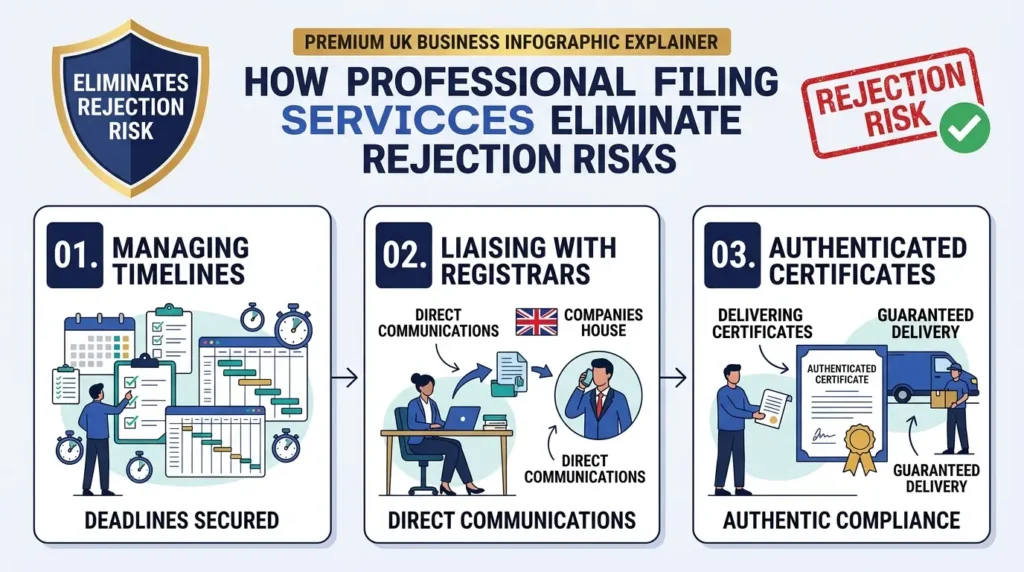
navigating administrative hurdles consumes valuable internal resources for growing enterprises. Specialized corporate secretarial services streamline the acquisition process by securing documents directly from official sources on demand. Expert oversight ensures that every piece of paperwork meets exact institutional criteria before submission. Organizations looking to streamline administrative workflows can utilize the Certificate of Good Standing service to obtain verified documents without bureaucratic delays. Delegating these regulatory tasks allows internal teams to focus on core commercial expansion while maintaining flawless corporate records.
How Does Outdated Documentation Impact Business Operations?
Outdated documentation halts critical business operations by stalling international contracts, freezing bank accounts, and delaying vital corporate restructuring initiatives.
Administrative oversights carry heavy operational consequences for active enterprises. When a regulatory body or financial institution rejects an expired document, the associated business transaction halts immediately. This disruption damages commercial relationships and creates costly administrative backlogs. Understanding the broader implications of compliance failures highlights why businesses must prioritize timely document renewals. For a broader exploration of administrative risks, review our guide on What Happens if You Submit an Out-of-Date Certificate of Good Standing? to safeguard your corporate standing.
Maintaining active corporate compliance requires constant vigilance regarding document lifespans and regulatory expectations. Enterprises protect themselves from costly administrative rejections by monitoring issuance dates, respecting strict submission windows, and utilizing expert verification services. Form My Company delivers reliable solutions that empower businesses to maintain flawless compliance records across all domestic and international markets.
Explore More Certificate of Good Standing Guide,
How to Choose a Renewal Schedule for Your Certificate of Good Standing
Comparing Single-Use vs Regularly Renewed Certificates of Good Standing
Frequently Asked Questions
How long is a Certificate of Good Standing valid for?
A Certificate of Good Standing is typically valid for 30 days from its date of issuance. Financial institutions, international regulators, and government bodies enforce this strict window because corporate compliance statuses can change rapidly. Form My Company ensures businesses receive freshly issued documents to prevent administrative rejection during critical submissions.
Can an expired Certificate of Good Standing be updated or renewed?
Registries do not extend or renew expired certificates; instead, a brand-new document must be ordered from the issuing authority. Because corporate details change, authorities require a fresh verification of active legal standing. Form My Company streamlines this replacement process by acquiring up-to-date certificates directly from official registries on demand.
Why do banks reject outdated Certificates of Good Standing?
Banks reject outdated compliance documents to comply with strict anti-money laundering regulations and mitigate financial risk. Financial institutions require real-time proof that a corporate entity maintains active legal standing and has filed recent accounts. Obtaining an accurate Certificate of Good Standing through Form My Company satisfies banking compliance mandates without administrative delay.
What information does a Certificate of Good Standing contain?
A Certificate of Good Standing displays the official company name, registration number, and confirmation that the enterprise has met all statutory filing requirements. It verifies that the business is not subject to strike-off or dissolution proceedings with Companies House. Form My Company helps corporations secure these official extracts to prove active corporate vitality to third parties.
Do international authorities require an apostille on a Certificate of Good Standing?
Foreign government departments and international regulators frequently require an apostille or consular legalization alongside a Certificate of Good Standing. This additional authentication verifies the document for cross-border business transactions and overseas subsidiary registrations. Form My Company provides comprehensive corporate services to ensure international compliance documents meet all specific destination criteria.