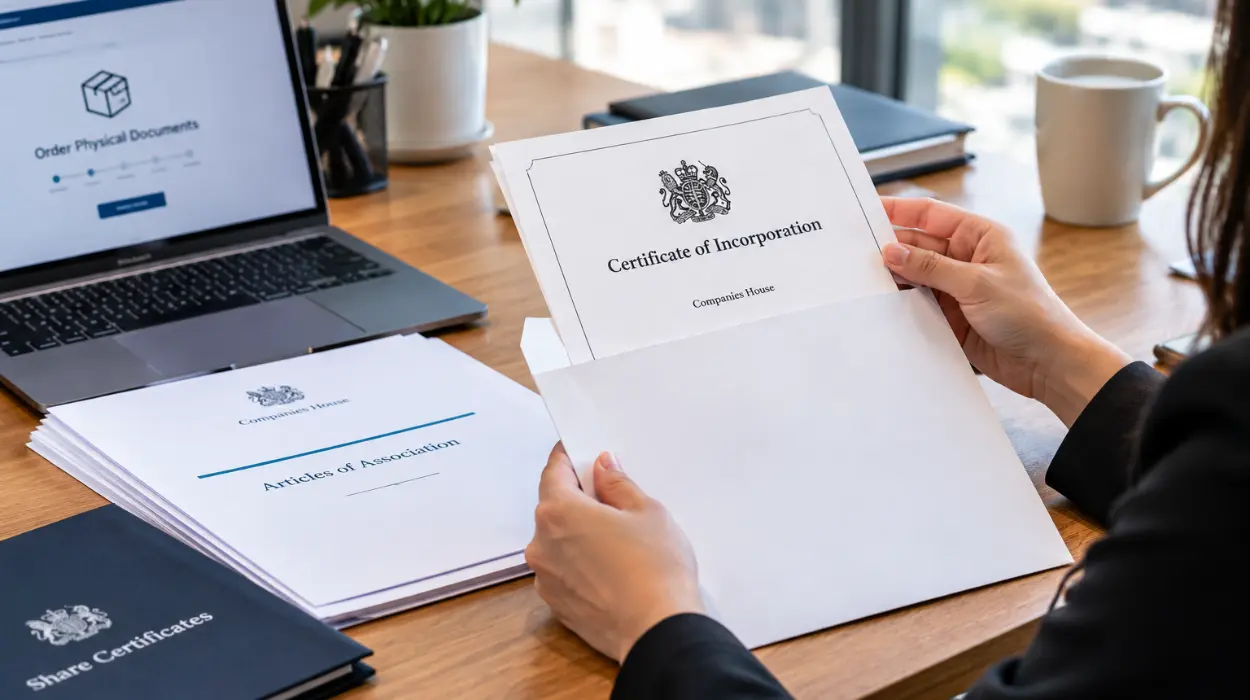
Modern corporate fraud threats to UK small businesses include corporate identity theft, mandate fraud, invoice hijacking, and unauthorised director appointments. Fraudsters exploit public Companies House records, falsify corporate documentation, and manipulate payment details to siphon company funds, destroy business credit, and create severe legal liabilities.
How Does Corporate Identity Theft Impact UK Small Businesses?
Corporate identity theft occurs when criminals impersonate a legitimate business by hijacking its registered details at Companies House. Fraudsters alter director profiles, change official registered addresses, and secure high-value commercial loans or credit lines under the company’s name without authorization.
Corporate identity theft severely undermines commercial operations and financial stability. Criminals access public corporate registers to gather legal entity details. They submit fraudulent paper forms or digital filings to Companies House. These unauthorized filings change key company details, including registered office addresses and director appointments. Once bad actors control the corporate record, they impersonate business owners.
Criminals use altered register details to open fraudulent merchant accounts. They apply for commercial overdrafts, order expensive equipment on credit terms, and secure trade financing. Lenders evaluate the legitimate business’s established credit rating, approving credit lines without manual verification. The legitimate business owners remain entirely unaware of these actions until credit bureaus report defaulted loans.
The legal and financial recovery process requires significant administrative labor. Businesses must submit official rectification forms to Companies House to correct the corporate register. They must collect evidence, consult legal experts, and notify law enforcement authorities. While owners attempt to restore official records, financial institutions often freeze legitimate business bank accounts. This operational disruption damages vendor relationships, halts daily trading, and impairs overall corporate valuation.
Why Is Mandate Fraud an Increasing Threat to Commercial Accounts?
Mandate fraud occurs when cybercriminals trick a business into altering supplier payment details. Fraudsters impersonate legitimate vendors through compromised email accounts or intercepted invoices, directing pending payments straight into fraudulent bank accounts controlled by criminal syndicates.
Mandate fraud actively targets daily operational cash flow within small enterprises. Fraudsters conduct extensive reconnaissance on targeted organisations. They monitor executive social media profiles, track public procurement announcements, and breach corporate email networks through phishing tactics. Once inside a business communications system, criminals observe billing schedules and invoice templates.
Criminals wait for a major payment cycle before initiating contact. They send fraudulent communications posing as an established supplier’s finance department. The email informs internal accounting staff of updated banking details due to an audit or corporate restructuring. Because the email uses convincing branding, spoofed domains, and familiar language, accounts payable staff often update payment software systems without secondary verification.
The financial loss becomes apparent only after the legitimate supplier requests overdue payment. Recovering funds transferred via domestic faster payments systems remains extremely difficult once funds enter money mule networks. Financial institutions trace funds across multiple temporary accounts, but criminals quickly convert fiat currency into untraceable assets. Beyond direct capital losses, businesses face contractual disputes with unpaid suppliers, immediate supply chain disruptions, and severe reputational damage.
What Role Do Falsified Companies House Filings Play in Business Fraud?
Falsified Companies House filings allow fraudsters to manipulate official corporate structures using fraudulent paper submissions or compromised web filing accounts. Criminals register fake directors, remove genuine officers, or declare false share capital to exploit corporate trust.
Companies House acts as an open register, operating historically on self-certification principles. While recent legislative updates increase verification checks, bad actors still exploit administrative gaps. Fraudsters submit paper forms to appoint fictitious officers or replace existing board members. They exploit time delays between document submission, register processing, and official notification updates sent to legitimate business owners.
Once listed as registered directors on the public record, criminals exercise legal authority over the entity. They request duplicate corporate bank cards, order corporate SIM cards, and present themselves as authorized signatories to commercial service providers. Fraudsters present altered Companies House documents to commercial leasing agencies to secure property contracts, high-value vehicle leases, and commercial equipment.
Restoring corporate integrity requires submitting formal applications to remove false filings. Companies House mandates legal declarations and evidence proving fraudulent activity before altering public entries. During this dispute resolution window, external credit reference agencies downgrade the target company’s credit score. B2B partners view frequent administrative changes as high-risk indicators, leading suppliers to revoke trade credit terms and demand upfront cash payments.
How Do Cybercriminals Execute Invoice Hijacking Schemes Against Small Firms?
Invoice hijacking involves criminals intercepting legitimate digital invoices sent between business partners. Fraudsters modify the payment details on the digital document before forwarding the updated file to the intended recipient, redirecting commercial funds straight to offshore accounts.
Invoice hijacking relies on advanced email thread hijacking and social engineering tactics. Cybercriminals breach corporate mail servers using stolen login credentials purchased on dark web forums. Once gaining network access, automated bots search inbox folders for keywords like invoice, statement, or payment due. The software identifies pending high-value commercial transactions and flags them for criminal exploitation.
Fraudsters create subtle rules within the victim’s email settings to redirect incoming responses to hidden folders. They alter original PDF invoices using editing software, changing bank sort codes and account numbers while leaving line items, tax calculations, and corporate branding intact. The fraudster forwards the altered invoice to the customer using an email address that visually matches the real domain name.
The receiving company processes the modified payment request in good faith. Because the invoice contains accurate project descriptions, purchase order numbers, and realistic billing amounts, payment verification protocols fail to catch the anomaly. The sending company tracks the unpaid account, while the receiving company insists payment cleared successfully. Resolving these double-entry payment disputes strains commercial relationships, consumes management bandwidth, and causes cash flow deficits.
What Internal Vulnerabilities Expose Small Businesses to Payment Fraud?
Internal vulnerabilities exposing small businesses to payment fraud include single-person approval workflows, lack of dual-factor verification, unverified supplier database changes, and minimal employee security training. These operational weaknesses allow unauthorized corporate financial transactions to bypass basic controls.
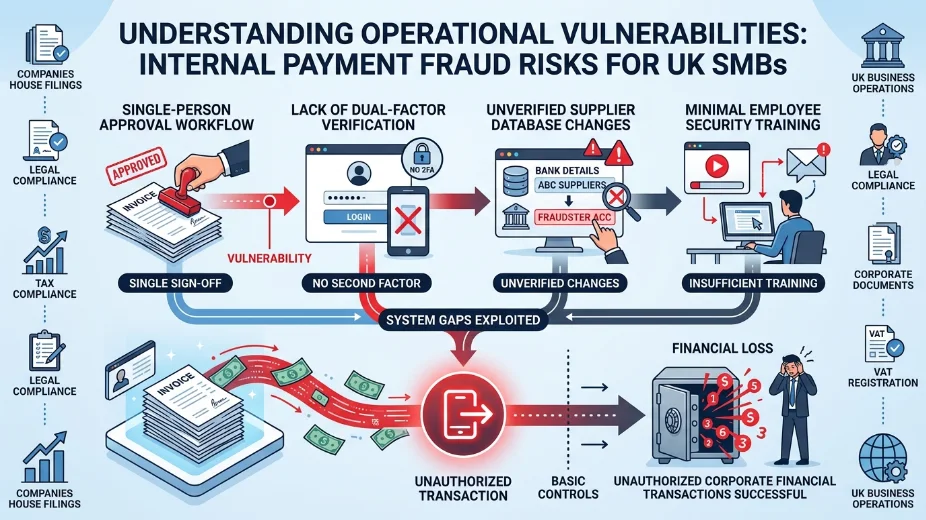
Small enterprises frequently operate with lean administrative teams, leading to inadequate segregation of operational duties. A single staff member often manages invoice creation, supplier database maintenance, and payment processing. Without mandatory dual-authorization workflows, malicious internal actors or external hackers face few technical barriers when manipulating payment queues.
Weak database management processes exacerbate these technical risks. When accounts teams receive bank update requests, staff often modify master vendor files without independently calling the supplier using verified contact numbers. Relying solely on contact information printed on incoming emails bypasses traditional safety controls. Manual processing methods lack automated audit trails, making original unauthorized account modifications hard to detect during routine accounting reviews.
Insufficient security protocols create clear operational entry points for criminals. Staff members lacking formal fraud awareness training routinely click suspicious links, download malicious email attachments, and share system credentials. Without clear protocol guidelines, employees skip manual confirmation steps during high-volume accounting periods. These operational vulnerabilities make small businesses attractive targets for organized criminal groups seeking accessible capital.
How Can Businesses Proactively Defend Their Identity and Corporate Data?
Businesses can proactively defend their identity by monitoring public registers, implementing strict verification protocols, securing corporate domain systems, and restricting account management privileges. Automated tracking tools alert company directors immediately when unauthorized filings occur on official corporate registries.
Proactive business defense requires combining robust operational protocols with automated corporate tracking software. Companies must mandate verbal confirmation protocols for all banking detail updates. Accounts personnel must verify banking modifications by calling verified representatives via phone numbers stored in original onboarding contracts rather than details listed on recent invoice correspondence.
Securing digital communication channels prevents invoice interception and unauthorized system access. Small firms must enforce multi-factor authentication across all corporate email accounts, financial software platforms, and cloud storage systems. Implementing advanced email authentication protocols prevents cybercriminals from sending domain-spoofed emails to clients. Restricting administrative access rights ensures only designated executive personnel modify sensitive company records.
Implementing comprehensive external identity monitoring prevents silent register manipulation. Using specialized solutions like Fraud Protection helps business owners identify suspicious filings at Companies House before financial damage occurs. Early detection enables corporate officers to report unauthorized filings immediately, freeze affected accounts, and preserve commercial credit ratings. To understand specific identity risk factors, owners can read Fraud Protection vs. Insurance: How to Shield Your Business Identity to learn practical preventative steps.
Corporate fraud poses continuous operational, financial, and legal risks to UK small businesses. Cybercriminals exploit public registration systems, intercept digital communications, and manipulate weak administrative workflows to steal capital and hijack corporate identities. Defending a commercial entity requires proactive administrative procedures, continuous staff security training, and real-time monitoring of corporate register filings.
Businesses that implement robust dual-authorization controls and external monitoring systems significantly reduce their risk profile. Monitoring registry activity protects commercial identity, preserves enterprise credit scores, and secures supply chain operations against unauthorized modifications. Business owners can protect your business identity with Form My Company fraud tools to build long-term operational resilience.
Explore our Fraud Protection guide,
How to Evaluate the ROI of Investing in Professional External Training Rooms
Why Modern Meeting Rooms Need Advanced Video Conferencing and Digital Tool Integration
Frequently Asked Questions
How Does Corporate Fraud Protection Work for UK Small Businesses?
The Form My Company Fraud Protection service actively monitors your official record at Companies House through an automated digital system. When any document or administrative change is submitted against your company registration number—such as altering director details or registered addresses—the service issues instant email notifications.
Why Are UK Small Businesses Vulnerable to Corporate Identity Theft?
Companies House processes official register filings in good faith, which allows fraudsters to submit unauthorized paper or online changes before verification occurs. Criminals alter registered office addresses and director profiles to apply for commercial loans, open merchant accounts, and order goods using the company’s credit history.
What Activity Does the Form My Company Fraud Protection Service Alert You To?
The Form My Company Fraud Protection service monitors all public register updates and immediately flags changes to director appointments, resignations, registered addresses, share capital amendments, and annual statement filings. This real-time oversight allows business owners to detect suspicious corporate modifications before financial harm occurs.
How Is Company Fraud Protection Different From the Companies House PROOF Scheme?
While the Companies House PROOF (Protected Online Filing) scheme blocks paper-based filing submissions, the Form My Company Fraud Protection service adds real-time digital alert surveillance across all electronic and digital filings. Combining paper prevention with active digital monitoring delivers complete defense against unauthorized register changes.
Can Existing Companies Register for Form My Company Fraud Protection?
Yes, the Form My Company Fraud Protection service can be applied to any existing UK Limited Company or Limited Liability Partnership (LLP) regardless of who originally incorporated it. Business owners simply connect their Company Registration Number to the 24/7 monitoring software to activate continuous record protection.