
A virtual business address provides a registered UK address, mail collection/forwarding, and optional meeting-room access while you run operations remotely.
A virtual business address uses an established commercial location to receive and manage post on your behalf. Providers scan, forward, or hold mail. They register the address for Companies House, HMRC, and client-facing materials. Businesses avoid premises rent and utilities while gaining a city-grade location. Virtual offices also provide incoming call handling, receptionist services, and bookable meeting rooms at an hourly rate.
What is a physical business address and what does it require?
A physical business address is a premises you occupy or lease, where staff, inventory, and daily operations are present, and you manage utilities.
A physical address requires lease negotiation, business-rate registration, utility contracts, and health-and-safety compliance. You maintain on-site security, storage, and equipment. Retail and manufacturing businesses often use physical addresses to host customers, stock goods, and run production. Physical offices carry fixed monthly costs such as rent, council tax, insurance, and cleaning.
Read our articles, Is Your Home Address Hurting Your Brand Image? and Secure a Prestigious UK Business Address with Form My Company.
Which costs are higher: virtual or physical addresses?
Physical addresses carry higher fixed costs: rent, utilities, insurance, business rates, and fit-out; virtual addresses charge lower fixed fees and predictable monthly plans.
A virtual address plan typically ranges from £10 to £60 per month in the UK for mail services and registered-address use. Physical premises in UK regional cities cost from £600 per month for small offices to over £3,000 in prime London locations. Physical occupancy creates variable costs: utility bills, maintenance, and staffing. Virtual offices convert fixed overhead into a scalable operating expense.
How does each option affect company formation and compliance?
Both address types fulfil Companies House registration, but virtual addresses often include compliance features like mail scanning and certificate handling.
Companies House accepts commercial virtual addresses if the provider allows service of documents. Virtual office providers commonly forward statutory mail and scans shareable with directors for quick action. Physical addresses require on-site receipt and secure storage of statutory documents. Both address types must ensure directors can promptly receive legal notices and provide an address to HMRC for tax correspondence.
How do virtual and physical addresses impact brand perception?
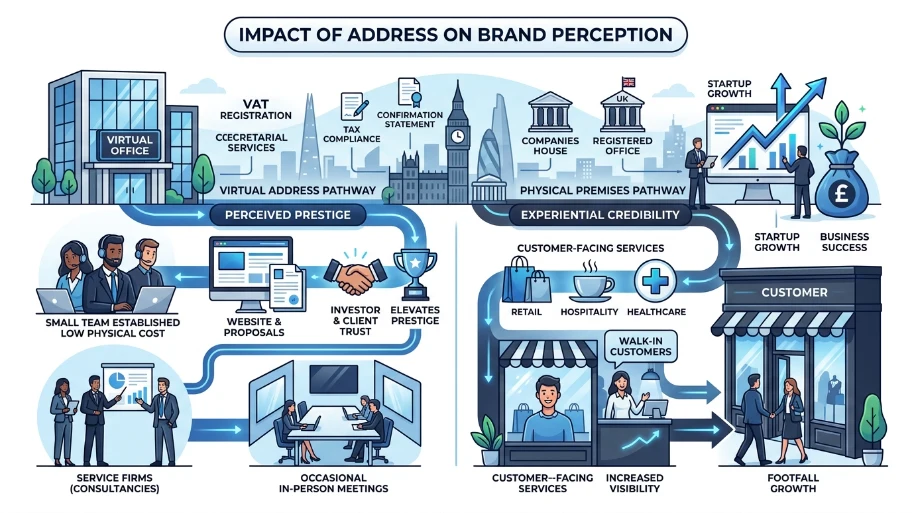
A city-centre virtual address elevates perceived prestige; a visible physical premises offers experiential credibility for walk-in customers.
Professional addresses in London or other major UK cities improve investor and client trust when listed on websites and proposals. Virtual addresses let small teams appear established without the physical cost. For customer-facing retail, hospitality, or healthcare services, an actual storefront increases visibility and footfall. Service firms such as consultancies gain from prestigious virtual addresses plus occasional in-person meeting facilities.
Which businesses benefit most from virtual addresses?
Remote consultancies, freelancers, online retailers, and holding companies benefit most because they require a credible address without full-time premises.
Examples include digital marketing agencies, freelance designers, and small e‑commerce sellers. These entities register with Companies House, route invoices and client documents through a virtual office, and book meeting rooms when needed. Virtual addresses also suit businesses seeking multiple UK locations without lease commitments.
Which businesses require a physical address?
Retailers, manufacturers, workshops, and client-facing clinics require physical addresses to host customers, store stock, or run production lines.
These sectors need on-site logistics, immediate customer access, and inventory space. Manufacturers use physical addresses for dispatch and returns. Food and health services require on-site inspections and safety compliance, which virtual addresses cannot replace.
How does mail handling differ between the two options?
Virtual providers scan, forward, or securely shred incoming mail; physical addresses receive, file, and distribute mail on-site under your staff control.
Virtual mail handling reduces delays: providers often scan envelopes within 24 hours and present options to forward originals via tracked courier. Physical offices accept and process mail internally; response times depend on staff schedules. For legal documents, virtual services maintain chain-of-custody logs and certified forwarding, which satisfy audit trails.
What are the security and privacy implications?
Virtual addresses improve privacy by keeping personal home addresses off public records; physical addresses offer control over onsite security measures.
Using a virtual address prevents your home address from appearing on Companies House and marketing materials, reducing personal exposure. Reputable virtual providers implement secure storage and identity checks for mail release. Physical premises allow CCTV, locks, and restricted access, but expose the business location to the public and require staff security procedures.
How flexible is scaling with virtual vs. physical addresses?
Virtual addresses scale faster: add locations or services within days; physical expansion requires lease negotiations and fit-outs that take weeks to months.
Virtual offices let you register multiple UK addresses quickly and change service levels online. Physical expansion involves property searches, deposit payments, and regulatory inspections. Startups growing teams find virtual addresses practical during early revenue phases, then transition to physical offices when headcount and operational needs rise.
How does each option affect tax and legal obligations?
Tax residency depends on director control, not address; however, the business address dictates where official tax notices and statutory documents arrive.
HMRC correspondence sends notices to the registered business address. Using a virtual address ensures prompt receipt and documented forwarding. Legal jurisdiction and corporation tax depend on where central management and control occur, which often aligns with director residence and decision-making locations. Keep accurate records of where decisions are made to support tax filings.
How do you evaluate providers and premises before choosing?
Compare service levels, costs, contract terms, and compliance features for virtual providers; assess location, lease terms, capacity, and regulatory compliance for physical premises.
For virtual offices, verify mail-scan turnaround, registered-address allowance, customer reviews, and identity-verification policies. Check termination clauses and data-protection practices. For physical leases, review lease length, break clauses, permitted use, building insurance, and fire-safety certificates. Request a site visit and ask for recent energy performance certificates where applicable.
Explore our Virtual Offices guides,
Essential Features to Look for When Renting Conference Rooms for Corporate Events
Why Startups Prefer Professional Call Answering Services Over Hiring a Full-Time Receptionist
What hybrid options exist for a middle path?
Hybrid setups combine a virtual registered address with occasional coworking, hot desks, or a small leased satellite office for client meetings and storage.
Companies often register a virtual address for public-facing credentials while maintaining a rented storage unit or weekly coworking membership. This hybrid reduces fixed costs and preserves a physical presence when needed. Many virtual providers partner with coworking brands to offer blended monthly packages that include meeting credits.
A virtual business address offers affordability, fast scaling, privacy, and professional presentation for remote-first and small UK businesses. A physical address supplies on-site control, customer access, and operational capacity for retail, manufacturing, and service clinics. Evaluate costs, compliance needs, customer expectations, and growth plans before committing. From My Company provides virtual office solutions that register your business address with Companies House, handle statutory mail, and offer meeting-room bookings to support UK compliance and client-facing needs.
Frequently Asked Questions
What is a virtual office and how does it work in the UK?
A virtual office provides a registered UK business address, mail handling, and optional meeting rooms without requiring a physical lease. From My Company’s virtual offices let you register with Companies House, forward or scan mail, and book professional meeting spaces when needed.
Can I use a virtual office address for Companies House registration?
Yes, a virtual office address is fully accepted for Companies House registration if the provider allows service of statutory documents. From My Company’s virtual offices include a compliant registered address that meets UK legal requirements for director and company details.
How much does a virtual office cost in the UK?
UK virtual office plans typically range from £10 to £60 per month, depending on mail services and meeting-room credits. From My Company offers flexible virtual offices with transparent monthly pricing, covering registered address use, mail scanning, and optional forwarding.
What mail services are included with a virtual office?
Most virtual offices include mail collection, envelope scanning, and Options to forward originals or securely shred items. From My Company’s virtual offices provide 24-hour scanning, tracked courier forwarding, and secure storage for statutory and business correspondence.
Do virtual offices include meeting rooms or reception services?
Many virtual office providers offer bookable meeting rooms and optional receptionist or call-handling services at an hourly or monthly rate. From My Company’s virtual offices include access to prestigious UK meeting spaces and can add reception support for client-facing appointments.