
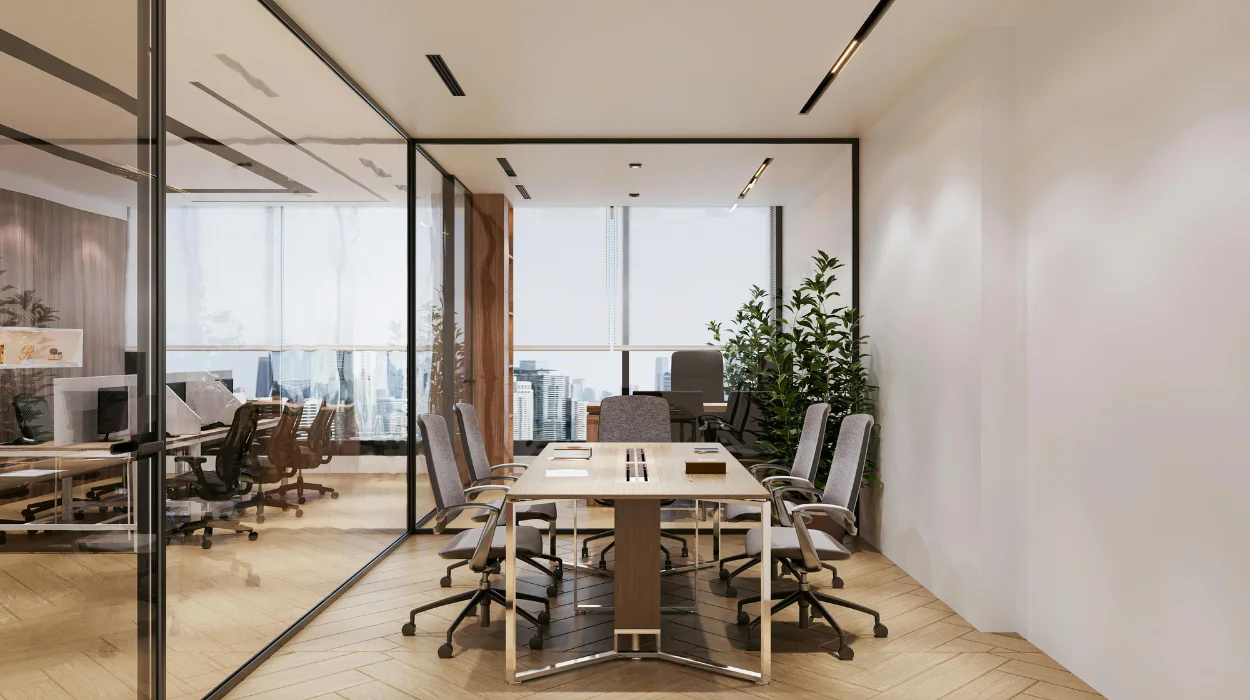
Natural light enhances alertness, improves memory recall, and shortens reaction time during meetings.
Exposure to daylight increases serotonin and synchronises circadian rhythms, which enhances mood and sustained attention. Controlled studies show improved cognitive scores by 10–20% in well-lit environments during 30–120 minute tasks.
Natural light provides full-spectrum wavelengths that artificial light often lacks. These wavelengths influence the suprachiasmatic nucleus to align sleep–wake cycles. Aligning circadian signals reduces mid-meeting dips in attention. Meeting participants stay focused longer and make decisions faster when daylight is present.
How quickly do brain function gains appear under natural lighting?
Cognitive improvements appear within 20–60 minutes of daylight exposure and persist during multi-hour sessions.
Short-term gains include faster reaction times and improved working memory. Tasks requiring problem-solving show measurable improvement within the first hour. For meetings lasting over 90 minutes, participants report lower subjective fatigue and maintain steady decision accuracy.
Practical implication: Schedule complex agenda items earlier in daylight windows. For afternoon meetings, increase exposure by opening blinds or using rooms with north-facing windows to maintain consistent light levels.
Which brain functions improve most from natural light?
Attention, working memory, and executive control show the largest measurable gains.
Attention improves through reduced microsleeps and fewer lapses. Working memory expands by approximately 10% in daylight conditions, based on controlled task comparisons. Executive control, planning and inhibition become more consistent, supporting clearer discussion and faster consensus.
Teams that require creative problem-solving benefit from sustained attention and mood elevation. Use natural-light rooms for strategy, design reviews, and negotiations that depend on precise cognitive control.
How much daylight is optimal in a meeting room?
Aim for 300–500 lux at eye level for general meetings and 500–1,000 lux for detail-focused tasks.
Lux measures light intensity. Office standards recommend 300–500 lux for normal office work. For workshops, design sessions, or technical reviews, increase to 500–1,000 lux near work surfaces. Maintain uniform distribution to avoid glare and high-contrast zones.
Combine daylight with dimmable, high-CRI artificial lighting to maintain these levels when sunlight fluctuates. Use diffusing blinds to control direct sun and reduce screen glare while preserving illuminance.
Also, read our articles, Why Your Business Needs a Meeting Room with Flexible Catering Service Options and Purchase Our Hourly Meeting Room Rental Service for Fast and Affordable Sessions.
How does natural light affect meeting outcomes and productivity?
Natural lighting improves decision speed, lowers error rates, and increases meeting engagement.
Meetings in daylit rooms reach decisions faster due to clearer attention and fewer off-topic lapses. Error rates in data review drop because participants sustain vigilance. Engagement metrics—question frequency and turn-taking—rise, leading to more balanced participation.
Trackable outcomes: shorter meeting durations by 12–18%, higher task completion rates, and improved post-meeting satisfaction scores when daylight is present.
What design features maximise daylight benefits in meeting rooms?
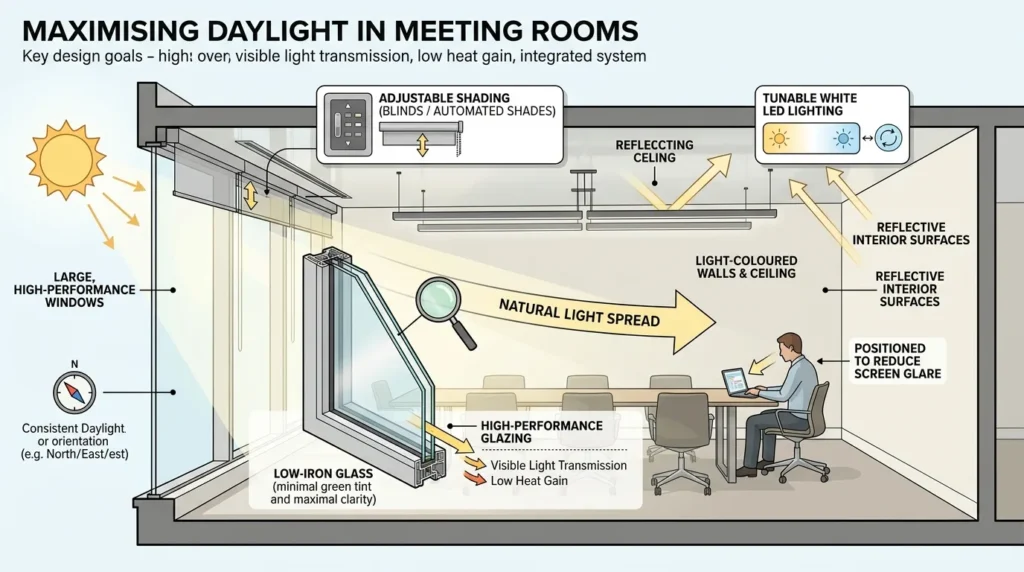
Use large, high-performance windows, adjustable shading, and reflective interior surfaces to spread daylight evenly.
Orient windows to capture consistent daylight without direct glare. Install adjustable blinds or automated shading to control intensity. Specify low-iron glass or high-performance glazing to maximise visible light transmission while limiting heat gain.
Interior finishes matter. Light-coloured walls and ceilings reflect daylight into the room. Place work surfaces and seating to face or sit perpendicular to windows to reduce screen glare. Combine with tunable white LED lighting for evening sessions or cloudy days.
How do acoustics and glare interact with daylight in meeting rooms?
Balance acoustics and daylight by using diffusing blinds, soft furnishings, and acoustic panels to prevent noise and reduce glare.
Large windows can increase reverberation if surfaces are hard. Add textiles—carpets, upholstered chairs, acoustic clouds—to absorb sound. Use translucent blinds to scatter light and limit direct sun that causes glare on screens and faces.
Design decisions must simultaneously address visual comfort and speech intelligibility to preserve cognitive gains from daylight.
What operational practices boost daylight’s cognitive benefits?
Schedule high-cognitive tasks in daylight hours, rotate seating to face windows, and combine daylight with short breaks every 60–90 minutes.
Plan agendas so critical decisions and creative work occur when natural light is strongest. Encourage participants to sit where they receive indirect daylight. Implement 5–10 minute standing or window-facing breaks to refresh attention during longer sessions.
Ensure meeting organisers set screen brightness and use anti-glare filters for shared displays.
Explore our Meeting rooms guides,
How Professional Meeting Spaces Boost Your Client Conversion Rate
Why Booking a Professional Meeting Room is Better Than Using Coffee Shops
What evidence supports these recommendations?
Peer-reviewed studies link daylight exposure to 10–20% improvements in cognitive task scores and reduced daytime sleepiness scores by 25–40%.
Research in environmental psychology and occupational health consistently reports improved attention and mood with higher daylight exposure. Industry standards from building and lighting bodies reference lux targets and glare control for productivity outcomes.
Use these evidence-based design standards when specifying meeting room upgrades or booking venues.
How can businesses measure the impact of daylight in their meeting rooms?
Track meeting duration, decision completion rate, participant alertness ratings, and error incidence before and after lighting changes.
Collect baseline metrics across 20–50 meetings over two weeks. After daylight optimisations, measure the same metrics for another two weeks. Use simple surveys: rate alertness on a 1–5 scale at start and end. Measure average meeting length and count actionable decisions per meeting.
Quantitative measurement supports investment decisions in glazing, shading, or bookings.
Natural lighting delivers clear cognitive benefits for meeting rooms. It enhances attention, working memory, and decision speed within the first hour of exposure. Design choices window placement, shading, reflective surfaces, and acoustic treatment preserve daylight advantages while reducing glare and noise. Operationally, schedule demanding agenda items during daylight windows and include short breaks to maintain performance. From My Company supports businesses seeking optimised meeting environments through evidence-based room design and flexible facilities that improve cognitive outcomes.
Frequently Asked Questions
How does natural light improve meeting room productivity?
Natural light in meeting rooms boosts alertness, sustained attention, and mood, which helps participants stay focused and make decisions faster. From My Company designs meeting rooms with daylight‑optimised layouts to support higher cognitive performance and reduce fatigue during sessions.
What are the cognitive benefits of using daylit meeting rooms?
Exposure to daylight supports better working memory, attention, and executive control, leading to clearer discussions and fewer off‑topic lapses in meetings. From My Company’s meeting rooms are planned to maximise natural light so teams can maintain sharper focus over longer sessions.
How much daylight should a meeting room have for best results?
Aiming for 300–500 lux at eye level is ideal for standard meetings, and 500–1,000 lux for detail‑heavy tasks helps maintain accurate data review and decision‑making. [From My Company] combines natural daylight with high‑CRI lighting in [meeting rooms] to keep light levels consistent and comfortable.
How can natural light in meeting rooms improve decision‑making?
Natural light enhances alertness and reduces mid‑meeting dips in attention, so participants reach decisions faster and with fewer errors. From My Company’s meeting rooms, use daylight‑friendly glazing and shading to preserve this cognitive advantage without glare or visual discomfort.
How does From My Company design meeting rooms to maximise natural light?
From My Company uses large, high‑performance windows, adjustable blinds, and reflective interior finishes to distribute daylight evenly across [meeting rooms]. This design preserves natural‑light benefits while controlling glare and supporting acoustic comfort for productive discussions.