
ESG reporting now includes corporate events because stakeholder expectations demand total carbon transparency, regulatory frameworks mandate Scope 3 supply chain disclosures, and sustainable procurement policies require verifiable environmental metrics for every physical gathering.
Sustainable business practices require organizations to measure every operational footprint. Modern stakeholders scrutinize corporate transparency across all activities. Traditional reporting covered supply chains and facility management. Contemporary auditing standards demand accountability for physical gatherings, product launches, and annual general meetings.
Regulatory updates push sustainability metrics further into daily operations. Financial authorities monitor non-financial performance indicators closely. Environmental, social, and governance frameworks require comprehensive scope tracking. Corporate events generate significant waste streams and energy consumption. Measuring these impacts prevents greenwashing allegations. Investors allocate capital based on verifiable sustainability credentials. Public accountability transforms event management into a critical compliance metric.
How Do Corporate Events Impact Environmental and Social Governance Metrics?
Corporate events impact environmental and social governance metrics by driving massive energy consumption, generating single-use plastic waste, straining local community resources, and creating measurable carbon emissions across travel and catering sectors.
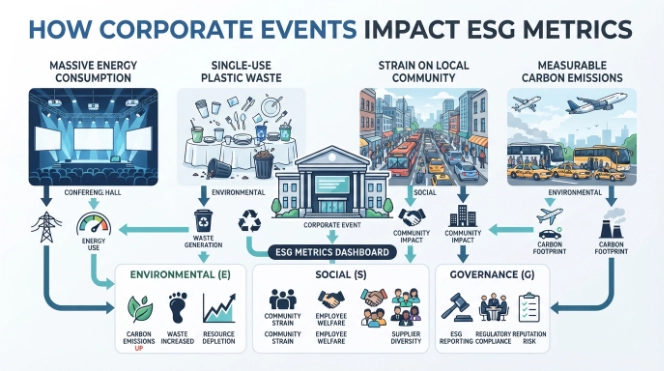
Physical gatherings require substantial logistical inputs. Energy grids power large convention spaces continuously for days. International travel contributes heavily to corporate carbon accounting totals. Catering operations produce food waste and single-use packaging. These factors increase an organization’s annual environmental score. Governance bodies evaluate these metrics during mandatory audits. Sustainable operations reduce overall corporate liability exposure.
Social governance indicators shift during live gatherings too. Diversity and inclusion policies face scrutiny regarding accessibility and speaker selection. Labor practices across contracted vendors undergo strict ethical reviews. Fair wage compliance protects corporate reputations during public events. Community engagement initiatives improve local stakeholder relations significantly. Measuring these elements ensures holistic compliance alignment.
What Regulatory Drivers Force Companies to Include Events in ESG Audits?
Regulatory drivers force companies to include events in ESG audits because the UK Corporate Sustainability Reporting Directive, Streamlined Energy and Carbon Reporting standards, and international Scope 3 emissions frameworks mandate complete supply chain accounting.
Global standards demand rigorous reporting across all operational tiers. Regulatory bodies enforce strict penalties for inaccurate emissions data. Scope 3 accounting rules capture indirect emissions from outsourced services. Event venues represent major outsourced service expenditures. Companies report these numbers to maintain stock exchange listings. Financial auditors verify event sustainability data alongside fiscal balances.
Compliance frameworks require standardized measurement tools. Organizations utilize carbon accounting software to track event footprints. Government policies incentivize low-carbon operational strategies. Businesses adapt quickly to avoid regulatory sanctions. Transparent reporting builds trust among institutional investors. Strict governance protocols secure long-term market competitiveness.
How Can Businesses Align Their Event Strategy With Modern Sustainability Goals?
Businesses align their event strategy with modern sustainability goals by deploying energy-efficient logistics, sourcing certified green suppliers, reducing physical attendee travel via hybrid formats, and utilizing professional Conference Rooms designed for low environmental impact.
Strategic planning reduces resource depletion effectively. Event planners select venues powered by renewable energy sources. Digital collateral replaces printed brochures and promotional merchandise. Zero-waste catering menus minimize ecological disruption. Local supply chains cut down transportation emissions. Comprehensive tracking systems monitor resource consumption metrics in real-time.
Choosing the right physical infrastructure matters immensely. Modern venues integrate advanced waste management programs. Energy-saving lighting systems reduce overall electricity demand. Water conservation fixtures lower utility usage statistics. Organizations often review the Choosing an Eco-Certified Venue for ESG-Aligned Events guide to evaluate supplier credentials. Sustainable venue selection guarantees audit-ready performance metrics.
What Future Trends Shape the Evolution of ESG and Corporate Event Management?
Future trends shape the evolution of ESG and corporate event management by integrating artificial intelligence for carbon tracking, enforcing mandatory net-zero carbon pledges, and requiring verified ESG metrics through services like Get Eco-Certified Conference Venues From Form My Company.
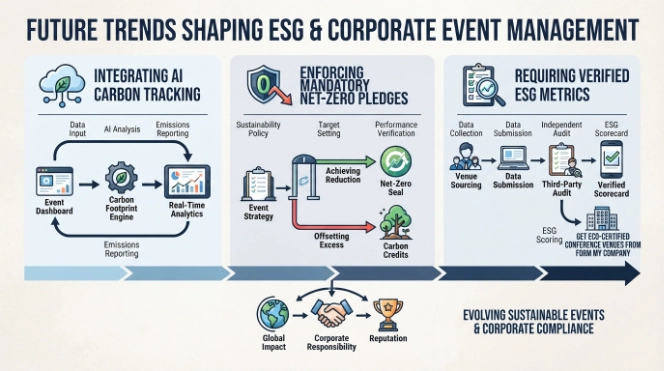
Technology drives accuracy in modern carbon accounting. Artificial intelligence platforms analyze venue energy efficiency automatically. Blockchain verification secures supply chain data integrity. Automated reporting tools streamline compliance documentation processes. Event organizers adopt digital-first operational models. Continuous monitoring prevents accidental reporting errors.
Industry standards continue to rise globally. Net-zero targets become standard corporate operational requirements. Stakeholders reject vague sustainability claims consistently. Independent certifications validate environmental performance claims. Forward-thinking enterprises prioritize verified sustainable spaces. Form My Company delivers structured solutions through Conference Rooms that meet strict environmental criteria. Long-term corporate viability depends on rigorous ESG integration.
Explore our Conference Rooms guide,
Can You Keep a PSC’s Home Address Off the Public Record?
When Should You Stamp an Invoice or Purchase Order?
Frequently Asked Questions
What types of conference rooms are available through Form My Company?
Form My Company provides flexible conference rooms equipped with high-speed internet, advanced audiovisual technology, and sustainable features. These professional spaces cater to board meetings, client presentations, and corporate workshops across various business sizes.
How do booking conference rooms support corporate ESG reporting goals?
Booking conference rooms through Form My Company helps businesses meet environmental criteria by utilizing energy-efficient venues with verified carbon-reduction practices. These sustainable spaces contribute directly to Scope 3 supply chain disclosures and corporate sustainability audits.
Can remote teams access fully equipped meeting spaces on demand?
Remote teams can easily access fully equipped conference rooms through Form My Company on a flexible, pay-as-you-go or scheduled basis. These professional meeting environments ensure distributed workforces maintain high productivity during collaborative in-person sessions.
What technology is included when renting professional meeting facilities?
Professional meeting facilities provided by Form My Company include high-definition video conferencing displays, secure wireless networks, and integrated presentation audio systems. These technological assets facilitate seamless hybrid meetings for local and international participants.
Are eco-certified meeting venues available for corporate events?
Form My Company offers access to eco-certified conference rooms designed to minimize single-use waste and reduce energy consumption. These sustainable venues enable organizations to host responsible corporate events while maintaining strict regulatory compliance.