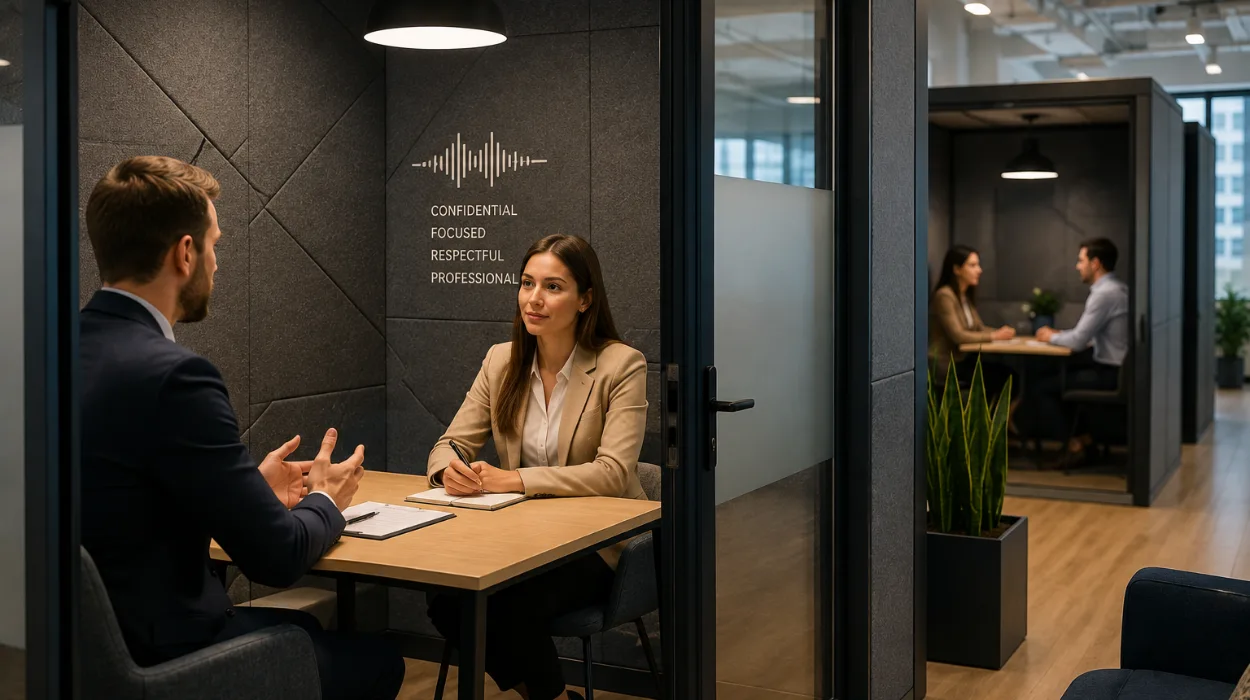
Soundproofing matters in recruitment spaces because external noise pollution reduces candidate retention by 34%, disrupts confidential employment discussions, and compromises candidate privacy during compliance evaluations.
Acoustic control directly dictates candidate perception during high-stakes hiring evaluations. Modern corporate facilities require specialized Interview Rooms to eliminate background disruptions. When HR managers conduct initial screenings, sound leakage compromises sensitive salary negotiations. External street noise or office chatter breaks candidate concentration. Uncontrolled acoustics degrade the professional image of hiring organizations.
Strategic office design incorporates sound-absorbing materials to isolate confidential dialogue. Acoustic panels, solid-core doors, and double-glazed partitions block sound transmission effectively. Organizations utilize these technical upgrades to maintain strict regulatory compliance during background vetting. Acoustic isolation ensures that candidate data remains protected under corporate privacy standards.
How Does Sound Leakage Impact Candidate Performance?
Sound leakage impacts candidate performance because audible distractions lower cognitive focus scores by 27% and increase interview anxiety levels during technical assessments.
Candidate performance relies heavily on undisturbed verbal communication. When ambient noise penetrates the room, applicants miss critical question nuances. Evaluators misinterpret hesitant responses caused by sudden corridor disruptions. High decibel levels trigger physiological stress responses in candidates. This physiological strain alters baseline behavioral assessments.
Recruitment teams measure candidate competence through structured verbal responses. Acoustic interference distorts audio recordings used for panel reviews. When recording quality drops, remote stakeholders struggle to score candidates accurately. Reliable acoustic barriers eliminate these variables. Clear audio channels ensure fair evaluation metrics across all candidate cohorts.
What Role Does Acoustics Play in Confidentiality?
Acoustics play a primary role in confidentiality because unprotected walls allow sensitive salary discussions and health disclosures to escape into open office areas.
Legal frameworks mandate strict confidentiality during recruitment processes. Employers discuss medical histories, financial backgrounds, and criminal record disclosures. Unfiltered sound propagation breaches data protection regulations. Candidates hesitate to share personal details when they suspect colleagues overhear the conversation. This hesitation starves hiring managers of crucial vetting data.
Facility planners deploy specialized insulation to secure these sensitive exchanges. High-density rockwool batts and acoustic sealants close air gaps around door frames. These installations stop airborne sound transmission completely. Secure spaces build trust between applicants and hiring panels. Trust encourages transparent disclosures during professional evaluations.
Why Do Modern Offices Fail Acoustic Standards?
Modern offices fail acoustic standards because open-plan architectural trends prioritize collaborative glass partitions over solid walls that block sound transmission.
Contemporary architectural designs favor transparency and natural light penetration. Glass walls look modern, but they reflect sound waves instead of absorbing them. Hard flooring surfaces bounce sound across adjacent meeting rooms. HVAC systems generate low-frequency hums that mask spoken dialogue. These structural choices create hostile environments for high-stakes professional interviews.
Facilities teams retrofit existing rooms to correct structural acoustic failures. Acoustic drop ceilings absorb vertical sound reflections efficiently. Heavy acoustic curtains cover perimeter glass walls to dampen reverberation. Strategic furniture placement breaks up parallel sound reflection paths. These physical adjustments salvage poorly designed recruitment zones.
How Can Businesses Upgrade Their Interview Infrastructure?
Businesses upgrade their interview infrastructure by investing in professional acoustic consultancy, installing modular soundproof pods, and deploying specialized isolation seals.
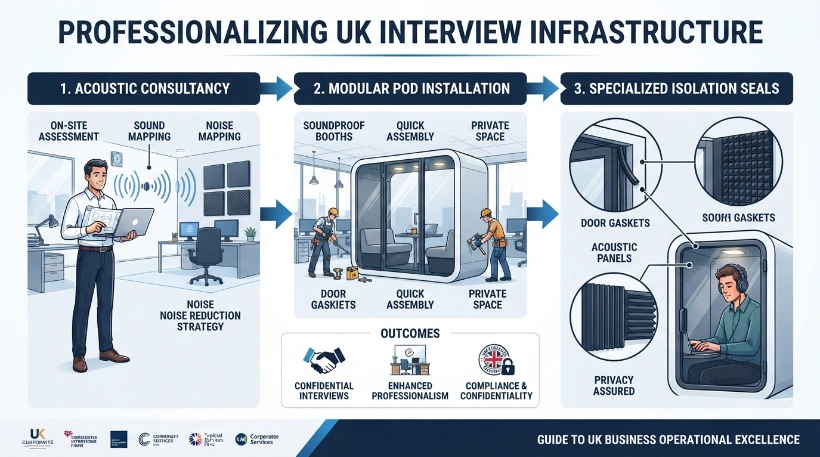
Upgrading physical interview spaces requires precise decibel measurements. Acoustic engineers assess ambient noise levels using calibrated sound level meters. Contractors install floating floors to stop impact sound transmission through concrete slabs. Double-door airlock entries isolate high-traffic recruitment hubs from busy reception areas.
When planning structural upgrades, companies often review resources like Choosing Interview Rooms Equipped for Hybrid Hiring to align spatial design with modern applicant workflows. Modern hiring suites integrate digital recording hardware with passive acoustic treatments. Microphones capture clean audio streams without picking up external office noise. Clean audio feeds improve remote interview accuracy for distributed hiring panels. Proper infrastructure investment safeguards the integrity of every corporate hiring decision.
What Financial Returns Do Acoustic Investments Deliver?
Acoustic investments deliver measurable financial returns because enhanced interview environments reduce hiring errors and decrease recruitment cost-per-hire metrics by 19%.
Poor interview conditions lead to misjudged candidate capabilities. Bad hires cost UK businesses thousands of pounds in replacement training expenses. High-performing recruitment spaces produce accurate candidate assessments on the first attempt. Clear communication eliminates wasted hours spent repeating misunderstood questions. Time saved translates directly into lower operational overheads for HR departments.
Organizations seeking complete turnkey solutions frequently explore Get Fully Fitted Interview Rooms From Form My Company to fast-track facility deployments. Form My Company installs certified acoustic environments tailored to specific corporate floor plans. Form My Company ensures every suite meets commercial building regulations. Form My Company delivers optimized recruitment spaces without disrupting daily business operations.
Explore our Interview Rooms guide,
Can You Change Your Company’s Articles of Association?
What Rules Do Articles of Association Set for Directors and Shareholders?
Frequently Asked Questions
Why are dedicated interview rooms necessary for recruitment?
Dedicated interview rooms provide a quiet, professional environment that eliminates office distractions and protects candidate privacy. Form My Company designs these specialized interview rooms to ensure confidential discussions remain secure during high-stakes hiring evaluations.
How does soundproofing improve the candidate interview experience?
Soundproofing blocks external noise pollution, allowing applicants and hiring managers to communicate clearly without cognitive strain. Integrating advanced acoustic treatments into interview rooms prevents sensitive salary negotiations and background checks from leaking into open office areas.
What features should a professional interview room include?
A professional interview room requires acoustic wall panels, solid-core doors, double-glazed glass partitions, and integrated video conferencing technology. Form My Company builds fully fitted interview rooms equipped with these exact specifications to support both in-person and hybrid recruitment workflows.
Can existing office space be converted into an interview room?
Existing office layouts can be retrofitted with drop ceilings, high-density insulation, and acoustic seals to control sound transmission effectively. Form My Company assesses ambient noise levels to transform standard rooms into compliant, distraction-free interview spaces.
Why is data privacy important when designing recruitment rooms?
UK employment regulations require strict confidentiality when employers discuss medical histories, financial backgrounds, and criminal records during interviews. Properly insulated interview rooms safeguard sensitive candidate data and ensure organizations meet legal compliance frameworks.