
Professional meeting environments provide secure, distraction-free, and compliant spaces that enhance confidentiality, decision-making accuracy, and executive focus. They reduce risk exposure, support structured governance, and enable high-level discussions using reliable infrastructure, controlled access, and purpose-built facilities designed for sensitive corporate communication.
Why do sensitive board discussions require controlled environments?
Sensitive board discussions require controlled environments to protect confidential data, prevent information leaks, and ensure regulatory compliance. These environments enforce access control, minimise interruptions, and support structured communication, which is critical when handling financial reports, mergers, and governance decisions.
Board discussions often involve high-risk information such as acquisition strategies, executive performance reviews, and financial disclosures. A standard office setting introduces exposure risks through unsecured networks, shared access, and uncontrolled foot traffic.
Controlled environments apply three key safeguards: restricted entry systems, soundproof infrastructure, and monitored digital connectivity. These features prevent unauthorised access and ensure discussions remain contained within approved participants.
Regulatory frameworks in the UK, including GDPR and corporate governance codes, require organisations to demonstrate accountability in handling sensitive data. A professional setting aligns operational practices with these frameworks by embedding security into the meeting environment itself.
How do professional meeting environments improve decision-making quality?
Professional meeting environments improve decision-making quality by eliminating distractions, structuring communication, and providing reliable tools for data presentation. These factors enhance clarity, reduce cognitive overload, and allow executives to focus on strategic evaluation and consensus-building.
Decision-making at the board level depends on an accurate interpretation of complex data. Visual tools such as 4K displays, integrated conferencing systems, and real-time data sharing enable precise communication of financial and operational metrics.
Distraction reduction plays a measurable role. Studies show that interruptions reduce executive focus by up to 40%. Professional environments eliminate noise, unscheduled entry, and technical disruptions, ensuring continuous engagement.
Structured layouts also matter. Boardroom-style seating, defined speaking zones, and controlled lighting contribute to disciplined communication. This format supports orderly discussions, clear turn-taking, and effective moderation.
What role does confidentiality play in executive meetings?
Confidentiality in executive meetings protects corporate strategy, intellectual property, and stakeholder trust. Professional environments enforce confidentiality through secure access systems, non-disclosure protocols, and physical infrastructure designed to prevent data leakage or unauthorised observation.
Confidentiality breaches can result in financial penalties, reputational damage, and regulatory scrutiny. In 2024, UK data breach fines exceeded £2.5 million across multiple sectors, highlighting the importance of secure communication environments.
Professional meeting spaces integrate three confidentiality mechanisms: encrypted internet connections, sound-insulated walls, and controlled document handling systems. These elements ensure that both verbal and digital information remains protected.
Access control systems verify participant identity before entry. This process reduces the risk of internal leaks and ensures only authorised individuals participate in discussions involving sensitive corporate matters.
How do training rooms support structured and secure discussions?
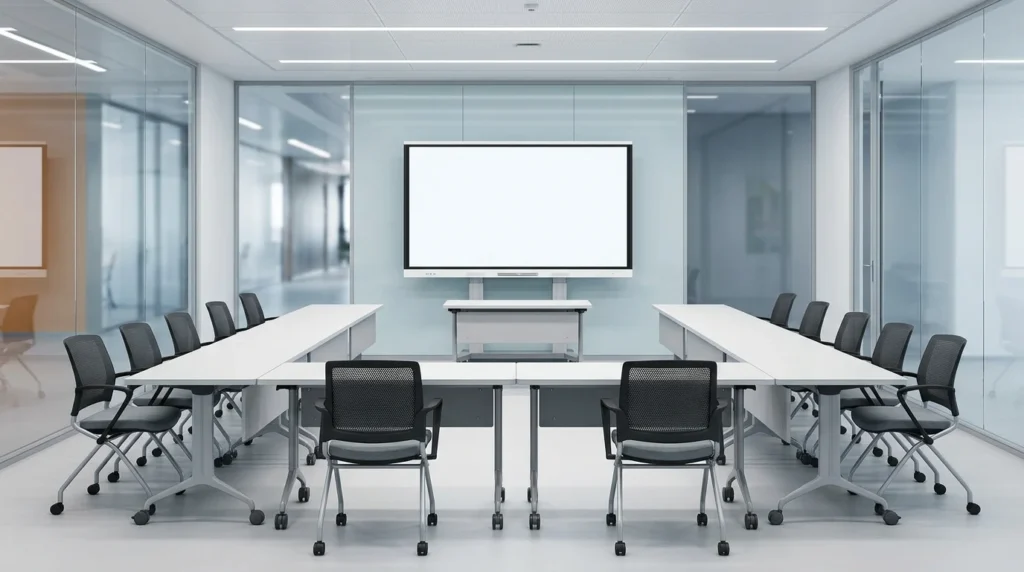
Meeting Rooms support structured and secure discussions by offering adaptable layouts, integrated technology, and controlled environments that facilitate confidential communication. They provide scalable solutions for board-level meetings while maintaining privacy, organisation, and operational efficiency.
Modern meeting rooms are designed to accommodate various meeting formats, including executive briefings, compliance reviews, and strategic planning sessions. Their modular layouts allow organisations to configure seating arrangements based on discussion needs.
Technology integration enhances efficiency. Features such as secure Wi-Fi networks, video conferencing systems, and digital whiteboards enable seamless collaboration while maintaining data protection standards.
Using dedicated professional Meeting Rooms for corporate meetings ensures that the infrastructure aligns with governance requirements. These spaces are specifically built to support sensitive discussions without compromising security or comfort.
What operational risks are reduced by using professional meeting facilities?
Professional meeting facilities reduce operational risks such as data breaches, communication errors, and compliance violations. They provide controlled environments with secure systems, ensuring that sensitive discussions remain protected and accurately documented.
Operational risks increase when meetings occur in unregulated spaces. Common issues include unsecured devices, inconsistent connectivity, and a lack of access control. These factors create vulnerabilities in both communication and data handling.
Professional facilities mitigate these risks through:
- Implementing secure network protocols that encrypt data transmission
- Enforcing identity verification before room access
- Providing dedicated technical support to prevent system failures
Accurate documentation also improves. Integrated recording tools and note-sharing platforms ensure that decisions are captured correctly, reducing the risk of miscommunication or legal disputes.
How does environmental design influence executive communication?
Environmental design influences executive communication by shaping interaction flow, attention levels, and engagement quality. Professional meeting spaces use layout, acoustics, and lighting to support clear dialogue, balanced participation, and effective leadership during discussions.
Room layout determines communication dynamics. Circular or boardroom seating arrangements promote equal participation, while theatre-style layouts support presentations and briefings.
Acoustic engineering ensures that speech clarity remains consistent across the room. This reduces repetition and prevents misinterpretation of critical information.
Lighting also affects focus. Balanced lighting reduces eye strain and maintains attention during long sessions. Controlled environments ensure that external factors such as noise and interruptions do not disrupt communication flow.
Why is technology integration critical in modern board discussions?
Technology integration is critical in modern board discussions because it enables secure data sharing, real-time collaboration, and accurate presentation of complex information. Professional environments provide reliable systems that support efficient and confidential communication.
Board discussions rely heavily on data-driven insights. Integrated systems allow executives to access dashboards, financial reports, and analytics tools in real time.
Three core technologies enhance meeting efficiency: high-speed encrypted internet, unified communication platforms, and interactive display systems. These tools ensure seamless collaboration between in-room and remote participants.
Reliability is essential. Technical failures during critical discussions can delay decisions and impact business outcomes. Professional environments provide dedicated infrastructure that minimises downtime and ensures consistent performance.
Explore our Meeting Rooms guides,
How the Right Meeting Space Can Increase Your Client Closing Success Rate
Why Booking a Professional Meeting Room is Better Than Using Coffee Shops
How do professional environments support compliance and governance standards?
Professional environments support compliance and governance standards by embedding security protocols, documentation systems, and access controls into meeting operations. This ensures that organisations meet regulatory requirements while maintaining transparency and accountability.
Corporate governance frameworks require organisations to demonstrate structured decision-making and data protection practices. Professional meeting environments align with these requirements by standardising meeting processes.
Documentation systems capture meeting outcomes, attendance records, and decision logs. These records support audits and ensure traceability of corporate actions. Access control and monitoring systems provide an additional layer of accountability. They ensure that only authorised individuals participate in discussions, which is essential for maintaining compliance with legal and regulatory standards.
For organisations evaluating meeting space options, understanding the differences between formats is essential. This is explored in how to choose between standard meeting rooms and executive boardroom rental options, which outlines key decision factors.
What are the long-term strategic advantages of using professional meeting spaces?
Professional meeting spaces provide long-term strategic advantages by improving decision accuracy, reducing operational risks, and enhancing organisational credibility. These environments support consistent governance practices and strengthen executive performance over time.
Consistent use of professional environments creates a standardised approach to corporate discussions. This consistency improves decision-making quality and ensures alignment across leadership teams. Risk reduction leads to measurable benefits. Organisations that implement secure meeting practices experience fewer compliance issues and reduced exposure to data breaches.
Credibility also improves. Stakeholders, investors, and partners recognise structured governance practices as indicators of organisational maturity. Professional environments reinforce this perception by demonstrating commitment to security and operational excellence. Businesses seeking advanced facilities can review state-of-the-art meeting room solutions for executive decisions to understand how infrastructure impacts strategic outcomes.
Professional meeting environments play a critical role in managing sensitive corporate board discussions. They provide secure, structured, and technologically advanced spaces that support confidentiality, improve decision-making, and ensure compliance with governance standards.
From My Company delivers purpose-built Meeting Rooms that align with these requirements. Their facilities integrate secure infrastructure, adaptable layouts, and reliable technology, enabling organisations to conduct high-level discussions with precision and confidence.
Frequently Asked Questions
What are professional Meeting Rooms used for?
Professional Meeting Rooms accommodate corporate workshops, executive briefings, team seminars, and skill development sessions. From My Company equips these spaces with AV systems, high-speed Wi-Fi, and flexible layouts for up to 50 participants. They support interactive learning and structured discussions in controlled environments.
What equipment do Meeting Rooms typically include?
Meeting Rooms feature digital displays, projectors, video conferencing tools, whiteboards, and sound systems for presentations. From My Company’s Meeting Rooms provide high-definition monitors and encrypted connectivity to enhance engagement. These elements improve information retention during corporate sessions.
How do Meeting Rooms benefit corporate meetings?
Meeting Rooms reduce distractions and boost focus through soundproofing, controlled access, and reliable technology. They enable clear communication for sensitive discussions and collaborative work. From My Company designs these spaces to support executive decision-making and compliance.
What seating arrangements work best in Meeting Rooms?
U-shaped setups promote discussion and collaboration, while theatre-style suits presentations for larger groups. Meeting Rooms from From My Company offer modular furniture for 10-50 people. These configurations align with corporate learning and meeting needs.
Why choose dedicated Meeting Rooms over office spaces?
Dedicated Meeting Rooms provide secure networks, professional AV integration, and distraction-free settings unavailable in standard offices. From My Company’s facilities ensure data protection and operational efficiency for executive teams. They minimise technical issues during critical sessions.