Flexible catering reduces interruptions, supports dietary needs, and improves meeting productivity by up to 30% in focused-session studies.
Flexible catering speeds setup and cleanup. It reduces the time lost locating food off-site. It accommodates common dietary requirements: vegetarian, vegan, gluten-free, halal, and nut-free. It supports structured agendas by providing timed refreshment breaks. Data-driven venue reports show better attention spans and faster decision cycles when food matches attendee needs.
How does flexible catering improve attendee focus and performance?
Providing tailored meals and timed breaks sustains blood glucose and attention for 90–120 minute sessions.
Balanced food keeps glucose steady and reduces post-meal drowsiness. Proteins, complex carbohydrates, and water support cognitive tasks like decision-making and problem-solving. Meeting planners who schedule a 15-minute refreshment break every 60–90 minutes report clearer participant contributions. Use small-portion, low-sugar options to avoid energy crashes.
What catering options should companies offer in meeting rooms?
Offer three core options: light refreshments, full plated meals, and boxed lunches with clear dietary labels.
Light refreshments include coffee, tea, water, fruit, and pastries. Full plated meals suit half-day or full-day workshops where structured dining is required. Boxed lunches provide quick distribution and maintain hygiene. Always label items with allergens and ingredients, and offer at least one vegan and one gluten-free choice per menu. Read our articles Why Natural Lighting in Meeting Rooms is Crucial for Better Brain Function, and Purchase Our Hourly Meeting Room Rental Service for Fast and Affordable Sessions.
How do flexible catering services handle dietary restrictions and allergies?
Implement four steps: collect dietary data, label food, segregate preparation areas, and train staff in cross-contamination prevention.
Collect attendee dietary data during booking. Use clear labels describing allergens and ingredients. Insist that caterers segregate gluten-free and nut-free items in preparation and presentation. Train serving staff to avoid cross-contact and to verify attendee selections at service points.
When should businesses choose on-demand versus pre-ordered catering?
Choose on-demand for small ad-hoc meetings under six attendees; pre-order for groups of six or more or events longer than 90 minutes.
On-demand service suits quick meetings and variable headcounts. Pre-ordering ensures portion control, dietary accuracy, and cost predictability for larger groups. Pre-ordering reduces food waste by aligning portions to RSVPs. For hybrid meetings, pre-order boxed meals for remote pickup.
How does flexible catering affect meeting logistics and cost control?
Flexible plans combine base room hire with tiered catering packages to control costs and simplify billing.
Tiered packages let organisers select essentials, upgrades, and special requests. Bundling catering with room hire reduces separate vendor coordination. Use RSVP-based counts to invoice accurately. Track per-head cost, service fees, and waste metrics to measure ROI and reduce unnecessary spend.
What processes ensure smooth catering delivery in meeting rooms?
Follow a four-step process: confirm headcount, set service times, verify dietary notes, and perform a pre-meeting walk-through.
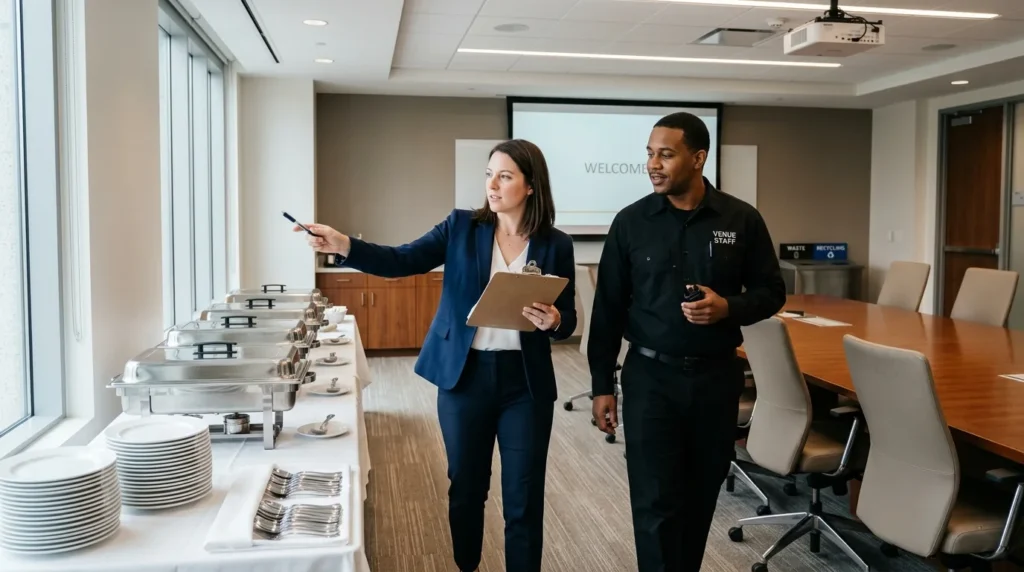
Confirm headcount 48 hours before the meeting. Set exact service times to fit the agenda. Re-check dietary notes the day before. Conduct a walk-through with venue staff to confirm serving locations, AV proximity, and waste collection points. This process minimises delays and keeps meetings on schedule.
Which KPIs measure catering effectiveness for meeting rooms?
Track five KPIs: attendee satisfaction score, on-time meal service rate, dietary compliance rate, food waste percentage, and cost per attendee.
Attendee satisfaction provides qualitative feedback on taste and timing. On-time service rate records whether meals are aligned with agenda times. Dietary compliance measures correct allergen handling. Food waste percentage estimates over-ordering issues. Cost per attendee monitors budget adherence and informs future package pricing.
How does flexible catering support hybrid meetings and remote attendees?
Offer boxed meals for on-site pickup and digital vouchers for remote participants to claim nearby delivery.
Boxed meals reduce queueing and support social distancing. Digital vouchers let remote attendees order from partnered local vendors, maintaining parity between in-person and remote experiences. Synchronise meal times with virtual breaks so all participants eat during the same agenda window.
Explore our Meeting rooms guides,
Why Hiring a Professional Meeting Space is More Cost-Effective Than Hotels
Comparing Hourly Meeting Room Rentals vs Full Day Professional Workspace Booking Options
What legal and compliance steps apply to meeting room catering?
Comply with food-safety regulations, display allergen information, and document supplier certifications.
Verify that caterers hold current food hygiene certificates and public liability insurance. Display allergen lists at serving points. Retain supplier certificates for audits. Keep records of dietary requests and how they were met for three months to support any incident investigations.
How can meeting rooms be configured to integrate catering with AV and seating?
Design service zones at least two metres from AV equipment and place refreshment stations near entry points to avoid noise disruptions.
Separate service zones prevent spill risk near electronics. Place stations near doors to reduce circulation through the meeting area. Use quieter beverage machines and pre-poured drinks to limit equipment noise. Arrange seating to allow quick movement for breaks without blocking sightlines to screens.
Flexible catering in meeting rooms delivers measurable productivity gains, improves attendee wellbeing, and simplifies event logistics. Implementing structured data collection, clear labeling, and tiered packages reduces risk and cost while improving satisfaction. From My Company integrates venue setup with catering choices to ensure meetings run efficiently and meet dietary and timing needs.
Frequently Asked Questions
What is included in a meeting room service from My company?
A meeting room service from My company usually includes a professional space, seating, tables, and basic presentation support. Many meeting rooms also offer Wi‑Fi, power access, and optional catering to keep sessions organized and efficient.
How far in advance should I book meeting rooms?
Booking meeting rooms 24 to 72 hours ahead gives more availability and better room choice. For larger team sessions or client meetings, earlier booking helps confirm layout, catering, and any technical setup.
Can meeting rooms be rented by the hour?
Yes, many meeting rooms are available by the hour for interviews, board meetings, and short planning sessions. Hourly booking gives businesses flexible access without paying for unused time.
Do meeting rooms support catering and refreshments?
Yes, many meeting rooms support catering and refreshments such as tea, coffee, water, and light meals. Flexible catering options help keep attendees focused during longer meetings and reduce the need to leave the venue.
What types of business events use meeting rooms?
Meeting rooms are used for client meetings, interviews, workshops, training sessions, and team planning. They provide a private, controlled environment that helps businesses present professionally and manage time effectively.