Professional meeting rooms impress new business prospects by delivering a controlled, credible environment that reflects brand authority, ensures privacy, and supports structured communication. They signal operational readiness, reinforce trust, and create a distraction-free setting where decisions progress faster and relationships strengthen.
Why do professional meeting rooms influence first impressions?
Professional meeting rooms shape first impressions by presenting a consistent, high-quality environment that conveys credibility, organisation, and attention to detail. Prospects evaluate visual cues, layout, and professionalism within seconds, forming judgments that directly affect trust and decision-making outcomes.
First impressions form within 7 seconds during business interactions. A structured meeting space eliminates visual noise and creates a focused atmosphere: clean design, organised seating, and professional lighting signal preparedness and reliability. Meeting environments communicate non-verbal authority. A well-equipped room shows operational stability. It demonstrates that a business manages processes efficiently. This perception directly affects how prospects evaluate long-term partnerships.
Environmental consistency matters when engaging new clients. External noise, interruptions, or poor setup weaken authority. A professional setting removes these risks and ensures every interaction reflects controlled execution.
How does a professional environment build trust during meetings?
A professional environment builds trust by ensuring privacy, consistency, and clear communication conditions. It allows businesses to present information securely, maintain confidentiality, and demonstrate structured processes, which collectively increase confidence in decision-making and partnership reliability.
Trust increases when sensitive discussions occur in secure spaces. Professional meeting rooms provide controlled access, reducing risks of interruptions or data exposure. This environment supports confidential negotiations and contract discussions. Consistency across meetings strengthens credibility. When every interaction occurs in a similar, well-managed setting, prospects perceive operational stability. This consistency reinforces brand reliability across multiple touchpoints.
Structured environments improve communication clarity. Clear acoustics, visual aids, and organised layouts help stakeholders absorb information efficiently. This reduces misunderstandings and accelerates agreement timelines.
What features in meeting rooms create a strong business impression?
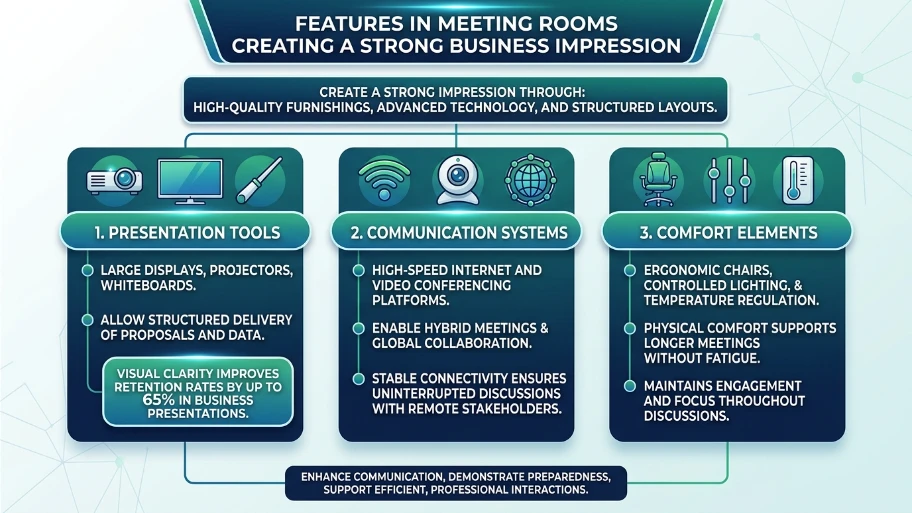
Meeting rooms create a strong business impression through high-quality furnishings, advanced technology, and structured layouts. Features such as presentation screens, video conferencing systems, and ergonomic seating enhance communication, demonstrate preparedness, and support efficient, professional interactions.
Modern meeting spaces include three essential feature categories: presentation tools, communication systems, and comfort elements. Each contributes directly to meeting effectiveness. Presentation tools include large displays, projectors, and whiteboards. These tools allow structured delivery of proposals and data. Visual clarity improves retention rates by up to 65% in business presentations.
Communication systems include high-speed internet and video conferencing platforms. These enable hybrid meetings and global collaboration. Stable connectivity ensures uninterrupted discussions with remote stakeholders. Comfort elements include ergonomic chairs, controlled lighting, and temperature regulation. Physical comfort supports longer meetings without fatigue. This maintains engagement and focus throughout discussions.
How can meeting room setup improve client engagement?
Meeting room setup improves client engagement by structuring seating, visuals, and interaction flow to encourage participation. Strategic layouts enhance eye contact, support collaboration, and ensure all participants remain actively involved in discussions and decision-making processes.
Seating arrangements influence interaction quality. Round tables encourage collaboration, while boardroom layouts support formal negotiations. Choosing the correct format aligns with meeting objectives. Visual positioning affects attention. Screens placed at eye level ensure all participants remain focused. Clear visibility prevents disengagement and improves comprehension of presented data.
Spatial organisation reduces distractions. Minimal clutter and defined zones for materials help participants concentrate. This increases productivity and reduces meeting duration by an average of 20%.
When should businesses use professional meeting rooms instead of informal spaces?
Businesses use professional meeting rooms when discussions involve negotiations, confidential information, or high-value prospects. Formal environments are essential when presenting proposals, finalising agreements, or conducting strategic discussions that require authority, structure, and privacy.
Informal spaces lack control over noise and privacy. This creates risks during sensitive discussions. Professional environments eliminate these uncertainties and support focused communication. High-value prospects expect structured interactions. A formal setting aligns with their expectations and reinforces professionalism. This alignment increases the likelihood of successful outcomes.
Complex discussions require tools and clarity. Professional meeting rooms provide the infrastructure needed for presentations, data sharing, and collaborative decision-making. For businesses seeking structured environments, using dedicated meeting rooms ensures consistency and professionalism across all client interactions.
How do professional meeting rooms support better negotiation outcomes?
Professional meeting rooms support better negotiation outcomes by providing a controlled setting that reduces distractions, enhances communication clarity, and reinforces authority. This environment enables structured discussions, improves focus, and increases the likelihood of reaching mutually beneficial agreements.
Negotiations depend on clarity and control. A professional setting ensures discussions remain focused without interruptions. This allows both parties to evaluate terms effectively. Authority plays a critical role in negotiation dynamics. A structured environment reinforces positioning and credibility. This influences how proposals are perceived and accepted.
Time efficiency improves in controlled settings. Meetings conducted in professional rooms often conclude faster due to reduced distractions and clearer communication pathways.
How does location and accessibility impact client perception?
Location and accessibility impact client perception by influencing convenience, punctuality, and overall experience. Easily accessible meeting rooms in central locations signal professionalism, reduce travel friction, and enhance the perceived reliability of the hosting business.
Central locations reduce travel time for participants. This increases punctuality and reduces delays. Efficient access contributes to a smooth meeting experience. Accessibility features such as parking, transport links, and reception services improve convenience. These factors directly affect how prospects evaluate operational efficiency.
A well-located meeting space reflects strategic positioning. It signals that a business values accessibility and client experience, which strengthens overall brand perception.
How can businesses align meeting rooms with their brand identity?
Businesses align meeting rooms with brand identity by ensuring design, layout, and presentation materials reflect their values and positioning. Consistent branding across physical environments reinforces recognition, strengthens credibility, and supports a unified client experience.
Visual consistency strengthens brand recall. Elements such as colour schemes, presentation templates, and signage reinforce identity. This ensures that every interaction aligns with brand messaging. Material presentation reflects professionalism. Organised documents, branded materials, and structured agendas show attention to detail. This influences how prospects evaluate operational quality.
Alignment between the environment and messaging reduces confusion. A cohesive experience ensures that clients clearly understand the business’s positioning and value proposition. For deeper insight into how workspace influences outcomes, explore the connection between a professional workspace and successful business partnership outcomes today.
What role does technology play in professional meeting rooms?
Technology in professional meeting rooms enhances communication, supports collaboration, and ensures seamless information sharing. Advanced tools enable efficient presentations, remote participation, and real-time data exchange, which improve meeting productivity and decision-making accuracy.
Video conferencing tools enable global collaboration. Businesses connect with stakeholders across different regions without delays. This expands opportunities and accelerates decision-making. Digital presentation systems improve clarity. Data, visuals, and reports display accurately, reducing misinterpretation. Clear communication strengthens understanding and agreement.
Integrated systems streamline operations. Automated scheduling, smart controls, and connectivity reduce setup time. This ensures meetings start and end efficiently.
How do professional meeting rooms reduce business risks?
Professional meeting rooms reduce business risks by ensuring confidentiality, preventing interruptions, and supporting compliance with data protection standards. Controlled environments protect sensitive information and maintain professional integrity during critical business interactions.
Confidentiality remains a key concern in business meetings. Professional spaces limit access to authorised individuals only. This reduces the risk of data exposure. Interruptions disrupt communication and create misunderstandings. Controlled environments eliminate these disruptions, ensuring discussions remain focused and accurate.
Compliance with data protection standards becomes easier in secure settings. Businesses maintain control over documents, conversations, and digital information during meetings.
Explore our meeting rooms guides,
Understanding the Difference Between Budget Meeting Spaces and Premium Executive Business Centres
Why Renting a Meeting Room is the Best Solution for Client Interviews
How can businesses maximise the value of meeting room usage?
Businesses maximise meeting room value by planning agendas, using available technology effectively, and aligning the environment with meeting objectives. Structured preparation ensures efficient use of time, improves communication, and increases the likelihood of achieving desired outcomes.
Preparation defines meeting success. Clear agendas outline objectives and discussion points. This ensures all participants remain aligned throughout the meeting. Effective use of technology enhances communication. Visual aids, data presentations, and collaborative tools improve understanding and engagement.
Time management improves productivity. Meetings that follow structured timelines reduce inefficiencies and ensure key decisions are reached promptly. Businesses evaluating premium environments can review premium meeting room solutions for executive business meetings to support high-level discussions and strategic engagements.
Professional meeting rooms serve as controlled environments that directly influence trust, communication clarity, and negotiation outcomes. They eliminate uncertainty, reinforce credibility, and support structured interactions that lead to stronger business relationships.
From My Company delivers purpose-built meeting rooms designed for professional engagement, secure communication, and efficient collaboration. These environments align with business objectives and support consistent, high-quality client interactions.
Frequently Asked Questions
How do professional meeting rooms help impress new business prospects?
Professional meeting rooms create a credible first impression by combining privacy, structure, and a polished environment. They help prospects view the business as organised, reliable, and ready for serious discussions.
What features should business meeting rooms have for client meetings?
Effective meeting rooms include reliable presentation screens, stable Wi-Fi, ergonomic seating, and good lighting. These features support clear communication, smooth collaboration, and a more professional client experience.
Why are meeting rooms better than informal spaces for business discussions?
Meeting rooms provide a controlled setting with fewer distractions and better confidentiality. That makes them more suitable for negotiations, proposals, and other conversations that require focus and professionalism.
How can meeting rooms improve business meetings with new prospects?
Meeting rooms improve meetings by creating a structured space for discussion, presentations, and decision-making. They also help keep the conversation on track and reduce interruptions that weaken engagement.
What do clients notice first in a professional meeting room?
Clients usually notice the cleanliness, layout, lighting, and overall organisation of the meeting room. These details shape how they judge the business’s professionalism and attention to detail.