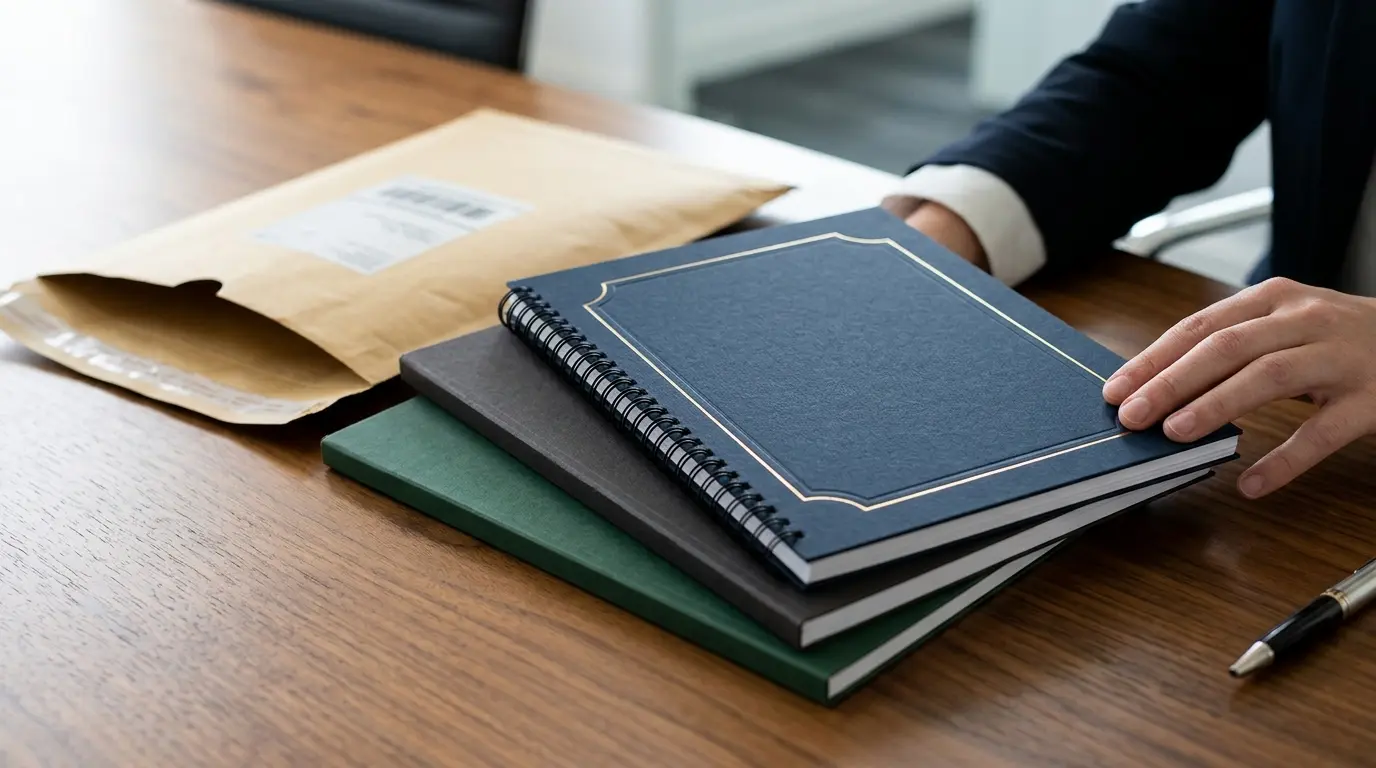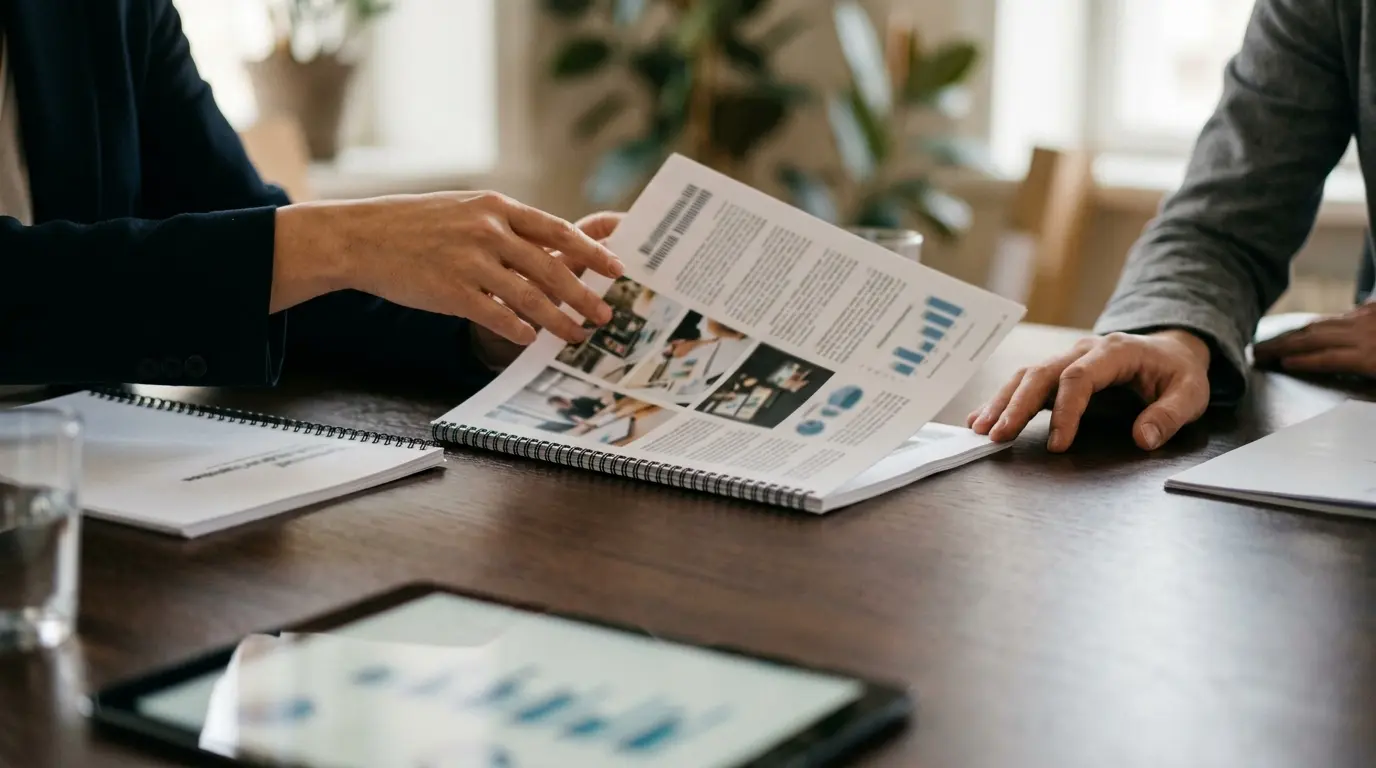
First impressions start with your venue because the physical environment shapes perception within 7 seconds. A professional, well-equipped space signals credibility, organisation, and trust, while poor surroundings create doubt. Venue quality directly influences how clients, partners, and stakeholders evaluate your business from the outset.
Why does your venue influence first impressions so strongly?
Your venue influences first impressions because people process visual and environmental cues faster than verbal communication. Cleanliness, layout, lighting, and technology immediately signal professionalism, attention to detail, and operational standards, shaping judgment before any discussion begins.
Human perception relies heavily on visual data. Studies show that 55% of first impressions come from visual input, while only 7% comes from spoken words. When a client enters a space, they assess lighting quality, furniture condition, and spatial organisation within seconds. A structured venue layout communicates efficiency. For example, a boardroom with aligned seating, integrated screens, and soundproofing demonstrates preparedness. In contrast, cluttered desks or outdated equipment signal disorganisation.
Environmental psychology also plays a role. Neutral colours, ergonomic furniture, and controlled acoustics reduce cognitive load. This allows visitors to focus on the discussion rather than distractions. When a business uses professional boardrooms, it aligns its physical presence with expected corporate standards. This alignment strengthens trust from the first interaction.
What elements of a venue create a strong first impression?
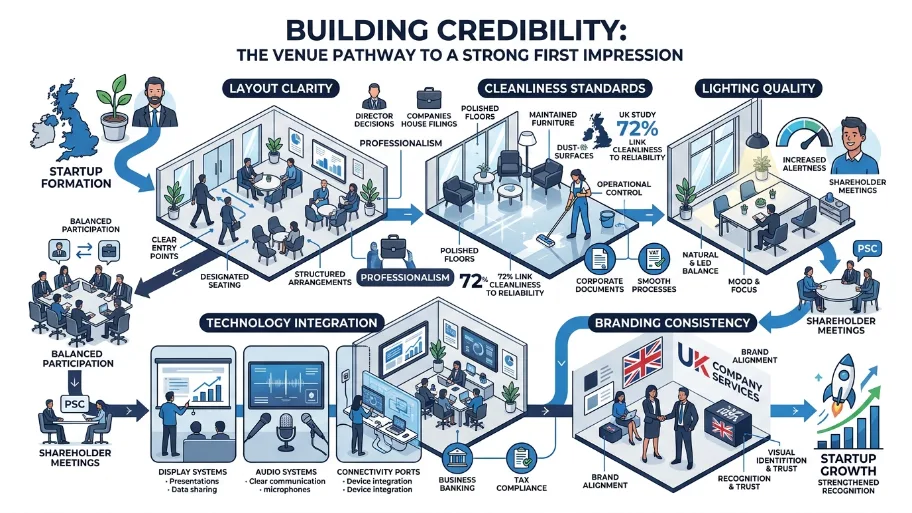
Five key elements shape venue perception: layout clarity, cleanliness standards, lighting quality, technology integration, and branding consistency. Each component communicates operational discipline and influences how visitors evaluate credibility, reliability, and attention to detail.
Layout and spatial organisation
A well-defined layout improves navigation and comfort. Clear entry points, designated seating, and structured table arrangements guide behaviour. For example, a rectangular boardroom table with equal spacing ensures visibility and balanced participation. This signals fairness and professionalism.
Cleanliness and maintenance
Clean environments indicate operational control. Dust-free surfaces, polished flooring, and maintained furniture reflect consistent standards. A 2024 UK workplace study found that 72% of clients associate cleanliness with reliability. Poor maintenance creates immediate doubt about service quality.
Lighting and ambience
Lighting affects mood and focus. Natural light increases alertness by 15%, while poor lighting causes fatigue. Balanced lighting—combining natural and LED sources—creates a professional atmosphere suitable for decision-making.
Technology and functionality
Modern meetings depend on technology. High-speed Wi-Fi, integrated screens, and video conferencing tools ensure smooth communication.
Three essential tools in high-spec venues include:
- Display systems for presentations and data sharing
- Audio systems for clear communication
- Connectivity ports for seamless device integration
Branding and consistency
Brand alignment reinforces identity. Subtle branding elements such as colour schemes or logo placement create familiarity. A consistent visual identity across physical and digital touchpoints strengthens recognition and trust.
How do professional boardrooms enhance business perception?
Professional boardrooms enhance perception by providing structured environments designed for high-level interaction. They incorporate advanced technology, premium furnishings, and controlled acoustics, which collectively signal authority, preparedness, and operational excellence to clients and stakeholders.
Boardrooms differ from standard meeting spaces in purpose and design. They are built for strategic discussions, negotiations, and executive meetings.
A high-spec boardroom typically includes:
- Soundproof walls to prevent external noise interference
- Large-format display screens for data presentation
- Ergonomic seating designed for extended meetings
These features improve communication clarity and decision-making efficiency.
Using dedicated boardrooms also aligns with corporate expectations. When stakeholders enter a formal setting, they adjust their behaviour accordingly. This creates a structured environment for productive dialogue.
Businesses that use professional spaces often experience improved meeting outcomes. Clear visuals, stable connectivity, and comfortable seating reduce friction during discussions. For organisations seeking structured environments, using professional boardrooms for business meetings ensures that every interaction reflects operational competence and credibility.
Why do clients judge credibility based on meeting environments?
Clients judge credibility based on meeting environments because physical settings act as proof of operational standards. A well-managed venue demonstrates consistency, investment in quality, and respect for professional engagement, all of which influence trust and decision-making.
Trust forms through observable evidence. Clients evaluate whether a business maintains high standards across all touchpoints.
For example, three observable indicators that clients assess:
- Equipment reliability during presentations
- Time management reflected in room readiness
- Staff coordination within the venue
When these elements function smoothly, they validate competence.
Conversely, technical failures or disorganised setups introduce doubt. If a presentation system fails or seating is inadequate, clients question internal processes. Venue quality also signals financial stability. Premium environments suggest that a business invests in infrastructure and operations. This perception strengthens confidence in long-term partnerships.
How does venue choice impact meeting outcomes?
Venue choice impacts outcomes by influencing focus, communication clarity, and participant engagement. A well-equipped environment reduces distractions, supports structured discussion, and enables efficient decision-making, while poor venues introduce friction that disrupts productivity.
Meeting effectiveness depends on environmental control. Noise levels, seating comfort, and technology performance directly affect participant engagement.
A controlled boardroom environment improves:
- Focus levels by reducing external interruptions
- Communication clarity through acoustics and audio systems
- Decision speed through accessible presentation tools
For instance, a boardroom with integrated video conferencing enables remote stakeholders to participate without delays. This ensures continuity in discussions. In contrast, informal or poorly equipped spaces create inefficiencies. Delays caused by technical issues or discomfort reduce productivity and prolong meetings.
Businesses evaluating workspace options often compare formats. Understanding the differences between boardrooms vs meeting rooms for business use helps identify which environment aligns with strategic goals. (Boardrooms vs. Meeting Rooms: Selecting the Best Space Type)
What role does consistency play in building impressions?
Consistency reinforces first impressions by aligning physical, operational, and brand elements across interactions. Repeated exposure to the same standards strengthens trust, reduces uncertainty, and builds a reliable business image over time.
Consistency extends beyond a single meeting. It includes every client interaction, from reception experience to meeting execution.
Three areas where consistency matters:
- Visual identity across venues and materials
- Service quality during bookings and support
- Technical reliability across meetings
When these elements remain stable, clients develop confidence in the business.
Inconsistent environments create confusion. For example, a premium website paired with a low-quality meeting space creates a mismatch. This weakens credibility. Maintaining consistent standards across all venues ensures that first impressions evolve into lasting trust.
Explore our boardrooms guide,
How High-End Boardrooms Impact High-Stakes Business Decisions
How can businesses ensure a strong first impression through venue selection?
Businesses ensure strong first impressions by selecting venues that meet professional standards in design, technology, and service delivery. Structured evaluation of features, accessibility, and functionality guarantees that the environment supports credibility and effective communication.
Venue selection requires objective criteria. Businesses evaluate spaces based on operational requirements and client expectations.
Key evaluation actions include:
- Assess location accessibility for clients and stakeholders
- Verify the availability of high-speed internet and presentation tools
- Inspect seating comfort and room layout for the meeting type
- Confirm support services such as reception and technical assistance
These checks ensure alignment between venue capabilities and meeting goals.
Flexible booking also plays a role. Businesses often require spaces for different durations. Options such as hire high-spec meeting rooms by the hour or day, providing adaptability for varying needs. (Hire High-Spec Meeting Rooms by the Hour or Day)
Selecting the right venue transforms meetings into structured, outcome-driven interactions.
First impressions form within seconds, and venue quality plays a decisive role in shaping them. A structured, well-equipped environment communicates professionalism, supports effective communication, and builds immediate trust.
From My Company provides purpose-built boardrooms designed to meet modern business standards. These spaces integrate advanced technology, professional layouts, and consistent service delivery, ensuring that every meeting reflects credibility and operational excellence.
Frequently Asked Questions
What are boardrooms used for in business?
Boardrooms are used for high-level meetings such as strategic planning, board discussions, investor presentations, and executive decision-making. From My Company provides professional boardrooms designed for secure, distraction-free environments with integrated technology for effective business communication.
How do I hire a boardroom for a meeting?
You can hire a boardroom by booking through From My Company’s online platform, selecting your preferred location, date, and duration. Their boardrooms offer flexible hourly or daily rates with instant confirmation and professional support for seamless meeting setup.
What features should a good boardroom have?
A good boardroom should have soundproof walls, high-speed Wi-Fi, integrated display screens, video conferencing tools, and ergonomic seating. From My Company’s boardrooms include all these features plus on-site technical support to ensure smooth executive meetings and presentations.
Are boardrooms different from meeting rooms?
Yes, boardrooms are designed for formal, high-stakes meetings like board discussions and investor talks, while meeting rooms suit casual team collaborations. From My Company offers both options, with boardrooms featuring premium furnishings, advanced technology, and enhanced privacy for senior-level business needs.
How much does it cost to rent a boardroom?
Boardroom rental costs vary by location, duration, and features, typically ranging from £50 to £150 per hour in the UK. From My Company offers competitive hourly and daily rates for their boardrooms with transparent pricing and no hidden fees for business users.