Is My Company Dormant
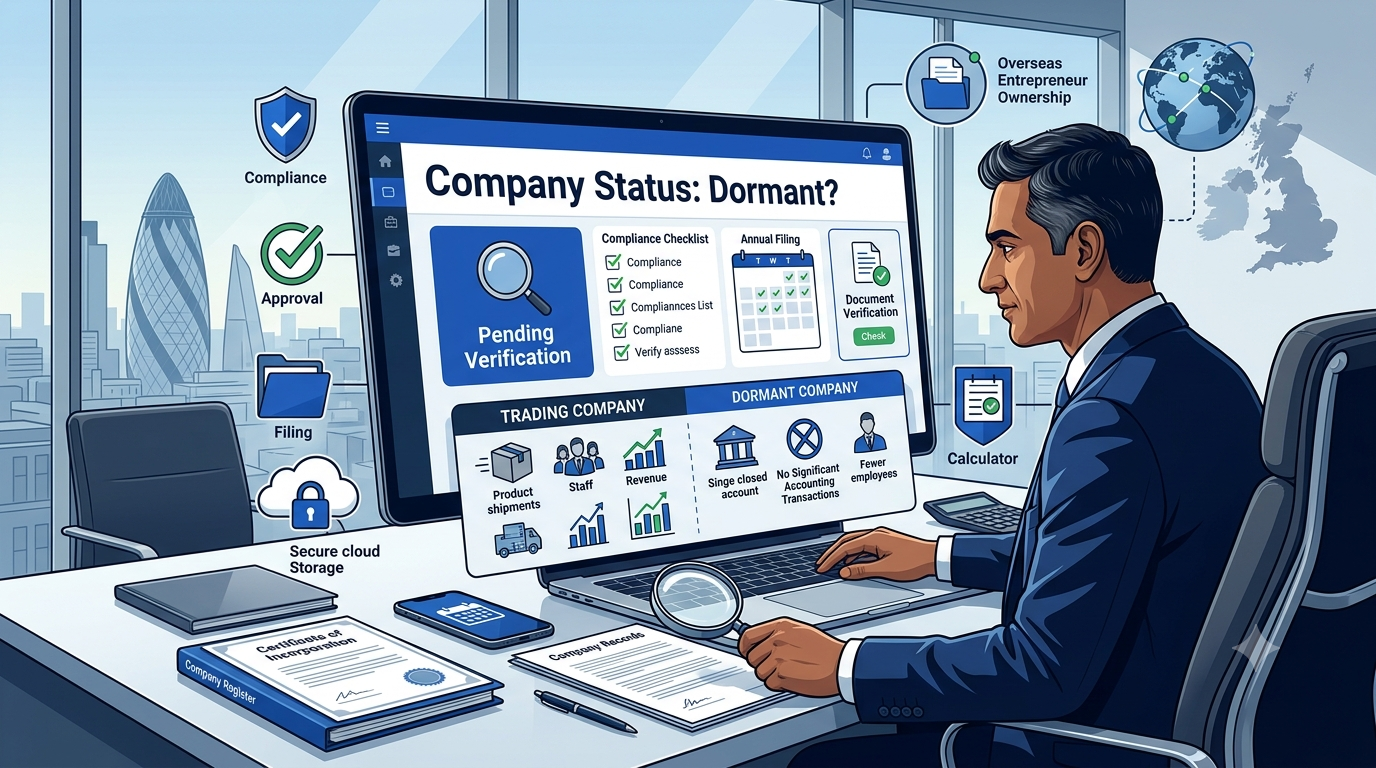
Working out whether your UK limited company genuinely qualifies as dormant isn’t always as straightforward as people expect. Dormant means more than just “not trading” or “not making money,” and small everyday transactions can accidentally take you out of dormant status without you realising. Getting it right matters, because filing dormant accounts for a company that’s actually active can cause real problems later. At Form My Company, we help UK company owners confirm their status and file the right kind of accounts. This guide walks through exactly how to check whether your company is dormant, in plain English.
What “Dormant” Actually Means
There are two different definitions of dormant that matter for UK companies, and they’re not the same thing:
- Companies House dormant. Your company is dormant for Companies House purposes if there have been no “significant accounting transactions” during the financial year. This affects which type of annual accounts you file.
- HMRC dormant. Your company is dormant for HMRC (Corporation Tax) purposes if it isn’t trading and has no other sources of income. This affects whether you need to file a Corporation Tax return.
A company can be dormant for both, one, or neither. Most owners think about dormant status in the Companies House sense (because it affects what accounts you file), but the HMRC side matters just as much.
For this guide, we’ll focus mainly on the Companies House definition, but flag the HMRC side where relevant.
The Companies House Test for Dormant Status
Companies House considers a company dormant if it has had no “significant accounting transactions” during the financial year. That sounds simple, but the definition of “significant accounting transaction” catches many owners out.
A significant accounting transaction is essentially any financial movement that would normally need to appear in the company’s accounts, with a few specific exceptions Companies House allows.
The exceptions (which don’t disqualify dormant status).
- Payments for shares taken by subscribers to the memorandum of association at incorporation (in other words, your initial share capital paid in when the company was formed)
- Fees paid to Companies House (for example, the £100 incorporation fee or the £50 confirmation statement fee)
- Penalties paid for late filing of accounts
If your company has had only these types of transactions, it’s still dormant.
What counts as a significant accounting transaction (which does disqualify dormant status).
Basically, anything else. This includes:
- Bank interest received (even a few pence)
- Bank charges paid
- Any customer payment received
- Any supplier or service payment made
- Salary or dividend payments
- Any expense reimbursement
- Any asset purchase or sale
- Any loan received or repaid
- Any refund received or issued
- Domain renewals, accounting software subscriptions, or other business-service payments
- Any transaction on the company’s bank account that isn’t in the exception list
Notice how easy it is to accidentally disqualify dormant status. Even something as small as a bank charge or a few pence of interest received on the company’s bank account will typically take you out of dormant.
Common Situations and What They Mean
Let’s walk through some common scenarios non-active companies find themselves in:
- Recently incorporated, not yet trading, no bank account, no activity. Very likely dormant for Companies House purposes. You’ve just incorporated and haven’t done anything yet beyond paying the incorporation fee.
- Incorporated, has a business bank account with a small balance, receives occasional interest. Probably not dormant, because interest received counts as a transaction. Even a few pence of interest disqualifies dormant status.
- Incorporated, has a bank account that has never had money in it. Likely still dormant, though check whether the bank has charged any monthly fees.
- Trading paused, no transactions in the last year. Possibly dormant, but check carefully. Bank charges, insurance renewals, software subscriptions, or any residual payments would disqualify it.
- Company holds an asset (like intellectual property) but doesn’t trade with it. Depends on whether the asset generates any income. If it does (like a licensing payment), that’s a transaction and the company isn’t dormant.
- Company received a customer payment during the year. Not dormant. Any customer transaction disqualifies.
- Company paid its accountant or registered office provider. Not dormant. These are significant transactions even if the amounts are modest.
- Company received a small grant. Not dormant. Grant income is a transaction.
- Company reimbursed a director for an incorporation-related expense before starting trading. Depends on the specifics, but typically this would count as a transaction and disqualify dormant status.
If any of these situations apply to yours, it’s worth checking carefully rather than assuming.
How to Check Your Company’s Status
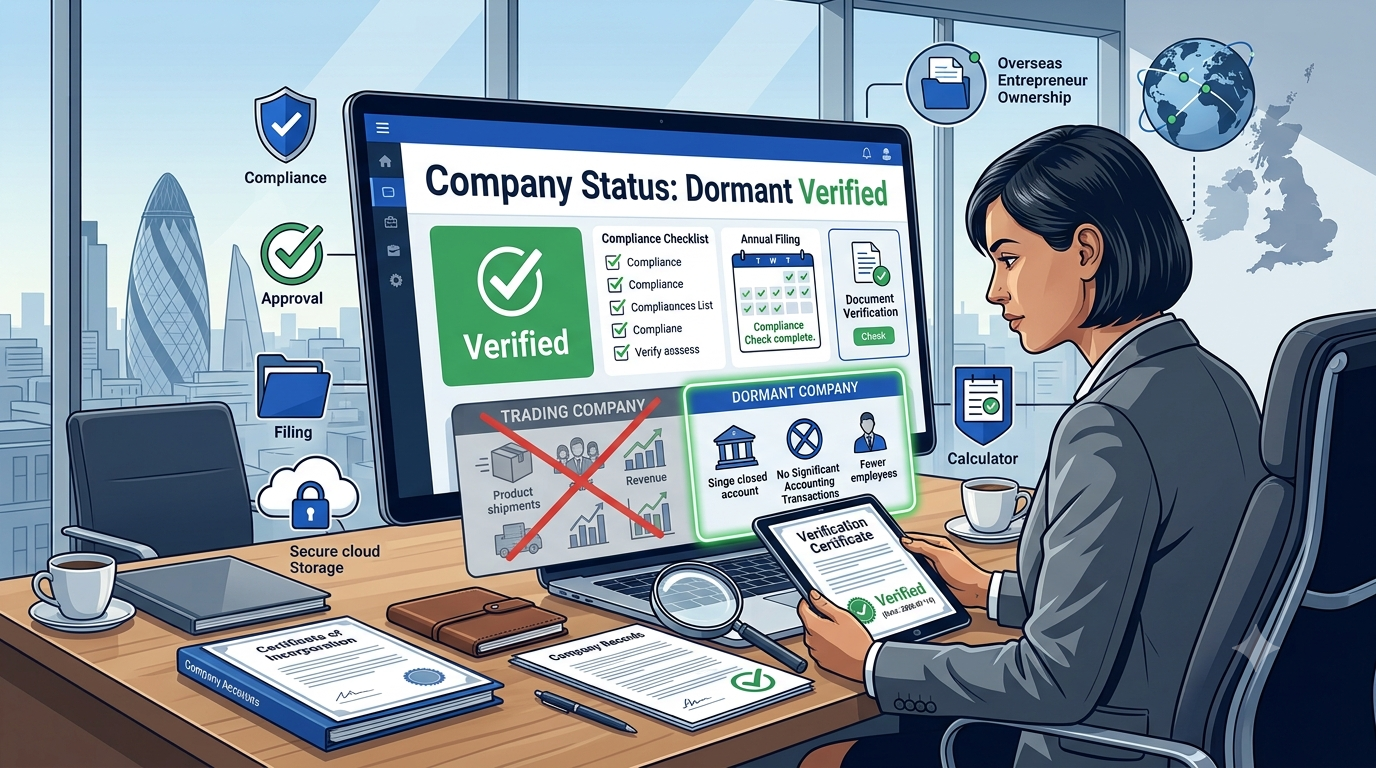
Here’s a practical approach to working out whether your company qualifies as dormant for the financial year:
Step 1: List every transaction in the financial year. Go through your business bank account statements (if any) line by line. Include incoming and outgoing.
Step 2: Cross-check against the Companies House exceptions. Was each transaction one of: initial share capital, a Companies House fee, or a late filing penalty?
Step 3: If everything is on the exception list, your company is dormant. For Companies House purposes.
Step 4: If anything is off the exception list, your company isn’t dormant. Even one transaction disqualifies. You’ll need to file full accounts, not dormant accounts.
Step 5: Check HMRC separately. HMRC has its own view of dormant status. If you’re unsure whether HMRC will expect a Corporation Tax return, contact HMRC to confirm.
For most owners, this exercise is quick. If your company has genuinely had no activity, the check confirms dormant status. If there’s been even minimal activity, it usually surfaces the transactions that disqualify.
Grey Areas Worth Watching
A few situations create genuine uncertainty:
- Bank accounts that charge monthly fees. If your business bank account charges a monthly fee, that’s a transaction and your company isn’t dormant. This catches many owners who thought they’d kept the company inactive.
- Bank interest on small balances. Even a tiny amount of interest received disqualifies dormant status. Some owners solve this by closing the business bank account until they’re ready to trade, though that has its own implications.
- Subscription renewals. Domain names, software, insurance, or other subscriptions that auto-renew can quietly disqualify dormant status if paid from a company account or if the company is otherwise responsible.
- Directors’ loans. If a director has lent the company money or the company owes a director, activity on that loan may count as a transaction.
- Corporate transactions. Any share issuances beyond the initial subscription, share transfers, or other corporate movements after incorporation could affect status.
- Dormant becoming active mid-year. If your company starts trading partway through the accounting period, the whole period is treated as active, not just from the start of trading.
If you’re in any of these grey areas, it’s worth checking with a qualified UK accountant rather than assuming.
The Difference Between Companies House and HMRC Dormant
This is where people often get caught out, so it’s worth spelling out clearly:
- Companies House dormant. Determined by whether you’ve had significant accounting transactions during the financial year. Affects what type of annual accounts you file with Companies House (dormant accounts vs full accounts).
- HMRC dormant. Determined by whether you’re actually trading and have any sources of income. Affects whether HMRC expects a Corporation Tax return.
- These can overlap or diverge. A company can be dormant for Companies House but active for HMRC (unusual but possible), or vice versa. Most commonly, if you’re dormant for one, you’re dormant for the other, but it’s worth checking both separately.
- HMRC needs telling. HMRC doesn’t automatically know your company is dormant. You typically need to notify them (or confirm your status when they ask) to avoid Corporation Tax return obligations.
For non-resident owners especially, coordinating Companies House and HMRC positions matters. Getting one right without the other can still lead to compliance issues.
What to Do Based on Your Answer
If your company is genuinely dormant:
- File dormant company accounts (Form AA02 for eligible small dormant companies) within the accounts deadline
- File your annual confirmation statement (£50 fee still applies) within its own separate deadline
- Confirm dormant status with HMRC to potentially avoid Corporation Tax return obligations
- Keep your Companies House record accurate, including any changes to directors or PSCs
- Track deadlines carefully, since dormant companies still face penalties for late filing
If your company isn’t dormant (even if it feels inactive):
- File full accounts, not dormant accounts, for the financial year
- File your annual confirmation statement
- Handle Corporation Tax with HMRC based on your actual position
- Consider whether professional accounting support would help, given that you have transactions to record properly
- Review whether you can genuinely wind down activity to become dormant in future years, if that’s your goal
What Happens If You File the Wrong Type of Accounts
Filing dormant accounts for a company that’s actually active can cause real problems:
- Legal issues. Making a false or misleading filing to Companies House can trigger consequences.
- HMRC exposure. If HMRC discovers trading activity that wasn’t disclosed, back taxes, penalties, and interest can apply.
- Amendment requirements. If Companies House later challenges the filing, you may need to amend to full accounts, sometimes retrospectively.
- Reputational and compliance concerns. Repeated misfiling can lead to enforcement action.
If in doubt, file full accounts (not dormant). Better to over-file than to file the wrong type. And a qualified UK accountant can help clarify your position quickly if you’re uncertain.
Non-Resident Considerations
For non-resident owners, checking dormant status is essentially the same exercise, but with a few practical notes:
- Multiple currency accounts. If your UK company has held or moved money in multiple currencies, foreign exchange movements could count as transactions.
- Payments from overseas parent or related entities. Any payment received from a related non-UK company likely counts as a transaction.
- Coordinating with your home country’s tax rules. Dormant for UK purposes doesn’t necessarily mean dormant for tax purposes in your country of residence. Get local tax advice.
- Ongoing UK registered office costs. If your provider charges annually, whether these are paid personally or via the company matters for dormant status.
For non-residents especially, an ACSP or ongoing service that regularly checks status with you is valuable, because things can drift without you noticing.
How Form My Company Helps
We help UK company owners check their dormant status and file the right accounts as part of our ongoing support. As an Authorised Corporate Service Provider (ACSP), we can:
- Review your transactions with you to confirm dormant status before filing
- File dormant company accounts (Form AA02) where your company qualifies
- File full accounts guidance where dormant status doesn’t apply
- File your annual confirmation statement (£50 fee applies) with its separate deadline
- Handle identity verification (IDV) for directors and PSCs under the ECCTA
- Provide a compliant UK registered office address in Bolton BL1
- Provide a UK director’s service address to keep your home address off the public register
- Coordinate with your accountant or with HMRC on wider compliance
For non-resident owners especially, having someone regularly check dormant status with you removes the risk of accidentally misfiling.
Check Your Company’s Status Today
Working out whether your UK company qualifies as dormant is straightforward when you know what to look for, but the exceptions and grey areas catch out many owners each year. With Form My Company, checking your status and filing the right kind of accounts is quick, accurate, and fully supported. Get in touch today and let us confirm your position, so you can file with confidence.
Frequently Asked Questions
How do I know if my UK company is dormant?
Check every transaction during the financial year. If all of them fit into the Companies House exceptions (initial share capital, Companies House fees, or late filing penalties), your company is dormant. If any transaction falls outside these exceptions, your company isn’t dormant and you need to file full accounts.
Does dormant mean the company isn’t trading?
Not exactly. Dormant means the company has had no significant accounting transactions during the financial year. A company that isn’t trading but has had bank charges, interest received, or paid supplier fees isn’t technically dormant.
Do bank charges disqualify dormant status?
Yes. Bank charges paid from the company’s bank account count as significant accounting transactions and disqualify dormant status. Interest received on a company account also disqualifies.
Is Companies House dormant the same as HMRC dormant?
Not quite. Companies House dormant is about whether significant accounting transactions occurred, affecting what type of annual accounts you file. HMRC dormant is about whether the company is trading, affecting Corporation Tax obligations. Both matter, and both need checking separately.
Can a company be dormant if it has money in the bank?
It can, if the money in the bank hasn’t generated interest or bank charges during the year. But even a small amount of interest received disqualifies dormant status, so this is a common trap. Some owners close the bank account to preserve dormant status.
What if I’ve been filing dormant accounts but I’m not sure the company actually qualifies?
Review your bank statements and any other financial records for the periods in question. If you find transactions that would have disqualified dormant status, consider getting professional advice on whether you need to amend past filings. Better to address this quickly than let it grow.
Can Form My Company help me confirm my status?
Yes. We work with UK company owners to check dormant status, review transactions, and file the right kind of accounts. If your situation is genuinely complex, we can also point you toward a qualified UK accountant for tailored advice.