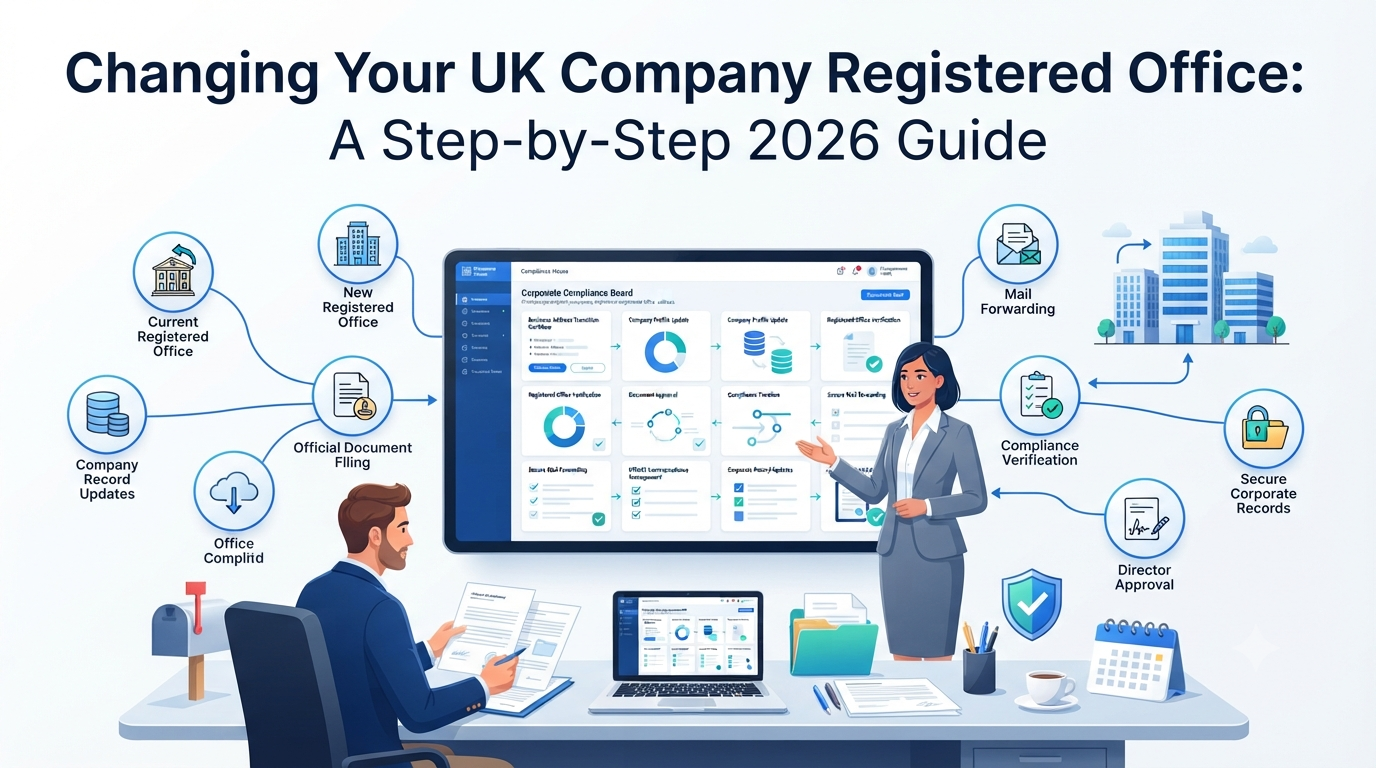
Changing Your UK Company Registered Office
Your registered office address is your UK company’s official statutory address, and while it doesn’t change often, there are legitimate reasons why you might need to. Moving to a new physical location, switching to a professional address service, updating an outdated arrangement, or restructuring your business are all common triggers. Whatever the reason, changing your registered office must be done correctly through Companies House. Getting it wrong or missing the deadline can cause real compliance issues. At Form My Company, we handle registered office changes as part of our compliance services. This guide walks you through exactly how to change your UK company registered office in 2026.
Why Change Your Registered Office?
There are several common reasons companies change their registered office:
Moving to a new location. Physical office relocation, whether within the same city or across the UK.
Switching to a professional address service. Moving from a home or informal address to a professional service provider.
Ending a business partnership. Where the previous registered office was at a partner’s location.
Cost efficiency. Moving to a more affordable service.
ACSP requirement. Some Authorised Corporate Service Providers require registered office to align with their compliance work.
Compliance improvement. Under the “appropriate address” rules from March 2024, some older addresses may no longer meet requirements.
Trading location change. As business locations shift.
Company restructure. As part of broader corporate changes.
Privacy improvement. Moving away from a home address to protect personal details.
Group company alignment. For businesses with multiple UK entities.
Post-acquisition changes. After M&A or ownership changes.
Whatever the reason, the process is the same and involves Companies House filing.
Requirements for the New Registered Office
Before changing, ensure the new address meets requirements:
UK physical address. Must be a real UK physical location.
Same jurisdiction as your company. England and Wales, Scotland, or Northern Ireland, matching your original company registration.
Meets “appropriate address” rules. Since March 2024, Companies House requires that documents can be delivered and would come to someone’s attention, with delivery recordable.
Not a standalone PO Box. PO Boxes on their own don’t meet the appropriate address test.
Real physical presence. A location where mail can genuinely be received.
Reliable ongoing use. Must be a stable long-term address.
Consent to be used. If it’s someone else’s address, they must consent.
Compatible with your business. For any regulated or specific business types.
Most non-resident owners of UK companies switch to professional service provider addresses to meet these requirements reliably.
Legal Requirements for Changing Registered Office
Under UK law, changing the registered office requires:
Board approval. Typically a board resolution.
Companies House notification. Within 14 days of the change.
No shareholder resolution required. For most straightforward changes (though your Articles may specify).
Documentation. Records of the board resolution and the change.
Compliance with any specific restrictions. For certain company types.
Same jurisdiction limitation. You can change addresses within the same UK jurisdiction, but not between jurisdictions (that would require re-registration).
For most private limited companies, the process is straightforward: board resolution, filing, and update related records.
Step 1: Confirm the New Address Is Appropriate
Before starting the process:
Verify the address meets requirements. UK physical address, correct jurisdiction, “appropriate address” compliance.
Get consent if needed. If using someone else’s address (like a service provider), confirm their consent.
Plan the effective date. When you want the change to take effect.
Notify affected parties in advance. Your bank, key clients, and business partners may need to know.
Check for any restrictions. Regulated business types or specific circumstances that could affect the change.
Coordinate with your accountant. Since Corporation Tax and HMRC records will reflect the change.
Preparation before filing prevents complications.
Step 2: Pass a Board Resolution
The change must be authorised by the board:
Board meeting or written resolution. Documenting the decision to change the registered office.
Record the resolution. In board minutes or written form.
Include the new address details. So the resolution is specific.
Include the effective date. When the change will take effect.
Follow your Articles of Association. Some Articles may have specific requirements.
Store safely. The board resolution is a legal document.
For most companies, this is a simple internal decision. For larger companies with more formal governance, it may involve more elaborate procedures.
Step 3: Update Your Statutory Register
Immediately after the board resolution:
Update the register of registered office. In your company’s statutory records.
Record the change and effective date. For your internal audit trail.
Ensure the register matches Companies House. Once filed.
Store the records safely. As permanent company records.
Internal records must match the Companies House filing.
Step 4: File Form AD01 with Companies House
The main filing is Form AD01 (Change of registered office address). The process:
Access Companies House WebFiling. You’ll need your Companies House account credentials and authentication code.
Select “Change registered office address.” Or use Form AD01 through paper filing if preferred.
Enter the new address details. Full UK address with postcode.
Confirm the effective date. When the change takes effect.
Add supporting information as needed. For any specific circumstances.
Submit the filing. Digital filings are typically processed within 24 hours.
No filing fee. Companies House currently doesn’t charge for AD01 filings.
Alternative: Filing through an ACSP. As an Authorised Corporate Service Provider, we can file on your behalf, coordinated with any other Companies House work.
Alternative: Paper filing. Still available but slower.
Step 5: Meet the 14-Day Deadline
Timing matters:
Companies House expects filing within 14 days. Of the change taking effect.
Late filings can attract penalties. Companies House takes prompt filing seriously.
Retrospective filings. If you’ve already changed the address without filing, submit immediately.
Coordination with the effective date. The change takes effect when Companies House accepts the filing, not from the resolution date (unless specifically backdated).
Prompt filing avoids compliance issues.
Step 6: Update Related Records
The Companies House filing is one step. You also need to update:
Business bank account. Notify your bank so they update their records.
HMRC. Update your Corporation Tax records with the new address.
VAT records. If VAT-registered, update HMRC VAT records.
PAYE records. If you have employees, update employment records.
Business insurance. Any policies referencing the registered office.
Client and supplier contracts. Where the registered office is specified.
Corporate cards and accounts. Where the registered office is on file.
Company letterhead and stationery. For future correspondence.
Website and marketing materials. Where the registered office is displayed.
Business partners and suppliers. Who may need to update their records.
Professional advisers. Your accountant, solicitor, auditor, and other advisers.
Statutory registers. Beyond the register of registered office.
Ongoing compliance obligations. For confirmation statements, PSC updates, and other filings.
Coordinating these updates prevents mismatches and ongoing confusion.
Step 7: Confirm the Change Is Live
After filing:
Check Companies House. The new address should appear on your company’s public record within 24-48 hours of filing.
Check confirmation emails. From Companies House confirming acceptance.
Verify statutory records. Match Companies House with your internal register.
Communicate the change externally. To customers, suppliers, and other stakeholders.
Test mail delivery. To ensure the new address is actually receiving statutory correspondence.
Document everything. For your ongoing records.
Confirming the change is complete prevents surprises later.
Common Mistakes to Avoid
A few issues come up regularly:
Missing the 14-day deadline. Companies House expects prompt filing.
Choosing an address that doesn’t meet “appropriate address” rules. Under the current requirements, standalone PO Boxes or informal addresses don’t work.
Not obtaining board approval. The change should be authorised internally before Companies House filing.
Forgetting to update related records. Bank, HMRC, insurance, and other records need updates.
Not updating statutory registers. Internal records must match Companies House.
Changing addresses too frequently. Frequent changes look unstable and can raise Companies House queries.
Trying to change jurisdictions. You can change addresses within a jurisdiction but not between them.
Not coordinating with wider compliance. Confirmation statements, PSC updates, and other filings should align.
Missing the impact on the confirmation statement. Your next confirmation statement should reflect the new address.
Not verifying the new address is genuinely appropriate. Meeting the appropriate address test matters.
Filing without ensuring the new address is ready. If the new address isn’t set up to receive correspondence, mail can be lost.
Professional support significantly reduces these risks.
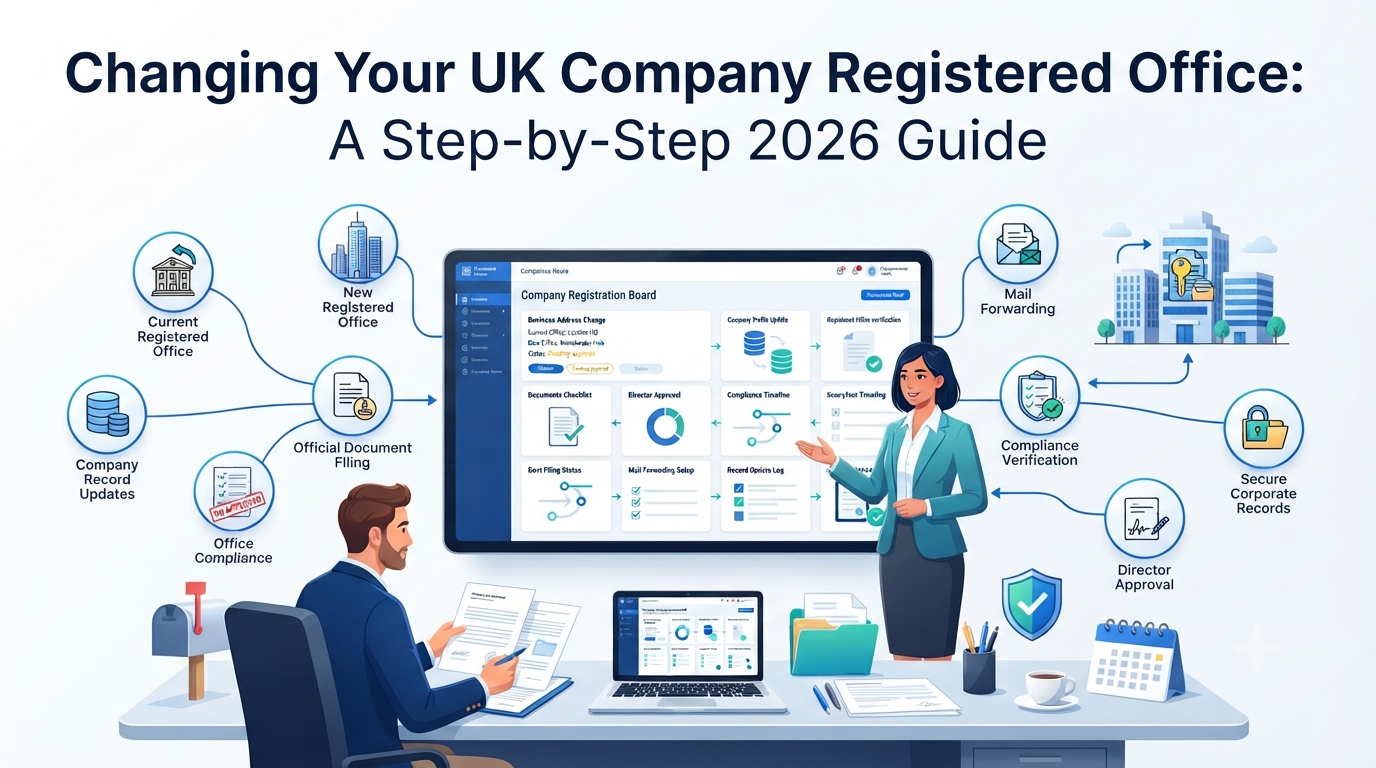
Changing Registered Office for Non-Resident Owners
For non-resident owners of UK companies, changing the registered office often means switching to or between professional address services:
From informal to professional. Moving from a friend’s or family member’s address to a proper service provider.
Between service providers. As you compare cost, service quality, or bundling.
With formation. Setting up a UK company with a professional registered office from day one.
During restructuring. As your UK business evolves.
Practical coordination challenges. Time zones and communication add friction.
Bundled service considerations. Registered office often works best combined with director’s service address, confirmation statement filing, and other services.
Long-term planning. Multi-year continuity matters more than one-off changes.
For non-resident owners, working with an ACSP that handles the registered office change smoothly and integrates with wider compliance is typically the best approach.
The ECCTA Impact on Registered Office Changes
Under the Economic Crime and Corporate Transparency Act, registered office issues have new dimensions:
Enhanced Companies House scrutiny. Of new registered office addresses.
Active enforcement. Companies House can query, reject, or change addresses that don’t meet appropriate address rules.
Coordination with wider ECCTA compliance. Your registered office affects other filings.
Regulatory oversight. ACSPs handle registered office matters within regulated frameworks.
Failure to Prevent Fraud considerations. For providers, ensuring registered office addresses meet all requirements.
Public register scrutiny. Registered office information is highly visible and subject to review.
Change flags. Frequent or unusual changes can attract Companies House attention.
The result is that changing your registered office isn’t just an administrative task. It’s a compliance matter with regulatory implications.
Special Circumstances
Some situations warrant special consideration:
Company striking off. Changing registered office while a company is subject to strike-off proceedings can complicate matters.
Company in liquidation. Different rules apply.
Company in administration. Coordination with the administrator is needed.
Group company changes. Multiple companies changing addresses at once may require coordinated filings.
Company reorganisation. As part of broader corporate restructuring.
Cross-border implications. Changes affecting international structures.
Regulated sector considerations. For companies in specific industries.
Dormant company changes. Even dormant companies need appropriate addresses.
For any of these, professional guidance ensures the change is handled correctly.
What If You’ve Missed the Deadline?
If you’ve already changed your registered office and missed the 14-day filing deadline:
File as soon as possible. Prompt action is essential.
Explain the delay to Companies House if asked. Genuine reasons are typically accepted.
Check for any consequences. Late filing penalties may apply.
Review your wider compliance. Ensure no other filings have been missed.
Consider professional support. To bring compliance back on track.
Update all related records immediately. To prevent further mismatches.
Learn from the delay. Set up systems to prevent recurrence.
Missing the deadline once is manageable; repeated late filings suggest a broader compliance issue.
When You Might Not Need to Change Your Registered Office
Sometimes owners consider changing when they don’t need to:
Trading location changes. You can trade from a different location without changing your registered office.
Adding a new office. Multiple business locations don’t require registered office changes.
Director address changes. Director service address changes are separate filings.
Postal address changes. Only if your registered office is affected.
Minor renovations at existing address. Usually don’t require notification.
If in doubt about whether a change is needed, professional advice avoids unnecessary filings.
How Form My Company Helps with Registered Office Changes
We handle registered office changes as part of our compliance services. As an Authorised Corporate Service Provider (ACSP), we can:
File AD01 on your behalf. Coordinated with any other Companies House work.
Provide a new UK registered office address. In Bolton BL1, as part of our Non-Residents package.
Update your statutory registers. For internal records.
Coordinate with HMRC. Updates for Corporation Tax and VAT.
Guide you through the change. Ensuring the new address meets all requirements.
Handle the compliance impact. For confirmation statements and other filings.
Support ongoing compliance. After the change is complete.
Bundle services in packages. Registered office, director’s service address, confirmation statement, and identity verification services.
Multi-year continuity. For long-term stability.
Non-resident owner support. For overseas coordination of the change.
Whether you’re moving to a new location, switching service providers, or updating an outdated arrangement, we handle the change professionally.
Change Your Registered Office Correctly Today
Changing your UK company registered office is a specific procedural step with real compliance implications. Getting the timing, filing, and related updates right protects your company’s compliance position and business relationships. With Form My Company, registered office changes are straightforward and fully supported as part of our compliance services. Get in touch today and let us handle the change while you focus on your business.
Frequently Asked Questions
How do I change my UK company registered office?
Get board approval, update your statutory register, file Form AD01 with Companies House within 14 days, update related records (bank, HMRC, insurance), and confirm the change is live on the public register.
What is Form AD01?
Companies House Form AD01 is used to change your company’s registered office address. It can be filed online through Companies House WebFiling or through an Authorised Corporate Service Provider like Form My Company.
Is there a fee to change registered office?
No. Companies House currently doesn’t charge a filing fee for AD01 filings, whether filed online or by paper.
How long do I have to file the change?
Companies House expects the change to be filed within 14 days of the effective date. Late filings can attract penalties, so prompt filing is important.
Can I change to any UK address?
The new address must be a UK physical location in the same jurisdiction as your company (England and Wales, Scotland, or Northern Ireland) and must meet the “appropriate address” rules that took effect in March 2024.
Can I change my registered office to another country?
No. Your registered office must be in the same UK jurisdiction as your company registration. Changing jurisdictions would require re-registering the company.
Do I need shareholder approval to change the registered office?
Typically no, for most private limited companies. A board resolution is usually sufficient. Your Articles of Association may specify different requirements.
Can Form My Company change my registered office?
Yes. As an Authorised Corporate Service Provider (ACSP), we can file AD01 on your behalf, provide a new UK registered office address, coordinate with HMRC and other updates, and handle the wider compliance impact.