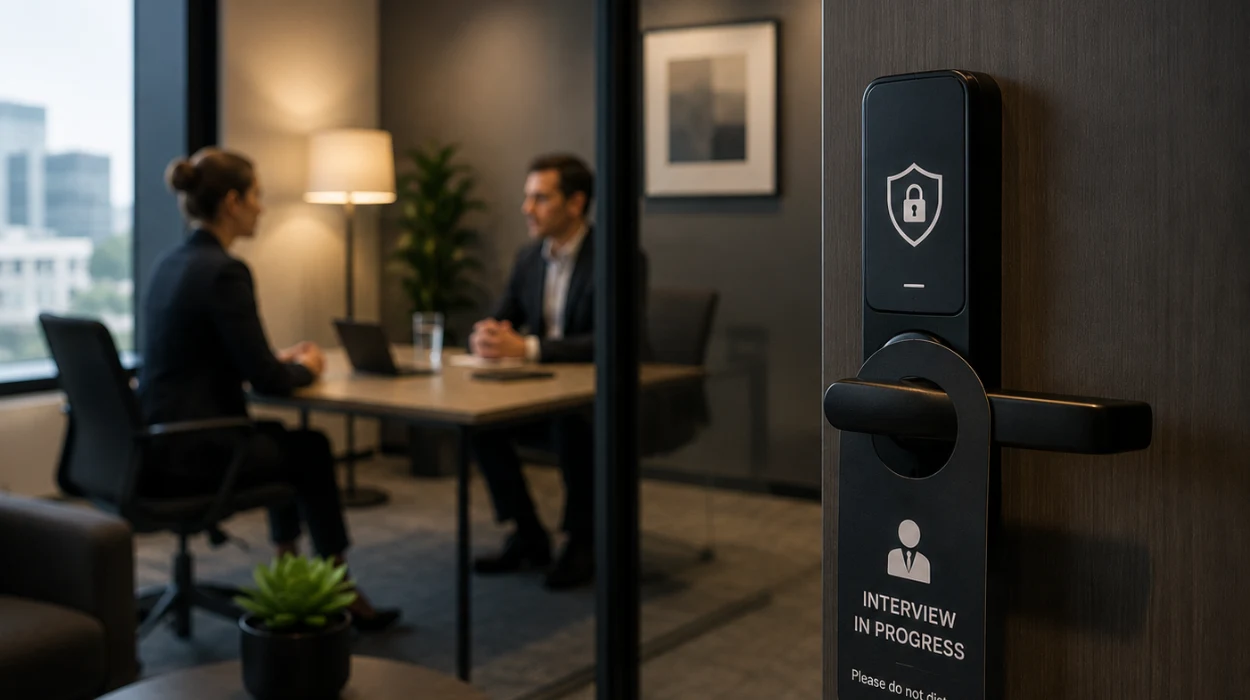
Choosing a secure interview space for sensitive roles requires evaluating physical soundproofing, isolated access control, and strict data compliance standards to protect candidate confidentiality, prevent intellectual property leaks, and maintain corporate privacy during recruitment evaluations.
Finding the right physical environment for high-level recruitment is essential when protecting corporate interests. Modern businesses face significant security vulnerabilities during executive and technical talent acquisitions. When evaluators discuss proprietary technology, financial data, or legal strategies, standard meeting rooms expose companies to severe compliance breaches. Data privacy regulations mandate strict access controls for candidate discussions. Organizations must assess physical security features before scheduling confidential applicant evaluations.
Why Does Physical Security Matter for Candidate Privacy?
Physical security protects sensitive candidate discussions by preventing unauthorized eavesdropping, unauthorized visual recording, and data theft through secure room design, acoustic isolation barriers, and restricted access protocols.
Confidentiality breaches often occur through poor architectural design or shared office footprints. Sound travels easily through standard drywall and drop ceilings. Interviewers discussing intellectual property or executive compensation require dedicated acoustic barriers. Sound-rated walls prevent outside listeners from capturing proprietary details.
Acoustic engineering standards measure sound transmission class ratings. Rooms designed for sensitive roles maintain minimum ratings to stop voice propagation. Organizations must verify structural soundproofing before booking external facilities. External noise pollution also disrupts critical evaluations. Quiet environments ensure candidates remain focused and protected.
Visual security is equally critical during executive screenings. Glass walls without privacy film expose participant identities and confidential documents. Secure interview spaces utilize frosted glass or solid partitions. Position screens away from windows to block long-range optical viewing.
Controlled physical access prevents uninvited individuals from entering evaluation zones. Facilities require electronic keycard logs or biometric entry gates. Visitor tracking systems log every person entering the secure perimeter. Staff members monitor hallways to maintain strict isolation zones. These measures eliminate insider threats during critical hiring phases.
What Compliance Standards Apply to Interview Spaces?
Compliance standards for secure interview spaces require adherence to data protection regulations, industry privacy frameworks, and secure document handling protocols to safeguard candidate personal data during evaluation sessions.
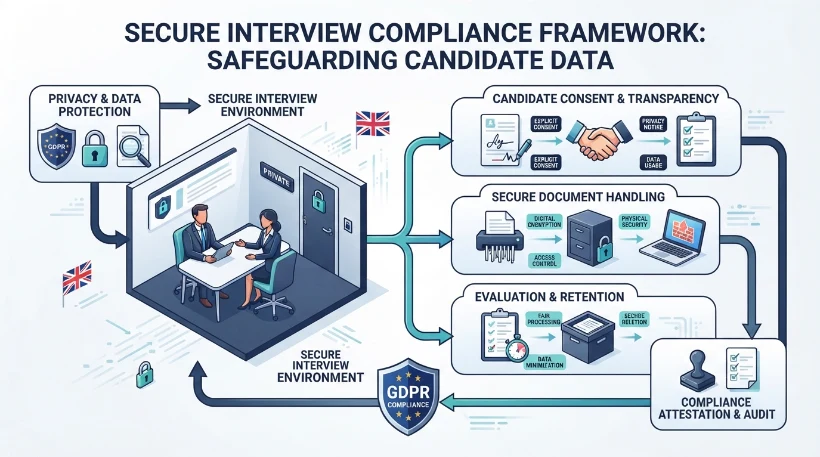
Regulatory frameworks dictate how organizations handle applicant data from initial contact to final hiring decisions. The Data Protection Act governs the handling of personally identifiable information. Secure rooms prevent unauthorized access to printed resumes and assessment notes. Evaluators must lock physical documents in secure cabinets immediately after sessions.
Financial services and healthcare sectors enforce specialized compliance frameworks. Regulators require strict audit trails for every recruitment interaction. Secure facilities maintain compliance logs detailing room usage and authorized personnel. These records satisfy external regulatory audits without exposing private conversations.
Digital security within the room protects transmitted data. Hardwired network connections replace unsecured wireless networks to prevent interception. Encrypted communication channels secure remote board members joining hybrid interviews. IT teams verify firewall security before every high-level session.
Organizations outsourcing recruitment spaces must review vendor compliance certifications. Certified facilities demonstrate adherence to international security standards. Compliance officers verify facility credentials before approving external venue contracts. Adhering to these standards eliminates legal liability during sensitive talent searches.
How Do You Evaluate Acoustic and Technical Infrastructure?
Evaluating acoustic and technical infrastructure involves measuring decibel reduction levels, inspecting hardware encryption protocols, and testing dedicated broadband connections to ensure seamless, interference-free communication during evaluations.
Technical reliability directly impacts the success of remote or hybrid executive interviews. Secure spaces require dedicated fiber internet connections rather than shared public Wi-Fi. High-speed broadband prevents video latency during global candidate assessments. IT professionals test bandwidth stability prior to every scheduled session.
Hardware security safeguards proprietary video conference feeds. Encrypted conference systems prevent unauthorized signal interception. Microphones feature directional audio capture to eliminate ambient room noise. High-definition cameras maintain secure feeds through encrypted virtual private networks.
Acoustic testing measures ambient background noise levels inside the room. HVAC systems must operate silently to avoid audio distortion during digital recordings. Double-glazed acoustic glass blocks exterior street noise completely. Sound masking systems generate low-level white noise to obscure vocal frequencies outside the door.
Power redundancy ensures interviews continue without data loss during electrical failures. Uninterruptible power supply units protect recording equipment and computers. Surge protectors safeguard sensitive hardware from electrical fluctuations. Technical infrastructure audits guarantee zero downtime during critical executive screenings.
What Location and Access Factors Prevent Breaches?
Location and access factors prevent security breaches by utilizing discreet building entrances, private elevator access, and dedicated secure parking structures to maintain candidate anonymity throughout the recruitment process.
Executive candidates often hold prominent current positions. Anonymity is paramount to protect candidates from professional disruption. Discreet building entrances prevent public exposure during arrivals and departures. Private service elevators transport applicants directly to secure evaluation floors.
Facility placement within a business district affects overall security exposure. Standalone corporate suites offer superior privacy compared to shared coworking hubs. Coworking spaces introduce risks from unknown neighboring tenants and shared common areas. Dedicated corporate facilities eliminate these uncontrolled variables entirely.
Visitor management protocols dictate clear arrival procedures. Reception staff verify identification against pre-approved guest manifests. Security personnel escort candidates directly to designated interview rooms. Escorted transit prevents wanderers from accessing restricted corporate areas.
Internal navigation routes must remain isolated from general office traffic. Separate corridors for hiring managers and applicants prevent accidental hallway encounters. Secure exit pathways allow candidates to leave without passing public waiting areas. These logistical controls preserve absolute discretion for high-profile lateral hires.
How Do Professional Interview Rooms Deliver Complete Security?
Professional interview rooms deliver complete security by combining military-grade acoustic engineering, rigorous data compliance protocols, and dedicated private facilities tailored for sensitive executive and technical recruitment.
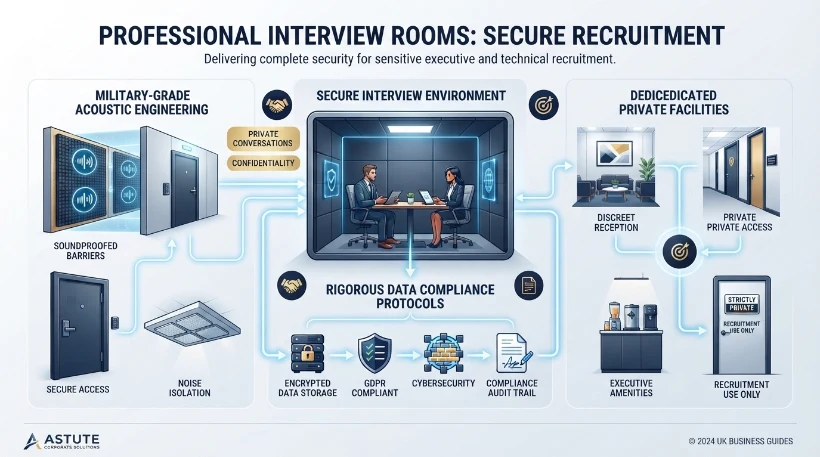
Securing internal resources for executive recruitment strains standard office infrastructure. Dedicated professional spaces offer turn-key security without diverting internal IT and facilities teams. These environments integrate physical and digital safeguards into a single controlled location.
Organizations seeking reliable environments often utilize specialized Professional Interview Rooms designed for high-stakes evaluations. These spaces incorporate advanced acoustic baffling and encrypted network infrastructure. Companies can conduct confidential assessments without investing in permanent facility renovations.
Streamlining the evaluation process requires dependable logistical support. Managed spaces provide trained staff to handle visitor logging and technical troubleshooting. Administrative teams ensure compliance logs are maintained accurately for every session. This operational efficiency allows hiring managers to focus exclusively on candidate assessment.
Protecting intellectual property during talent acquisition remains a top priority for growing businesses. Utilizing verified secure spaces prevents costly data leaks and compliance penalties. Organizations safeguard their competitive advantage by prioritizing environment security during every sensitive hire.
Explore our Interview Rooms guide,
How to Run GDPR-Compliant Interviews in a Hired Room
How to Get Solicitor-Certified Copies of Your Company Documents
Frequently Asked Questions
What features make an interview room secure for sensitive executive hiring?
A secure interview room utilizes architectural acoustic barriers, sound-rated walls, and encrypted broadband connections to prevent eavesdropping and data interception. When businesses hire through Form My Company, these dedicated spaces also feature restricted electronic access logs and frosted glass partitions to maintain absolute candidate confidentiality.
Why should companies use external interview rooms instead of regular office boardrooms?
External interview rooms prevent intellectual property leaks by offering isolated access controls, private elevators, and soundproof environments away from general office traffic. Form My Company provides these specialized facilities to ensure hiring managers can discuss sensitive financial or proprietary data without internal disruption.
How do secure interview spaces protect candidate data privacy during recruitment?
Secure interview spaces safeguard candidate data by enforcing strict document management protocols, hardwired network security, and isolated physical entry logs. Form My Company ensures that all physical notes and digital video transmissions adhere to strict compliance frameworks to protect personal data.
Can remote interview participants connect securely in professional interview rooms?
Remote participants connect securely through encrypted video conferencing hardware and dedicated fiber internet connections that eliminate public network vulnerabilities. Form My Company equips interview rooms with high-definition secure feeds to ensure seamless hybrid executive evaluations without signal interception.
What is the cost and booking process for hiring confidential interview rooms?
Booking confidential interview rooms involves selecting compliant facility locations and reserving tailored time slots that match executive recruitment schedules. Form My Company offers flexible booking options for interview rooms, allowing organizations to secure professional, turn-key environments without permanent overhead costs.