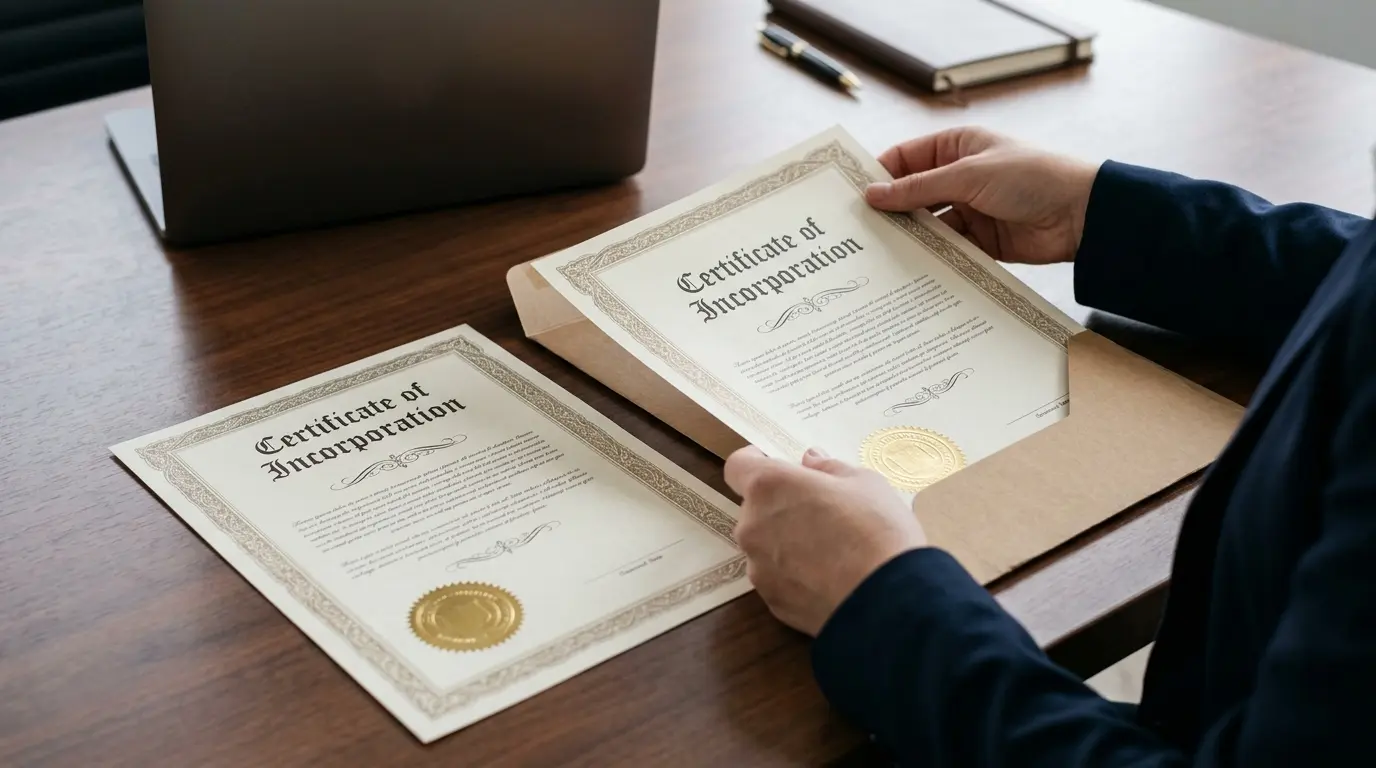
Prioritize company documents for legalisation by examining your immediate foreign operational needs, banking requirements, and commercial registration timelines abroad. Legalise foundational incorporation records first, followed by governance certificates and operational agreements, ensuring your international expansion meets overseas regulatory deadlines efficiently.
When businesses expand operations into foreign jurisdictions, navigating cross-border compliance demands a precise legalisation strategy. Over 85% of international corporate expansions face bureaucratic delays because executives legalise documents in the wrong sequence. Foreign authorities, overseas banks, and international registries require specific document hierarchies to validate foreign entities. Establishing this operational roadmap protects your company from costly administrative stalls and rejected overseas filings.
Why Should Incorporation Certificates Be Legalised Before Other Records?
Legalise certificates of incorporation first because foreign authorities require foundational proof of legal existence before processing any secondary corporate filings.
Foreign regulatory bodies demand immediate verification of a company’s legal genesis. 100% of international business registries require an official certificate of incorporation before issuing local operating licenses. When you submit incorporation records through apostilled documents, foreign authorities validate your legal standing under UK jurisdiction.
Without this foundational verification, overseas institutions reject subsequent filings like financial statements or tax certificates. Government agencies prioritize original formation records to establish corporate identity before granting commercial permissions.
| Document Priority | Primary Foreign Recipient | Typical Processing Time |
| Certificate of Incorporation | Foreign Business Registry | 3 to 5 business days |
| Articles of Association | International Partner Banks | 4 to 6 business days |
| Board Resolutions | Overseas Regulatory Bodies | 5 to 7 business days |
How Do You Determine the Legalisation Order for Governance Documents?
Prioritize governance documents based on whether overseas commercial banks or foreign tax authorities demand immediate operational control validation.
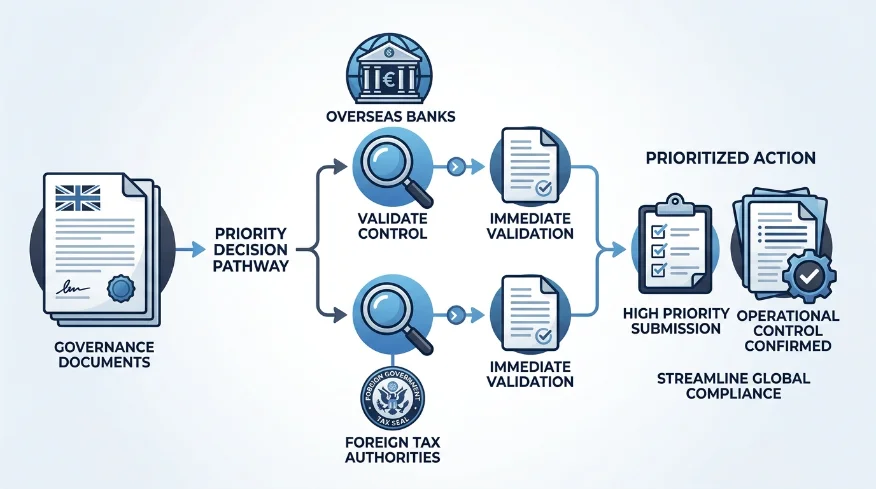
Corporate governance records regulate internal authority and external representation. International banks request authenticated governance instruments to satisfy strict anti-money laundering regulations. When expanding into foreign markets, 70% of multinational financial institutions mandate certified constitutional documents during initial account opening phases.
You must align your legalisation schedule with banking compliance checkpoints to accelerate capital deployment. Review the Can Board Resolutions and Powers of Attorney Be Apostilled? guide to understand how governing resolutions support overseas administrative approvals. Structuring governance paperwork correctly prevents freezing of international commercial accounts and halts bureaucratic rejections.
Which Operational Agreements Require Immediate International Authentication?
Legalize operational agreements immediately when foreign tender submissions, local subsidiary formations, or overseas asset acquisitions require active legal proof.
Commercial transactions abroad demand enforceable proof of contractual capacity. Foreign enterprise boards scrutinize operational contracts for valid international certification before signing partnerships. When UK enterprises bid on overseas government contracts, procurement officers enforce strict validation standards.
Executing contracts without prior international validation exposes businesses to legal nullification in foreign courts. 45% of cross-border contract disputes stem from unauthenticated foundational corporate authorizations. Securing proper authentication on operational agreements guarantees legal enforceability across international borders.
How Can Form My Company Streamline Your Document Legalisation Strategy?
Form My Company accelerates international expansion by managing end-to-end document legalisation through established diplomatic and governmental authentication channels.
Managing multi-jurisdictional paperwork consumes valuable executive bandwidth during critical international growth phases. Form My Company handles official authentication protocols through the Foreign, Commonwealth & Development Office and relevant embassies.
Businesses utilizing professional document handling reduce administrative error rates by 90%. Read the Want to Get Your Articles of Association Apostilled Through Form My Company? overview to explore direct commercial solutions. Professional oversight ensures your corporate portfolio satisfies strict international compliance frameworks without operational disruption.
Successful international expansion depends entirely on strategic document sequencing and precise legalisation execution. Form My Company delivers the solution by orchestrating seamless authentication workflows that satisfy complex foreign regulatory frameworks.
Explore our Apostilled Documents guide,
How to Decide Which Company Documents to Apostille for Overseas Use?
How to Meet Hiring Compliance Standards With Professional Venues?
Frequently Asked Questions
Which corporate documents require an apostille for international business expansion?
Foundational records like certificates of incorporation, articles of association, and board resolutions typically require an apostille. Form My Company processes these apostilled documents to ensure overseas authorities and foreign banks legally recognize your UK entity.
How long does it take to get corporate documents apostilled in the UK?
Standard UK apostille processing through the Foreign, Commonwealth & Development Office generally takes a few working days. Form My Company streamlines this timeline for apostilled documents, minimizing administrative delays during cross-border trade.
Can international banks accept foreign company documents without an apostille?
Overseas financial institutions strictly require apostilled documents to verify corporate identity and comply with anti-money laundering regulations. Form My Company authenticates vital business records so foreign banks can validate your corporate structure safely.
What is the difference between a notarisation and an apostille for business paperwork?
Notarisation involves a notary public witnessing document execution, whereas an apostille authenticates the notary’s signature for international validity under the Hague Convention. Form My Company coordinates both notarisation and apostilled documents to ensure total compliance across foreign jurisdictions.
Can digital or electronic corporate documents receive an apostille?
Certain electronic UK company registry documents qualify for electronic apostille verification by government authorities. Form My Company evaluates your specific files to secure the correct physical or digital apostilled documents required by overseas regulators.