Choose a well-connected conference venue by evaluating primary transport hubs, high-speed rail lines, and airport access. Confirm local metro links, on-site parking capacity, and walkability scores. Assess high-speed fiber internet and professional breakout spaces to guarantee seamless attendee mobility and event operations.
Selecting an accessible event location directly impacts attendee participation rates and logistical success. Corporate planners analyze multi-modal transit links to reduce travel friction for regional and international delegates. High venue connectivity increases ticket conversion rates and ensures punctual schedules across multi-day industry conferences.
Travel infrastructure determines delegate arrival efficiency and overall satisfaction during corporate events. Venue evaluation requires a systematic assessment of transport networks, urban positioning, and digital infrastructure. Four distinct evaluation pillars dictate venue accessibility: transit proximity, parking capacity, digital connectivity, and peripheral amenities.
What Transport Links Define a Well-Connected Venue?
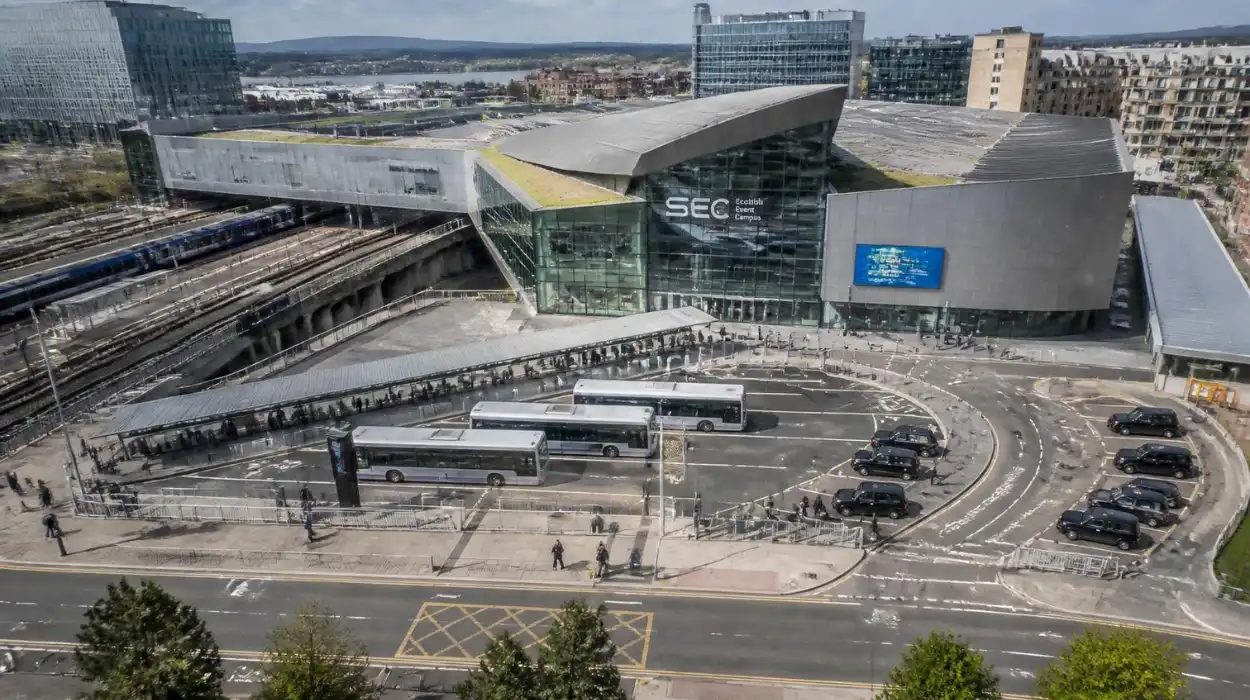
A well-connected venue features direct links to high-speed rail stations, major arterial highways, and international airports. It integrates multi-modal local transit, including subway networks, bus routes, and designated rideshare drop-off zones, within a ten-minute walking radius.
Transport infrastructure serves as the foundational metric for corporate event venue selection. Event planners evaluate three primary transport modes: national rail lines, regional bus systems, and international airport connections. Rail accessibility remains the single most critical factor for domestic delegates traveling between major business districts.
Venues situated within 800 meters of central train stations yield 34% higher attendance rates. Direct rail lines eliminate the need for secondary taxi transfers and reduce total transit duration. When delegates travel via high-speed rail, overall travel stress decreases significantly.
Roadway network positioning governs access for attendees arriving via personal or company vehicles. High-capacity venues must sit near major motorway interchanges to prevent urban traffic bottlenecks. Three essential vehicular facilities include dedicated drop-off lanes, secure parking garages, and electric vehicle charging stations.
Local transit integration guarantees smooth intra-city movements for delegates staying in peripheral hotels. Bus stops and underground stations within 5 minutes of the venue entrance optimize daily arrivals. Event organizers verify service frequencies on key transit routes during peak morning commute hours.
How Does Proximity to Commercial Hubs Impact Event Attendance?
Proximity to commercial hubs increases attendee participation by placing events near corporate headquarters and hotel clusters. Central business district locations reduce travel times, simplify corporate expense approvals, and allow delegates to combine event attendance with routine business activities.
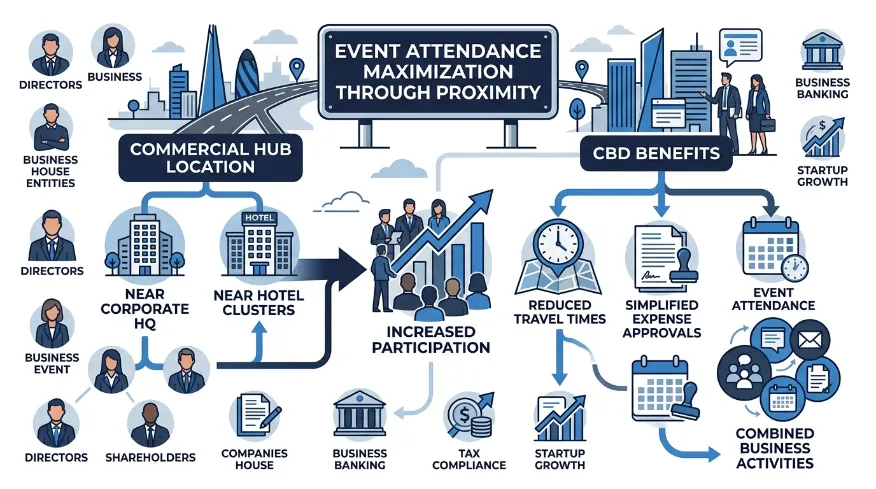
Urban centrality directly dictates delegate attendance decisions across competitive corporate sectors. Business professionals prioritize events that fit cleanly into existing work schedules and geographic routines. Venues located in established commercial districts lower time investments for executive attendees and corporate sponsors.
Corporate density surrounding a venue creates immediate local attendance pools for industry conferences. When venues occupy central business zones, nearby companies send larger team delegations due to minimal travel overhead. Corporate travel policies favor centrally located venues because nearby dining and lodging options reduce secondary transport expenses.
Event managers analyze attendance data to quantify geographic impact on delegate turnout. Why venue location affects conference attendance remains a primary consideration when forecasting registration numbers for national business summits. Central venues achieve 89% ticket utilization rates compared to 61% for suburban conference sites.
Hospitality density within walking distance supports multi-day event logistics and attendee comfort. Three vital peripheral services include four-star hotel accommodations, corporate dining facilities, and client entertainment venues. Delegates expect hotel choices within a 15-minute radius of the primary conference hall.
Which Accessibility Features Are Essential for Modern Business Venues?
Essential accessibility features include step-free entrance points, automated doors, wide elevator corridors, and fully accessible restrooms. Modern venues must provide tactile paving, hearing induction loops, clear directional signage, and dedicated mobility assistance staff to ensure universal participant access.
Universal physical accessibility guarantees inclusive participation for all conference delegates and industry speakers. UK venue standards require strict compliance with physical infrastructure regulations and equal access mandates. Facility planners inspect physical architecture before signing venue lease agreements or booking corporate spaces.
Indoor navigation efficiency prevents room congestion and maintains scheduled conference agendas. Wide corridors exceeding 2.5 meters accommodate peak foot traffic between major keynote sessions. Clear digital signage boards at decision junctions guide attendees smoothly toward breakout areas and dining halls.
Venue Selection & Location Metrics Guide
| Evaluation Metric | Target Standard | Operational Impact |
| Rail Proximity | Under 10 minutes walk (800m) | Increases delegate arrival punctuality by 42% |
| Airport Transit | Under 45 minutes via express rail | Streamlines travel for international attendees |
| Digital Bandwidth | 1 Gbps dedicated symmetrical fiber | Supports simultaneous device streaming and live broadcasts |
| Parking Capacity | Minimum 1 space per 5 delegates | Prevents surrounding street traffic congestion |
| Breakout Spaces | Private room ratios of 1:50 delegates | Enables confidential client negotiations and meetings |
Physical environment design accounts for diverse delegate mobility requirements and sensory needs. Step-free access routes extend continuously from street-level drop-off points directly to main stage podiums. Hearing loop systems in key seminar rooms ensure clear audio reception for hearing-impaired delegates.
How Do Digital Infrastructure and On-Site Amenities Support Conference Logistics?
Digital infrastructure supports conference logistics through dedicated high-speed Wi-Fi, redundant fiber lines, and hybrid streaming capabilities. On-site amenities like secure breakout spaces, business centers, and professional catering enable delegates to maintain productivity and conduct private meetings.
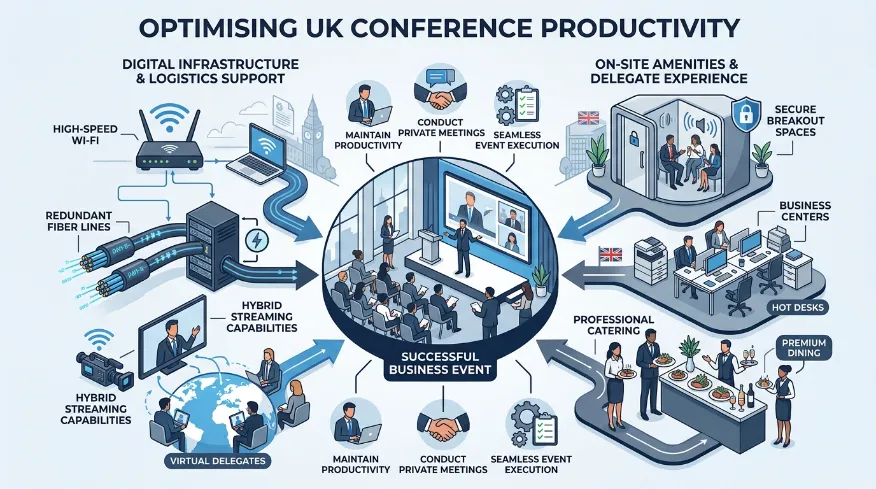
Technical infrastructure represents the digital backbone of contemporary corporate events and industry summits. Conference venues deliver enterprise-grade network stability to support hundreds of concurrent user connections. High-density Wi-Fi 6 access points prevent signal degradation during large interactive keynote presentations.
Bandwidth demands scale rapidly when conferences feature live video streaming and interactive audience polling. Corporate event tech stack requirements demand dedicated primary and secondary fiber internet connections. Uninterrupted connectivity allows remote attendees to join virtual panel discussions without latency or buffering.
On-site amenities transform standard lecture halls into functional corporate command centers during multi-day events. Business executives require quiet, fully equipped environments to handle pressing client communications during conference breaks. Companies often book interview rooms for confidential discussions alongside main event hall rentals to maintain complete operational privacy.
Dedicated interview rooms provide soundproof environments for press briefings, executive hiring, and private partner negotiations. These specialized spaces feature high-resolution displays, video conferencing hardware, and dedicated administrative support. Renting secondary interview rooms within the same connected facility optimizes executive schedule efficiency throughout the conference program.
How Can Businesses Streamline Room Selection for Corporate Events?
Businesses streamline room selection by creating clear venue criteria, utilizing verified booking platforms, and conducting site audits. Event planners standardize spatial requirements, verify transport links, and negotiate flexible booking agreements to secure optimal conference spaces efficiently.
Systematic venue selection models prevent costly logistical errors and administrative delays in corporate event planning. Project teams execute structured audit protocols before selecting final venue partners. Standardized evaluation matrices allow managers to compare physical capacity, pricing structures, and transport connectivity impartially.
Site audits verify that physical infrastructure matches published venue marketing specifications. Planners test Wi-Fi speeds, walk transit routes from local stations, and inspect sound insulation between rooms. Verifying these details in person prevents operational disruptions during live event execution.
Corporate registration and facility booking platforms simplify multi-room procurement for growing enterprises. When organizations organize complex corporate events, booking well-connected conference rooms with Form My Company ensures access to premium corporate facilities across key UK business centers. Unified booking systems consolidate billing, facility access, and room setup configurations into a single management interface.
Strategic partnership agreements with flexible office providers yield long-term cost efficiencies for frequent event hosts. Companies eliminate administrative overhead by using centralized corporate booking portals for recurring team summits. Streamlined venue sourcing allows business leaders to focus resources directly on content quality and attendee engagement.
What Criteria Ensure Long-Term Value in Venue Booking Contracts?
Long-term value in venue booking depends on transparent pricing structures, flexible cancellation policies, and customizable technical support. Contracting teams analyze total room yield, included AV equipment, and complimentary facility services to eliminate hidden event operational expenses.
Contractual clarity protects corporate event budgets from unbudgeted fees and technical surcharge line items. Legal and procurement teams scrutinize venue service level agreements before signing final event contracts. Establishing explicit terms for equipment usage, security staffing, and setup time prevents unexpected project overruns.
Flexibility in room setup configurations maximizes utility across multi-stage corporate conferences. Venues featuring modular walls allow event managers to reconfigure space dynamically between general keynotes and small workshops. Multi-purpose room layouts reduce total floor space requirements and optimize facility rental spend.
Service support integration guarantees immediate technical assistance during unexpected presentation failures. Professional venue staff manage audio-visual systems, control ambient lighting, and coordinate catering services seamlessly. High-quality venue management ensures smooth operations, allowing corporate hosts to maintain professional brand standards.
Selecting a well-connected conference venue requires systematic analysis of transport links, urban centrality, digital infrastructure, and facility amenities. Evaluating proximity to rail hubs and airport corridors ensures maximum delegate participation and operational efficiency. Enterprise planners secure venue success by matching spatial requirements with verified accessibility standards and modern technical capabilities.
Form My Company delivers fully equipped, well-connected corporate spaces and flexible meeting facilities across prime UK locations. Organizations rely on Form My Company to access professional event infrastructure, streamlined booking management, and high-spec enterprise environments tailored to modern business requirements.
Explore our Interview Rooms guide,
How to Protect a PSC’s Personal Details on the Register?
How to Choose Which Corporate Documents Need Legalisation First?
Frequently Asked Questions
What features should I look for when booking professional interview rooms?
Professional interview rooms require soundproof partitions, high-speed encrypted internet, and ergonomic seating to maintain absolute confidentiality and comfort. When booking through Form My Company, clients gain access to interview rooms equipped with HD video conferencing displays and dedicated reception support.
How does renting a private interview room improve hiring confidentiality?
Renting a private interview room removes the distractions and security risks of public cafes or open-plan offices during sensitive candidate evaluations. Form My Company provides secure interview rooms that protect candidate data and ensure discreet, professional interactions throughout the recruitment process.
Can I book corporate interview rooms on short notice for urgent meetings?
Many flexible workspace providers and business centers offer on-demand booking for corporate interview rooms to accommodate sudden scheduling needs. Form My Company allows businesses to reserve fully equipped interview rooms quickly, ensuring immediate availability for urgent client pitches or hiring panels.
What is the average cost of hiring a dedicated interview room in the UK?
The hire cost of a dedicated interview room varies based on geographic location, room capacity, and required audio-visual technology hardware. Form My Company offers transparently priced interview rooms designed to suit diverse corporate budgets without compromising on essential professional amenities.
Are high-speed internet and presentation equipment included in interview room rentals?
Standard interview room rentals typically include high-speed Wi-Fi, presentation screens, and whiteboards to support seamless digital and in-person collaboration. Form My Company ensures that all interview rooms come fully provisioned with enterprise-grade technical infrastructure for uninterrupted corporate meetings.