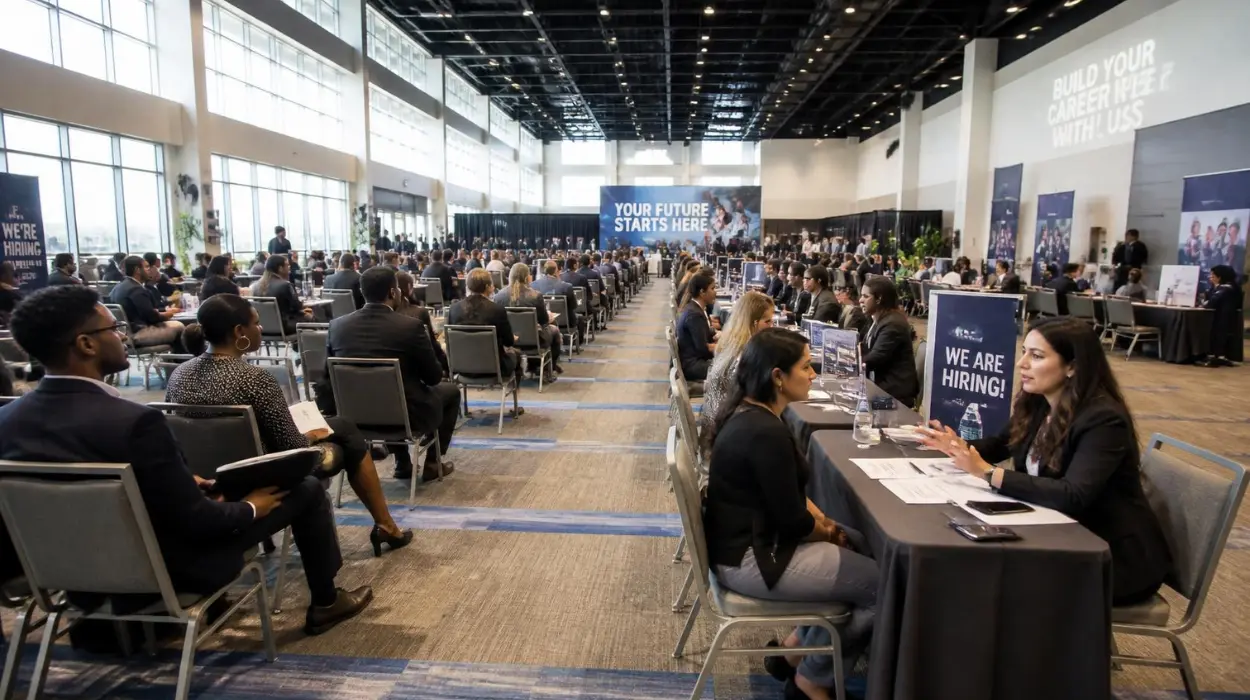
A great venue for high-volume hiring events requires high-capacity modular rooms, robust Wi-Fi networks supporting 500 simultaneous devices, accessible central transport links within 5 minutes of transit hubs, and dedicated breakout zones that handle fast-paced candidate throughput efficiently.
High-volume recruitment requires infrastructure that scales instantly. Companies running massive talent acquisition campaigns need spaces that prevent bottlenecks. Traditional office meeting rooms fail when dealing with hundreds of applicants daily. Event facilities must accommodate concurrent group presentations and private assessments.
Selecting the right location directly impacts candidate experience and employer brand perception. Talented professionals abandon processes plagued by overcrowding or poor acoustic privacy. Facilities management teams must evaluate physical layouts before signing venue contracts.
Operational efficiency dictates that candidate flow moves in one direction. Reception areas process incoming registrations without blocking exit corridors. Interview spaces remain isolated from waiting zones to maintain confidentiality. Acoustics play a vital role when 30 simultaneous conversations happen in one large hall. Sound-masking panels prevent interview leaks and reduce ambient stress levels.
What Infrastructure Supports Rapid Candidate Processing?
Reliable infrastructure for rapid candidate processing depends on high-density power grids, enterprise-grade fiber internet connections, automated check-in kiosks, and secure document scanning stations that process 120 applicants per hour.
Digital recruitment tools demand uninterrupted power supplies across every zone. Venues lacking floor power distribution require dangerous extension cord networks. High-speed fiber connections prevent video assessment lags during remote panel reviews. Recruiters rely on cloud-based applicant tracking systems during live evaluation days. System crashes halt entire recruitment drives and frustrate prospective employees.
Hardware redundancy ensures uninterrupted operations throughout intensive hiring schedules. IT departments deploy backup routers when primary networks experience sudden drops. Registration desks utilize tablet stands equipped with barcode scanners. Automated queue management screens direct candidates to available evaluation booths instantly.
Facilities offering professional Interview Rooms provide the exact infrastructure needed for seamless candidate processing.
Physical security protocols protect candidate data during mass recruitment events. Registration terminals encrypt personal identifiable information locally before cloud synchronization. Hardwired Ethernet ports supersede Wi-Fi networks for secure administrative workstations. Access control gates restrict candidate movement to designated assessment zones only. Facilities staff monitor environmental controls to maintain optimal room temperatures. Overheated spaces degrade candidate performance during cognitive and technical tests.
Why Do Transport Links and Accessibility Matter Most?
Central transport links and universal accessibility matter because 85% of candidates commute via public transit, and compliant step-by-step facilities ensure total adherence to modern equality legislation.
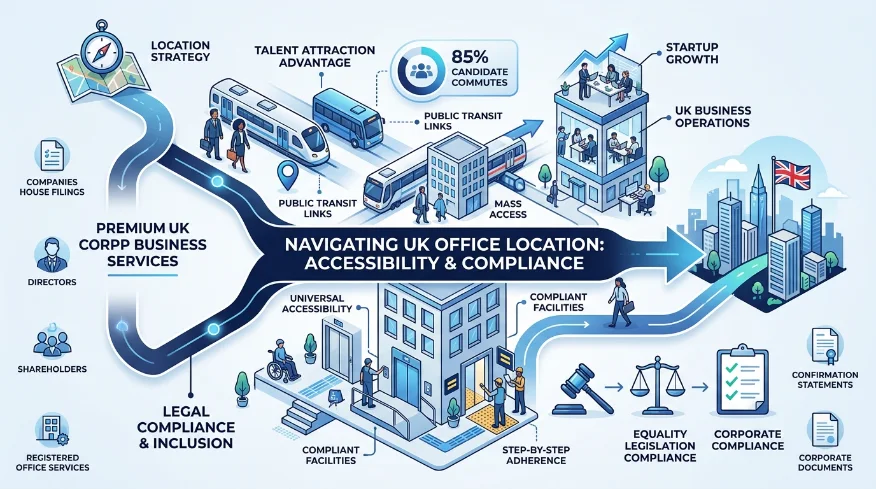
Location accessibility determines overall attendance rates for large-scale recruitment drives. Venues situated within 400 meters of underground or train stations maximize candidate turnout. Peripheral industrial estates often suffer from low applicant attendance due to poor bus schedules. Parking infrastructure must accommodate at least 150 vehicles for regional recruitment campaigns. Electric vehicle charging bays attract environmentally conscious talent pools.
Universal design principles guarantee that every applicant navigates the space comfortably. Step-by-step wheelchair ramps provide unassisted entry into main presentation halls. Braille signage directs visually impaired candidates toward evaluation booths. Elevators feature voice confirmation systems for multi-story assessment centers. Accessible restrooms must reside on the same floor as the primary interview zones.
Local commuting patterns dictate optimal scheduling windows for high-volume events. Morning arrival slots align with regional commuter train timetables. Clear pedestrian signage outside transit hubs guides unfamiliar applicants directly to venue entrances. Security personnel stationed at building perimeters prevent unauthorized public entry. Clear directional paths reduce candidate anxiety before high-stakes interviews.
How Do Layout Variations Influence Interview Success?
Flexible layout variations influence interview success by utilizing modular acoustic partitions, scalable cluster seating configurations, and private consultation booths that adapt to changing recruiter-to-candidate ratios.
Rigid architectural walls restrict how HR teams structure assessment days. Modular acoustic panels allow facilities managers to transform open halls into 20 distinct interview bays within 60 minutes. Open-plan group interaction zones test collaboration skills effectively. Private soundproof cubicles facilitate confidential salary negotiations and final contract offers.
Zoning strategies separate high-energy group tasks from quiet evaluation modules. Assessment centers use concentric circle seating arrangements for rapid group rotations. Interviewers remain stationary while candidate cohorts rotate through evaluation stations. This rotating structure processes 300 candidates across an 8-hour operational window.
Lighting quality directly alters the psychological tone of high-volume assessments. Adjustable LED systems brighten collaborative zones while softening private interview spaces. Natural daylight reduces cognitive fatigue during prolonged evaluation sessions. Climate control zoning prevents stuffiness in densely populated briefing rooms. Acoustic dampening carpets absorb footsteps and minimize disruptive ambient echo.
What Amenities Reduce Candidate and Recruiter Fatigue?
Dedicated catering stations, ergonomic seating arrangements, secure cloakroom facilities, and quiet decompression lounges significantly reduce physical fatigue for both candidates and recruitment teams.
Recruitment staff work grueling 10-hour shifts during multi-day talent acquisition drives. Ergonomic task chairs prevent lower back strain during prolonged evaluation panels. Dedicated staff breakout rooms provide essential respite away from candidate noise. Hydration stations situated every 15 meters maintain alertness levels across large event floors.
Candidate experience improves dramatically when basic physical comforts are met. Secure cloakroom attendants process winter coats and heavy bags in under 30 seconds. On-site cafeterias serve dietary-compliant meals without requiring candidates to leave the premises. Clean, well-maintained restrooms stocked with essential supplies prevent mid-event hygiene issues. Quiet waiting zones equipped with charging ports reduce pre-interview anxiety.
Operational success relies on comprehensive venue support staff presence. On-site AV technicians troubleshoot microphone failures instantly during group presentations. Dedicated cleaning crews sanitize interview desks between every candidate rotation. Security teams manage crowd control smoothly during peak arrival hours. Form My Company assists hiring managers in evaluating these exact operational details when planning major recruitment drives.
How Does Venue Technology Drive Recruitment Efficiency?
Venue technology drives recruitment efficiency through integrated digital signage networks, biometric attendance tracking systems, and centralized intercom setups that coordinate multi-floor evaluation teams.
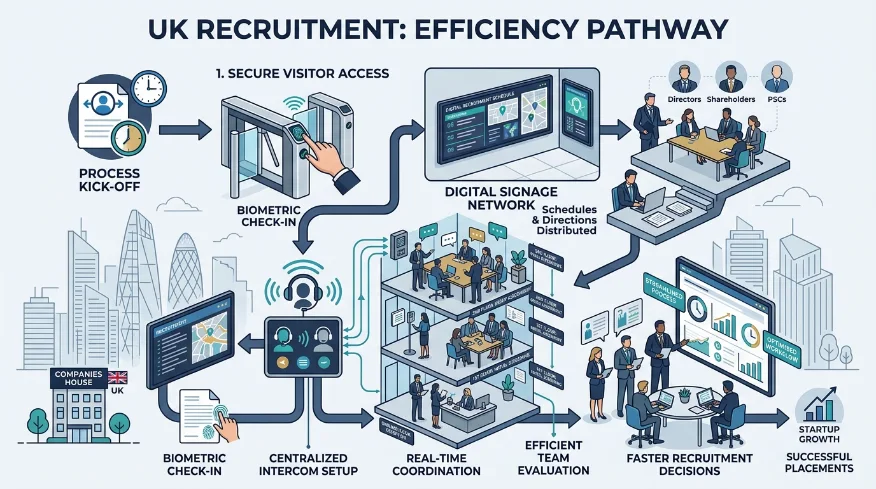
Digital signage replaces static paper schedules with dynamic room allocation displays. Centralized dashboard software updates interview timings across 50 separate rooms simultaneously. Biometric check-in terminals verify applicant identities against submitted government documentation instantly. This eliminates fraudulent proxy attendance during competitive graduate schemes.
Communication infrastructure keeps distributed recruitment teams synchronized throughout the day. Wireless headset systems allow lead recruiters to broadcast urgent scheduling updates instantly. Digital feedback tablets mounted outside interview rooms capture recruiter scoring immediately. Cloud-based databases aggregate scores in real time for executive hiring committees.
Data security remains paramount when deploying wireless recruitment technologies. Encrypted local networks prevent unauthorized interception of candidate evaluation scores. IT administrators monitor bandwidth usage to prevent network bottlenecks during peak assessment hours. Automated badge printers generate secure visitor passes containing temporary RFID access permissions. Reviewing our guide on how to choose a venue for high-volume hiring events provides deeper technical benchmarks for your next campaign.
Why Are Acoustic Control and Privacy Non-Negotiable?
Acoustic control and privacy remain non-negotiable because sound bleed violates data protection regulations, compromises candidate confidentiality, and increases cognitive fatigue in crowded spaces.
Mass recruitment events generate significant ambient noise from simultaneous conversations. Poorly insulated venues create a cacophony that disrupts delicate interview processes. Acoustic wall panels with a minimum rating of 0.85 NRC absorb high-frequency speech sounds. Double-glazed partition doors prevent private discussions from bleeding into waiting areas.
Confidentiality laws require strict physical separation during compensation and background discussions. Candidates share sensitive personal data regarding medical history and financial backgrounds. Secure interview rooms ensure unauthorized listeners cannot overhear confidential exchanges. Sound masking white-noise emitters protect discussions in open-plan assessment hubs.
Acoustic engineering directly influences the professional perception of hiring brands. Chaotic, echo-heavy environments signal disorganization to top-tier talent. Serene, well-insulated evaluation spaces project corporate stability and attention to detail. Facilities management teams audit decibel levels prior to booking multi-day assessment contracts. Want to book a high-volume hiring venue with Form My Company? Our specialists secure acoustically optimized facilities tailored to your exact recruitment scale.
Explore our Interview Rooms guide,
Why Does Venue Location Affect Conference Attendance?
How to Get Printed Certificate of Incorporation and Share Certificates?
Frequently Asked Questions
What size interview rooms are available for hire through Form My Company?
Form My Company provides flexible interview rooms ranging from compact one-on-one consultation pods to large multi-table assessment spaces. These professional hiring venues accommodate everything from individual candidate screenings to panel evaluations for 50 or more applicants simultaneously.
How are Form My Company interview rooms equipped for digital recruitment?
Each interview room features high-speed fiber-optic internet connectivity, integrated power grids, and digital display screens for presentations. These dedicated facilities support video conferencing software and automated applicant tracking systems without bandwidth interruptions.
Can I book Form My Company interview rooms for multi-day hiring events?
Corporate clients secure interview rooms for extended schedules ranging from single-day assessment marathons to week-long graduate recruitment campaigns. Custom facility packages include modular acoustic partitioning and dedicated breakout areas to maintain high candidate throughput.
What is included in the hourly rate for Form My Company interview rooms?
Booking rates cover professional reception services, secure visitor sign-in infrastructure, enterprise-grade Wi-Fi networks, and daily cleaning between candidate rotations. Additional administrative support options include printing stations and hardware setup assistance.
How far in advance should I reserve interview rooms for high-volume hiring?
Securing interview rooms at least four weeks prior to your target launch date ensures optimal room availability and custom layout configurations. High-volume recruitment drives scheduled during peak corporate hiring seasons require advance booking to lock in prime central transit locations.