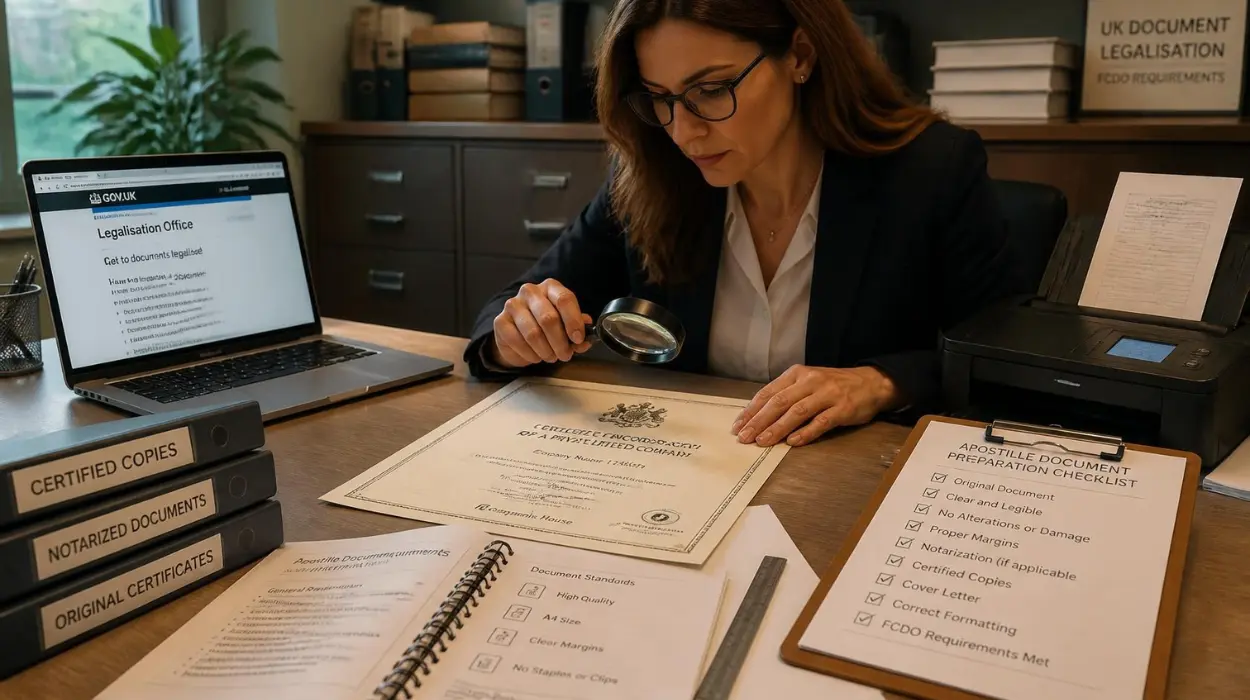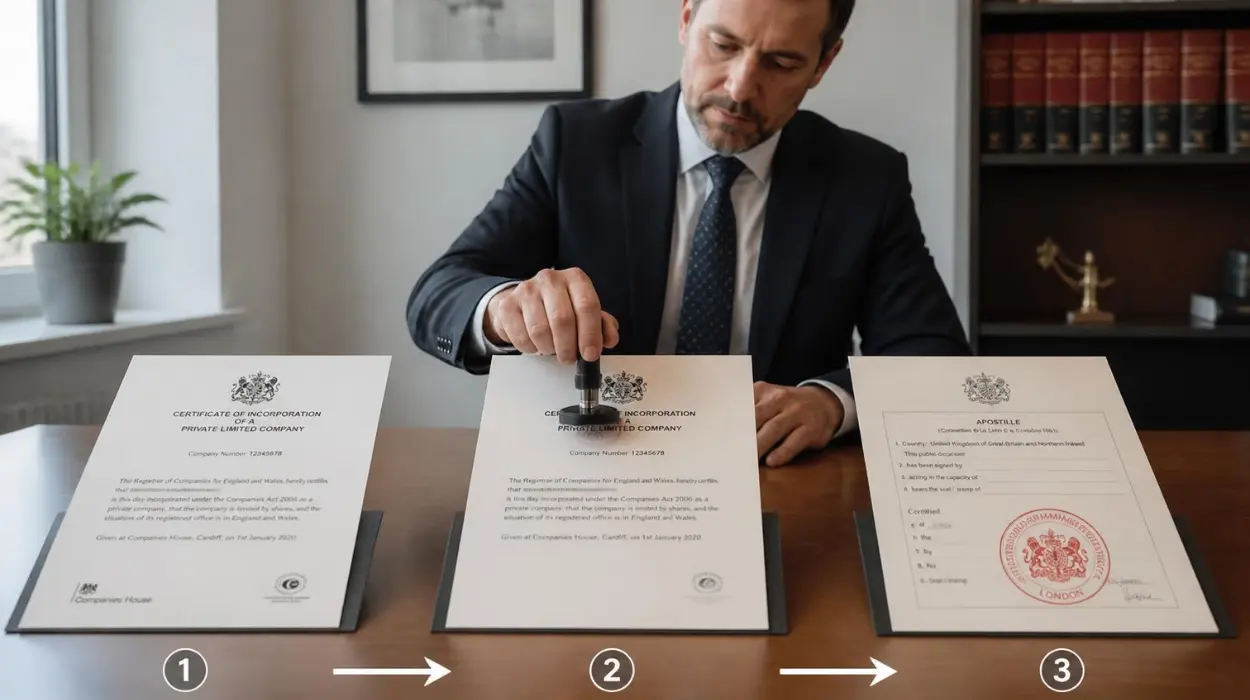
The UK apostille process validates official paperwork for international use through a formal government authentication framework. This procedure involves verifying document origin, authenticating signatures through the Foreign, Commonwealth & Development Office, and securing cross-border recognition across member states.
Understanding the operational workflow of document legalisation ensures global corporate compliance. International expansion requires valid paperwork to satisfy foreign regulatory authorities.
How Do You Identify Which Documents Require Legalisation?
Identifying required papers involves evaluating destination country rules and administrative needs. Common business items include certificates of incorporation, memorandum documents, and board resolutions.
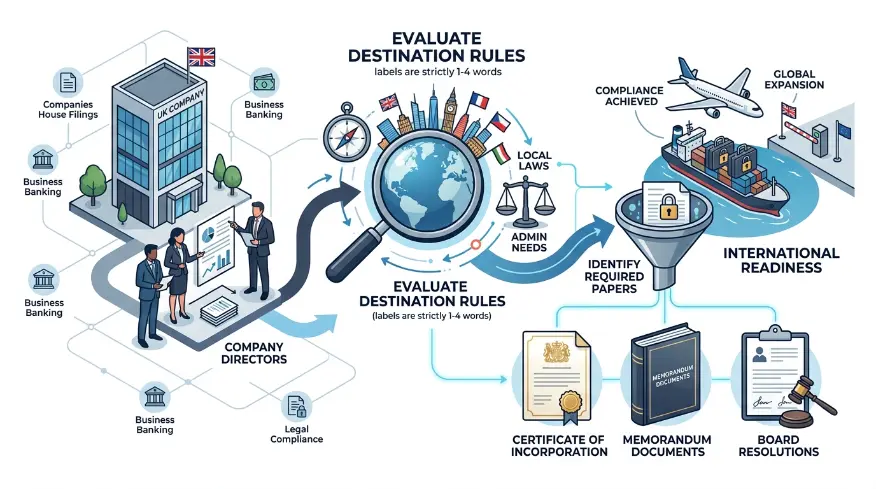
Global commercial activities demand precise paperwork categorization. Jurisdictions outside the UK enforce strict verification standards before accepting foreign business filings. Companies operating across borders submit specific corporate records for authentication. Three primary corporate filing types include incorporation certificates, annual accounts, and director appointments. Reviewing foreign authority guidelines prevents administrative delays during cross-border transactions.
| Document Classification | Typical Issuing Body | Primary International Use Case |
| Incorporation Certificate | Companies House | Establishing foreign corporate bank accounts |
| Memorandum and Articles | Companies House | Demonstrating internal governance rules |
| Certificate of Good Standing | Companies House | Proving active corporate legal status |
What Role Does Solicitor Certification Play in Document Preparation?
Solicitor certification authenticates copies and private signatures before government submission. Legal professionals verify original records, apply wet-ink signatures, and provide official practice credentials.
Many foreign institutions refuse unverified photocopies or private contractual agreements. Independent legal validation bridges the gap between private records and government authentication. Legal practitioners inspect physical paperwork to confirm authenticity. Two primary certification methods involve notarisation of private signatures and true copy verification by practicing solicitors. Executing these preliminary steps ensures compliance with strict submission criteria.
How Does Submission to the Foreign, Commonwealth & Development Office Function?
FCDO submission initiates official government review and authentication. The department inspects registrar signatures, verifies official seals, and attaches the physical apostille certificate.
The Foreign, Commonwealth & Development Office acts as the sole competent authority for issuing apostilles in the UK. Applicants submit physical documents via postal channels or registered counter services. Government examiners cross-reference signatures against established registrar databases. Securing professional assistance through Apostilled Documents simplifies submission tracking and eliminates administrative errors. Standard processing requires specific turnaround windows depending on chosen service tiers.
What Happens After Receiving the Apostille Certificate?
Post-issuance handling involves securing physical delivery and presenting papers to foreign authorities. Recipients verify digital tracking codes, dispatch documents via secure couriers, and submit files to international bodies.
Completed apostilles consist of an official, embossed government certificate permanently attached to the underlying document. International recipients inspect these certificates to confirm legitimacy under the 1961 Hague Convention framework. Businesses utilizing global structures often pair this process with insights found in how to prepare your document correctly for the apostille process. Final deployment of authenticated records enables seamless overseas operations, bank account creation, and subsidiary registration. Organisations ready to streamline international expansion can review thinking to start your apostille application easily with Form My Company for structured operational guidance.
Navigating international administrative frameworks demands meticulous attention to detail and adherence to strict governmental standards. Form My Company delivers reliable solutions by managing document certification, solicitor verification, and FCDO submissions efficiently, ensuring global business paperwork meets every required legal threshold without unnecessary friction.
Explore our Apostilled Documents guide,
Why Does Venue Location Affect Conference Attendance?
Can Board Resolutions and Powers of Attorney Be Apostilled?
Frequently Asked Questions
How long does the UK apostille process take?
Standard FCDO apostille processing typically takes between 3 to 5 working days once physical paperwork is received. Form My Company offers expedited handling options to reduce turnaround windows for urgent international business submissions.
Can digital or scanned documents receive a UK apostille?
UK government authorities require original documents or certified true copies bearing a wet-ink signature from a practicing solicitor or notary public. Form My Company verifies document eligibility to ensure compliance before official submission.
What is the difference between a solicitor certification and an apostille?
Solicitor certification verifies the authenticity of a document or signature within the UK jurisdiction, while an apostille is an official government stamp issued by the FCDO. Form My Company manages both preliminary verification and final governmental authentication stages seamlessly.
Which documents commonly require an apostille for overseas use?
Corporate filings such as incorporation certificates, certificates of good standing, and memorandum documents frequently require legalisation for foreign operations. Form My Company processes these essential business items to meet international regulatory standards.
Do apostilled documents expire under UK or international law?
Apostille certificates themselves do not have an expiration date, but foreign institutions often require the underlying document to be issued within the last 3 to 6 months. Form My Company advises corporate clients on specific foreign authority validity windows prior to application.