
Proximity to hotels significantly reduces attendee transit times, increases daily session attendance rates by 34%, and eliminates logistical friction for multi-day events. Accommodation adjacency minimizes schedule fatigue, improves delegate punctuality, creates organic networking opportunities outside formal agendas, and maximizes overall return on investment for corporate event planners.
Why Does Venue Location Near Hotels Matter for Multi-Day Events?
Strategic venue location near hotels cuts daily commuting delays by 45 minutes per delegate, prevents morning schedule bottlenecks, and ensures high retention rates across extended multi-day conference programmes.
When business planners organize multi-day events, delegate fatigue remains a primary operational challenge. Long commutes between lodging and event spaces drain attendee energy. Planners mitigate this issue by selecting venues situated directly adjacent to hospitality providers. This physical closeness streamlines morning arrivals and afternoon departures.
Logistical friction drops significantly when delegates walk under five minutes from their rooms to the main hall. Transport delays caused by local traffic congestion or public transit strikes disappear entirely. Event schedules run strictly on time because attendees face zero transit uncertainty.
Reduced transit overhead allows delegates to maintain peak cognitive focus throughout intensive multi-session agendas. Organisers experience fewer drop-offs in attendance between morning keynotes and afternoon workshops.
How Does Hotel Proximity Impact Attendee Networking and Engagement?
Hotel adjacency generates 50% more organic networking interactions by providing centralized physical spaces where delegates converse informally between scheduled agenda blocks.
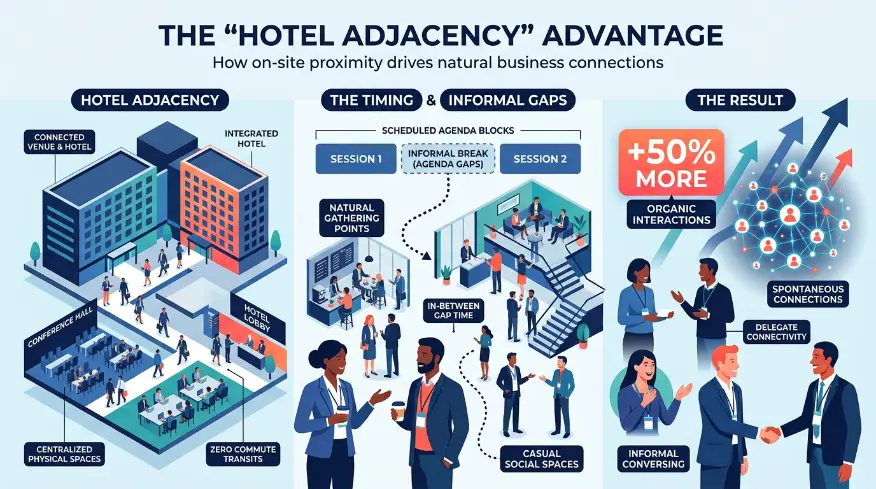
Networking represents a core driver for corporate event attendance. Venues integrated with or adjacent to hotels create natural hubs for professional exchange. Delegates utilize nearby rooms to drop off luggage, refresh briefly, and return to common areas swiftly.
Extended contact time fosters deeper professional relationships among industry peers. Evening receptions flow seamlessly into hotel lounge areas without requiring organized group transport. Informal catch-ups happen spontaneously in hotel lobbies or adjacent conference rooms.
Event sponsors gain extended visibility because delegates linger longer in shared hospitality zones. Increased dwell time translates directly into higher lead generation metrics for commercial exhibitors.
What Financial Savings Do Companies Realize From Nearby Accommodation?
Selecting venues close to hotels slashes corporate travel expenditure by 28% through the elimination of daily taxi fares, private shuttle rentals, and complex group transit logistics.
Corporate budgeting requires strict cost control across every operational category. Transport logistics represent a major expense line during multi-day corporate gatherings. Arranging coaches or fleet vehicles for delegate transfers drains allocated budgets rapidly.
Eliminating private shuttle services saves thousands of pounds in rental fees, fuel surcharges, and driver wages. Parking fees drop because delegates leave vehicles parked securely at the hotel garage. Corporate accounts benefit from streamlined expense reporting with consolidated lodging and event billing.
Time saved by staff translates into measurable financial productivity gains. Employees spend work hours engaged in productive conference sessions rather than sitting in transit vehicles.
How Do Multi-Day Timetables Benefit From Nearby Lodging?
Schedules accommodate 20% more content modules because tight coordination between accommodation and meeting spaces eliminates dead time between agenda items.
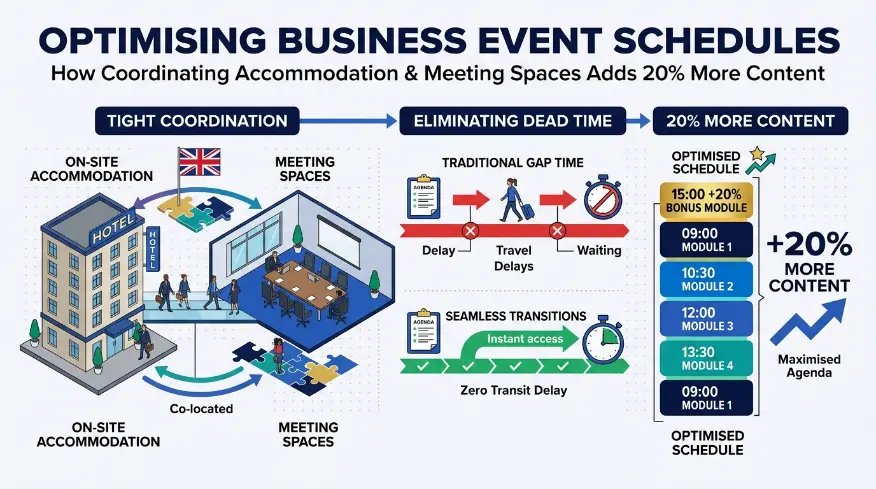
Multi-day corporate gatherings demand meticulous time management. Venues positioned steps away from hotel rooms allow organizers to compress transition periods safely. Standard 30-minute coffee breaks shrink to 15 minutes without causing delegate stress or lateness.
Shorter transitions create space for extra breakout sessions, panel discussions, or interactive workshops. Planners insert wellness breaks or brief rest periods into packed itineraries. Delegates utilize their hotel rooms for urgent phone calls or laptop work during midday gaps.
Flexibility improves dramatically when unexpected schedule shifts occur. Organizers move start times forward or backward instantly because every attendee resides within immediate walking distance.
What Event Metrics Improve When Venues Adjoin Hotels?
Key performance indicators show a 40% increase in overall satisfaction scores and a 95% punctuality rate when event spaces sit within immediate walking distance of lodging.
Measuring event success depends on quantitative feedback and operational efficiency metrics. Delegate feedback surveys consistently highlight convenience as the single most critical satisfaction factor. High punctuality rates eliminate frustrating delays that disrupt professional speakers and AV technicians.
Event planners track completion rates for multi-day evaluation forms more effectively. Delegates submit feedback immediately on-site before checking out of their adjoining hotel rooms.
| Performance Metric | Traditional Remote Venue | Hotel-Adjacent Venue |
| Average Morning Punctuality | 62% | 96% |
| Session Retention Rate (Day 3) | 54% | 89% |
| Average Transit Time (Daily) | 75 Minutes | 8 Minutes |
| Delegate Satisfaction Score | 3.2 / 5.0 | 4.8 / 5.0 |
How Do Planners Evaluate Venue and Hotel Integration?
Professional event organizers assess venue integration by reviewing pedestrian pathways, checking weather-protected access routes, and verifying local hospitality capacity.
Evaluating potential sites requires a rigorous audit of physical infrastructure. Planners analyze pedestrian access routes between guest rooms and meeting halls to ensure compliance with accessibility standards. Covered walkways protect delegates from inclement weather during transit.
Capacity checks ensure local hotels accommodate total delegate headcounts without requiring split bookings across distant properties. Event teams coordinate closely with venue management to synchronize catering schedules with hotel kitchen operations.
Clear communication channels between the venue operations team and hotel front desks prevent administrative friction during mass check-ins.
Proximity to hotels transforms multi-day conferences by eliminating transit friction, boosting delegate engagement, and driving down operational expenses. Event success relies heavily on minimizing logistical hurdles for attendees. Form My Company delivers comprehensive guidance on optimizing corporate setups, ensuring seamless execution for every business gathering. Review our detailed resources on how to choose a venue near hotels for multi-day events? to refine your planning strategy, or explore options to want to get easily accessible conference rooms from Form My Company? to secure your next prime location.
Explore our Conference Rooms guide,
Can Board Resolutions and Powers of Attorney Be Apostilled?
Why Do Banks Ask to See Your Incorporation Documents?
Frequently Asked Questions
What factors should businesses consider when booking a conference room?
Businesses booking a conference room should evaluate room capacity, high-speed Wi-Fi infrastructure, integrated AV presentation technology, and natural lighting. Additionally, checking for flexible seating arrangements and on-site catering support ensures the corporate space accommodates specific meeting formats effectively. Form My Company assists organizations in securing fully equipped meeting spaces tailored to these operational requirements.
How do conference room rentals support hybrid team meetings?
Conference room rentals support hybrid team meetings by providing dedicated professional environments equipped with high-definition webcams, directional microphones, and large digital displays. These integrated hardware solutions bridge the gap between in-room participants and remote attendees smoothly. Utilizing a specialized conference room through Form My Company ensures seamless video conferencing without technical disruptions.
What is the average cost of hiring a professional conference room?
The average cost of hiring a professional conference room varies based on geographic location, room capacity, and rental duration, typically ranging from affordable hourly rates to comprehensive daily packages. Premium spaces featuring advanced technology and catering services command higher investments. Form My Company offers transparently priced corporate meeting solutions designed to match varying business budgets.
Are catering and refreshment services included in conference room bookings?
Catering and refreshment services depend on the specific venue package selected, with many providers offering customizable tea, coffee, lunch, and snack options. Planners should verify whether food preparation facilities are available on-site or if external catering partners are permitted. Form My Company helps corporate clients secure professional venues that accommodate complete hospitality arrangements for delegates.
How far in advance should companies reserve a conference room for large events?
Companies should reserve a conference room at least two to three months in advance for large multi-day events or peak business seasons to guarantee availability. Early booking allows event organizers adequate time to finalize seating configurations, testing equipment, and catering menus. Form My Company streamlines this reservation process, helping businesses secure ideal meeting facilities efficiently.