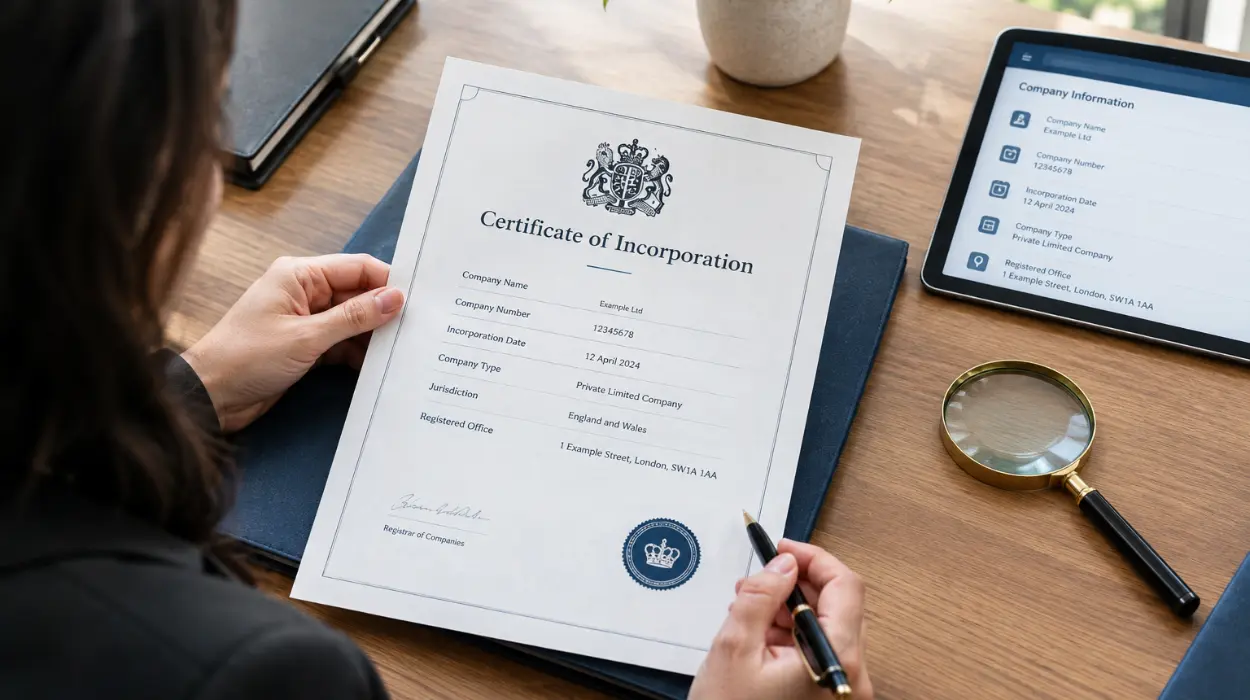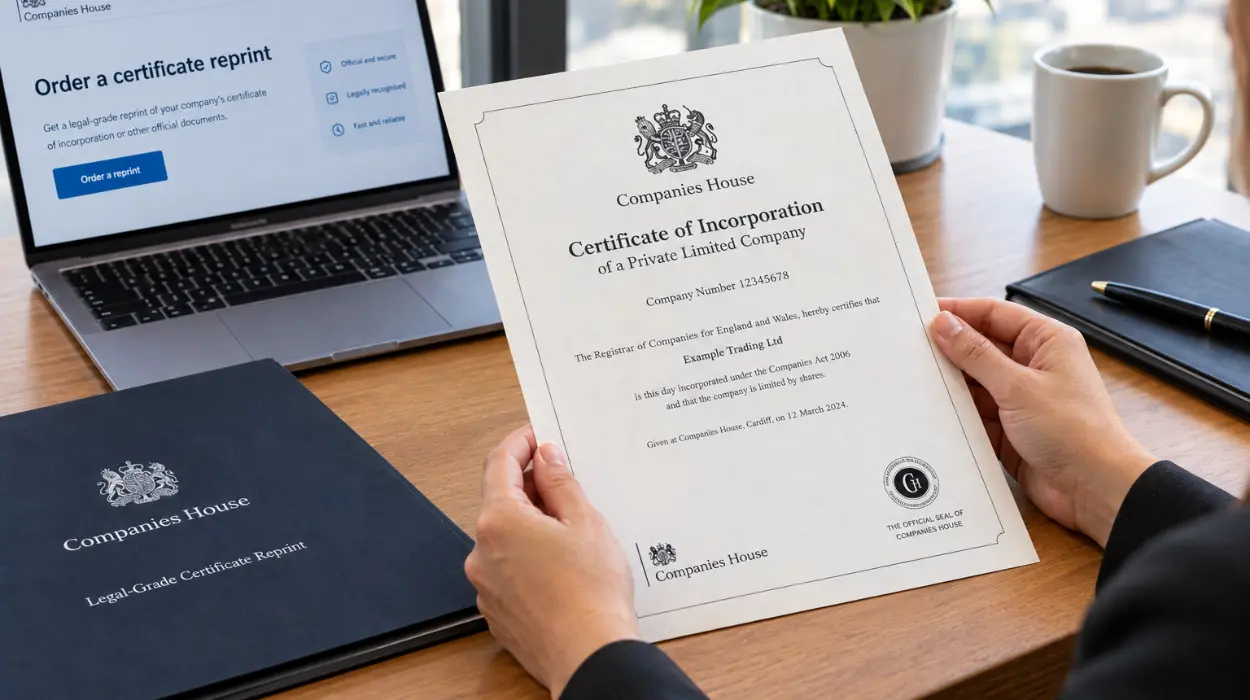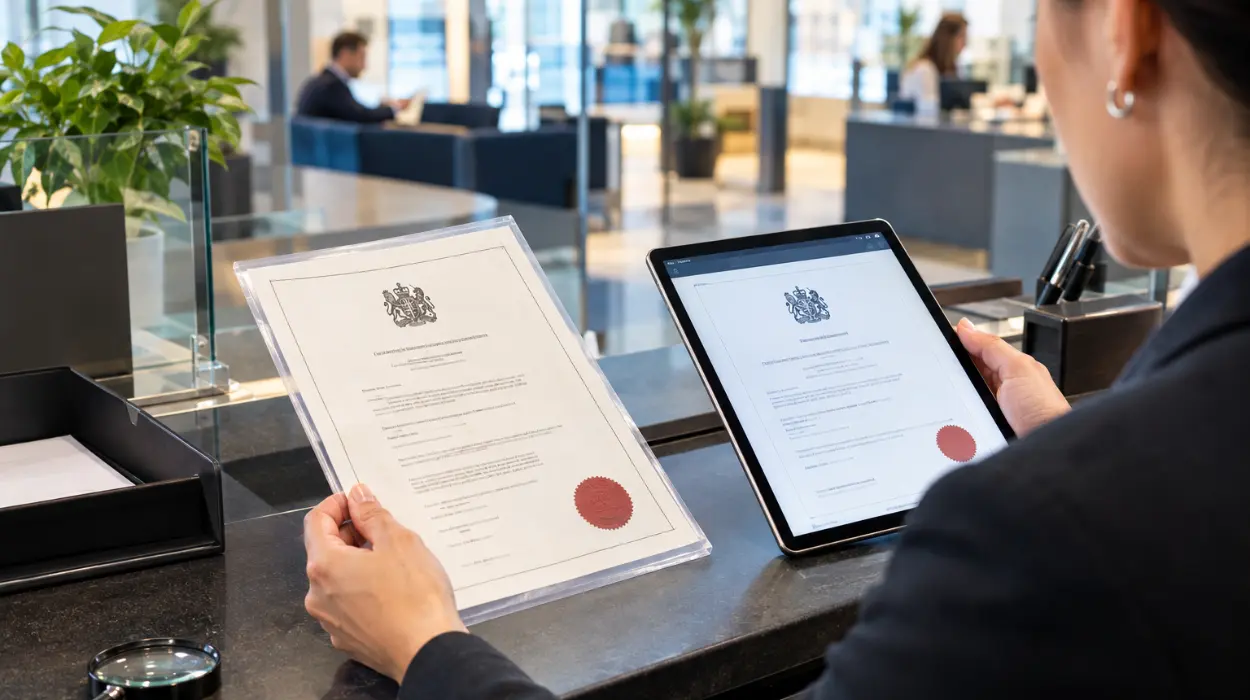
Comparing DIY and managed apostille applications reveals clear operational differences in paperwork handling, submission methods, and processing timelines. DIY applications require manual document gathering and direct government submissions, while managed services utilize dedicated specialists to handle secure document authentication efficiently.
Navigating document legalization requires a clear understanding of administrative procedures. Global business operations demand verified document authentication. Cross-border transactions require official validation. Regulatory bodies mandate proper paperwork channels. International partners request certified records. Legal authorities check document origins. Commercial expansion relies on accepted certificates. Public offices inspect official seals. Overseas authorities expect proper attestation. Document compliance prevents legal delays. Foreign entities verify corporate structures. Legal validation secures international agreements.
Why do businesses choose between DIY and managed application routes?
Businesses choose between DIY and managed apostille routes based on operational capacity, internal resources, and project timelines. DIY applications reduce external service expenses, whereas managed solutions eliminate administrative burdens and minimize bureaucratic error risks.
Corporate compliance teams evaluate operational costs carefully. Internal administrative staff handle routine tasks. External specialists manage complex legalizations. Companies compare resource allocation strategies. Organizations assess internal legal capabilities. Management reviews project deadlines constantly. Businesses weigh financial investments against time savings. Administrative bottlenecks disrupt corporate expansion. Professional services streamline official procedures. Internal teams lack specialized procedural knowledge. Regulatory compliance demands absolute precision. Corporate decision-makers analyze risk factors thoroughly.
What specific steps define the DIY apostille application process?
The DIY apostille application process involves identifying document types, completing government application forms, paying official fees, and dispatching physical paperwork to the Foreign, Commonwealth & Development Office. Applicants must track submissions independently and resolve processing rejections directly.
Applicants gather original certificates first. Individuals verify notary requirements meticulously. Citizens complete online application portals. Senders package physical documents securely. Senders pay standard government processing fees. Applicants dispatch packages via tracked mail. Senders monitor return delivery statuses. Applicants correct rejected paperwork independently. Senders handle administrative queries directly. Citizens manage international shipping logistics. Applicants verify official seal placements. Individuals store legalized certificates safely.
How does the managed apostille application workflow operate?
The managed apostille application workflow operates through professional document intake, compliance pre-checks, secure courier transit, expedited government processing, and quality-assured return delivery. Dedicated case managers oversee every phase to eliminate rejection risks.
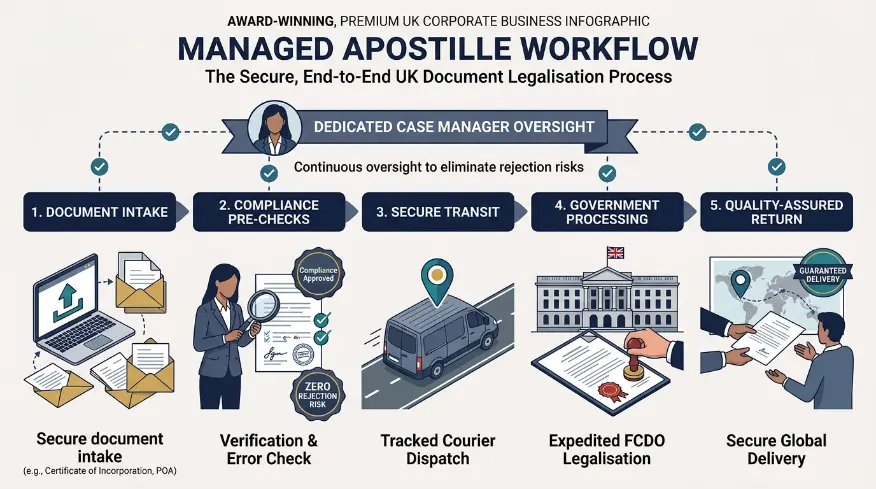
Clients submit physical or digital files. Specialists review document eligibility thoroughly. Teams verify notary stamps immediately. Experts manage official government submissions. Service providers track application progress continuously. Quality controllers inspect final certificates. Couriers dispatch authenticated records securely. Operations teams resolve administrative discrepancies instantly. Account managers update client statuses. Specialists ensure complete regulatory compliance. Professionals handle multi-document portfolios efficiently. Service providers expedite complex legalizations.
What are the primary cost implications of each approach?
Primary cost implications involve balancing direct government fees against administrative labor overheads, potential rejection expenses, and postal charges. DIY routes incur lower upfront costs, while managed solutions optimize total expenditure through error prevention and efficiency.
Finance departments calculate administrative labor expenses. Organizations measure employee time expenditure accurately. Companies analyze government fee structures. Businesses track postal and courier costs. Corporations evaluate document rejection financial losses. Accounting teams review operational budgets. Management assesses efficiency gains systematically. Financial controllers measure transactional overheads. Businesses calculate indirect delay costs. Organizations compare overall project expenses. Finance managers review service pricing transparently. Companies optimize resource allocation models.
How do processing timelines compare between DIY and managed methods?
Processing timelines differ significantly because DIY applications experience delays from administrative errors and postal transit, whereas managed submissions benefit from established channels and priority handling. Managed services accelerate overall document legalization cycles.
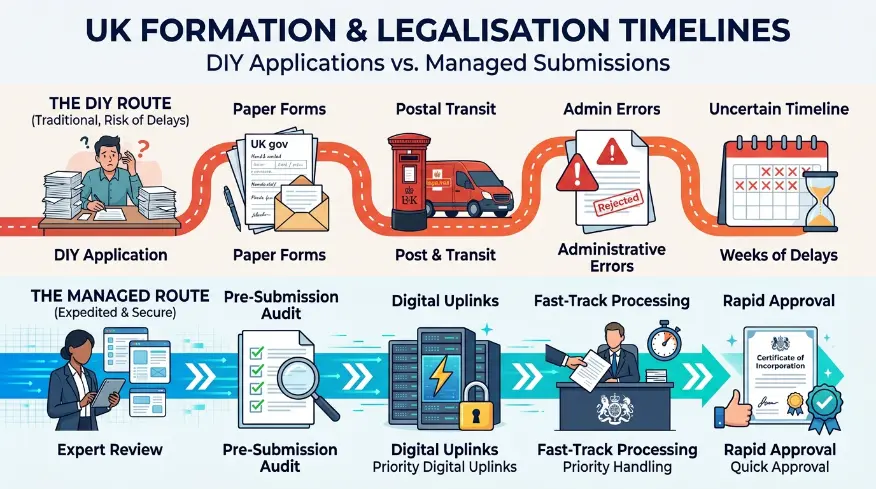
Project planners track standard government turnaround schedules. Operations managers monitor postal transit durations. Administrative errors extend processing cycles. Professional handlers prevent common submission mistakes. Priority submission channels reduce waiting periods. Business timelines depend on document readiness. Operational efficiency minimizes administrative lag. Project managers calculate critical path timelines. Expedited workflows ensure predictable delivery dates. Corporate schedules accommodate legalization phases. Delay risks threaten international contract deadlines. Time management dictates entry strategies.
Which operational approach best serves modern corporate expansion?
Modern corporate expansion is best served by managed apostille applications because they secure reliable compliance, protect strict timelines, and relieve internal administrative pressure. Businesses utilizing structured Apostilled Documents services ensure seamless global operations.
Global markets demand rapid document authentication. Corporate strategies prioritize risk mitigation. Business expansion requires scalable administrative solutions. Companies maintain focus on core revenue activities. Organizations eliminate bureaucratic friction points. International trade compliance necessitates flawless execution. Corporate governance frameworks mandate strict adherence. Businesses leverage external expertise effectively. Growth initiatives require dependable operational partners. Strategic planning incorporates professional services. Enterprise scalability depends on streamlined processes. Commercial success relies on verified credentials.
Understanding the operational mechanics of document authentication allows businesses to choose the optimal path for their international expansion. While DIY applications offer a hands-on approach for simple filings, managed solutions provide the precision, speed, and reliability required for complex commercial requirements. Form My Company delivers structured solutions through our professional Form My Company apostille guide to streamline your paperwork. When you are ready to secure official validation, Form My Company provides the Ready to get your document through the full apostille process with Form My Company? expertise needed for seamless global operations.
Explore our Apostilled Documents guide,
City Centre vs Out-of-Town Venues: Which Suits Your Event?
How to Choose a Well-Connected Conference Venue?
Frequently Asked Questions
How long does it take to get apostilled documents through Form My Company?
Standard processing for apostilled documents typically takes between 3 to 5 working days once the physical paperwork reaches the competent authority. Form My Company manages secure document intake, compliance pre-checks, and expedited delivery to minimize turnaround times for businesses.
What types of documents can Form My Company legalize with an apostille?
Form My Company handles a wide range of corporate and personal paperwork, including certificates of incorporation, memorandum of association, and power of attorney documents. Each item undergoes strict administrative verification to ensure it meets international legalization standards.
Why do international authorities require apostilled documents for UK businesses?
Overseas regulatory bodies require apostilled documents to verify the authenticity of official stamps and signatures originating from the United Kingdom. Form My Company ensures your corporate records comply with Hague Convention requirements for seamless cross-border recognition.
Can I process my apostilled documents myself instead of using a managed service?
Applicants can submit documents independently directly through government channels, though this requires managing shipping logistics and rejection risks personally. Utilizing Form My Company mitigates administrative errors and streamlines the complete document authentication workflow.
What are the main costs associated with securing apostilled documents?
Total expenditure for apostilled documents includes official government processing fees, postal charges, and potential administrative overheads if errors occur. Form My Company provides transparent pricing structures that bundle secure handling and professional compliance verification.